

Seniority is the only real currency in commercial aviation, yet most students waste years on fragmented training that fails to secure a professional timeline. Entering an elite airline ready pilot program is the only strategic way to bypass the inefficiencies of recreational flight schools and meet the rigorous 2026 industry standards. If you don’t secure your seniority number early, you risk losing millions in lifetime earnings to those who chose a more disciplined, high-tempo path from the start.
Aspirants frequently struggle with the confusion surrounding FAA Part 141 versus Part 61 requirements and the fear of graduating without a clear hiring pathway. This guide provides the definitive roadmap to mastering an airline ready pilot program, ensuring you move from zero experience to a commercial cockpit with total financial and regulatory certainty. We’ll explore the technical components of professional curricula, the strategic impact of fixed-price models, and the exact steps to leverage an airline ready pilot program to secure a seat at a major carrier.
An airline ready pilot program is not a collection of casual flight lessons; it is a mission-critical syllabus engineered for one specific outcome: the transition into a commercial cockpit. While recreational flight training focuses on the basic mechanics of flight for hobbyists, professional career programs function as high-performance academies. These programs treat every hour in the air as a component of a larger, regulatory-compliant career path. The industry demands candidates who have been forged in an environment of high-stakes accountability and procedural rigor.
The “Zero to Hero” philosophy serves as the foundation of this professional standard. It is a strategic training model that takes an individual with no prior aviation experience and moves them through a compressed, high-intensity timeline toward commercial certification. This progression is governed by the strict standards of Pilot certification in the United States. By immersing students in a professional environment from day one, these programs ensure that graduates aren’t just pilots, but are disciplined aviators prepared for the demands of a major carrier.
Airlines prioritize candidates from structured academies because these institutions mirror the operational tempo of a commercial airline. In this high-intensity setting, students don’t just learn to fly; they master Standard Operating Procedures (SOPs) that are identical to those used by regional and major airlines. This disciplined approach ensures that when a pilot moves from single-engine basics to multi-engine commercial command, their decision-making and technical skills remain sharp under pressure. Efficiency and compliance are the metrics of success in this professional-grade environment.
Choosing the right regulatory framework is a critical career decision. While Part 61 training offers flexibility that suits recreational flyers, it lacks the rigid structure required for rapid career advancement. Professionals recognize Elite Flight Training: The FAA Part 141 Advantage as the superior choice for accelerated learning. The FAA grants Part 141 programs increased oversight and approved syllabi, which allows for more efficient training timelines.
The strategic benefits of a Part 141 airline ready pilot program are quantifiable:
By opting for a Part 141 track, you’re choosing a path that prioritizes regulatory precision and career velocity. It’s the most direct route to meeting the industry’s highest standards. Candidates who want to become a commercial pilot fast will find that the Part 141 framework, combined with a high-velocity academy structure, is the definitive method for eliminating wasted time and reaching the flight deck ahead of the competition.
Technical mastery in a professional airline ready pilot program is not achieved through repetitive flight alone; it requires a sophisticated integration of advanced technology and rigorous academic theory. The industry is unforgiving of mediocrity. To secure a seat at a major carrier, candidates must demonstrate proficiency in environments that mirror the complexity of a modern commercial jet. This curriculum is designed to eliminate the learning curve between light training aircraft and high-performance regional equipment.
The multi-engine rating is the absolute gateway to commercial employment. It introduces the complexity of asymmetric thrust, advanced systems management, and higher approach speeds. According to the Bureau of Labor Statistics Occupational Outlook Handbook, the demand for highly skilled pilots remains robust, but only for those who can handle the rigors of complex aircraft operations. Mastery of multi-engine aerodynamics is a non-negotiable requirement for anyone seeking the 2025 median airline pilot salary of $232,140. It’s the point where training shifts from basic airmanship to professional command.
Beyond the flight deck, a rigorous airline ready pilot program emphasizes two critical pillars:
Because these advanced components require significant resources, many students find that a Fixed-Price Flight Training Program is the most strategic way to manage the investment required for this level of elite instruction. This model ensures that the focus remains on your performance rather than the ticking clock of an hourly rental rate.
Financial volatility is the silent killer of aviation careers. In a traditional hourly billing model, every minute of weather delay or additional instruction becomes a direct tax on your future. For students in an elite airline ready pilot program, this risk is unacceptable. By utilizing a Fixed-Price Flight Training Program, you shift the financial burden of training efficiency from your shoulders to the institution. This model provides a locked-in financial roadmap, ensuring that your focus remains on cockpit performance rather than credit limits. While academic institutions like the University of Central Missouri Professional Pilot Program offer structured degree tracks, the private sector’s fixed-price career programs provide a more direct, cost-controlled path for those prioritizing speed to the flight deck.
Standard flight schools often lure students with aggressive hourly rates, only to reveal “gotchas” like fuel surcharges, instructor premiums, and undisclosed checkride fees. These hidden costs can inflate a budget by 20% or more, often leading to training stalls when funding runs dry. A professional career program eliminates these variables. When the price is fixed, the academy is incentivized to provide the most efficient path to certification. This creates a psychological advantage; you don’t hesitate to book the extra simulator session or ground briefing because the cost is already accounted for in your professional budget.
Securing your commercial ticket is only half the battle. The real challenge is the 1,500-hour requirement for the Airline Transport Pilot (ATP) certificate. The CFI Fast Track Program is the industry’s most efficient engine for building these hours. By transitioning from student to professional instructor, you stop paying for flight time and start earning it. This strategic transition ensures you reach the major carriers years ahead of those navigating the industry without a structured plan. Choosing an airline ready pilot program with a fixed-price structure is a strategic decision that maximizes your ROI and guarantees that your career trajectory remains uninterrupted by financial instability.
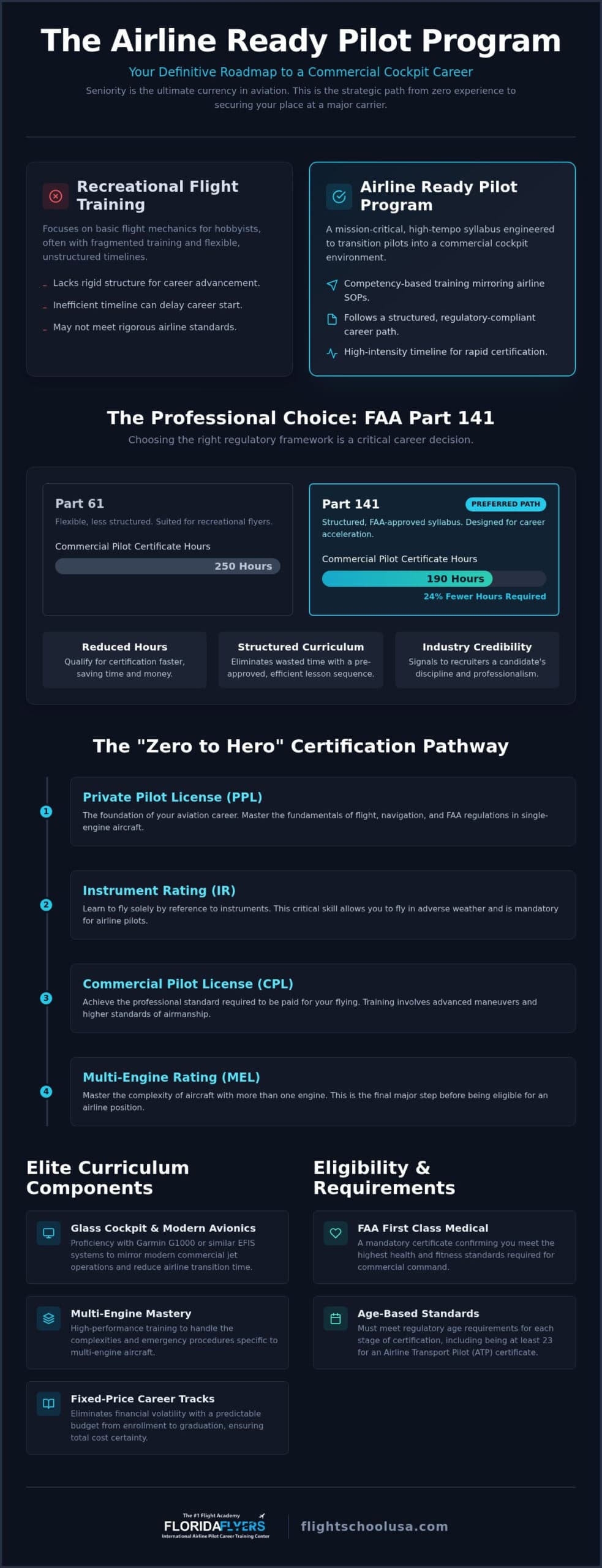
Professional aviation isn’t a right; it’s a privilege granted only to those who meet the industry’s most uncompromising regulatory thresholds. The FAA First Class Medical is the absolute prerequisite for any pilot targeting a seat in a commercial cockpit. Without this certification, your investment in an airline ready pilot program is effectively a sunk cost. You must demonstrate peak physical and neurological health to act as a pilot-in-command in scheduled airline operations. Beyond medical fitness, you must be at least 18 years old to hold a Commercial Pilot Certificate, though the standard age for the Airline Transport Pilot (ATP) certificate remains 23. While a degree isn’t a legal mandate for all regional carriers in 2026, the industry’s competitive nature demands a baseline of high-level technical aptitude and a clean legal record. Those who are just beginning to research how to become a pilot will find that understanding these eligibility thresholds early is the most critical first step toward a sustainable commercial aviation career.
US-based FAA certification remains the global gold standard for pilot prestige and technical proficiency. We facilitate rigorous training for the International Student Flight Academy through a precise M1 Visa strategic plan. This process allows foreign nationals to enter the United States for high-intensity, residential flight training. The timeline for visa approval requires meticulous documentation and proactive coordination with the academy’s admissions department. By training in the world’s most robust regulatory environment, international students gain a significant competitive edge when returning to their home markets or seeking global employment opportunities. It’s a high-stakes transition that demands total commitment to the US-based curriculum.
For those transitioning from military service, deploying GI Bill assets is the most tactical way to fund advanced ratings and CFI certifications. Not all institutions are equipped to handle the administrative rigors of VA-funded training. Part 141 schools are specifically authorized to cater to these tracks, providing a structured environment that mirrors the discipline of military operations. By utilizing GI Bill Flight Training, veterans can bypass the financial hurdles of civilian certification and move directly into a high-tempo career path. This is the most efficient method for veterans to leverage their existing discipline into a high-earning commercial aviation career. You’ve already served; now it’s time to command your professional future.
The path to the flight deck is governed by these strict eligibility standards, and non-compliance is not an option for the serious professional. If you’re ready to meet these requirements and begin your transition, apply for our Airline Ready Program to initiate your professional compliance review.
The transition from trainee to professional aviator is a calculated progression, not a series of random events. The airline ready pilot program roadmap is a high-tempo sequence starting with the Private Pilot License and culminating in the Commercial Multi-Engine rating. This isn’t just about logging hours; it’s about adopting the mindset of a captain from the first engine start. You’ll learn from seasoned captains who act as elite career mentors, ensuring every maneuver meets the industry’s most rigorous training standards. Precision is a habit, and excellence is the only acceptable baseline for those seeking a seat at a major carrier.
Professional development requires total immersion. We provide on-site Student Housing to eliminate the logistical friction of commuting and external distractions. Living within an aviation-centric community fosters a high-stakes environment where students engage in constant peer review and collaborative study. This residential advantage ensures you spend maximum time in the cockpit or ground school, accelerating your mastery of complex systems. It’s about building a professional network before you even reach the regional jet level. When you’re surrounded by individuals who share your high-performance goals, the collective discipline of the group drives individual success. Efficiency is the priority, and our residential model is designed to facilitate that momentum.
The final phase of our curriculum involves a rigorous review board process designed to mirror actual airline hiring standards. Professional mentorship from industry experts helps refine your technical knowledge and HR interview skills. Major carriers look for more than just flight hours; they seek candidates with a clean training record and the poise of a leader. Our program prepares you for the specific demands of airline recruitment, ensuring your placement is a result of strategic preparation. We treat every administrative task and checkride as a critical component of your professional legal standing. Results are the only metric that matters in this high-stakes industry, and our pathway is engineered to deliver them.
A career in the clouds demands a no-nonsense attitude toward professional development. If you’re ready to commit to the rigors of an elite aviation career and move beyond the limitations of recreational flight schools, the time for action is now. You can Apply for the Airline Ready Pilot Program at Flight School USA to begin your journey toward a commercial cockpit. Secure your future by training with an institution that functions as a prestigious gatekeeper of industry standards.
Professional aviation is a high-stakes discipline that demands absolute precision and a strategic approach to training. By selecting an airline ready pilot program, you’re choosing a path that prioritizes regulatory rigor and financial predictability. We’ve detailed how the transition from zero experience to a commercial cockpit requires the integration of glass cockpit technology, multi-engine mastery, and the structured environment of an FAA Part 141 certified academy. Eliminating the variable costs of traditional flight instruction through our Fixed-Price Guarantee ensures that your focus remains entirely on your performance as a professional aviator.
The global standard of FAA certification is within your reach, whether you’re a domestic student or an international aspirant requiring M1 Visa sponsorship. The window of opportunity in the 2026 hiring market is open for those who demonstrate the highest standards of airmanship and discipline. Don’t leave your career to chance in a fragmented training market. You have the technical tools and the roadmap to master the path to a major carrier seat. Secure Your Seat in the 2026 Airline Ready Program and take command of your professional trajectory today. Your journey to the captain’s seat starts with a single, decisive step toward excellence.
An airline ready pilot program is a structured, career-track syllabus designed to transition students from zero flight experience into a commercial airline cockpit. Unlike modular training, this program integrates all necessary ratings, including Private, Instrument, and Commercial Multi-Engine, into a high-intensity, continuous curriculum. It operates under rigorous FAA Part 141 standards to ensure every graduate meets the technical and procedural benchmarks required by regional and major carriers. It’s the professional standard for elite aviation careers.
Completing the core certifications within a professional airline ready pilot program typically requires 10 to 12 months of full-time, immersive training. However, reaching “airline ready” status also involves meeting the 1,500-hour Airline Transport Pilot (ATP) requirement. Most graduates utilize our CFI Fast Track Program to build these hours while earning an income as an instructor, generally reaching the flight deck of a regional airline within approximately two years of their start date.
Yes, eligible veterans can utilize GI Bill assets for professional flight training at FAA Part 141 certified academies. These benefits are specifically applicable to advanced ratings and instructor certifications after an initial private pilot license is obtained. This tactical funding allows veterans to transition from military service to a high-earning commercial career without the burden of significant out-of-pocket tuition. We provide the necessary administrative support to ensure your VA-funded training track remains compliant and efficient.
The primary distinction lies in the training’s objective and structure. Standard flight schools often cater to recreational hobbyists using a flexible, “pay-as-you-go” Part 61 model. In contrast, an airline ready program functions as a high-performance academy with a pre-approved Part 141 syllabus. It prioritizes standardized operating procedures (SOPs), advanced simulation, and a high-tempo environment. This professional-grade approach ensures graduates are prepared for the rigors of an airline’s initial operating experience from day one.
A college degree isn’t a regulatory requirement for enrollment in our professional training tracks or for employment at many regional airlines. While some major carriers historically preferred a four-year degree, the current industry landscape focuses heavily on technical proficiency and clean training records. We prioritize the development of elite flight skills and regulatory compliance. You can launch your commercial career with our certifications and decide to pursue a degree later to enhance your long-term seniority.
To act as a pilot-in-command for a scheduled airline, you must hold a valid FAA First Class Medical Certificate. This is the industry’s most stringent medical standard, requiring evaluations of vision, hearing, cardiovascular health, and neurological function. We require students to secure this certificate before beginning their career-track training. It acts as a critical gatekeeper, ensuring you’re physically qualified to handle the high-stakes responsibilities of a commercial cockpit throughout your professional tenure.
Our Fixed-Price Career Program eliminates the financial volatility inherent in traditional flight training. In an hourly billing model, weather delays or additional instruction hours can lead to catastrophic budget overruns. By locking in your costs at the start, we shift the risk of training efficiency from you to the academy. This financial security allows you to focus entirely on mastering the technical curriculum without the psychological stress of an unpredictable and expanding training budget.
Yes, international students are eligible for training through our M1 Visa Admission Services. FAA certification remains the global benchmark for pilot excellence, and we provide the necessary documentation and residential support for foreign nationals to train in the United States. This pathway includes on-site student housing and an immersive, full-time curriculum designed to produce world-class aviators. We manage the complex visa logistics so you can focus on meeting the academy’s rigorous professional standards.


