
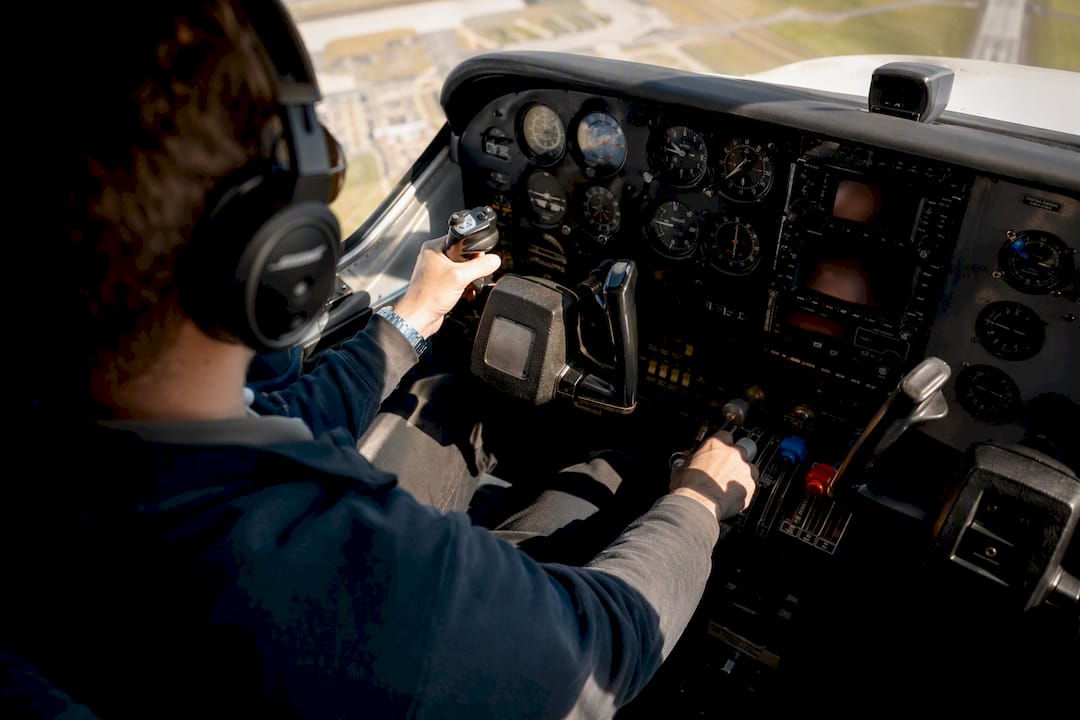
To pass your FAA multi-engine add-on checkride, you need to master Vmc and the engine-out flow, then rehearse both until they are muscle memory. Multi engine checkride prep isn’t about cramming every regulation into your head the night before. It’s about narrowing your focus to the handful of skills that actually decide pass or fail, then drilling those skills until they’re automatic under pressure.
Do these three things first: memorize your aircraft’s V-speeds cold, rehearse the identify, verify, feather flow until you can do it without thinking, and tab your POH so you can find V-speeds and limitations in seconds. Then schedule at least one mock checkride before the real one.
Expect the oral and flight portions to run 1 to 1.5 hours each, so plan for a half-day to full-day event. Bring your certificates, medical, photo ID, logbook, and IACRA confirmation number, because administrative gaps stop checkrides before they start.
Pro Tip: Say every action out loud during practice, even when flying solo. Examiners grade what they hear, not just what you do.
Passing a multi-engine checkride comes down to mastering Vmc, automating the identify, verify, feather flow, and rehearsing under real DPE-style pressure before test day.
| Point | Details |
|---|---|
| Vmc drives the oral | Master SMACFUM factors and be ready to explain how weight, CG, and density altitude each shift Vmc. |
| Engine-out flow must be automatic | Drill identify, verify, feather until it runs without conscious thought, narrating every step out loud. |
| Single-engine go-around is highest risk | Hold Vyse to short final and clean up promptly, since this maneuver causes many checkride failures. |
| Paperwork fails candidates too | Confirm IACRA, endorsements, AROW documents, and a tabbed POH the day before your checkride. |
| Florida Flyers offers a faster path | In-house Self Examining Authority and a high first-time pass rate cut wait times for U.S. candidates. |
Most checkride failures that have nothing to do with flying skill come from missing paperwork or an airplane that isn’t ready. Handle the administrative side the day before, not the morning of.
A DPE who watches you calmly work through this checklist before takeoff is already forming a favorable impression. One who watches you fumble for a missing endorsement is forming the opposite one.
Prioritize Vmc. It dominates the oral portion more than any other single topic, and DPEs use it to probe whether you actually understand multi-engine aerodynamics or just memorized a definition.
Start with the fundamentals: what makes an engine “critical,” how P-factor and asymmetric thrust create yaw, and why losing the critical engine costs you more rudder authority than losing the other one. From there, memorize the factors that raise or lower Vmc using the mnemonic SMACFUM: Standard atmosphere, Maximum takeoff weight, Aft CG, Clean configuration, Flaps up, Undercarriage (gear) up, and Maximum available power on the operating engine. Every one of those factors needs a “why,” not just a “what.”
Next, know every V-speed by name, number, and application. Vmc, Vyse (blue line), Vsse, Vxse, and Vle all show up on the oral, and you need to explain when each applies and point to where it lives in your POH without hesitation.
Study propeller feathering logic and fuel system flows next. Know your memory items for an engine failure cold, because the DPE will ask you to recite them before you ever leave the ground. Practice answering scenario questions the way examiners actually grade them: state your conclusion first, then explain your reasoning. “I would continue the approach because…” beats a rambling explanation that arrives at a conclusion three sentences later.
Pro Tip: When a DPE asks “what would you do if,” answer the question first in one sentence, then justify it. Examiners lose confidence in candidates who think out loud for a full minute before committing to an answer.
Build your flight practice as a progression, not a random assortment of maneuvers. Each stage should feel routine before you add the next layer of difficulty.
The Vmc demonstration deserves its own dedicated practice block. Do it only at a safe altitude, decelerating toward Vmc with a simulated feather configuration, and recover at the first sign of loss of directional control or at the published Vmc, whichever comes first. The recovery itself is simple in theory and easy to botch under stress: reduce power on the operating engine, lower the nose, and let the airplane accelerate before you reapply power.
Single-engine approaches and go-arounds test the same discipline from a different angle. Hold Vyse, your blue line speed, all the way to short final. Use a small bank of 2 to 3 degrees into the operating engine with minimal rudder pressure rather than fighting the yaw with your feet alone. On a go-around, clean up the airplane promptly, because wrong-engine feathering and loss of directional control during single-engine go-arounds rank among the most common reasons candidates fail.
Drill the identify, verify, feather flow until it runs on autopilot: identify with dead foot equals dead engine, verify by retarding the suspect throttle, then feather or secure per your POH. Say each step out loud every time, because narrating your actions is exactly what CFIs recommend for building the habit examiners want to see.
Pro Tip: Practice the Vmc demo recovery at a higher, more conservative altitude than you might think you need. Rushing this maneuver out of nervousness is a common way candidates lose points they didn’t have to lose.
Book a full mock checkride with an instructor you haven’t flown with recently, ideally one who has never coached you through this exact syllabus. A fresh instructor asks harder questions and throws surprise engine failures at moments you wouldn’t expect from someone who already knows your habits.
Run the mock exactly like the real thing: full oral questioning first, then a complete flight profile with simulated failures sprinkled in at random points. This kind of dress rehearsal reveals weak spots that routine training flights tend to hide, because routine flights rarely recreate the pressure of being watched and graded.
Once the mock goes well, book your actual DPE for a day with stable, forecast-confirmed weather, and block out the entire day rather than squeezing it between other commitments. If your schedule allows, fly a short refresher the day before the checkride instead of taking several days off beforehand.
Accelerated, daily block training tends to produce better retention for the multi-engine add-on than spreading flights out over several weeks. If your schedule doesn’t allow for a training block, concentrate your final flights on ACS tolerances and the identify, verify, feather flow rather than trying to cover everything evenly.
Florida Flyers Flight Academy holds a distinct advantage for candidates racing against a training timeline: Self Examining Authority, which lets the academy conduct FAA checkrides in-house instead of waiting weeks for an outside DPE slot. Combined with a high first-time pass rate on FAA practical exams, that in-house authority turns “when can I test” from a scheduling headache into a non-issue.
Students can move from a Private Pilot License through ATP with a reduced total of flight training hours, with competitive pricing and a support structure built around getting candidates checkride-ready without unnecessary delay.
When you’re evaluating any school for your multi-engine add-on, ask these questions before you commit:
Pro Tip: Ask any school directly for their first-time pass rate on the multi-engine practical. A school confident in its numbers will share them without hesitation.
The Airman Certification Standards function as the answer key for your entire checkride. Everything the DPE asks or evaluates traces back to a specific ACS task, which means the standards themselves are the most efficient study document available to you.
The oral portion draws from ACS areas covering multi-engine aerodynamics, systems knowledge, performance planning, and emergency procedures. The flight portion breaks into specific tasks: preflight preparation, normal takeoffs and landings, performance maneuvers, and the engine-out tasks that make this rating distinct from a single-engine checkride, including Vmc demonstrations, single-engine approaches, and engine failure procedures.
Each ACS task lists specific tolerances, the numeric standards a DPE uses to grade you. Altitude tolerances during steep turns, airspeed tolerances during approaches, and heading tolerances during instrument tasks all come from this document rather than from an instructor’s personal preference. Read the ACS tolerance for each maneuver before you practice it, not after, so you’re training to the actual standard rather than a rough approximation of it.
Treat the ACS as a checklist you work through systematically during your final two weeks of prep, checking off each task once you and your instructor agree you can perform it to standard. Candidates who study the ACS document directly, rather than relying only on secondhand study guides, tend to walk into the oral with fewer surprises.

Typical oral questions follow predictable patterns once you’ve seen enough of them. Expect definitional questions (“What is Vmc?”), scenario questions (“What would you do if an engine failed on takeoff at 200 feet?”), and regulatory questions about currency, endorsements, and required equipment.
Structure every answer the same way: state your conclusion first, then support it. A DPE asking about an engine failure after liftoff wants to hear “I would maintain control, pitch for blue line, and troubleshoot only once I have a positive climb” before you explain the reasoning behind that sequence. Candidates who explain their thinking first and arrive at a conclusion last tend to sound less confident, even when the underlying knowledge is solid.
Expect follow-up questions that push past your first answer. If you explain what Vmc is, expect a follow-up on what happens to Vmc as weight decreases, or how density altitude changes the picture. These follow-ups aren’t the DPE trying to trip you up. They’re testing whether you understand the concept or memorized a single fact about it.
Practice answering out loud, not just reviewing material silently. The physical act of forming a spoken answer under mild pressure, even in a practice session with your instructor, builds the verbal fluency that oral exams actually demand. Silent review teaches recognition; speaking teaches recall, and recall is what the DPE is grading.
Engine failures dominate multi-engine emergency training, but the checkride expects fluency across a broader set of scenarios than just “an engine quit.” Brief yourself on engine failure before rotation, engine failure after liftoff but before a safe altitude, and engine failure at cruise, because each scenario carries a different decision tree.

Below a safe single-engine climb speed and altitude, most twins call for closing the throttles and landing straight ahead or on the remaining runway rather than attempting a single-engine climbout, given how little performance margin exists that close to the ground. Above that altitude, the calculus shifts toward identifying, verifying, and securing the failed engine while climbing at blue line. Know your specific aircraft’s guidance here, because this threshold varies by airplane and the DPE will expect an aircraft-specific answer, not a generic one.
Brief fire procedures separately from simple power loss, since an engine fire demands immediate securing of that engine regardless of altitude, unlike a straightforward power loss where you might trade some time for altitude. Also brief what happens if you can’t get a clean feather. A windmilling propeller creates drag that can erase your single-engine climb performance entirely, so know your aircraft’s guidance for that failure mode too.
Verbalize every emergency brief before you start the engines each flight, not just before the checkride. That habit, repeated dozens of times in training, is what makes the response automatic rather than something you have to think through under pressure.
Weight and balance calculations aren’t a paperwork formality on a multi-engine checkride. They directly determine how much climb performance you have left after losing an engine, which is why the oral exam treats this topic as inseparable from Vmc discussions.
A heavier airplane has a higher Vmc and a worse single-engine climb rate, shrinking your margin for error at exactly the moment you need more of it. An aft center of gravity makes the problem worse by reducing the effectiveness of the rudder you need to counteract asymmetric thrust. Know how to explain, in plain terms, why a fully loaded airplane behaves differently on one engine than a lightly loaded one.
Before your checkride flight, run actual weight and balance numbers for the airplane you’ll fly that day, not a generic example from a textbook. Calculate your single-engine service ceiling for that specific weight, and be ready to explain what that number means if you lose an engine at your planned cruise altitude. DPEs often ask candidates to interpret performance charts live rather than just recite that charts exist, so practice pulling real numbers under time pressure before exam day.
Build every cross-country flight plan around predetermined single-engine decision points, not just fuel stops and checkpoints. Before you ever start the engines, know which airports along your route offer suitable runways if you lose an engine over that segment, and know your single-engine service ceiling relative to terrain below your planned altitude.
Mountainous or high-density-altitude routes deserve extra scrutiny, since a single-engine climb that works fine near sea level might not clear terrain at higher elevations. Build exit strategies into your planning: at what point does continuing to the destination make more sense than turning back, and which alternate airports sit within single-engine glide or climb range at each phase of the flight.
During the checkride itself, expect the DPE to ask you to identify your decision point in real time, mid-flight, not just describe the concept in the abstract during the oral. Being able to point at your current position and name the nearest suitable airport, unprompted, demonstrates the kind of situational awareness the ACS is actually trying to measure.
If you’re pursuing a multi-engine add-on without a separate instrument checkride pending, expect at least a conceptual discussion of single-engine instrument approaches rather than a full instrument evaluation, since the multi-engine add-on itself doesn’t require instrument privileges to pass. That said, many candidates pursue this rating with an instrument rating already in hand, and DPEs frequently ask how an engine failure changes an approach you’d otherwise fly with both engines running.
Know how losing an engine affects your approach speed, your descent rate, and your go-around performance during an instrument approach. A single-engine missed approach at Vyse behaves very differently than a two-engine missed approach, and DPEs like to probe whether you understand that difference even if they don’t require you to fly a full instrument approach on one engine during the checkride itself.
Brief how you’d handle an engine failure during an approach in instrument conditions specifically, since the decision to continue an approach versus execute an immediate missed approach depends heavily on your remaining performance margin and proximity to minimums.
Engines aren’t the only system a DPE can fail on you. Propeller malfunctions, including a failure to feather or an overspeed condition, show up regularly in oral scenarios and occasionally as simulated events during the flight portion.
Electrical failures test a different kind of knowledge: which instruments and radios you lose, what backup systems remain, and how you’d manage communication and navigation with reduced electrical capacity. Know your aircraft’s electrical system well enough to explain, without hesitation, what still works if you lose the alternator on the operating engine.
Landing gear and flap system failures round out the common non-engine scenarios. A gear extension failure changes your approach planning considerably on a multi-engine airplane, since you’re now managing asymmetric considerations alongside a mechanical malfunction. Practice talking through each of these scenarios with your instructor before the checkride, because a candidate who’s only prepared for engine failures can get caught flat-footed by a propeller or electrical question that arrives from an unexpected direction.
Most checkride prep advice treats the multi-engine add-on like a knowledge test with an extra flying component bolted on. That framing is backward. There’s no written exam here, so the entire evaluation rewards candidates who can explain reasoning under pressure and execute the identify, verify, feather flow without hesitation, not candidates who memorized the most facts.
The conventional advice to “study everything in the ACS equally” wastes time. Vmc dominates the oral disproportionately, and the single-engine go-around is disproportionately the maneuver that unravels candidates in the air. A tactical prep plan concentrates effort there first, then fills in the rest.
What most candidates skip is the mock checkride with a fresh instructor. Training with the same CFI for months builds habits that feel comfortable precisely because that instructor already knows what you know. A DPE won’t extend that same familiarity, and a mock exam with someone new is the closest rehearsal you can get. Combine that with an accelerated schedule and a program built around fast in-house testing, and the gap between “prepared” and “checkride-ready” shrinks considerably.
— Rainer
Florida Flyers Flight Academy removes the biggest bottleneck in multi-engine checkride prep: waiting on an outside examiner’s calendar. Because the academy holds Self Examining Authority, checkrides happen in-house on your training timeline, not whenever a DPE has an opening weeks out.

The 111-hour Private Pilot License to ATP pathway is built around exactly the kind of block training this article recommends: daily flights, fast repetition, and instructors who know how to turn ACS tolerances into muscle memory before test day. If you’re weighing schools for your multi-engine add-on, visit Florida Flyers Flight Academy to ask about mock checkride availability, current fleet status, and how soon you could be sitting across from an examiner instead of waiting for one.


