
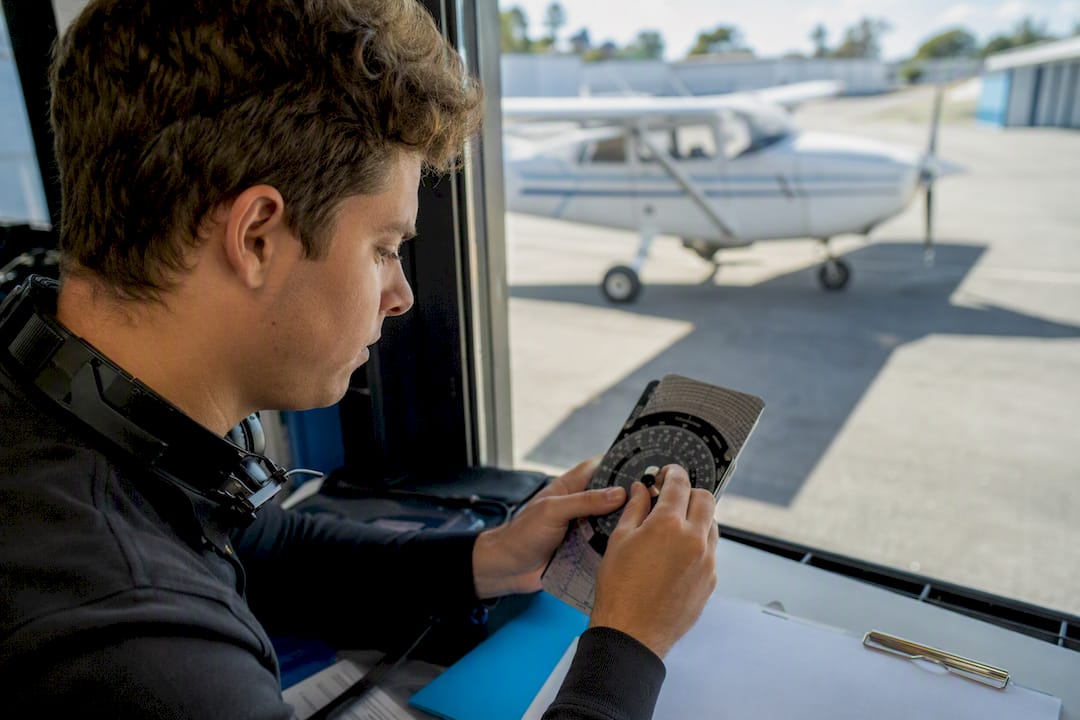
The national first-attempt checkride pass rate hovers in a fairly tight band year over year, with private pilot applicants passing at a lower clip than commercial or ATP candidates on their initial attempt, based on FAA U.S. Civil Airmen Statistics. If you’re weeks out from your own practical test, the number that matters most isn’t a single national average. It’s the rate for your specific certificate, because the gap between a private pilot checkride and a CFI initial is significant enough to change how you should be spending your prep time right now.
Here’s what that data actually means for you as you plan your final weeks of training:
Pro Tip: Ask your instructor for your school’s own internal first-time pass rate before scheduling your checkride. A school tracking this number closely is usually one that’s actively coaching toward it.
First-attempt checkride success depends far more on oral exam preparation, paperwork accuracy, and consistent training frequency than on raw flight hours alone.
| Point | Details |
|---|---|
| Certificate risk varies | Private pilot and CFI initials see more first-attempt failures than commercial or ATP tests. |
| Oral exam is the top failure point | Conversational, ACS-referenced answers outperform memorized scripts during questioning. |
| Trends move slowly | Pass rates stay in a stable band year to year, with private pilot rates softening recently per AOPA. |
| Consistency beats total hours | Dense, regular training schedules predict success better than accumulated hour totals alone. |
| Flightschoolusa’s in-house model | Self Examining Authority supports accelerated PPL to ATP training in 111 hours. |
Not all checkrides carry the same risk of a pink slip. The FAA’s civil airmen data, broken out by certificate level, shows a consistent pattern: the earlier you are in your pilot career, the more likely you are to fail your first attempt.
Private pilot applicants face the toughest initial test relative to their experience level, largely because it’s their first exposure to the oral-and-flight format under real evaluation pressure. Most failures trace back to weak knowledge of airspace, weather minimums, or an inability to explain performance calculations rather than an actual inability to fly the airplane. Examiners routinely report that candidates can execute a steep turn just fine but freeze when asked to justify a go/no-go decision using actual conditions.
Commercial pilot candidates generally post stronger numbers. By this stage, most applicants have already survived one DPE encounter, know what an oral exam feels like, and have sharpened their maneuvers to commercial standards of precision (think tighter tolerances on chandelles, lazy eights, and power-off 180s). The failures that do happen tend to cluster around maneuver tolerances rather than knowledge gaps.
ATP applicants, somewhat counterintuitively, often pass at higher rates than newer pilots. The ATP-CTP training requirement and the sheer hour minimums involved mean candidates arrive with far more flight time and crew-environment exposure. Preparation should emphasize:
Add-on ratings and the CFI initial each carry their own pass-rate personality, and lumping them together with primary certificates hides useful signal.
The instrument rating checkride tests something fundamentally different from a private or commercial test: your ability to fly precisely while managing a mental workload most VFR pilots have never experienced. Failures usually stem from procedural breakdowns (missed approach execution, holding entries) rather than raw aircraft control. Preparation should weight IFR decision-making and approach procedures heavily, not just needle-tracking accuracy.
Multi-engine add-ons tend to be shorter, more technically focused evaluations. Engine-out procedures, Vmc awareness, and systems knowledge specific to the twin dominate both the oral and flight portions. Because many multi-engine checkrides are add-ons rather than initial certificates, applicants often underestimate the oral’s depth on single-engine performance numbers.
The CFI initial stands apart. It’s widely regarded among examiners as one of the most demanding checkrides in the certification path, not because the flying is harder, but because the applicant has to teach every maneuver while performing it. Outcomes hinge heavily on two components:
A CFI candidate who flies a lazy eight beautifully but can’t explain the aerodynamics behind it in teaching language is far more likely to bust than one who flies it adequately while narrating clearly.
Pass rates for practical tests don’t swing wildly from year to year. AOPA’s analysis of FAA data shows they generally sit within a stable range across most certificates, with commercial and CFI rates holding especially steady over time. Private pilot numbers are the exception worth watching. Industry tracking has flagged a recent softening in private pilot first-attempt rates even as overall issuance of new certificates climbs, a trend documented in Jason Blair’s analysis of pass-rate data.
A few forces tend to drive the year-to-year movement:
For you, the practical implication is straightforward: if your local area has a DPE backlog, build extra buffer into your schedule rather than testing on the first available slot regardless of readiness.
Yes, and the gap is one of the more misunderstood numbers in checkride discussions. Secondary reporting on FAA data has pointed to notable differences between pass rates when an inspector conducts the test versus a designated pilot examiner, with inspector-administered tests sometimes running at different approval levels than DPE-administered ones.

Before you read too much into that gap, understand the limitation: inspectors test a much smaller, less representative sample of applicants, often involving unusual circumstances, enforcement-related retests, or specific investigative scenarios. DPEs handle the overwhelming majority of routine practical tests, so their numbers reflect the general applicant population far more accurately.
What this means for you:
The oral exam causes more busts than most applicants expect, not because it’s designed to trick you, but because it exposes memorized answers instantly. Examiners are trained to probe past a rehearsed script, and PilotPointer’s prep guidance notes that the strongest applicants treat the oral as a conversation, freely referencing the ACS, the Airplane Flying Handbook, or the POH rather than trying to recite everything from memory.
Common failure patterns include:
Pro Tip: When an examiner asks a scenario question, narrate your thinking. Saying “I’d check the AWOS, compare it against my personal minimums, and here’s why” scores far better than a one-word answer, even if the final decision is the same.
A structured runway beats last-minute cramming every time. Here’s a prep sequence that maps to how examiners actually score:
Your paperwork checklist should include:
On test day, arrive early, greet your examiner professionally, and treat the pre-test briefing as your first opportunity to demonstrate organized thinking rather than a formality to rush through.
Pro Tip: The morning of your checkride isn’t the time to review new regulations. Spend it reviewing your logbook entries and the aircraft’s maintenance status instead, since that’s where paperwork surprises tend to hide.
Every figure in this article traces back to FAA U.S. Civil Airmen Statistics, the agency’s annual dataset covering certificate issuance and practical test outcomes broken out by category and rating. The FAA also publishes test standards through the Airman Certification Standards, which define exactly what examiners are required to evaluate during both the oral and flight portions.
A “first-attempt pass rate” specifically counts applicants who passed on their initial try, excluding retests after a discontinuance or failure. That distinction matters because a candidate who fails one task and returns days later to complete the test gets counted differently than one who passes cleanly the first time.
If you want to check current numbers yourself:
| Step | Where to Look |
|---|---|
| Access raw data | FAA’s Civil Airmen Statistics portal on faa.gov |
| Confirm evaluation criteria | The ACS document for your specific certificate |
| Cross-check interpretation | FAA supporting media pages that explain dataset definitions |
Keep in mind that DPE-administered and inspector-administered tests aren’t reported with identical context, a caveat covered in more detail above.
Regional variation is real, though the FAA doesn’t publish a clean state-by-state breakdown of pass rates for public consumption. What drives the variation is mostly indirect: examiner density, training environment complexity, and local weather patterns.
Busy metro areas with Class B or C airspace tend to produce applicants who are more comfortable with complex communications and traffic sequencing, simply because they train in that environment daily. Rural areas with simpler airspace can leave applicants less rehearsed in high-workload radio environments, which sometimes shows up as hesitation during the flight portion.
Florida, and Central Florida specifically, offers a training environment that favors consistency: relatively stable weather for most of the year, high traffic density around major airports for realistic radio work, and a concentration of examiners familiar with high-volume flight schools. Regions with harsher winters often see compressed training windows that force rushed scheduling near test dates, a scheduling pressure that correlates with lower readiness regardless of the applicant’s actual skill.
The practical takeaway: if you’re training somewhere with limited weather windows or a thin DPE pool, build extra schedule buffer rather than assuming national averages apply evenly everywhere.

Flight experience matters more than age, though the two often correlate in ways that shape outcomes. Applicants who train at a steady, consistent pace, several sessions per week, tend to retain procedures and maneuvers better than those stretching training over many months with long gaps between lessons.
Career-track students in accelerated programs often outperform recreational students on first-attempt outcomes, not because they’re inherently more talented, but because dense, back-to-back training days prevent the skill decay that happens when weeks pass between lessons. A private pilot candidate flying twice weekly for six months is relearning basics every session; one flying daily for six weeks builds momentum that carries straight into the checkride.
Older career-changers sometimes bring stronger test-taking discipline and life experience with high-pressure evaluations (military background, prior professional licensing exams), which can offset less muscle memory. Younger students often adapt faster to stick-and-rudder skills but may need more coaching on the judgment and communication side the oral exam demands. Neither pattern is a guarantee, but instructors who’ve trained hundreds of applicants consistently point to training frequency, not age, as the stronger predictor of first-attempt success.
Talk to instructors who’ve walked dozens of students through checkrides, and the same handful of habits keep surfacing among applicants who pass clean on the first try.
They treat the oral exam as rehearsal, not a one-time event. Candidates who schedule two or three mock orals with different instructors in the weeks leading up to the test get exposed to varied questioning styles, which builds the flexibility real examiners demand.
They over-prepare their weakest maneuver rather than polishing their strongest one. Instructors consistently note that applicants who identify their shakiest task, whether that’s steep spiral entries or short-field landings, and drill it disproportionately tend to walk in with fewer nerves overall.
They sleep and eat like it’s a normal training day, not a special occasion. Anxiety-driven all-nighters reviewing regulations the night before a checkride tend to hurt performance more than they help.
Finally, successful candidates treat the examiner as a colleague evaluating their judgment, not an adversary looking for mistakes. That mental shift changes how confidently they narrate decisions during the oral, which examiners consistently read as a sign of genuine competency.
Private pilot applicants typically arrive at their checkride with more hours than the FAA’s bare minimum of 40, since most flight schools and instructors build in buffer time for weather cancellations, maneuver mastery, and cross-country requirements. Accelerated programs that run consistent daily schedules tend to bring students to checkride readiness closer to the regulatory minimum because dense training reduces the skill-decay that normally forces extra hours.
Commercial applicants need substantially more experience under 14 CFR requirements, and by that stage most candidates have well over 190 hours logged, often including complex or high-performance aircraft time depending on their training path. Instrument add-on candidates generally need to log the required hours of instrument time, whether actual or simulated, before their instructor even signs them off for the test.
The pattern that matters most for your own planning: hour totals alone don’t predict checkride success nearly as well as how recently and how consistently those hours were flown. A candidate with exactly the minimum hours flown over eight intensive weeks often performs better under evaluation pressure than one who accumulated more hours over a full year with long training gaps between flights.
Examiner style varies more than most applicants expect, and it’s worth preparing for that variability rather than hoping for a particular personality type. Some DPEs run a strictly scripted oral exam, moving through ACS areas in order with minimal small talk. Others prefer a scenario-based conversational style, weaving knowledge questions into a simulated cross-country planning discussion.
Neither approach is easier or harder in terms of the standard being applied, since every examiner works from the same ACS regardless of personal style. What changes is how comfortable you’ll feel if you’ve only ever practiced with one questioning format. An applicant who’s only rehearsed rapid-fire Q&A can get thrown off by an examiner who prefers a slower, narrative-style oral, even though the actual knowledge being tested is identical.
The best defense is exposure. Training with more than one instructor in the weeks before your test, or sitting in on a peer’s oral exam prep session, exposes you to different questioning rhythms before the real thing. Schools with Self Examining Authority often have an advantage here, since students train and test within a consistent standard the whole way through, reducing the surprise factor that comes from meeting an unfamiliar examiner’s style for the first time on test day.
Years of tracking student outcomes against ACS standards have taught us one thing above all: pass rates improve when training schedules stay dense and consistent, not when they stretch out to “save money” per lesson. We adjust our own scheduling and instructor pairing using exactly the FAA trends discussed here, because the data reflects what we see in the training bay every week.
— Rainer
If everything above tells you anything, it’s that consistency and in-house standards beat scattered scheduling and unfamiliar examiners every time. Flightschoolusa holds Self Examining Authority, which means checkrides happen in-house rather than waiting weeks for an outside DPE slot to open up, and the same instructors who trained you understand the standard your examiner will apply.

Students move through an accelerated track from Private Pilot License through ATP in as little as 111 hours, with consistent daily flying that avoids the skill decay stretched-out schedules cause. If you’re weighing whether your current training pace gives you a real shot at a clean first-attempt pass, visit the Flightschoolusa training programs page to see current course options and start a conversation about enrollment.


