
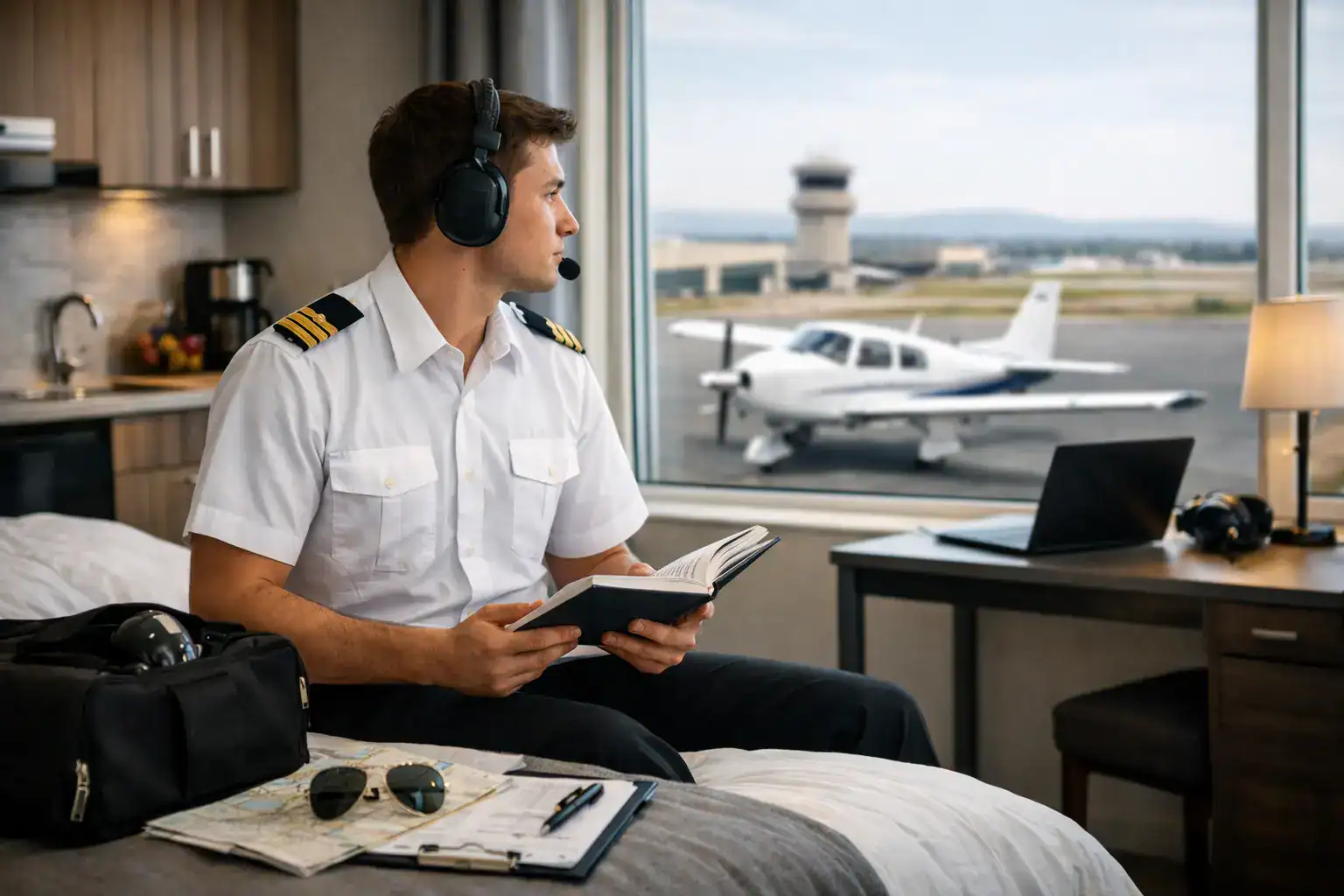
A 7:00 a.m. flight lesson does not start when the propeller turns. It starts when you wake up, make breakfast, check the weather, and get to the airport ready to learn. The right student pilot housing can make that routine simple. The wrong arrangement can add a long commute, surprise expenses, roommate distractions, and enough daily friction to slow an accelerated training plan.
For future commercial pilots relocating to Florida, housing is not a side detail. It is part of the training strategy. A focused living arrangement supports attendance, study time, rest, and the consistency required to move from Private Pilot training through instrument, commercial, multi-engine, CFI, and airline career preparation.
Flight training rewards momentum. Each completed lesson builds on maneuvers, procedures, radio work, and decision-making learned in the lesson before it. Long gaps create extra review time. Arriving rushed or exhausted can reduce the value of a flight lesson that you have already scheduled, prepared for, and paid for.
Housing close to the training location gives students more control over that momentum. A shorter drive means more flexibility when weather improves, an aircraft becomes available, or an instructor opens a time slot. It also makes it easier to return for ground training, simulator sessions, stage checks, and independent study without turning every airport visit into a major commute.
This matters even more in an accelerated program. Training on a fast timeline is demanding, but it is not just about flying every day. Students must prepare for lessons, review mistakes, complete knowledge-test work, and protect sleep. A quiet, practical place to live helps keep the mental workload manageable.
The lowest monthly rent is not always the lowest overall cost. A cheaper apartment far from the airport can cost more in fuel, vehicle wear, parking, lost time, and missed flexibility. When comparing options, assess the complete daily picture rather than the advertised price alone.
Start with the actual drive time to the flight school, not the distance shown on a map. Test the route during the hours when you expect to travel. In Florida, traffic, rain, road construction, and seasonal congestion can turn a short route into an unpredictable one.
Ideally, housing should provide reliable access to the airport, grocery stores, pharmacies, banking, and basic services. If you do not have a car, confirm that transportation is realistic before signing a lease. Rideshare costs add up quickly, and public transit is not always practical for early morning or late afternoon flight schedules.
International students should also consider how they will establish their U.S. routine. A housing arrangement with clear address documentation, accessible shopping, and dependable transportation removes avoidable stress during the first weeks of training.
Pilot training requires concentrated study outside the airplane. You will need space for manuals, charts, a laptop, headset, and online ground school materials. More importantly, you need enough quiet to study weather systems, instrument procedures, regulations, and oral-exam topics without constant interruption.
A shared apartment can be an excellent value, especially for students who want a built-in social network. But it depends on the roommates. Ask whether other residents work nights, host frequent guests, smoke, keep different schedules, or have pets that may make sleep and study difficult. A lower rent is not a bargain if it repeatedly disrupts your preparation.
Private housing offers more control and privacy, but it usually costs more. For some career-focused students, that trade-off is worthwhile. For others, a well-managed shared arrangement leaves more money available for training. The best choice is the one that supports your budget without compromising your training discipline.
Flight training timelines can vary. Weather, maintenance, checkride availability, personal study progress, and added ratings may change your expected completion date. Before committing, understand the lease length, deposits, utility requirements, renewal terms, and penalties for early departure.
Month-to-month housing offers flexibility but may carry a higher monthly price. A longer lease can provide cost stability, but it can become inconvenient if your training finishes early or your career plans change. Ask whether subleasing is permitted and get all agreements in writing.
Also verify what is included. Internet is essential for modern flight training, not an optional luxury. Confirm whether rent includes utilities, furnishings, laundry access, parking, and maintenance. Small recurring costs can materially change a monthly budget.
A professional pilot career starts with financial organization. Treat housing, transportation, food, insurance, and personal expenses as part of the total cost of relocation. Do not spend every available dollar on the first month of rent and assume the rest will work itself out.
Create a monthly number that includes your expected housing cost, utility estimate, groceries, phone, vehicle expenses, and a contingency reserve. Then compare that number against your training schedule and available funds. This gives you a clearer decision than comparing rent alone.
Students pursuing full-time training should be especially realistic about employment. A demanding accelerated course leaves limited room for a job with unpredictable hours. If work is necessary, choose housing that protects your commute and gives you enough time to prepare for each lesson. Missing study time to cover a long drive can become expensive in its own way.
A professional housing search should involve more than photos and a quick text exchange. Ask direct questions about the property, the people, and the practical details that affect training.
If you are viewing remotely, request a live video walkthrough rather than relying only on listing photos. Confirm the condition of the bedroom, bathroom, kitchen, parking area, and internet setup. For shared housing, speak with potential roommates before sending money. Clear expectations now prevent distractions later.
The most common mistake is choosing a place based only on price. Another is waiting until arrival to start the search, which can force students into short-term lodging that costs far more than planned. Start early enough to compare locations, lease terms, and transportation options without pressure.
Avoid paying deposits through informal channels without verifying who owns or manages the property. Rental scams target people relocating from out of state and abroad. Use documented agreements, retain receipts, and be cautious of offers that appear dramatically cheaper than comparable housing.
Finally, do not underestimate recovery time. Flight training can require early wake-ups, intensive study, and the ability to adapt to changing weather or schedules. Housing near the airport is not about luxury. It is about arriving prepared, maintaining a reliable routine, and giving every training day the best chance to move you closer to the next certificate.
Florida Flyers Flight Academy supports career-focused students with training infrastructure designed for a direct route toward professional pilot qualifications. When evaluating housing, align that same level of planning with your daily life. A stable place to sleep, study, and reset can become one of the most practical advantages you bring to the flight line.
Choose student pilot housing the way a professional pilot makes operational decisions: consider the full picture, plan for variables, and select the option that protects the mission. Your address may be temporary, but the habits it supports can carry into every stage of your aviation career.


You May Like
