Pilot ground school USA is the starting point for every aspiring pilot. It’s where you learn the theory behind flying—how aircraft work, how to read weather patterns, how to communicate with ATC, and how to navigate safely through U.S. airspace.
Before you ever touch the controls of an airplane solo, you’ll need to understand the rules, responsibilities, and risks of being in command. Ground school prepares you for the FAA knowledge test, builds your confidence, and sets the foundation for all your future flight training.
In this guide, we’ll cover everything you need to know about pilot ground school USA—from what it includes, to how to choose the right course, the costs, timelines, and whether online or in-person options are best for you.
What Is Pilot Ground School USA?
Pilot ground school is the academic side of flight training. Before you step into the cockpit solo, you need to understand the theory that supports safe, legal, and effective flying.
Pilot ground school USA is where student pilots learn critical topics like aerodynamics, airspace classifications, FAA regulations, radio communication, weather patterns, and flight planning. It’s not just about passing a test—it’s about learning how to think like a pilot.
The main goal of pilot ground school USA programs is to prepare you for the FAA knowledge test—a 60-question, multiple-choice exam that covers the theory required for your license. This test is mandatory for the Private Pilot License (PPL), and ground school is what equips you to pass it.
Whether you choose an in-person course or an online ground school, this is where you’ll learn how to make decisions in the air, communicate clearly, read weather charts, and calculate fuel, weight, and balance—before ever turning the key on an aircraft.
What Subjects Do You Learn in Pilot Ground School USA?
Every licensed pilot in the U.S. is expected to understand far more than how to move the controls of an airplane. That’s where pilot ground school comes in. It teaches the “why” behind every decision in the cockpit—and prepares you to pass the FAA knowledge test with confidence.
Here’s a deeper look at the core subjects covered in most pilot ground school USA programs:
Aerodynamics and Aircraft Systems
You’ll start with the physics of flight—how lift, weight, thrust, and drag interact. You’ll learn how wings create lift, how airfoils work, and what happens in a stall. Beyond theory, you’ll dive into how aircraft systems operate:
- Engines
- Fuel systems
- Flight controls
- Magnetos
- Pitot-static systems
- Electrical systems
This helps you understand what’s happening under the cowling—and what to do if something goes wrong.
Airspace, Regulations, and Pilot Privileges
The U.S. airspace system is complex. pilot Ground school USA will teach you how to navigate it legally and safely. You’ll study Class A, B, C, D, E, and G airspace—what’s allowed, what’s restricted, and what communication is required. You’ll also learn about temporary flight restrictions, air traffic rules, and the privileges and limitations of your student or private pilot certificate under FAA Part 61.
Aviation Weather Theory and Interpretation
Weather is one of the biggest variables in flight safety. You’ll learn how pressure systems, wind shear, frontal boundaries, and humidity affect performance and decision-making. You’ll also study how to interpret official weather reports like METARs and TAFs, PIREPs, and prog charts—so you can make informed go/no-go decisions before every flight.
Radio Communication and ATC Procedures
From ground control to approach clearance, communication in the cockpit is constant. You’ll learn how to use aviation radios properly, what phraseology is standard, and how to handle situations like missed approaches, go-arounds, or emergencies. This subject gives you the confidence to speak clearly and correctly with air traffic control.
Flight Planning, Navigation, and Charts
You’ll learn how to plan VFR cross-country flights from scratch—calculating headings, groundspeed, fuel burn, and checkpoints. This includes interpreting sectional charts, using pilotage and dead reckoning, and working with navigation aids like VOR, DME, and GPS. You’ll also learn how to file flight plans and read NOTAMs.
Weight & Balance and Aircraft Performance
Before every flight, you’ll need to calculate the aircraft’s total weight and center of gravity. You’ll learn how to use performance charts from the Pilot Operating Handbook (POH) to determine takeoff distance, climb rate, fuel burn, and landing distance under various conditions. Miscalculating here can be dangerous—this section shows you how to get it right every time.
These aren’t just test topics—they’re real-world skills you’ll use every time you fly. That’s why pilot ground school USA isn’t just a formality—it’s the foundation of your safety, confidence, and future success in the air.
Types of Pilot Ground School USA
When it comes to learning ground theory in the U.S., students have three main options: in-person, online, and hybrid. Each has pros and cons depending on your learning style, schedule, and budget.
Let’s break them down so you can choose the right fit for your flight training journey.
In-Person Ground School
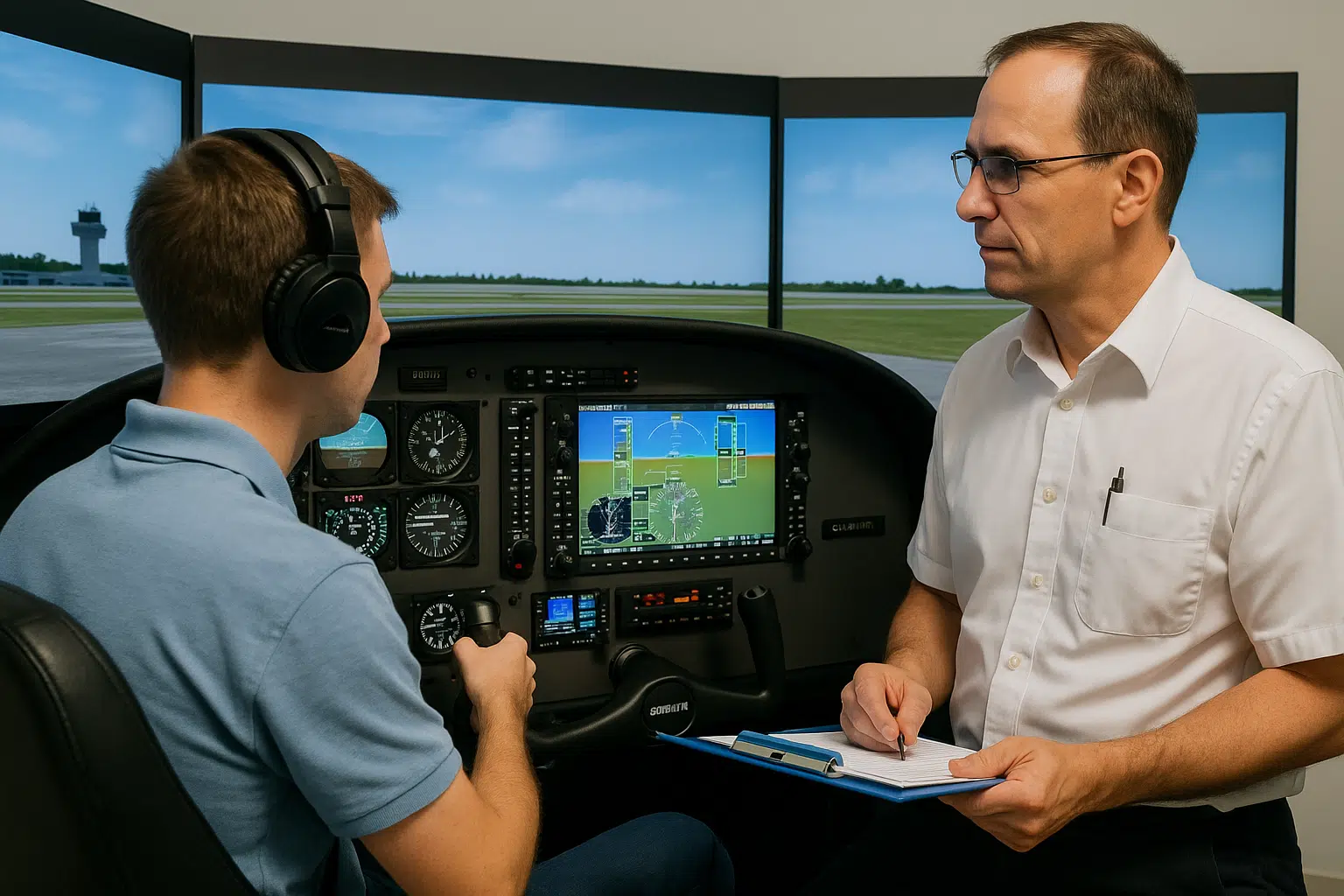
This is the traditional classroom-style setup, usually offered by local flight schools, aviation colleges, and Part 141 academies. You’ll sit with a small group of students and follow a structured curriculum led by a certified ground instructor.
Benefits:
Real-time feedback from a certified instructor: When you’re sitting in a classroom, you can ask questions and get immediate answers. Complex topics like airspace rules or weather systems become easier to understand with guided explanations on the spot.
Structure keeps you accountable: In-person classes follow a fixed schedule, which helps you stay on track. If you’re the type who benefits from deadlines and a clear routine, this structure makes it easier to stay consistent.
Collaborative learning environment: You’ll train alongside other students, which creates opportunities for group discussions, shared experiences, and study partnerships. You’re not just learning from the instructor—you’re learning from your peers, too.
Ideal for hands-on learners: If you retain more by seeing and doing—not just watching videos—then a physical classroom with diagrams, charts, and interactive tools may be your best match.
Things to consider:
- Less flexible with time
- Often more expensive than online programs
- Requires commuting to a physical location
This format works well if you’re enrolled full-time or training locally at a pilot ground school USA provider near your airport.
Online Ground School
Online ground school is popular among student pilots looking for flexibility. These programs are self-paced, video-based, and accessible from anywhere. Top platforms include Sporty’s, King Schools, Gleim, and Gold Seal—all FAA-compliant and capable of issuing knowledge test endorsements.
Benefits:
Learn on your own schedule: With online ground school, there are no fixed class times. Whether you’re working full-time or juggling other commitments, you can study early in the morning, late at night, or on weekends—whenever it fits your routine.
Budget-friendly for most students: Online programs are often a fraction of the cost of in-person classes. You’ll find high-quality options for $100–$400, and many include lifetime access, practice exams, and even FAA test endorsements.
Replay lessons as often as needed: Didn’t fully grasp Class E airspace the first time? No problem. You can pause, rewind, and rewatch video lessons until it clicks. This level of control makes it easier to master complex topics without feeling rushed.
Study from anywhere in the world: Whether you’re based in California, New York, or training internationally under FAA rules, online ground school lets you start from anywhere with internet access—no physical classroom required.
Things to consider:
- Requires self-discipline
- Limited direct interaction with instructors
- No hands-on classroom experience
If you’re balancing a job or school—or want to move fast—online pilot ground school might be your best option.
Hybrid Ground School
Some schools now offer a blend of both—live sessions via Zoom or Microsoft Teams, combined with self-paced online study. Others let you do most of the course online and attend scheduled Q&A or exam review sessions in person.
Benefits:
Flexibility without losing instructor support: Hybrid programs give you the best of both worlds—you can study independently at your own pace, but still attend live sessions or one-on-one calls when you need help. This keeps you moving without feeling stuck or alone.
Stay consistent without going full-time: Most hybrid schools follow a weekly structure with suggested timelines or live Q&A sessions. This rhythm helps you stay on track—even if you’re working or training part-time—without the pressure of a daily classroom schedule.
Great fit for both U.S. and international students: Whether you’re local or learning from abroad, hybrid options let you access quality instruction and FAA-endorsed training. It’s especially useful for international students preparing to join a flight school in the USA.
Hybrid is becoming more common in pilot ground school USA programs, especially among younger students who prefer digital learning with a human touch.
FAA Ground School Requirements – What You Need to Know
Unlike flight hours, the FAA doesn’t mandate a set number of classroom hours for ground school under Part 61. But make no mistake—you must complete ground school to move forward as a student pilot in the U.S.
To earn a Private Pilot License (PPL) or any higher certificate, you must pass the FAA Knowledge Test—a written exam that proves you understand critical flight theory. This includes topics like airspace rules, weather, aircraft systems, navigation, and regulations.
Before you can take that test, you’ll need an endorsement from a certified flight instructor or an FAA-approved ground school provider (online or in-person). This endorsement verifies that you’ve completed the required training and are prepared to pass.
If you’re enrolled in a Part 141 program (usually through a structured flight academy), your ground school must follow a more rigid FAA-approved curriculum. These programs may have formal attendance requirements and must be completed within a specific timeframe.
Whether you’re going the flexible Part 61 route or attending a structured school, every pilot ground school USA course is built around one key goal: preparing you to ace the FAA written exam and fly safely with full knowledge of the rules.
How Much Does Pilot Ground School Cost in the USA?
The cost of pilot ground school USA can vary widely depending on the format you choose. Whether you go online, in-person, or hybrid, understanding what you’re paying for is key.
Here’s a breakdown:
Typical Cost Ranges
| Type of Ground School | Cost Range (USD) | What’s Included |
|---|---|---|
| Online (self-paced) | $100 – $400 | Video lessons, quizzes, practice exams, test endorsement |
| In-person | $500 – $1,500 | Classroom instruction, instructor access, printed materials |
| Hybrid (blended) | $300 – $900 | Online materials + scheduled instructor-led sessions |
What Affects the Cost?
1. Format: Online options are usually the most affordable, while in-person classes can be more expensive due to instructor hours and facility costs.
2. Provider reputation: Top brands like Sporty’s, King Schools, Gold Seal, and Gleim may charge slightly more—but they offer more polished materials and proven pass rates.
3. Additional features: Some programs include FAA practice test platforms, flashcards, and lifetime access. Others may bundle the cost of the written exam or offer a money-back guarantee if you fail.
Hidden Costs to Keep in Mind
- FAA Written Exam Fee: ~$175 (paid separately at an approved testing center)
- Study Supplements: Books, E6B flight computer, navigation charts (~$50–$100)
- Test Endorsement: Some online schools require you to complete all quizzes before issuing it
Choosing the right pilot ground school USA program isn’t just about price—it’s about value. Pick the option that fits your learning style, timeline, and long-term goals.
How to Choose the Right Pilot Ground School USA Program
Not all ground schools are the same. Your decision here can impact how fast you progress, how well you understand the material, and how confident you feel on test day. Choosing the right pilot ground school USA program comes down to a few key factors.
Know Your Learning Style
Are you self-motivated and comfortable learning through video lessons? Then an online pilot ground school USA course may work best. If you prefer classroom discussion, whiteboards, and face-to-face teaching, look for an in-person or hybrid setup.
Consider Your Schedule
Do you want to complete ground school in a few weeks, or do you need flexibility over several months? Online ground schools are self-paced, while in-person classes often follow a set weekly timetable. Make sure your choice fits your availability.
Match the Program to Your Budget
Some pilot ground school USA courses are under $200, while others bundled with flight training can cost over $1,000. Just make sure it includes FAA practice exams, instructor access (if needed), and a knowledge test endorsement.
Ensure It’s FAA-Compliant
Your chosen ground school must meet FAA requirements to issue an endorsement for the knowledge test. Most reputable programs—online or in-person—will clearly mention this. Don’t waste time with programs that aren’t recognized by the FAA.
Location (if In-Person)
If you’re going the traditional route, make sure the pilot ground school USA provider is near your home base or your chosen flight academy. Some schools even let you sit in on a class before enrolling—take advantage of that if offered.
Choose wisely, and your ground school experience will give you the confidence, clarity, and knowledge needed to move forward in your pilot training.
Ground School vs. Flight School – What’s the Difference?
If you’re new to aviation, it’s easy to confuse pilot ground school USA programs with flight training itself—but they serve very different roles.
Ground School: The Theory Behind the Flight
Pilot ground school USA focuses on building your aeronautical knowledge. This includes learning regulations, navigation, weather systems, airspace structure, and aircraft performance—all without ever leaving the ground.
Your main goal in ground school is to pass the FAA Knowledge Test, which is required before most practical exams. You’ll study using videos, books, interactive lessons, and quizzes, either online or in-person.
It’s academic. It’s foundational. And it prepares you to make smart decisions once you’re actually in the air.
Flight School: The Hands-On Experience
Flight school is where you apply what you’ve learned in ground school. Here, you’ll work one-on-one with a Certified Flight Instructor (CFI) in a real aircraft. You’ll log takeoffs, landings, stalls, steep turns, emergency procedures, and eventually fly solo.
This is the “practical” side of training—and it’s structured around FAA minimum flight hours for each license level.
While ground school gives you the knowledge, flight school gives you the experience. You need both to become a safe, licensed pilot.
How They Work Together
In most pilot ground school USA programs, ground and flight training happen at the same time. You might study airspace classes one day and fly through them the next. Many students complete ground school first to pass the written test, then move fully into flight hours.
Some academies offer both services together in bundled training paths. Others allow you to start ground school separately before committing to flight time.
Either way, success in the cockpit starts with mastering the classroom.
How Long Does Pilot Ground School USA Take?
The time it takes to complete pilot ground school USA depends on how you choose to study. Some students fly through the material in just a few weeks—others may take several months.
Online Ground School Duration: If you’re enrolled in an online pilot ground school USA program, the pace is entirely up to you. Some students finish in as little as 2–4 weeks by studying daily. Others may take 8–12 weeks or more, especially if balancing work or school. Self-paced courses are designed to move as fast—or slow—as your schedule allows.
In-Person Ground School Duration: Classroom-based pilot ground school USA programs typically follow a structured timeline. Most run for 4–6 weeks, meeting several times per week, often in the evenings or on weekends. Accelerated full-time options may finish in as little as 2 weeks, while some college-affiliated programs run for a full semester.
Hybrid Program Duration: Hybrid ground school blends online lessons with scheduled live sessions. These often follow a loose timeline—like 6–8 weeks—but with more flexibility than full classroom courses. This option suits students who want structure but also need wiggle room in their week.
If your goal is speed, online pilot ground school USA courses offer the fastest path to your FAA written exam. With discipline, you can finish the entire program and pass your test in under a month. Just make sure you’re not rushing through—you need to understand the material, not just memorize it.
Where to Take the FAA Knowledge Test After Ground School
Once you’ve completed your pilot ground school USA training, the next step is the FAA Knowledge Test—also known as the written exam. This test proves that you’ve absorbed the theory needed to fly safely and legally in U.S. airspace.
FAA-Approved Testing Centers
You can’t take the FAA Knowledge Test just anywhere. You must schedule it at an FAA-authorized PSI testing center, located in cities across the USA. These centers offer secure, computer-based testing for all types of pilot certificates.
Once your pilot ground school USA provider issues your official endorsement (usually after completing all lessons and quizzes), you can register for the exam through PSI’s website. Choose a date, location, and time that works for you.
What You’ll Need on Test Day
Before showing up, you’ll need:
- A government-issued photo ID (with signature)
- Your ground school endorsement (digital or printed)
- Your FTN (FAA Tracking Number), which you’ll get from IACRA
You may also want to bring:
- A manual E6B flight computer (or electronic version)
- Plotter for navigation questions
- Scratch paper and pencils (provided by the center)
Most pilot ground school USA courses will prepare you with simulated tests, so there should be no surprises.
After the Test you’ll get your results immediately. A passing score is 70% or higher. Once you pass, your test results are valid for 24 calendar months—plenty of time to complete the rest of your flight training.
Passing the FAA Knowledge Test is a major milestone in any pilot ground school USA journey—and it marks your transition from student on the ground to pilot-in-training in the sky.
Best Pilot Ground School USA Programs in 2025 – Reviewed
With dozens of options available, choosing the best pilot ground school USA program can feel overwhelming. To help you narrow it down, here’s a breakdown of some of the top-rated ground schools in 2025—both online and in-person—based on value, content quality, and student feedback.
Florida Flyers Flight Academy: Florida Flyers offers a structured, FAA Part 141–approved pilot ground school USA curriculum, backed by decades of training experience. Students benefit from small class sizes, dedicated instructors, and the ability to transition seamlessly from ground to flight school—all under one roof. Ideal for full-time U.S. and international students.
Sporty’s Online Ground School: Self-paced online. Sporty’s is one of the most trusted names in online aviation education. Their pilot ground school USA course includes HD video lessons, interactive quizzes, FAA test prep tools, and a written test endorsement. Lifetime access and a pass guarantee make this a top choice for self-directed learners.
King Schools: Online, known for their energetic teaching style, King Schools provides a user-friendly and fun learning experience. Their pilot ground school USA courses offer excellent visual explanations and test prep features. It’s perfect for students who prefer a more engaging, personality-driven approach to learning.
Gleim Aviation: Online + printed materials. Gleim’s study system is highly structured and great for students who like reading and repetition. Their pilot ground school USA package includes books, online access, and full FAA test prep. They also offer custom-built kits for Part 61 and Part 141 training paths.
Gold Seal Ground School: Online (with optional instructor support). Gold Seal is known for interactive ground school with built-in progress tracking. Their pilot ground school USA course stands out for its FAA-authorized endorsements and professional-level curriculum. Ideal for visual learners who want structure and accountability.
Many community colleges and regional flight schools across the country offer pilot ground school USA classes in person or hybrid formats. If you prefer face-to-face instruction and live near an airport or aviation campus, this could be a cost-effective and supportive option.
Choosing the right pilot ground school USA provider depends on how you learn, your budget, and your flight training goals. Whether you go online or in-person, the key is consistency and choosing a program that keeps you engaged from start to finish.
Final Thoughts
Whether you’re training to become a commercial pilot or simply want to experience the freedom of flight, starting with a solid pilot ground school USA program is essential. It lays the foundation for every future flight decision—teaching you not just how to fly, but how to think like a pilot.
With multiple formats available—online, in-person, and hybrid—you can choose the option that fits your learning style, schedule, and budget. The right ground school will not only help you pass the FAA Knowledge Test but also give you the confidence to succeed in the air.
Flight training is a big step, but it starts with one clear move: mastering the ground. If you’re serious about aviation, now is the time to commit, study, and prepare for takeoff.
Contact the Florida Flyers Flight Academy Team today at (904) 209-3510 to learn more about how to transfer flight schools.