
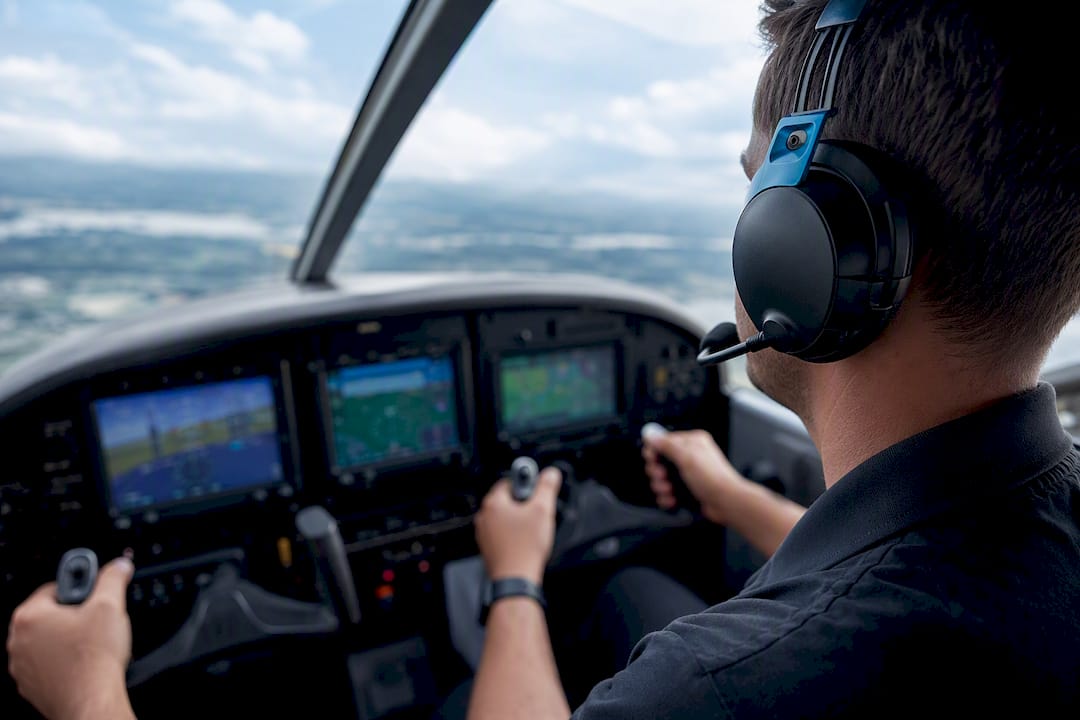
Study the Instrument Rating ACS as your master document, drill approach briefings and holding entries until they feel automatic, and run a full mock oral plus flight with your CFII inside the final two weeks. That single sequence, anchored to the Instrument Rating — Airplane ACS and to 14 CFR part 61’s experience rules, does more for your pass odds than any amount of extra ground school.
TL;DR:
- Focus your preparation on scenario-based oral questions that integrate multiple ACS areas rather than just memorizing regulations or procedures.
- Practice flying maneuvers within the exact tolerances specified, aiming towards the center of the range to build confidence under test pressure.
- Confirm you meet all FAA experience requirements and have proper endorsements, recent training entries, and documented knowledge test passing scores before scheduling the exam.
- Schedule and complete a full mock checkride within your training organization to mimic examiner behavior and identify areas needing improvement, reducing the risk of failure.
- Maintain organized documentation and aircraft paperwork to demonstrate professionalism and preparedness during the exam, and use a layered decision-making process for weather and operational scenarios.
The examiner isn’t grading your ability to recite regulations from memory. The Instrument Rating ACS organizes the oral around specific tasks, each with knowledge, risk management, and skill elements, and a designated pilot examiner (DPE) is trained to weave those elements into scenarios rather than fire off a checklist of questions. You’ll get a cross-country flight scenario with weather deteriorating en route, and inside that single narrative you’ll need to talk about alternate minimums, fuel reserves, lost communications procedures, and personal minimums, all at once.
This is the shift most candidates underestimate. Rote memorization gets you through flashcards, but it falls apart the moment a DPE asks a follow-up question that connects two topics you studied separately.
The core oral topic areas map directly to ACS Areas of Operation: preflight preparation, airport and ATC operations, instrument approach procedures, en route and holding procedures, emergency operations, and postflight procedures. Inside each area, examiners are specifically listening for aeronautical decision-making, not textbook definitions.
Build your prep around these drills:
A simple answer template keeps you from rambling: state your claim, cite the regulatory or ACS reference backing it, then ground it in a real-world decision you’d actually make in the airplane. If a DPE asks about alternate airport requirements, don’t just quote the 1-2-3 rule. Explain when you’d apply it, why the forecast matters more than the rule itself, and what you’d do if your first alternate’s runway got NOTAMed closed an hour before your ETA.
Pro Tip: Record yourself answering five ACS scenario questions and play them back. You’ll hear filler words and hedging language you never noticed while speaking, and that’s exactly what a nervous DPE encounter will amplify.
The flight portion tests a defined set of tasks, and every one of them has a published tolerance in the ACS, not a vague “fly it well” standard. You’ll fly a nonprecision approach, a precision or approach-with-vertical-guidance procedure (ILS or LPV), holding procedures, unusual attitude recovery, and partial-panel operations, along with a missed approach executed from minimums.
Common tasks include ILS or LPV approaches, RNAV/GPS approaches, a VOR or nonprecision approach, at least one circling approach if required by your training route, holding pattern entry and tracking, intercepting and tracking courses, and recovering from unusual attitudes under the hood.
ACS tolerances give you a concrete target, and they’re tighter than most instrument students expect going in:
Here’s the trap: flying to the exact edge of a tolerance during training builds a habit that collapses under checkride stress. Practice aiming inside the tolerance band, closer to the center than the edge, so you have a margin left when your hands get shaky on test day. Rotate’s checkride guide notes that scan discipline and consistent briefing habits are what separate pilots who fly to center-of-tolerance from those who drift toward the limits under pressure.
High-value drills worth repeating until they’re boring:
Before you schedule anything, confirm you actually meet the hard prerequisites, because a DPE cannot legally administer the practical test if your logbook doesn’t support it. According to AOPA’s summary of instrument rating requirements, 14 CFR 61.65 requires cross-country PIC time, actual or simulated instrument time, and instrument training from an authorized instructor.
Simulator and flight training device credit toward that 40 hours has limits depending on the device’s qualification level, so verify your logbook entries actually count the way you think they do. Part 61.65 also requires instrument training within the preceding two calendar months that covers the areas of operation on the practical test, commonly referred to as the “recent training” requirement, separate from instrument currency for flying under IFR.
Before test day, verify these items are in your logbook and paperwork:
Recency and currency are not the same thing, and mixing them up trips candidates constantly. Recency refers to whether you’ve trained recently enough to sit for the test; currency is the separate FAA standard (six approaches, holding, and intercepting/tracking courses within six calendar months) that governs whether you’re legal to fly IFR after you pass. You need recency to sit the checkride. You’ll need currency the day after to actually use the rating.
A tapered, structured schedule converts scattered study hours into real readiness, and it beats cramming by a wide margin because instrument flying is a motor skill as much as a knowledge base.
Set concrete volume goals rather than vague “study more” intentions. Ten plates a day, at least three hours of hood time in the final week, and one mock oral lasting the full expected duration. Guides like IFR Focus’s checkride preparation breakdown recommend exactly this kind of plate-volume and mock-sequencing structure to consolidate skills before test day.
Pro Tip: In the last 48 hours, prioritize sleep over one more study session. A well-rested pilot who’s slightly less polished on one obscure regulation will outperform an exhausted pilot who knows everything cold but can’t hold a heading.
Organize everything before you arrive, because fumbling through a backpack for your medical certificate signals disorganization before you’ve answered a single question. FAA guidance on examiner expectations notes that professionalism and preparedness shape how an examiner perceives you from the first handshake.
Bring these, tabbed and ready for quick inspection:
Aircraft paperwork matters just as much. Verify the annual inspection, transponder check, pitot-static/altimeter check, and ELT battery are all current, and know exactly where those entries live in the maintenance logs so you’re not searching under pressure. On the preflight side, pull weather and NOTAMs together with the examiner present, compute weight and balance using the examiner’s actual weight, and walk through your fuel planning out loud as part of the briefing.
Failures cluster around a small handful of predictable mistakes, and nearly all of them come from skills that were practiced casually instead of drilled to automaticity. Industry checkride data compiled by Rotate’s instrument rating guide points to approach briefings, holding entries, altitude deviations, and shaky cross-country planning as the recurring culprits, with some regions reporting first-attempt pass rates in the 75 to 80 percent range.
The common thread: these are exactly the tasks that feel manageable in low-stress practice but fall apart under the adrenaline of an actual test. A rushed approach briefing skips a step. A holding entry gets flown by guesswork instead of a memorized decision rule. An altitude bust happens because scan discipline slipped for four seconds during a radio call.
Fix each one with a specific drill, not general practice:
Pro Tip: Before scheduling your actual checkride, run your mock checkride against a simple pass/fail checklist. If you meet ACS tolerances on every maneuver and answer oral scenarios without hesitation twice in a row, you’re ready. If you’re still second-guessing holding entries, you’re not.
A mock checkride only earns its value if it feels uncomfortable in the same ways the real one will. Structure the oral portion for the full 1.5 to 2 hours, with your CFII weaving scenarios exactly the way a DPE would, mixing weather decisions, regulatory questions, and aircraft systems into a single narrative instead of isolated Q&A. GroundScholar’s instrument checkride prep framework is built on this same principle: scenario-based orals built directly from the ACS outperform flashcard memorization every time.
The flight portion should simulate an actual examiner’s demeanor, including realistic interruptions, a simulated equipment failure mid-approach, and a missed approach flown from minimums without warning. Running through this scenario more than once inside a single sortie builds the recovery habits you’ll need when adrenaline narrows your attention.
Keep four resources tabbed and within reach during every practice session:
Layer in spaced-repetition flashcards for regulations you keep forgetting, and schedule instructor-led critique after every mock session rather than just moving to the next one. Flightschoolusa’s FAA oral exam practice bank gives you a structured way to rehearse these scenario answers before you sit down with your CFII for the real mock.
Waiting weeks for an available DPE creates a strange problem: your skills peak, then erode while you sit on a scheduling waitlist, and you end up re-drilling material you’d already mastered. Self Examining Authority allows FAA checkrides to be conducted in-house rather than routed through the traditional third-party DPE pool.
That structural difference matters more than it sounds. Consistent examiner expectations mean your mock checkride prep maps directly onto what you’ll face on test day, since the same training organization that ran your mock oral understands exactly how the practical test will be administered. Reported first-time pass rates on FAA practical exams reflect alignment between training, mock prep, and the actual practical.
The practical benefit shows up in your calendar, not just your skill level. Instead of peaking three weeks before a checkride slot opens up, candidates training within an in-house checkride structure can schedule the practical closer to the point where their mock checkride performance actually clears the bar, with remediation loops built into the same training pipeline rather than handled separately from test scheduling.
Examiners build weather scenarios into the oral specifically to see how you think, not what you’ve memorized about legal minimums. Expect a scenario where forecast conditions are marginal at your destination, and the DPE wants to hear your full reasoning chain: current conditions, trend, alternate requirements, and your personal minimums layered on top of the legal floor.

The 1-2-3 alternate rule (ceiling at least 2,000 feet and visibility at least 3 statute miles within one hour of ETA) is the legal starting point, but a strong answer goes further. Explain why you’d pick a specific alternate over a legally qualifying one that’s operationally weaker, and be ready to talk about approach minimums, missed approach fuel reserves, and how icing or convective activity changes your go/no-go decision.
Expect a live version of this during the flight portion too. If actual weather near your training area is workable but not ideal, a DPE may ask you to reassess your alternate or fuel plan in real time, based on updated conditions you pull during the flight. This isn’t a trick question. It’s a direct test of whether your decision-making holds up once the scenario stops being hypothetical.
Practice this by working through three or four marginal-weather scenarios with your CFII before test day, each with a different combination of ceiling, visibility, and NOTAM complications, until your reasoning process becomes consistent regardless of which variable changes.
Examiners are evaluating judgment as much as they’re evaluating knowledge, and how you communicate shapes that judgment as much as what you actually know. Answer the question that was asked, then stop. Rambling into adjacent topics signals uncertainty even when the underlying knowledge is solid.
If you don’t know an answer immediately, say so directly and explain how you’d find it rather than guessing and hoping. “I’m not certain of the exact number, but I’d check the AIM section on lost communications procedures” reads as far more competent to a DPE than a confident but wrong answer.
Ask for clarification when a scenario is genuinely ambiguous. DPEs build scenarios with specific details on purpose, and a clarifying question about wind direction or aircraft equipment often shows sharper situational awareness than jumping straight to an answer.
During the flight portion, verbalize your decisions the way you would with a safety pilot. Narrate your scan, call out your altitude and heading checks, and brief each approach out loud even when it feels redundant. Silence during a checkride flight reads as uncertainty, whether or not that’s actually what’s happening in the cockpit.
Physical stress responses (a racing pulse, tunnel vision, shallow breathing) degrade the exact skills a checkride tests: instrument scan, verbal fluency, and working memory. Managing that response is a trainable skill, not a personality trait some pilots simply have and others don’t.
Box breathing (four seconds in, four seconds hold, four seconds out) before critical phases like your final approach briefing resets your physiological state faster than trying to “calm down” through willpower alone. Practice this specific technique during mock checkrides, not just in the abstract, so it’s automatic rather than another thing to remember under pressure.
Reframe the DPE’s questions as curiosity rather than interrogation. A DPE asking a follow-up question is often testing whether you can extend your reasoning, not signaling that your first answer was wrong. Treating every follow-up as a red flag creates a spiral that feeds on itself.
Build recovery routines for the moment something goes wrong mid-flight, whether that’s a slightly high altitude excursion or a fumbled holding entry. Acknowledge it, correct it, and move forward without dwelling. Examiners consistently note that recovery from a mistake matters more than the mistake itself, and pilots who spiral after one error tend to compound it into two or three more.
Most instrument checkride advice treats the oral and flight portions as separate study problems: memorize the regs, then separately drill the maneuvers. That framing produces pilots who can recite the 1-2-3 rule and fly a tight ILS, but freeze when a DPE combines both inside one scenario, which is exactly how real examiners test.
The overlooked truth is that scenario integration, not raw knowledge volume, is what separates a first-time pass from a retake. A candidate who’s flown three mock checkrides that combine weather decisions, equipment failures, and missed approaches into single sorties walks in with pattern recognition a flashcard-only candidate simply doesn’t have.
Where this model adds something concrete beyond generic advice: in-house Self Examining Authority means the same organization shaping your mock prep also administers the real test, which removes the mismatch between “how we trained you” and “how the exam actually runs.” That alignment, backed by a strong first-time pass rate, is a stronger predictor of success than any single study technique on this page. Prioritize the mock checkride over one more round of flashcards. It’s the closest thing to a dress rehearsal you’ll get.
— Rainer
If you’ve read this far, you already know the fastest path to a pass isn’t more solo study time. It’s a realistic rehearsal followed by a checkride scheduled without a six-week wait. Self Examining Authority means your mock prep and your actual practical test happen inside the same training pipeline, so there’s no gap between how you were trained and how the exam gets administered.

Flightschoolusa’s mock checkride program puts you through a full scenario-based oral and a flight portion that mirrors what an examiner will actually run, with CFII feedback built into every session rather than saved for the end. For candidates still finishing out their instrument time, the accelerated pilot training pathway folds checkride prep directly into the training calendar instead of treating it as a separate, later step. If you’re within a few weeks of test-ready, book a mock checkride and get a straight answer on what’s left to fix before you schedule the real thing.
Anchor every study session to the Instrument Rating ACS for tasks and tolerances. Keep the FAR/AIM tabbed for alternate minimums and lost-comm procedures, and use AOPA’s ratings guidance to double-check your experience math before you schedule anything.


