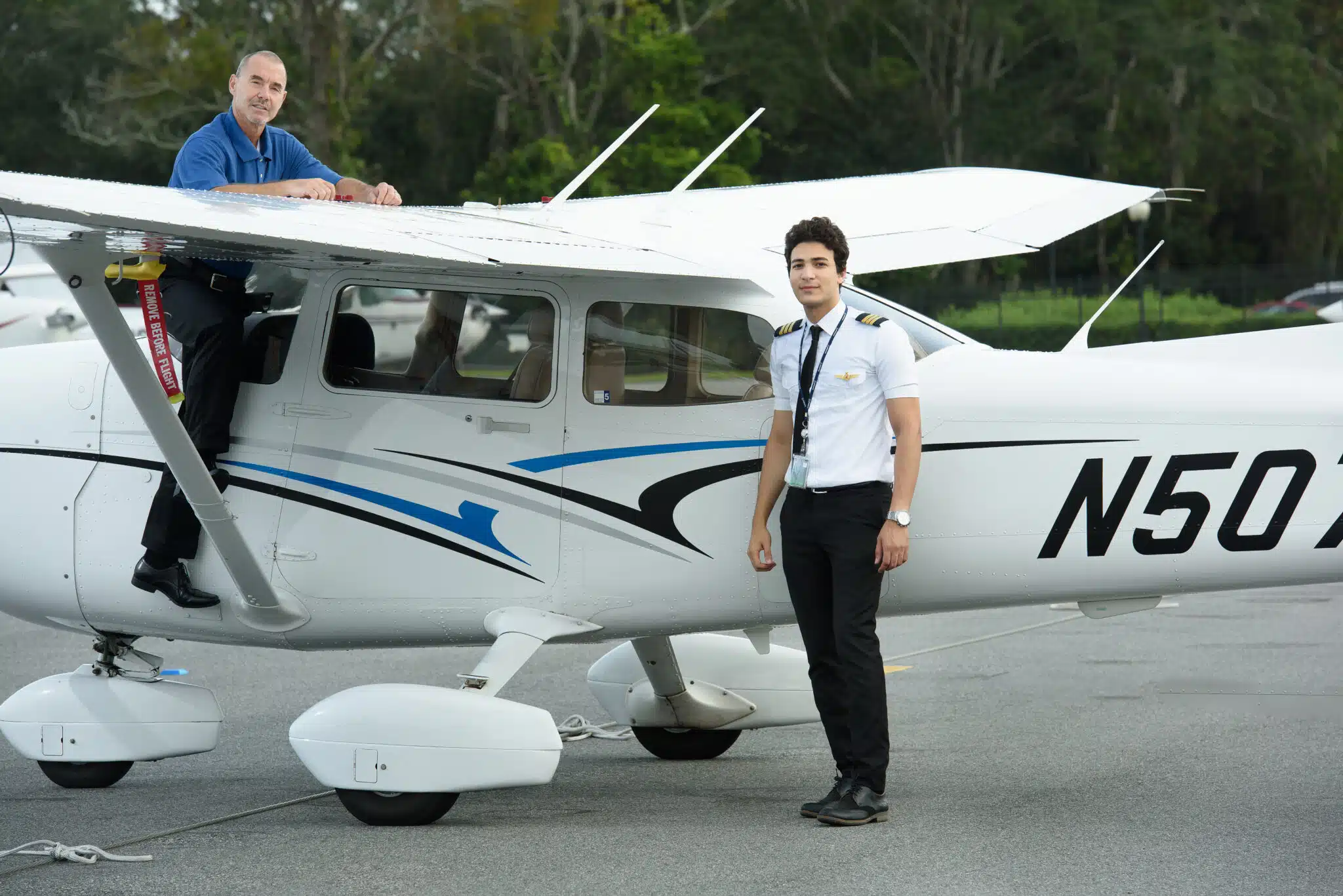
In every profession, passion often leads the way. If you’re serious about aviation and want to know how to become a commercial pilot, this guide is your starting point. Whether your dream is to command a Boeing 787 or fly regional routes as a paid professional, the path to a commercial pilot license is structured, achievable, and highly rewarding.
Many aspiring aviators begin with casual curiosity—some even take up flying as a hobby. But becoming a commercial pilot is far more than just a passion project. It’s a real, scalable career backed by global demand, especially in the post-2025 aviation rebound.
In FAA terms, a commercial pilot is someone certified to fly aircraft for compensation or hire. From air charter and cargo flights to becoming an airline first officer, the opportunities are diverse and steadily growing.
This 16-step guide will show you how to become a commercial pilot from scratch—even if you have no prior flight experience. While training timelines vary by student, this outline provides a proven roadmap to take you from the ground up to the flight deck.
Step 1: Decide If a Pilot Career Is the Right Fit for You
Before diving into flight training or committing financially, it’s essential to evaluate whether the path aligns with your long-term goals. Learning how to become a commercial pilot starts with understanding the realities of the profession—beyond the excitement of flying.
Start by researching the salary expectations and lifestyle. Commercial pilots often enjoy competitive pay, travel perks, and schedule flexibility, especially as they progress to higher positions. However, early in the journey, long hours, unpredictable schedules, and time away from home can be part of the trade-off.
Next, take time to explore the wide range of career opportunities available. Commercial pilots aren’t limited to major airlines—they fly for regional carriers, charter companies, corporate fleets, and cargo operations. Each sector has its own demands and benefits, so it’s worth considering where your interests and personality align best.
Finally, think about where you’d like to be based. Pilots often choose schools or employers near major hubs, and your home base can significantly affect your work-life balance, travel patterns, and career options.
If you’re excited by the idea of flying professionally—and ready to take the next step—keep reading. This guide will walk you through exactly how to become a commercial pilot, one phase at a time.
Step 2: Meet Eligibility Requirements as How to Become a Commercial Pilot
Before you begin your flight training journey, you need to ensure you meet the basic FAA requirements. These prerequisites are designed to ensure safety, readiness, and regulatory compliance from the first flight onward.
To be eligible for commercial pilot training, you must:
- Be at least 18 years old by the time you apply for your commercial license
- Read, speak, write, and understand English fluently
- Hold a second-class FAA medical certificate, which verifies your physical and mental fitness to operate an aircraft
- Have a valid U.S. government-issued ID or passport (especially for international students)
Understanding how to become a commercial pilot isn’t just about learning to fly—it’s also about proving you’re qualified to start training at a professional level. For many students, this step begins with scheduling an FAA medical exam through an Aviation Medical Examiner (AME).
If you meet these eligibility criteria, you’re ready to move forward and officially enter the training phase.
Step 3: Research and Choose the Right Flight School
Choosing the right training environment is one of the most important decisions you’ll make as you map out how to become a commercial pilot. With dozens of options available, from self-paced academies to university-affiliated programs, this step requires thoughtful research and a clear understanding of your career goals.
Start by narrowing down the type of training institution that fits your learning style and timeline. Part 61 schools offer a more flexible, personalized approach—great for students who prefer a self-paced experience. In contrast, Part 141 programs follow a structured, FAA-approved syllabus and can reduce the minimum number of hours required for your license. If your goal is to move efficiently through a well-organized curriculum, Part 141 may be the better fit.
For those who want to combine flight training with academics, aviation universities and colleges offer degree programs that integrate pilot certification with aviation science, management, or aeronautical engineering. These are ideal if you’re looking to build a long-term aviation career that includes both flying and future leadership opportunities.
Another option is the airline cadet program route, where select airlines offer integrated training with job placement pathways. These programs are competitive but can fast-track your transition from student to employed pilot. Alternatively, if you’re drawn to service and structure, the military route offers top-tier training and real-world flight experience—though it typically involves years of contractual commitment.
Once you’ve identified your preferred type of school, dig deeper. Look for positive reviews, safety records, and details about instructor qualifications. If possible, visit the school in person, take a discovery flight, or at least watch virtual tours and student testimonials. Don’t hesitate to reach out to school recruiters—they’re there to answer your questions and help you make an informed decision.
Choosing the right school isn’t just about cost or location—it’s about finding a place that will support your journey and help you succeed. Take your time here. A solid foundation will make all the difference as you move forward on the path to becoming a commercial pilot.
Step 4: Get Your Student Pilot Certificate as How to Become a Commercial Pilot
One of the first official milestones on your journey is securing your student pilot certificate. This document allows you to fly solo under instructor supervision and is a crucial early requirement as you progress toward becoming a commercial pilot.
The application process begins through the Integrated Airman Certification and Rating Application (IACRA) system—a secure, web-based FAA portal where you’ll complete and submit your initial request. It’s user-friendly, and your Certified Flight Instructor (CFI) will typically guide you through the process.
After submission, your application must be reviewed and approved by an FAA representative, Flight Standards District Office (FSDO), or a CFI who is authorized to validate the certificate. Once verified, the FAA begins processing your paperwork. This usually takes between 14 to 21 days, after which your official plastic certificate will arrive by mail.
While you’re waiting, your instructor may authorize you to conduct solo flights under their direct supervision—this is typically documented in your logbook. Once the student pilot certificate is in hand, you’re formally allowed to begin solo training flights, a pivotal step as you learn how to become a commercial pilot from the ground up.
Step 5: Earn Your Private Pilot License (PPL) as How to Become a Commercial Pilot
After receiving your student pilot certificate, the next critical milestone is earning your Private Pilot License (PPL). This license is your formal entry into the world of aviation and serves as the launchpad for every rating and role ahead.
You’ll begin with ground school, where you’ll learn essential aviation theory—everything from aerodynamics and aircraft systems to weather patterns and FAA regulations. Most students complete this phase in about 8 weeks.
While attending ground school, you’ll also begin your flight lessons. To earn your PPL, the FAA requires:
- 40 hours of flight time under Part 61 (or 35 under Part 141)
- Most students log between 50–60 hours before reaching checkride readiness
- In-air training covers maneuvers, takeoffs, landings, emergency procedures, and radio comms
One of the most exciting moments comes when your instructor signs off on your first solo flight—your chance to fly the aircraft by yourself. It’s a major confidence-builder and a defining moment in your training.
Next, you’ll need to pass two FAA assessments:
- The Private Pilot Knowledge Test – a multiple-choice exam covering theory and regulations
- The Practical Exam (Checkride) – a flight test with an FAA Designated Pilot Examiner (DPE), assessing your decision-making and real-world piloting skills
Once both are complete, you’ll be issued your Private Pilot License. At this stage, you can legally fly solo or carry passengers in single-engine aircraft—but you’re not yet permitted to fly for compensation. Still, this license marks a huge leap forward in your path toward mastering how to become a commercial pilot.
Step 6: Earn Your Instrument Rating (IR) as How to Become a Commercial Pilot
After earning your Private Pilot License, the next big leap is obtaining your Instrument Rating (IR). This advanced certification is a must-have if you’re serious about becoming a professional aviator—and it’s a core requirement in mastering how to become a commercial pilot.
The Instrument Rating allows you to fly under Instrument Flight Rules (IFR), meaning you’ll rely solely on cockpit instruments for navigation and control—especially when flying through clouds, low visibility, or busy controlled airspace. It’s a critical skill for commercial flight, where weather conditions aren’t always ideal.
To qualify for the rating, you’ll need to complete:
- 50+ hours of cross-country flight time as pilot-in-command
- A minimum of 40 hours of actual or simulated instrument training
- Dual instruction with a Certified Instrument Flight Instructor (CFII)
Your training will focus on procedures like holding patterns, precision and non-precision approaches, instrument navigation, and emergency response when visibility is compromised.
This phase typically takes about 8 weeks, though it may be longer or shorter depending on weather, aircraft availability, and your training pace.
Without an Instrument Rating, you’d be grounded during adverse weather—limiting both your safety and employability. Earning it proves your ability to handle real-world flying challenges and brings you one step closer to flying commercially, confidently, and in all conditions.
Step 7: Earn Your Commercial Single-Engine Rating (CSEL)
This is the stage where your journey officially shifts from student to professional. The Commercial Single-Engine Land (CSEL) rating is what certifies you to fly for compensation—and it’s a foundational piece in understanding how to become a commercial pilot in the U.S.
To qualify, you’ll need to meet flight hour requirements:
- 250 total flight hours under Part 61
- Or 190 hours if you’re enrolled in a structured Part 141 program
This phase of training emphasizes advanced maneuvers and complex aircraft operations, preparing you to safely and efficiently operate in real-world commercial environments. You’ll log hours in more powerful aircraft, practice precision flying, and master emergency procedures under high-performance conditions.
To earn your CSEL, you must pass two FAA evaluations:
The Commercial Pilot Airplane (CAX) Knowledge Test, which covers regulations, aerodynamics, and systems at a deeper level
A practical exam or checkride, conducted by an FAA Designated Pilot Examiner (DPE), where you’ll demonstrate advanced flight proficiency
Once certified, you’re officially eligible to be paid as a pilot—whether for banner towing, sightseeing tours, aerial surveying, or instructing (with the proper rating). However, while this license opens the door to paid aviation work, it’s not the final step if you’re aiming for a job at a U.S. airline. More flight hours and possibly additional ratings are still ahead.
Most students complete their CSEL in 6 to 8 weeks, depending on training pace, weather, and aircraft availability. But once this license is in your pocket, you’re no longer just training—you’re flying professionally.
Step 8: Earn Your Commercial Multi-Engine Rating (CMEL)
By this stage, you’ve already achieved commercial pilot status—but adding a multi-engine rating is a critical step for anyone planning to fly for airlines or corporate operators. It’s a specialized credential that enables you to operate aircraft with two or more engines, significantly expanding your job opportunities and aircraft privileges.
Multi-engine training introduces new flight dynamics, including:
- Asymmetric thrust management (what happens when one engine fails)
- Engine-out procedures and emergency performance recovery
- Multi-engine aerodynamics and systems knowledge
Flight hour requirements for the multi-engine rating vary depending on your training path:
- Part 61 students must complete 250 total hours, including 100 hours as Pilot-in-Command (PIC) and 50 hours of cross-country time
- Part 141 schools reduce this requirement to 190 hours, provided the syllabus is FAA-approved
If you’ve already passed the Commercial Pilot Airplane Knowledge Test (CAX) during your single-engine training, you won’t need to retake the written exam. However, if you’ve gone directly from Instrument Rating to CMEL (skipping CSEL), you’ll need to complete the CAX first.
Regardless of your path, you’ll still take a multi-engine checkride, which includes practical evaluations in areas like:
- Vmc demonstrations
- Engine failure procedures
- Complex multi-engine maneuvers
For international pilots, this rating also plays a key role in meeting global aviation standards. Many countries accept FAA credentials for license conversion, and in several regions, you can begin flying commercial passenger aircraft with just 250 logged hours, provided your training meets ICAO standards.
Adding this rating not only sharpens your skills—it also positions you closer to airline-level qualifications, bringing you another step forward in learning how to become a commercial pilot on a professional, global scale.
Step 9 (Optional): Become a Certified Flight Instructor (CFI)
While not required for all career paths, becoming a Certified Flight Instructor (CFI) is one of the most practical and strategic ways to continue progressing toward your airline goals—especially in the United States.
Why? Because most airline-bound pilots need to meet the FAA’s 1,500-hour rule before qualifying for an Air Transport Pilot License (ATPL). For many, instructing becomes the most efficient way to build those hours while also earning a paycheck.
As a CFI, you can accumulate flight hours while getting paid, turning each student flight into a step closer to your own career milestones. This makes the role of flight instructor a dual opportunity: teaching others while preparing for your next move.
Beyond the base instructor rating, pilots often go on to earn:
- CFII (Certified Flight Instructor – Instrument) – to teach instrument students
- MEI (Multi-Engine Instructor) – to train others in twin-engine aircraft
Both ratings expand your teaching capabilities and open up new job options at flight schools or collegiate programs.
On average, training takes:
- CFI: ~2 months
- CFII: ~3 weeks
- MEI: ~3 weeks
For those who enjoy teaching or want to solidify their knowledge, becoming a CFI offers both career momentum and educational mastery. It’s a popular path for many learning how to become a commercial pilot in the U.S.—especially for those pursuing the airline track through structured hour building.
Step 10: Time-Building – How to Become a Commercial Pilot with ATP Goals
Once you’ve secured your commercial license, the next challenge is meeting the total flight hour requirements for airline employment. In the U.S., this means logging 1,500 total hours to qualify for the Airline Transport Pilot (ATP) certificate—the highest level of pilot certification and the final gateway to the airlines.
Learning how to become a commercial pilot isn’t just about passing exams—it’s also about experience. Building time in the air teaches judgment, sharpens skills, and prepares you for the responsibilities of professional aviation.
There are several common paths to build hours:
- Flight instructing, which allows you to log time while earning income
- Banner towing, aerial photography, pipeline or survey flying, and Part 135 charter operations
- Flying under restricted ATP (R-ATP) provisions if you’ve attended an approved college program, which may lower your hour requirement
To meet ATP minimums, the FAA requires:
- 1,500 total flight hours (U.S. and Canada; some countries require less—around 250 hours)
- 500 hours cross-country time
- 100 hours at night
- 50 hours in multi-engine aircraft
Most pilots take 12 months or more to reach this benchmark, though the exact timeline depends on your availability, job type, and access to flying opportunities. Whether you’re instructing students or flying charter routes, each logged hour brings you closer to the cockpit of a regional or major airline.
This phase isn’t just a time requirement—it’s your chance to refine your professionalism, consistency, and confidence in real-world flying environments.
Step 11: Get Your ATP Certificate as How to Become a Commercial Pilot
The final certification step in your professional aviation journey is earning your Airline Transport Pilot (ATP) certificate. This is the highest level of pilot licensing issued by the FAA—and the one required to serve as captain or first officer for most commercial airlines in the U.S.
To qualify, you must first meet the age requirement:
- 23 years old for a full ATP
- 21 years old if applying for a Restricted ATP (R-ATP) through an approved collegiate or military pathway
Next, you’ll need to enroll in the ATP Certification Training Program (ATP-CTP). This course is a mandatory prerequisite before taking the FAA written knowledge exam. It includes both classroom instruction and hands-on training in full-motion simulators to prepare you for the demands of airline operations.
The ATP-CTP program typically includes:
- Advanced aerodynamics and systems theory
- High-altitude operations and jet performance
- Simulator sessions to practice crew resource management (CRM) and instrument procedures
Once you’ve completed the program, you’ll be eligible to sit for the FAA ATP knowledge exam. After passing the written, the final step is the ATP checkride, where you’ll demonstrate your ability to manage complex flight operations under strict FAA standards.
The entire ATP training process takes roughly 40 hours, though prep time for the written and simulator components can vary.
Earning your ATP is more than just a regulatory box to check—it’s a demonstration of readiness for the highest levels of aviation responsibility. And it’s the capstone achievement for anyone serious about how to become a commercial pilot with airline-level qualifications.
Step 12: Apply to Fly for a Regional Airline
With your ATP certificate in hand and hours logged, you’re now ready to enter the commercial airline workforce. For most new pilots in the U.S., the journey begins at a regional airline—a common and strategic entry point into the industry.
These carriers operate shorter domestic routes and provide a fast-paced environment to build additional turbine time, jet experience, and flight hours in structured airspace. It’s also where many pilots gain the real-world operational experience needed to eventually transition to major airlines.
The application process involves more than just submitting a resume. You’ll need to:
- Apply directly to multiple regional airlines and monitor openings on pilot-specific job boards
- Prepare for both technical interviews (covering aerodynamics, regulations, aircraft systems) and HR interviews (focused on personality, decision-making, and crew dynamics)
- Be ready for a simulator evaluation, where you’ll demonstrate situational awareness, procedural knowledge, and basic multi-crew coordination
Once hired, you’ll begin type rating training on the specific aircraft you’ll operate—commonly the CRJ (Bombardier) or ERJ (Embraer) series. This training includes ground school, simulator sessions, and final evaluation before you’re cleared to operate as a first officer.
Joining a regional airline isn’t just the next step—it’s your real-world proving ground. It marks the transition from training to full-time, professional flying, putting everything you’ve learned throughout how to become a commercial pilot into daily practice at 30,000 feet.
Step 13: Become a First Officer
Once you’ve completed type rating training and secured a spot with a regional airline, your next milestone is officially becoming a First Officer—your first paid airline role operating as part of a two-pilot crew.
This begins with Initial Operating Experience (IOE), a supervised phase where you’ll fly scheduled routes while learning your airline’s Standard Operating Procedures (SOPs), communications flow, and cockpit resource management in real-world conditions.
During IOE, you’ll fly with a training captain, who provides on-the-job instruction while evaluating your handling of flight operations, checklists, and passenger service under live conditions.
After several completed flights and performance reviews, you’ll undergo a final evaluation. This assessment ensures you’re ready to operate the aircraft safely and consistently without direct oversight.
Once you pass, you’re officially a First Officer—and now part of the airline team, flying paying passengers and building valuable turbine time as a professional pilot.
It’s the first major stop on the commercial airline career ladder—and a rewarding checkpoint in your journey through how to become a commercial pilot at the professional level.
Step 14: Promotion to Captain
After gaining experience as a First Officer and logging sufficient hours, the next step in your commercial aviation career is the coveted upgrade to Captain. This promotion isn’t just about hours—it’s about leadership, consistency, and readiness to take command of the aircraft.
Most airlines require a minimum of 1,000 hours of airline experience before you’re eligible to upgrade. These hours must be logged in multi-crew, turbine-powered aircraft under airline operations—typically at a regional carrier.
To qualify, you’ll need to complete:
A Captain’s checkride, which evaluates your command ability, decision-making, and adherence to operational protocols
A Type Rating upgrade if you’re transitioning to a larger or more complex aircraft—this includes ground school, simulator training, and flight evaluation
The timeline for promotion varies. Factors like seniority, airline expansion, and overall industry demand can accelerate or delay the process. Some pilots upgrade within two years, while others may wait longer depending on movement within their company.
When you’re officially signed off and seated in the left seat, you’ll have earned more than a title—you’ll carry full operational authority and ultimate responsibility for every flight. It’s the defining step in your journey through how to become a commercial pilot and a moment every aviator works toward with pride.
Congratulations—now you can say it: “This is your Captain speaking.”
Step 15: Time to Apply to the Majors
After years of building experience, hours, and command confidence, the next level in your pilot career is making the leap from regional to major airlines—where long-haul routes, larger aircraft, and higher pay await.
Most major carriers look for 3,000+ total flight hours, with many successful candidates having closer to 4,000, including substantial jet experience. This number ensures you’ve built the situational awareness, leadership, and technical consistency required for global commercial operations.
Equally important is Part 121 Pilot-in-Command (PIC) time. You’ll typically need:
- 1,000 to 1,500 hours of PIC logged in airline operations
- Strong safety records and documented proficiency in high-performance aircraft
When you’re ready, apply to legacy carriers such as Delta, United, American, and other global operators. These airlines have structured, competitive hiring processes, including:
- Technical and HR interviews focused on decision-making, CRM, and leadership
- Simulator evaluations that test your ability to handle complex scenarios in unfamiliar jets
Once selected, you’ll complete airline-specific training, which includes systems, procedures, and high-fidelity simulator sessions—often concluding with a type rating for wide-body or narrow-body jets.
The transition timeline varies, but most pilots move from regionals to majors within 3 to 7 years, depending on hiring cycles, fleet growth, and personal readiness.
This move marks your entrance into the top tier of the aviation industry—a key milestone for anyone who has mastered the journey of how to become a commercial pilot at the highest level.
Step 16: Career Advancement – Wide-Body Captain, Instructor, or Aviation Leader
After years of dedication, flight hours, and steady progression through the ranks, you’ve reached a point where your career as a commercial pilot can take many different—and exciting—paths. This is where experience becomes opportunity, and your next step is defined by what you want from aviation.
For many, the ultimate goal is transitioning to the wide-body fleet. With enough seniority and flight hours, you may upgrade to long-haul aircraft such as the Boeing 787 Dreamliner, 777, or Airbus A350—opening the door to global routes and advanced international flying.
Others may find their passion in leadership or instruction. Common advancement paths include:
- Check Airman or Type Rating Instructor roles, mentoring new hires and ensuring training quality
- Chief Pilot, Base Manager, or Flight Operations Supervisor, where leadership and operational oversight become your daily focus
- For those with broader ambitions, transitioning into airline executive roles offers influence over company direction, safety culture, and pilot development at scale
At this level, advancement often occurs over 5 to 15 years of airline experience. Progress is based on seniority, performance, leadership potential, and—often—your willingness to take on new challenges.
Whether you stay in the cockpit or move into executive ranks, you’ve reached the point where you no longer ask how to become a commercial pilot—you’ve done it. Now, you’re shaping the next generation of aviation.
Conclusion: How to Become a Commercial Pilot – What It Really Takes
Now that you’ve followed the complete 16-step journey, you understand exactly how to become a commercial pilot—from zero flight experience to the captain’s seat of a wide-body jet. This path isn’t for everyone. It requires discipline, precision, and a relentless commitment to growth.
You’ve seen what’s involved:
- Earning your Private Pilot License
- Advancing through instrument and commercial ratings
- Building flight time, instructing, and gaining turbine experience
- Stepping into regional airline roles and eventually applying to the majors
- Climbing into long-haul leadership as a Captain or aviation executive
Every phase builds on the one before it. Every hour logged, checkride passed, and lesson learned brings you closer to the flight deck of your dreams.
The truth is, how to become a commercial pilot isn’t just about certifications or titles—it’s about becoming a professional. One who leads with safety, precision, and confidence at 35,000 feet.
Where you go from here is entirely up to you.
But now, you’ve got the roadmap—and it’s time to fly it.
Contact the Florida Flyers Flight Academy Team today at (904) 209-3510 to learn more about how to do the foreign pilot license conversion in 4 steps.