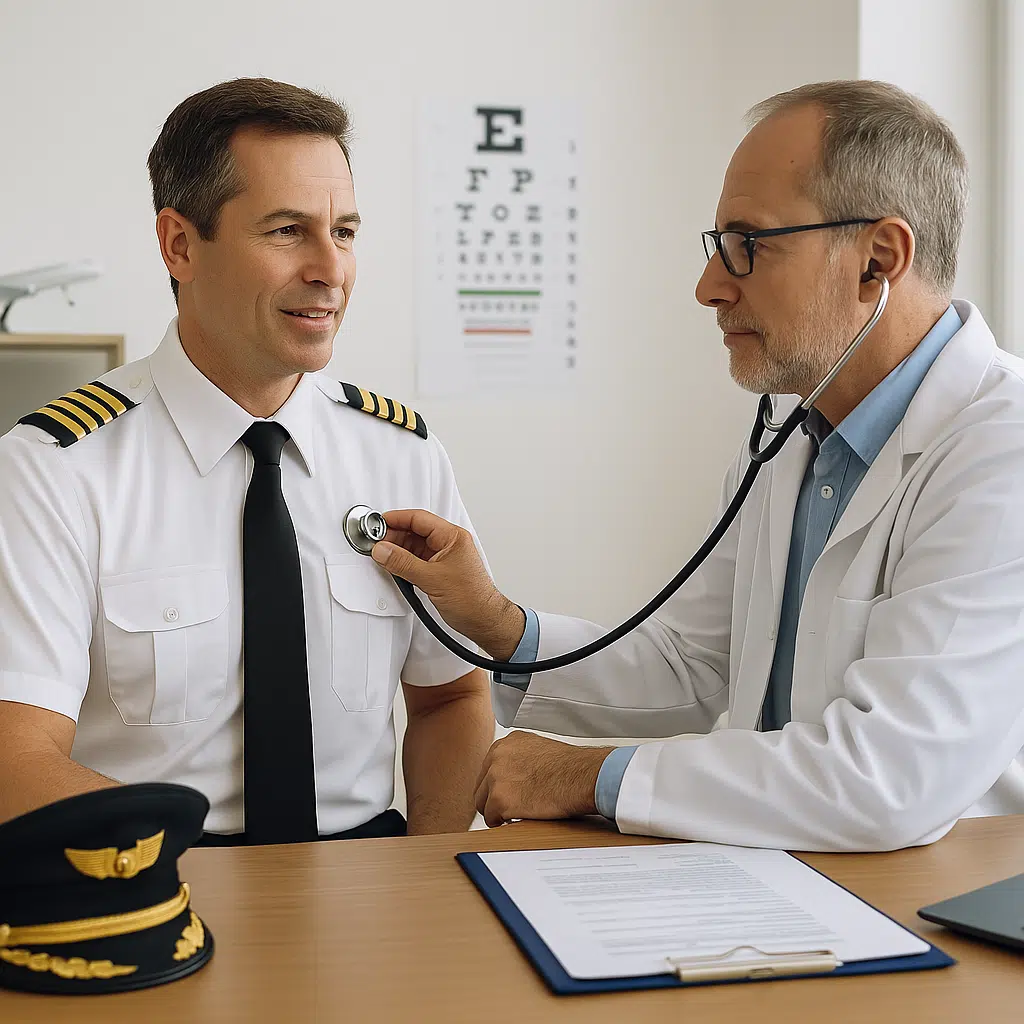
Before stepping into the cockpit as a student pilot, there’s one requirement you can’t skip—passing your FAA medical exam. Whether you’re planning to train for a Private Pilot License (PPL), Commercial Pilot License (CPL), or Airline Transport Pilot License (ATPL), holding a valid FAA medical certificate is non-negotiable.
In this guide, you’ll get a clear breakdown of the different certificate classes (Class 1, 2, and 3), medical requirements, disqualifying conditions, and what to expect during the examination process. If you’re starting your flight training or planning to enroll soon, this article will help you understand what it takes to stay medically certified and cockpit-ready.
What Is a FAA Medical Certificate?
A FAA medical certificate is an official document issued by an FAA-authorized Aviation Medical Examiner (AME) confirming that a pilot is medically fit to operate an aircraft. It’s not just another formality—it’s a legal and safety-critical requirement for anyone pursuing a pilot certificate in the United States.
Student pilots must hold at least a Class 3 FAA medical certificate before they can solo an aircraft. This certification ensures that a pilot’s vision, hearing, neurological health, and cardiovascular fitness meet the minimum standards necessary for safe flight operations. Even recreational flying demands a level of physical and mental health that the FAA carefully evaluates.
The FAA’s medical standards are designed not only to protect the pilot but also to ensure the safety of passengers and the public. Each certificate class corresponds to the level of flying privileges being pursued—from private flying to commercial airline transport—and comes with specific health benchmarks that must be met and maintained throughout a pilot’s career.
Types of FAA Medical Certificates: Class 1, 2, and 3
Not all FAA medical certificates are created equal. The FAA offers three distinct classes of medical certification, each aligned with a different level of pilot certification and operational privilege.
Class 1 FAA Medical Certificate
The most stringent medical certificate, Class 1 is mandatory for pilots operating as Airline Transport Pilots (ATP). This includes captains and first officers flying for commercial airlines. A Class 1 certificate must be renewed every 12 months for pilots under 40 years of age, and every 6 months for those 40 and older if they’re flying in ATP roles. It involves the most comprehensive medical checks, including ECGs for older applicants or those with certain medical histories.
Class 2 FAA Medical Certificate
This level is required for pilots engaged in commercial flying, such as flight instructors, crop dusters, or charter pilots who are compensated for their services but are not flying for scheduled airlines. The Class 2 certificate is valid for 12 months regardless of age and involves slightly less rigorous testing than Class 1 but still covers vision, hearing, and cardiovascular health.
Class 3 FAA Medical Certificate
Intended for student pilots, recreational flyers, and those pursuing a Private Pilot License (PPL), the Class 3 FAA medical certificate has the least strict requirements. For pilots under 40, it remains valid for 60 months (5 years), while those over 40 must renew every 24 months. It ensures that the pilot is in generally good health, with acceptable vision and hearing, and free from medical conditions that could impair their ability to fly safely.
Each class of FAA medical certificate builds on the previous in terms of expectations and privileges. Choosing the right class depends on your flight training goals—but regardless of class, passing the exam is a crucial early milestone in every pilot’s journey.
What FAA Medical Certificate Do Student Pilots Need?
For most student pilots, the FAA medical certificate journey begins with the Third-Class medical certificate. It’s the minimum medical clearance required to fly solo, making it a non-negotiable checkpoint in any FAA-approved flight training program.
This certification proves that a student pilot is healthy enough—both physically and mentally—to operate an aircraft safely while still under the supervision of a flight instructor. While you don’t need a medical certificate to begin ground school or even dual instruction with a certified instructor, you must obtain one before conducting any solo flight operations.
The good news? The Class 3 FAA medical certificate is the most accessible. It’s designed to confirm general health and functionality without the more stringent cardiovascular or neurological screenings required in higher classes. Most healthy individuals under 40 can expect their certificate to remain valid for five years, which covers a good portion of early training.
As student pilots progress toward a Commercial Pilot License (CPL) or Airline Transport Pilot License (ATPL), many opt to upgrade to a Class 2 or Class 1 FAA medical certificate, respectively. But early in your journey, the Class 3 certificate is often more than enough to get airborne and start building hours.
How to Apply for a FAA Medical Certificate
Applying for a FAA medical certificate is a structured process that starts online and ends in a face-to-face evaluation with a certified Aviation Medical Examiner (AME). It’s best to complete this step early in your training to avoid surprises or disqualifications that could derail your pilot career goals.
Here’s how the application process works in 2025:
Register on MedXPress: All applications must go through the FAA’s MedXPress portal. This is where you’ll fill out FAA Form 8500-8, which includes your medical history, current medications, prior surgeries, and any known conditions. Be honest—this information becomes part of your permanent FAA medical file.
Schedule an Appointment with an AME: Once your form is submitted, you’ll receive a confirmation number. Use this to book an appointment with an FAA-authorized AME in your area. These professionals are the only individuals permitted to conduct FAA medical exams and issue valid certificates.
Prepare for the Examination: Bring a valid government-issued ID to your appointment, along with any corrective lenses or hearing aids you normally use. If you’re on medication or have a notable medical history (e.g., asthma, ADHD, or past surgeries), bring documentation or physician notes to provide context for the AME.
Undergo the Medical Evaluation: During the exam, expect checks on your vision, hearing, blood pressure, pulse rate, and overall health. Depending on your age and desired certificate class, additional tests such as ECGs or lab work may be included.
Once the exam is complete and the AME finds you fit for duty, they’ll issue your FAA medical certificate on the spot or submit it for further FAA review if necessary.
Medical Conditions That Can Delay or Deny Certification
While many student pilots pass their FAA medical certificate exam without issue, there are specific medical conditions that can delay approval—or result in outright denial. The FAA places high importance on cognitive clarity, cardiovascular health, and the absence of any conditions that could impair a pilot’s judgment, coordination, or consciousness in flight.
Some of the most common disqualifying conditions include:
- Mental health diagnoses such as bipolar disorder, psychosis, or severe anxiety disorders
- Neurological conditions like a history of seizures or epilepsy
- Diabetes requiring insulin use (though non-insulin-dependent cases may be considered)
- Substance abuse or dependence, including alcohol-related offenses
- Significant cardiovascular issues, including a history of heart attack, heart failure, or uncontrolled hypertension
- Vision that cannot be corrected to FAA standards for distance, near, or intermediate focus
However, a diagnosis is not always the end of the road. The FAA offers a pathway known as Special Issuance Authorization, which allows pilots with certain conditions to fly under medical supervision or after additional documentation and testing. In many cases, this includes submitting records from treating physicians, undergoing further medical evaluations, or demonstrating long-term condition stability.
The review process can be lengthy, often taking several weeks or even months. That’s why it’s critical for student pilots with known medical histories to start the FAA medical certificate application as early as possible—well before any flight school deadlines or solo flight milestones.
Tips to Pass Your FAA Medical Exam
Earning your FAA medical certificate is largely about meeting basic health standards, but a little preparation can make the difference between a smooth process and a stressful delay. Especially for student pilots who are new to FAA procedures, knowing what to expect—and how to prepare—helps reduce anxiety and boosts your chances of a first-time approval.
Here are practical tips to help you pass your FAA medical exam:
Bring complete medical documentation: If you’ve ever been treated for conditions like asthma, ADHD, depression, or surgery, gather and organize all supporting records ahead of your exam. This allows the Aviation Medical Examiner to make an informed decision without needing to defer your case to the FAA.
Avoid caffeine, energy drinks, or stimulants: on the day of your exam. These can raise your blood pressure or heart rate and may result in an abnormal reading that flags a concern—especially if you’re borderline.
Get a good night’s sleep and stay hydrated: Fatigue and dehydration can mimic symptoms of stress or elevated vital signs. Arrive well-rested to present your best health baseline.
Be honest and transparent: Don’t attempt to hide medical conditions or omit medications. The FAA cross-references multiple federal databases—including the National Driver Register and prescription drug monitoring systems. Failing to disclose can result in denial or even future certificate revocation.
Wear your corrective lenses: if applicable, and bring your prescription. Your vision will be tested with and without them to confirm that you meet FAA standards.
Ultimately, the exam is not designed to eliminate aspiring pilots—it’s designed to ensure they’re safe, alert, and healthy enough to command an aircraft responsibly. If you prepare accordingly and communicate clearly with your AME, there’s a high chance of walking away with your FAA medical certificate the same day.
What Happens If You Fail the FAA Medical?
Failing your FAA medical certificate exam isn’t the end of your aviation journey—but it is a serious moment that requires careful next steps. Depending on the reason for the failure, there are still pathways forward, especially if you’re proactive and transparent about your medical history.
In most cases, if the Aviation Medical Examiner (AME) identifies a potential disqualifying condition but believes further review is warranted, they will defer the application to the FAA. This means you won’t receive a certificate on the spot, but the FAA will evaluate your records, request additional documentation, and make the final decision.
If you’re denied outright, there is still hope through the FAA’s Special Issuance Authorization process. This allows medically disqualified applicants to fly under certain conditions, provided they demonstrate sufficient control and management of their medical issues. You may need periodic follow-up exams, condition monitoring, or flight restrictions—but in many cases, pilots continue training and flying under these provisions.
Additionally, pilots who experience temporary disqualifications—such as post-surgery recovery, treatment for mental health, or discontinuation of certain medications—can reapply once their health stabilizes or the disqualifying factor is resolved. In such cases, it’s vital to work closely with your physician and an experienced AME who understands FAA requirements.
And if you believe your application was denied unfairly or based on outdated or misinterpreted information, the FAA offers an appeal process. This involves submitting additional medical evidence and, in some cases, appearing before a review board.
Bottom line? Failing the FAA medical certificate exam doesn’t mean your career is over—but it does mean you’ll need to follow protocol carefully, gather supporting documentation, and remain persistent.
When and How to Renew Your FAA Medical Certificate
Once you’ve earned your FAA medical certificate, keeping it valid becomes a routine part of your life as a pilot. The frequency of renewal depends on two key factors: your age and the class of certificate you hold.
Here’s a quick breakdown of renewal timelines:
Class 1 (Airline Transport Pilots):
- Under age 40: valid for 12 months
- Age 40 and over: valid for 6 months (when used for ATP privileges)
Class 2 (Commercial Pilots):
- Valid for 12 months regardless of age
Class 3 (Private and Student Pilots):
- Under age 40: valid for 60 months
- Age 40 and over: valid for 24 months
Once your certificate reaches the end of its validity period, it doesn’t vanish—but it downgrades. For example, a Class 1 certificate automatically reverts to a Class 2 or Class 3, depending on how much time has passed. This allows pilots to continue flying with reduced privileges rather than grounding them immediately.
Renewing your FAA medical certificate involves repeating the same core steps:
- Complete FAA Form 8500-8 on MedXPress, updating any changes to your health, medications, or lifestyle.
- Schedule another exam with an AME—ideally the same one who issued your previous certificate, if possible, for continuity.
- Prepare your updated medical records, especially if any new diagnoses or treatments have occurred since your last exam.
Pro tip: Don’t wait until the last minute. Schedule your renewal 30–60 days before expiration to allow time for any FAA follow-up requests or special issuance processing if needed.
By staying proactive with renewals, you ensure your flying privileges remain uninterrupted—and your path from student pilot to professional aviator stays right on course.
Conclusion
Obtaining your FAA medical certificate is more than just checking a box—it’s a critical step that confirms you’re ready to handle the responsibilities of pilot training and, eventually, professional flight.
From understanding which class of certificate fits your aviation goals to navigating special issuance scenarios, staying informed is essential. Be honest with your medical history, prepare thoroughly, and start the process early—especially if you have a health condition that may require additional review.
At Florida Flyers Flight Academy, we guide student pilots through every stage of the training process—including medical certification support. Whether you’re preparing for your first exam or planning to upgrade to Class 1 for a career in commercial aviation, our team is here to help you succeed.
FAA Medical Certificate FAQ: Answers for Student Pilots (2025)
What FAA medical certificate do I need as a student pilot?
Most student pilots require a Class 3 FAA medical certificate before they can perform their first solo flight. It verifies your general fitness to fly and is the least restrictive of the three certificate classes.
How long does an FAA medical certificate last?
Validity depends on your age and the certificate class. For example, a Class 3 certificate is valid for 60 months if you’re under 40 and 24 months if you’re over 40. Class 1 and Class 2 certificates have shorter durations, especially for pilots over 40.
Can I fly with a health condition?
Yes—many conditions that initially disqualify you may be approved through the FAA’s Special Issuance Authorization process. You’ll need medical documentation and, in some cases, regular monitoring or restrictions.
How do I find an FAA-approved Aviation Medical Examiner?
Use the FAA’s online AME locator tool. Search by location to find certified Aviation Medical Examiners near you who are authorized to conduct FAA medical certificate exams.
What happens if my medical certificate expires?
You cannot exercise the privileges associated with your pilot certificate if your FAA medical certificate has expired. However, if you’re flying for private or recreational purposes, you may still be eligible to operate under BasicMed or by renewing your certificate through an AME.
Contact the Florida Flyers Flight Academy Team today at (904) 209-3510 to learn more about how to do the foreign pilot license conversion in 4 steps.