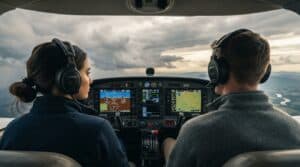
Even pilots feel fear. And not just new students—seasoned professionals, commercial aviators, and even instructors have moments where their heart races or their hands sweat.
The difference? They’ve learned how to manage it.
How pilots deal with fear of flying isn’t about being fearless—it’s about staying calm, focused, and trained when stress kicks in. Fear can show up during turbulence, equipment issues, unfamiliar procedures, or even total silence at 35,000 feet.
Understanding how pilots deal with fear of flying reveals something powerful: fear doesn’t disqualify you—it sharpens you, if you know how to work through it.
This guide breaks down 7 expert strategies pilots use to stay in control—not just of the aircraft, but of their mindset.
Pilots don’t pretend fear doesn’t exist. The first step in learning how pilots deal with fear of flying is recognizing that fear is a valid emotional response—not a flaw.
Instead of burying it, they ask:
“What exactly am I afraid of?”
Is it turbulence? Equipment failure? Weather unpredictability? Lack of aircraft control? Naming the fear gives it boundaries. And once defined, it becomes manageable. Pilots are trained to treat fear like a checklist item—not something to suppress but something to evaluate.
By understanding the root cause, they can respond with logic, not panic. This psychological clarity is one of the most underrated tools in how pilots deal with fear of flying—and it’s often the most powerful.
Training is the pilot’s anchor—especially when fear strikes. One core principle in how pilots deal with fear of flying is this: lean into what you’ve practiced, not what you’re feeling.
From day one, pilots are taught to default to procedure. Whether it’s aircraft’s engine failure, instrument malfunction, or severe weather, they follow the same checklists, flow patterns, and emergency responses. This structure creates consistency—and that consistency builds confidence.
During moments of panic, pilots don’t guess. They fly the airplane first, aviate, navigate, then communicate—just as they were trained. This mental framework allows them to act even when emotions surge.
The more hours logged, the more automatic this becomes. So how pilots deal with fear of flying isn’t through willpower—it’s through repetition, muscle memory, and complete trust in their systems.
Fear activates the body before the brain can catch up—heart races, palms sweat, and tunnel vision sets in. But one key tactic in how pilots deal with fear of flying is simple, portable, and proven: breathing.
Techniques like box breathing (inhale 4, hold 4, exhale 4, hold 4) are used by both military aviators and commercial pilots to reset the nervous system mid-flight. It’s not just calming—it’s a physiological interruption of panic.
Some pilots also combine breathwork with visualization—mentally walking through normal operations or emergency procedures before they happen. This preemptive mental training prepares the body to stay composed when pressure rises.
So when fear creeps in, pilots don’t fight it with force. They breathe through it. And that’s a powerful part of how pilots deal with fear of flying—regaining control without leaving their seat.
Aviation isn’t a solo journey—and neither is fear.
One of the most overlooked ways how pilots deal with fear of flying is through honest conversations with fellow aviators. Talking to someone who’s faced the same turbulence, same doubts, or same rough landings makes fear feel normal, not isolating.
Many pilots—especially students—feel like they’re the only one battling anxiety. But instructors, mentors, and even airline captains will often share their own stories when asked. Hearing how others managed their fears builds perspective and reinforces that fear doesn’t make you unfit—it makes you human.
Some flight schools and communities even encourage mental fitness check-ins or group debriefs. Because behind every cool, calm cockpit photo is a pilot who’s probably had to overcome something hard.
That shared wisdom is a big part of how pilots deal with fear of flying—and why you should never be afraid to ask.
Fear often comes from what we don’t understand. That’s why one key method in how pilots deal with fear of flying is to study the facts behind aviation safety.
Pilots aren’t just trained to operate aircraft—they’re taught why airplanes are built to withstand extreme conditions. From redundant systems and fail-safe designs to rigorous maintenance standards and safety checks, modern aviation is engineered for resilience.
By understanding the “why” behind each checklist item and procedure, fear becomes grounded in logic. For example, learning how turbulence is uncomfortable but rarely dangerous helps a pilot shift from anxious to analytical during a bumpy ride.
The deeper their technical knowledge, the more trust they place in the systems around them. And that trust is foundational in how pilots deal with fear of flying—because informed confidence is fear’s greatest counterweight.
Pilots don’t try to erase fear—they repurpose it.
A core part of how pilots deal with fear of flying is understanding that fear can actually sharpen performance. When managed correctly, it heightens awareness, tightens focus, and boosts reaction time. It’s not something to eliminate, but to channel.
Instead of panicking, experienced pilots ask:
“What is this fear trying to tell me?”
It might signal low visibility, a system behaving unusually, or the need to double-check an approach plate. Pilots learn to see fear as a mental nudge—not an emergency.
This mental shift takes practice. But once developed, it turns fear into fuel. Pilots stay alert, engaged, and intentional—not because they’re afraid, but because they’ve learned how to work with the fear, not against it.
Reframing is powerful. It’s one of the clearest examples of how pilots deal with fear of flying—not through denial, but through transformation.
Confidence doesn’t show up overnight—it’s built, flight by flight.
One of the most effective ways how pilots deal with fear of flying is through consistent experience. The more you fly, the more you normalize what once felt uncomfortable. Bumpy landings become learning moments. New airports become routine. Emergencies become rehearsed responses—not unknowns.
Each flight adds a layer of trust. In your training. In your instincts. In the aircraft. That accumulated trust makes fear smaller over time. It’s not that the fear goes away completely—but it no longer controls the cockpit.
Pilots also keep training even after certification. Currency checks, simulator refreshers, and ongoing ground study keep them sharp. Because staying confident means staying current.
In the end, how pilots deal with fear of flying isn’t about one breakthrough moment. It’s about repetition, routine, and the quiet power of showing up—again and again.
Even the best pilots feel fear—it’s part of being human. What separates confident aviators from anxious ones isn’t that the fear disappears. It’s that they know what to do with it.
This guide has shown you how pilots deal with fear of flying through strategy, structure, mindset, and repetition. They don’t fight fear with ego—they manage it with preparation, training, and perspective. Whether you’re a student pilot facing your first solo or a seasoned pro flying through unfamiliar airspace, these strategies can help you turn fear into focus.
Because the goal isn’t to be fearless. The goal is to keep flying—with clarity, purpose, and trust in yourself.
Contact the Florida Flyers Flight Academy Team today at (904) 209-3510 to learn more about how to transfer flight schools.