Emergencies don’t ask for permission. They show up fast, without warning, and demand immediate action. The difference between panic and precision? Preparation.
That’s why emergency procedures flight training isn’t just a box to check—it’s a survival skill every pilot must master. Whether you’re a student in your first solo phase or a commercial pilot sharpening your edge, learning how to respond under pressure is what separates safe landings from close calls.
This guide walks you through 7 essential steps used in flight schools and simulator programs worldwide to build calm, confident, and competent pilots. From memory items to checklist discipline and real-world repetition, you’ll learn exactly how to think—and act—when things go sideways.
Because in aviation, hope isn’t a strategy. Training is.
Understand the Psychology of Emergencies
Before checklists or cockpit drills, emergency procedures flight training begins in the mind. When something goes wrong in flight, your brain doesn’t default to logic—it defaults to survival mode. Heart rate spikes, vision narrows, and clear thinking becomes harder.
Pilots are trained to recognize this shift and work against it. Instead of letting fear take over, they rely on mental conditioning: slow breathing, focused thinking, and procedural memory. This is why mindset is the first layer of defense.
Instructors often explain that it’s not the emergency itself that causes accidents—it’s how the pilot reacts. By learning to manage the psychological response, you’re laying the foundation for every other aspect of emergency procedures flight training. Because when your brain wants to panic, training keeps your hands steady.
Memorize Immediate Action Items (Memory Items)
Some emergencies don’t give you time to think—they demand instant action. That’s why one of the first goals of emergency procedures flight training is mastering memory items.
These are the boldface procedures you must perform immediately during critical failures like engine fires, electrical smoke, or control loss. There’s no checklist to reference in those first few seconds—your brain and body must already know what to do.
Pilots use drills, call-and-response techniques, and scenario-based simulations to burn these steps into memory. For example, a fire during takeoff requires immediate throttle cutoff, mixture idle, and fuel shutoff. Instructors don’t just teach these—they test them regularly.
This level of reflexive recall is what gives pilots a few extra seconds when they matter most. And without it, no amount of theory will help in a crisis. In emergency procedures flight training, memory items aren’t optional—they’re life-saving.
Follow the Checklist—Every Time
Once immediate memory actions are complete, the next critical step in emergency procedures flight training is checklist execution. This is where many new pilots make mistakes—not because they forget the steps, but because stress tempts them to skip or rush.
The checklist is your second layer of defense. It ensures no critical item is missed during an already high-stakes moment. From smoke in the cockpit to fuel system malfunctions, each emergency has a structured, proven procedure that must be followed step-by-step.
Experienced pilots train their brains to slow down here. Even under pressure, they verbalize and confirm each action, often using a challenge-and-response format in multi-crew environments.
Instructors emphasize one rule over and over: fly the airplane first, then handle the checklist. In other words, maintain control, then follow the flow. Emergency procedures flight training reinforces this order relentlessly—because when panic sets in, process is your lifeline.
Train in Simulated Stress Scenarios
Knowing what to do on paper isn’t enough—you need to feel the pressure.
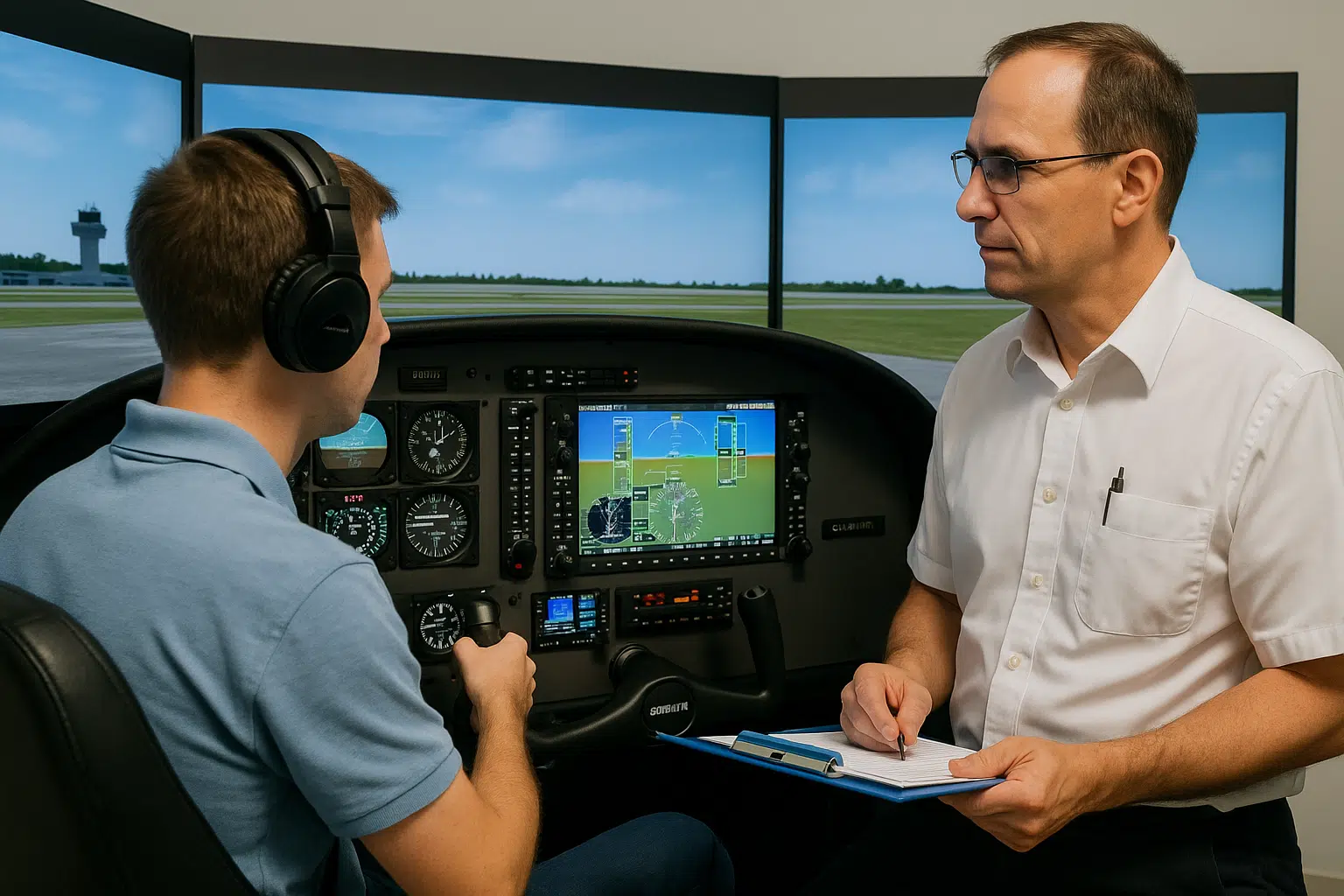
That’s why realistic simulation is a core component of emergency procedures flight training. Whether it’s a desktop sim, full-motion device, or actual dual-control aircraft, the goal is to create stress without danger. These scenarios force you to apply your memory items, follow the checklist, and stay composed in real time.
Instructors will often simulate engine failures on takeoff, electrical fires in cruise, or loss of instruments in IMC. You’re expected to respond without freezing, rushing, or improvising. Instead, you rely on what you’ve trained—and you build confidence by doing it repeatedly.
Simulators are especially powerful for multi-engine, instrument, and commercial students. They allow for complex failures that would be too dangerous to practice in real aircraft.
This stress exposure is what turns theoretical learning into real skill. In emergency procedures flight training, it’s not enough to know—you have to prove you can perform.
Learn the Why Behind Every Procedure
Great pilots don’t just follow steps—they understand them. A critical part of emergency procedures flight training is knowing why each action exists.
For example, why is mixture pulled before turning off the fuel selector during an engine fire? Why do you keep flaps retracted during a power-off glide? When you know the reasoning behind every move, you’re not just reacting—you’re thinking.
This deeper understanding also helps in partial or unusual failures where checklists may not cover the exact scenario. You’ll have the context to adapt intelligently without freezing or making blind guesses.
Flight instructors often say: “If you understand systems, you’ll understand emergencies.” That’s because the best decisions come from both knowledge and reflex—not just one or the other.
Emergency procedures flight training should never be memorized blindly. The more you understand the aircraft’s behavior, the more confidently and quickly you’ll respond when something goes wrong.
Drill Until It’s Automatic
In a real emergency, there’s no time to think—only time to act. That’s why repetition is a cornerstone of emergency procedures flight training.
Through frequent drills, pilots develop automaticity—the ability to perform critical tasks instinctively. Whether it’s executing an engine-out checklist or handling a sudden cabin depressurization, muscle memory kicks in when your brain lags behind under stress.
Flight schools and CFIs use mock emergencies, oral tests, and in-flight simulations to help you rehearse the same procedures again and again. Over time, the mental load decreases, and your response time sharpens.
This level of preparedness doesn’t come from studying—it comes from doing. The goal isn’t perfection; it’s consistency. Because in high-stakes moments, the pilot who has drilled the most is often the one who stays calm, decisive, and in control. In emergency procedures flight training, what you repeat becomes what you rely on.
Review Real Incidents to Sharpen Judgment
Books and checklists teach you procedures—but real-world cases teach you judgment. A valuable but often underused tool in emergency procedures flight training is studying actual aviation emergencies.
Analyzing incidents—from airline cockpit recordings to NTSB reports—gives you insight into how things go wrong, how pilots react, and what outcomes result. You’ll see moments where training kicked in and saved lives—and others where poor decisions made things worse.
This kind of reflection builds situational awareness. It trains you to ask:
“What would I have done in that moment?”
You begin to notice patterns, anticipate problems, and develop faster mental checklists.
Many CFIs incorporate case study discussions into ground lessons, while advanced students often follow YouTube debriefs or listen to podcasts like “PilotEdge” or “Flight Safety Detectives.” Studying real stories makes emergency procedures flight training more than theory—it turns it into a mindset.
Conclusion – Train for the Worst, Fly at Your Best
Emergencies aren’t predictable—but your response can be.
The entire goal of emergency procedures flight training is to build a calm, capable pilot who reacts with precision, not panic. It’s not about fear—it’s about readiness. From memorizing critical actions to drilling procedures and reviewing real-life cases, each step sharpens your ability to stay in control when everything else feels out of control.
When you’ve trained for the worst, you don’t just survive emergencies—you lead through them.
So wherever you are in your flight journey, make emergency training a priority. Because when it matters most, the time you invested today will be the reason you walk away tomorrow.
FAQ – Emergency Procedures Flight Training
What is emergency procedures flight training?
Emergency procedures flight training is specialized pilot instruction that prepares you to handle in-flight crises like engine failure, electrical fires, system malfunctions, or communication loss. It involves learning immediate actions (memory items), practicing standard operating checklists, and training in both simulated and real scenarios to build fast, reliable responses under pressure.
Why is emergency procedures training important for pilots?
Emergencies in aviation often happen without warning—and your reaction time is critical. Emergency procedures flight training ensures you can respond quickly, calmly, and accurately. It helps prevent panic, improves safety, and builds the confidence to manage stressful situations without hesitation.
Are emergency procedures taught during private pilot training?
Yes. Even at the private pilot level, emergency procedures flight training is part of the core syllabus. You’ll learn how to respond to simulated engine-outs, electrical failures, and other critical scenarios during both ground school and flight lessons. The goal is to make safe decisions—even when you’re flying solo.
How often should I practice emergency procedures?
Ideally, emergency procedures flight training should be practiced regularly—especially during proficiency checks, simulator sessions, and flight reviews. Consistency builds muscle memory and ensures that your responses remain sharp over time. Most instructors recommend revisiting emergency drills at least monthly.
Can simulators effectively prepare pilots for real emergencies?
Absolutely. Modern flight simulators replicate real aircraft systems and emergency scenarios with high fidelity. In fact, simulators allow for training in high-risk scenarios (like dual engine failure or instrument blackout) that would be too dangerous to attempt in real flight. They’re a vital part of emergency procedures flight training for both student and commercial pilots.
Is emergency training required for airline or commercial pilots?
Yes. FAA and EASA regulations mandate advanced emergency procedures flight training for all commercial and airline pilots. This includes initial, recurrent, and simulator-based training focused on handling high-stress and multi-crew emergency situations. It’s one of the pillars of aviation safety.
What’s the difference between memory items and a checklist?
Memory items are the immediate actions a pilot must take during an emergency—without referencing a checklist. These are practiced repeatedly until automatic. After memory items are completed, the pilot refers to a printed or electronic checklist to confirm all steps have been followed. Both are crucial elements in emergency procedures flight training.
Contact the Florida Flyers Flight Academy Team today at (904) 209-3510 to learn more about how to transfer flight schools.