Your first flight lesson is a thrilling and pivotal step into the world of aviation. It’s not just about taking off into the sky; it’s about discovering the foundation of flying, meeting the experts who will guide you, and starting an exciting journey toward becoming a licensed pilot. Whether you’re exploring aviation as a potential career or fulfilling a lifelong dream of flying, this day will mark a memorable moment in your life.
Understanding what to expect on day one of your first flight lesson can alleviate any nervousness and help you focus on enjoying every minute of the experience. From meeting your instructor to stepping into the cockpit for the first time, this guide walks you through everything you need to know about your first flight lesson.
Taking a flight lesson opens doors to endless opportunities in the world of aviation. For some, it’s the first step toward becoming a commercial airline pilot, while for others, it’s about gaining the ability to fly recreationally. Regardless of your goal, flight lessons provide a range of benefits.
Flight training enhances your knowledge of aerodynamics, weather conditions, and navigation. It also improves your decision-making skills, confidence, and self-discipline. Pilots often describe their flying experiences as liberating, giving them the unique perspective of seeing the world from above. Beyond the personal satisfaction of learning to fly, there’s a growing demand for pilots globally, making it an attractive career option for many.
Selecting the right flight school is a critical decision that can influence the quality of your pilot training and your overall experience. Different flight schools offer varying approaches to training, from smaller, more personalized environments to larger academies that cater to future airline pilots. Before committing, it’s essential to research and compare your options.
When choosing a flight school, consider factors like its reputation, the experience of its instructors, the condition of its aircraft, and its training programs. Some flight schools focus on training pilots for general aviation, while others specialize in commercial aviation. If you aim to become a professional pilot, choosing a reputable flight school like Florida Flyers Flight Academy can provide you with the comprehensive training you need to excel in the aviation industry.
Before your first flight lesson, it’s important to familiarize yourself with a few basic concepts and prepare mentally for the experience. While you don’t need to be an expert in aerodynamics or aviation law before your first day, understanding what’s ahead will help you feel more comfortable.
Most flight schools, including Florida Flyers, will provide you with pre-flight materials or a briefing to introduce key aviation terms and the basics of how airplanes fly. Additionally, dressing appropriately is crucial. Opt for comfortable clothes, sunglasses to combat the glare of the sun, and avoid wearing anything too bulky, as the cockpit is a confined space.
On the day of your flight lesson, expect a friendly and welcoming atmosphere at the flight school. Arriving on time will give you a chance to meet the staff, relax, and mentally prepare for your upcoming experience in the air.
To ensure your first flight lesson runs smoothly, it’s a good idea to bring along a few essential items. Your government-issued photo ID (such as a passport or driver’s license) is typically required by flight schools for identification purposes. Make sure to carry any materials the flight school may have provided ahead of time, such as pilot training books or notes.
It’s also recommended to bring a logbook if you plan to continue with pilot training, as it will be used to record your flight hours. Comfortable headphones are optional, though many flight schools will provide headsets. However, if you plan to invest in your own aviation headset later on, it’s worth testing different models to find the right fit. A bottle of water and a light snack are also useful, especially since flight lessons can be mentally demanding.
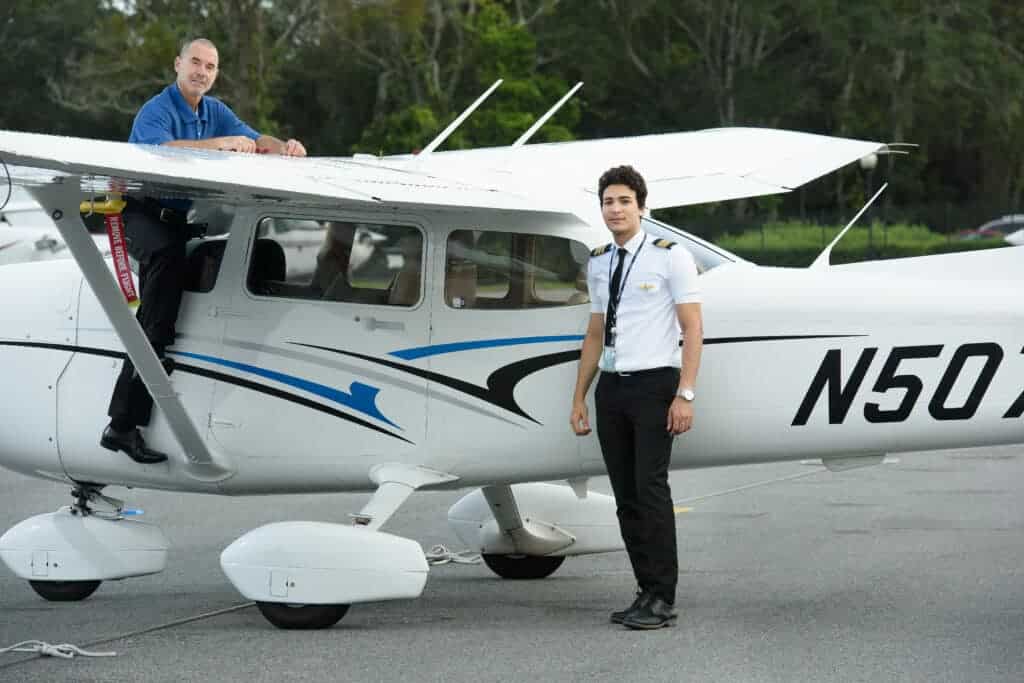
One of the first things you’ll do upon arriving at the flight school is meet your flight instructor. This instructor will be your guide throughout your pilot training journey. Typically, the instructor will have a wealth of experience, often including real-world flying as a commercial or airline pilot.
The introductory briefing with your instructor will outline the plan for the lesson, including the key objectives and expectations for the day. The instructor will walk you through the basic controls of the aircraft, discuss the pre-flight inspection, and answer any questions you might have. This is your time to familiarize yourself with the lesson structure and understand what your instructor will expect from you during the flight.
Before heading into the air, it’s essential to get acquainted with the aircraft you’ll be flying. Most flight schools use smaller aircraft, such as a Cessna 172, for initial flight training. These planes are designed to be easy to handle, making them ideal for first-time student pilots.
Your instructor will guide you through the aircraft’s main components, such as the cockpit, controls, and flight instruments. You’ll learn about the yoke (steering wheel), throttle, rudder pedals, and essential flight instruments like the altimeter, airspeed indicator, and attitude indicator. This process is critical for helping you feel confident in the cockpit, even before taking off.
Understanding the aircraft’s capabilities and limitations is key to pilot training. Familiarizing yourself with the aircraft’s layout will also ease any anxiety you might have as you prepare for your first flight.
Safety is paramount in aviation, and before any flight can begin, the pilot must complete a thorough pre-flight check of the aircraft. Your instructor will teach you how to perform a pre-flight inspection, an essential routine for every pilot.
During this inspection, you’ll check various components of the aircraft, such as the engine oil level, fuel quantity, flight controls, and tire condition. You’ll also learn to inspect the aircraft’s exterior for any visible damage and make sure the fuel is free of contaminants. These checks ensure the plane is in good condition for flight.
Safety procedures also include reviewing emergency protocols and understanding how to handle different scenarios in the air. While these procedures may seem complex at first, they are vital aspects of any flight lesson and will become second nature as you progress through your training.
Now comes the most exciting part: your first time in the air. Once the pre-flight checks are complete, you’ll take your place in the cockpit alongside your instructor. Although the instructor will handle most of the takeoff procedures, they may allow you to assist in taxiing the plane to the runway.
As the aircraft lifts off, you’ll feel the exhilaration of leaving the ground and ascending into the sky. During the flight, your instructor will demonstrate basic maneuvers, such as climbs, turns, and descents. You’ll have the opportunity to take control of the aircraft under the instructor’s guidance and practice these maneuvers yourself.
This part of your first flight lesson is designed to give you a feel for the airplane’s controls and responsiveness. Throughout the lesson, the instructor will provide clear instructions and help you understand the fundamentals of flying.
After landing, the learning process continues with the post-flight debriefing. This is a critical part of every flight lesson, as it allows you and your instructor to review what you learned during the flight. The debriefing is an opportunity to discuss the strengths you demonstrated in the air and areas that may need improvement.
Your instructor will also answer any additional questions you may have about the flight and provide insights into what to expect in your future lessons. It’s important to take notes during the debriefing, as this feedback will help you progress through your pilot training.
Many first-time student pilots have questions about their initial flight lesson. Here are some of the most common:
1. How long is a first flight lesson? Typically, a first flight lesson lasts around 60 to 90 minutes, including both the pre-flight briefing and the time in the air.
2. Do I need any prior experience? No prior experience is necessary. Your first flight lesson is designed for beginners, and the instructor will guide you through every step.
3. Will I be flying the plane on my own? While you’ll have the chance to control the aircraft during parts of the flight, your instructor will always be in the cockpit with you to ensure safety.
4. Can I bring a friend or family member? Some flight schools allow guests to accompany you, but it’s best to check with the school beforehand.
To make the most of your first flight lesson, keep the following tips in mind:
1. Stay relaxed and open to learning. Flying is a skill that takes time to develop, so don’t feel pressured to master everything right away.
2. Ask plenty of questions. Your instructor is there to help, and no question is too basic.
3. Focus on enjoying the experience. Your first flight lesson is meant to be exciting and fun, so take in the scenery and the unique sensation of being in the air.
Your first flight lesson is just the beginning of a rewarding journey toward becoming a pilot. Whether you’re pursuing a private pilot’s license or a career in commercial aviation, continuing your flight training is the next step. As you progress, you’ll dive deeper into aviation theory, practice more advanced flight maneuvers, and eventually fly solo.
Flight schools like Florida Flyers Flight Academy offer structured programs that take you from a novice to a fully licensed pilot. By enrolling in a professional pilot training program, you’ll receive the support and instruction needed to achieve your flying goals.
Your first flight lesson is an unforgettable experience, offering a glimpse into the exciting world of aviation. From the moment you step into the flight school to your time in the air, you’ll gain invaluable insight into what it means to be a pilot. While the first day may seem overwhelming at times, it’s the foundation upon which you’ll build your skills, knowledge, and confidence as a pilot. The thrill of flight, the sense of freedom, and the opportunity to soar above the earth will make every step of the journey worthwhile.
The lessons learned during your first flight, whether mastering the basic controls or understanding the importance of safety checks, will set you up for success as you continue your training. Each flight brings new challenges, but also new accomplishments as you advance toward your goal of becoming a pilot.
If you’re ready to take the first step toward your dream of flying, Florida Flyers Flight Academy is here to guide you. As a top-rated flight school, we specialize in providing comprehensive, professional pilot training programs tailored to fit your goals. Our experienced instructors, state-of-the-art facilities, and well-maintained aircraft ensure that you receive the highest quality training from day one.
Contact the Florida Flyers Flight Academy Team today at (904) 209-3510 to learn more about how to pay for flight school.