
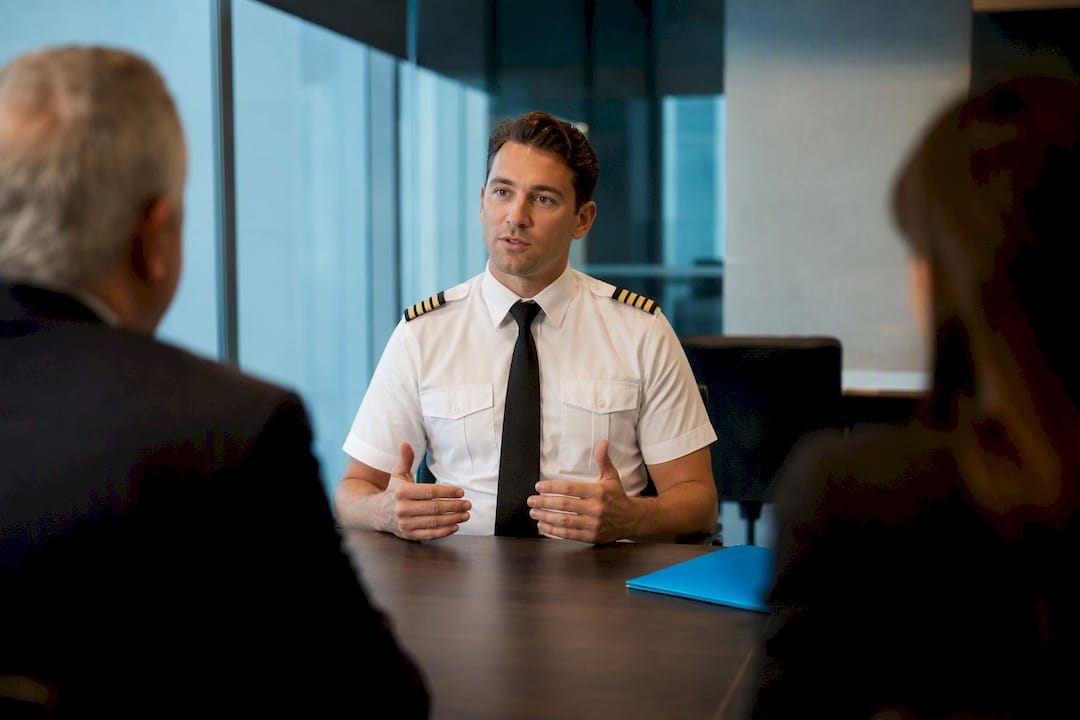
The highest-leverage way to prepare for an airline interview comes down to three actions: research the airline’s fleet, culture, and operations in depth; build 8 to 10 STAR or TMAAT stories anchored in safety and crew resource management; and run realistic mock interviews paired with focused technical refreshers. Give yourself 2 to 4 weeks and roughly an hour a day. Everything else in this guide fills in the details around that core.
TL;DR:
- Prioritize building 8 to 10 STAR or TMAAT stories focused on safety, crew resource management, and leadership, with weekly practice and recording feedback.
- Focus technical study on aircraft systems, fuel planning, weather interpretation, and threat management, emphasizing workload and decision-making in simulators.
- Practice mock interviews that mirror the actual format, including technical and behavioral segments, to develop stamina and refine responses under pressure.
- Know your logbook details and documents by memory, arrive early in professional attire, and prepare sharp questions to demonstrate genuine interest.
- Rest well, eat properly on interview day, and calmly handle unexpected questions by acknowledging gaps or taking brief pauses to maintain composure.
Every airline interview panel, regardless of carrier size, is scoring you against the same five categories: safety mindset, crew resource management, technical competence, professionalism, and cultural fit. Understanding how these get weighted changes how you should prepare.
A regional carrier tends to weight technical fundamentals and CRM heavily, since new-hire first officers often have thinner logbooks. A major airline shifts more weight toward professionalism, judgment under ambiguity, and leadership potential, because they’re evaluating you as a future captain. Cargo operators, with their unusual schedules and single-pilot decision points on the ground, often probe fatigue management and independent judgment harder than passenger carriers do. Adjust your story emphasis accordingly, since tailoring behavioral answers to the carrier’s actual operation consistently outperforms generic prep.
Nonverbal signals matter too. Eye contact, posture, and a measured pace of speech read as confidence. Fidgeting or rushing through an answer reads as nerves, even when the content is solid.
STAR (Situation, Task, Action, Result) and TMAAT (Tell Me About a Time) are two names for the same structure, and interviewers use both terms interchangeably. TMAAT is simply the question prompt; STAR is the answer framework you use to respond to it. When a panel asks “tell me about a time you disagreed with a captain,” they’re asking for a STAR answer.
Here’s how to build a bank that actually holds up under pressure:
Aim for 8 to 10 stories that each flex to cover two or three different questions. A single well-built maintenance-diversion story can answer questions about decision-making, communication, and dealing with pressure, depending on how you frame the result.
Pro Tip: Record yourself answering five random behavioral questions cold, then watch the playback with the sound off first. You’ll catch posture and fidgeting issues you’d otherwise miss, and recording mock interviews surfaces filler words and pacing problems faster than silent rehearsal ever will.
You don’t need to relearn every system on every aircraft you’ve flown. You need fast, confident recall on the topics that come up most often, and you need to show sound judgment in the sim rather than flawless stick-and-rudder work.
Prioritize study time on:
In the simulator portion, assessors care less about perfect handling of an unfamiliar type and more about workload management, CRM, and decision-making. Calling out a checklist item clearly and managing your workload under pressure often carries more weight than a smooth landing. Short, scenario-based drills tied to real operational decisions, rather than broad theory review, tend to produce faster gains before an interview.
Structure beats intensity here. A 2 to 4 week window gives you enough time to build stories, refresh technical knowledge, and rehearse without burning out before interview day.
Mock interviews that mirror the actual format, whether that’s a panel, a one-on-one, or a sim debrief, transfer better to the real thing than generic practice does, since replicating the assessment structure trains you for the specific pressure you’ll face.
Pro Tip: After each mock interview, write down the one question that tripped you up before you forget it. Patterns emerge fast. If the same category of question rattles you twice, that’s your next story to build.
Know your numbers before you walk in. Panels frequently ask candidates to recite figures from memory, and hesitating on your own logbook is a bad look.
Have these memorized cold:
For your resume, keep it to one page, lead with flight hours and certificates, and tailor the objective line to the specific airline. Bring printed copies of your resume, certificates, medical, and logbook summary even if you submitted everything digitally.
On interview day, arrive 30 to 45 minutes early, dress in a clean, well-fitted suit or airline-appropriate business attire, and treat every person you meet, from the front desk to the shuttle driver, as a scored interaction, since early arrival and professional conduct throughout the visit genuinely factor into hiring decisions. Prepare 2 to 3 sharp questions for the panel about training pipelines, upgrade timelines, or fleet plans. Skip generic questions you could have answered with a quick search.
The candidates who struggle most in interviews usually aren’t short on flying skill. They’re short on structured self-presentation: they can fly the airplane but can’t yet explain their own judgment clearly under a panel’s questioning. Structured mock checkrides and oral exam drills build that muscle earlier than most pilots expect, because they force you to narrate your reasoning out loud, under evaluation, before an airline ever asks you to.
Flightschoolusa built its Pilot Skills guide and FAA oral exam practice bank around exactly that gap, and the Airline Ready Pilot Program extends it into full interview readiness. That kind of repeated, evaluated performance under pressure is precisely what airline panels are testing for.
A sharp story bank falls apart fast if you’re running on four hours of sleep and a stomach full of coffee. Sleep matters more than any last-minute cram session. Pilots who prioritize rest in the 48 hours before an interview consistently outperform those who stay up polishing answers, because fatigue degrades recall and flattens vocal tone in ways candidates rarely notice in themselves.
Build in deliberate calm before you walk in. Activities like a short walk, light stretching, or slow breathing can lower physical tension and help steady your voice and posture. Avoid excessive caffeine on the morning of the interview as jitters can be interpreted as nervousness.
Eat something substantial beforehand. Airline interview days often run four to six hours across HR screening, technical review, and a simulator session, and a low-blood-sugar crash mid-afternoon shows up as sluggish answers and slower checklist recall in the sim.
Mentally, reframe the interview as a conversation between professionals rather than an interrogation. Panels are trying to picture you in their cockpit and their break room. Confident, measured answers land better than technically perfect ones delivered in a monotone. If you stumble on a question, pause, breathe, and restart the answer calmly. A brief pause reads as thoughtful. A rushed, tangled recovery reads as rattled.

Every panel throws at least one curveball. It might be a rapid-fire technical question outside your comfort zone, a scenario with no clean answer, or a deliberately uncomfortable pause after you finish speaking.
The instinct to fill silence with rambling is the biggest mistake candidates make here. If you don’t know an answer, say so plainly, then walk through how you’d find out. “I don’t have that figure memorized, but I’d check the AFM performance section before departure” shows sound judgment even without the exact number.
For stress or pressure questions, like being asked to justify a decision aggressively or being interrupted mid-answer, recognize the tactic for what it is: a test of composure, not a genuine challenge to your competence. Pause for a beat, acknowledge the question calmly, and answer without matching the panel’s intensity. Raising your own tone in response is the fastest way to look rattled.
Ethical or values-based scenarios, such as “what would you do if a captain asked you to do something you weren’t comfortable with,” deserve a direct answer grounded in your safety mindset rather than a hedge. Panels want to hear that you’d voice a concern respectfully and escalate if needed, not that you’d quietly go along with it.
If a question genuinely stumps you, it’s fine to ask for a moment. “Can I take a second to think through that?” reads far better than an immediate, disorganized answer. Silence you control beats silence that controls you.

Send a short thank-you email within 24 hours to whoever coordinated your interview, even if you’re unsure how it went. Keep it brief: thank the panel for their time, mention one specific point from the conversation, and reaffirm your interest in the position. Avoid restating your entire resume in the email.
Airline hiring timelines vary widely, from a few days at smaller regional carriers to several weeks or longer at major airlines waiting on class dates and training slots. Resist the urge to follow up too soon. A single polite check-in email after two to three weeks of silence is reasonable. Repeated calls or emails before that window tend to signal anxiety rather than enthusiasm.
While you wait, keep training current and keep applying elsewhere. Airlines respect candidates who stay active in their careers rather than pausing everything to wait on one outcome. If you’re rejected, a brief, gracious reply thanking them for the opportunity leaves the door open, since hiring pools reopen and panels remember professional conduct on the way out as much as on the way in.
Most interview advice overloads candidates with theory and underweights repetition. The research is consistent on this point: candidates rarely fail because they can’t fly. They fail because they can’t communicate judgment clearly, don’t have accountable stories ready, or freeze under a stress question they never rehearsed for.
The conventional advice to “just be yourself and know your systems” undersells how much structured practice changes outcomes. A pilot with average flying skill and a tight, rehearsed story bank consistently outperforms a stronger pilot who walks in unprepared to narrate their own decisions.
If you take one thing from this guide, prioritize the story bank first, technical refreshers second, and logistics last. Panels forgive a shaky systems answer far more readily than a rambling, unaccountable behavioral response. Build the stories, record yourself saying them out loud, and let the rest of your prep fill in around that foundation.
— Rainer
Flightschoolusa turns the checklist in this guide into a structured program instead of a solo project. The Airline Ready Pilot Program pairs technical refreshers with mock interview practice and FAA oral exam drills, so you’re rehearsing under evaluation long before an actual airline panel sits across from you.

Because Flightschoolusa holds Self Examining Authority, checkrides happen in-house without the scheduling delays that stall many training pipelines elsewhere, and the academy’s PPL-to-ATP pathway runs in as few as 111 hours with a first-time practical exam pass rate over 90%. That combination of speed and a proven pass record gives candidates more repetitions under real evaluation pressure before interview day arrives. If you want that structure behind your own prep, start with the flight training program overview to see how the pathway lines up with your timeline.
For deeper study, review VTH’s airline interview guide on the five evaluation areas, Fly.hr’s 2026 preparation timeline, and Rotate’s interview questions and prep tips. For CRM and crew role context, see Bluebird’s crew composition breakdown. Flightschoolusa’s own Pilot Skills guide and FAA oral exam practice bank round out hands-on study material.


