
Accelerated pilot training programs have become an attractive option for aspiring commercial pilots in the United States, driven largely by a significant shortage of qualified pilots. Airlines and flight schools nationwide are seeking quicker ways to train pilots without sacrificing safety or quality.
Unlike traditional pilot training, which can last two to three years, accelerated pilot training condenses the FAA-required curriculum into just 6–9 months. This intense approach allows students to become licensed commercial pilots faster, gaining a competitive advantage in the job market.
The growing popularity of accelerated training is a direct response to industry demands. Airlines, charter operators, and cargo carriers face increasing pilot retirements and higher travel demand, making rapid yet thorough pilot training essential.
Beyond speed, accelerated training often reduces total costs, minimizes disruption to students’ careers and personal lives, and enables quicker entry into employment. For disciplined individuals prepared to commit fully, accelerated programs offer a compelling alternative to traditional flight training.
This guide provides a comprehensive overview of accelerated pilot training in the USA, outlining timelines, costs, FAA requirements, and helping you determine if the fast-track approach matches your career goals.
What Is Accelerated Pilot Training?
Accelerated pilot training is an intensive approach to flight education designed specifically for students who aim to achieve their commercial pilot license (CPL) faster than traditional programs allow. While conventional pilot training typically spans between 18 months to two years, accelerated programs streamline this timeline dramatically, usually between 6 to 9 months.
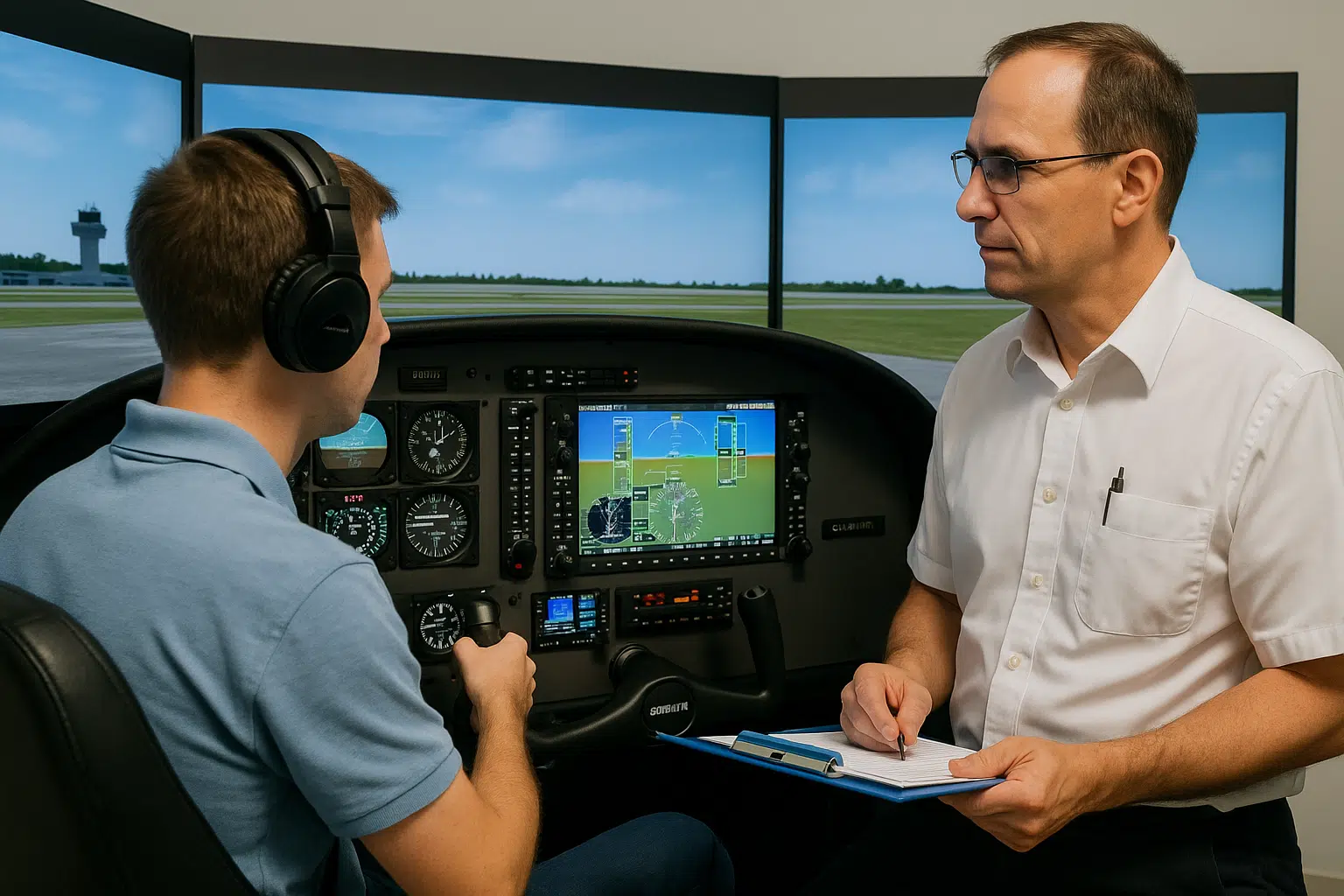
In these fast-track programs, students undertake full-time, structured training combining classroom instruction, ground school, simulator practice, and flight hours into condensed schedules. These programs are FAA-approved and adhere strictly to the same regulatory standards required in traditional training—ensuring safety and competence are never compromised.
The main difference is pacing. Accelerated training demands higher intensity, rigorous daily schedules, and a significant personal commitment from students. It’s ideal for individuals capable of maintaining strong discipline and quick knowledge retention.
Pros of accelerated pilot training include:
- Shorter time commitment
- Quicker career start and earning potential
- Cost savings on total training and living expenses
Cons include:
- Intense scheduling and workload
- Less flexibility for part-time work or external commitments
- Requires disciplined, focused learners
Accelerated training isn’t for everyone, but for students eager and ready to rapidly advance their aviation careers, it offers a highly effective and increasingly popular route to becoming a commercial pilot.
Key Milestones in Becoming a Commercial Pilot (Accelerated Path)
Accelerated pilot training is structured around clear, distinct milestones, each essential for progressing toward your goal of becoming a licensed commercial pilot. Unlike traditional programs, accelerated training compresses these stages into a significantly shorter timeframe, making each step intensive and goal-oriented. Here’s an overview of these milestones:
1. Private Pilot License (PPL)
The Private Pilot License (PPL) is your foundational certification, allowing you to pilot small aircraft under visual flight rules (VFR). Accelerated programs typically complete this phase within 1–2 months.
During this stage, you’ll learn essential aerodynamics, aircraft control, navigation methods, flight planning, and aviation regulations. FAA standards require at least 40 flight hours, combining instructor-led training and solo flights, ensuring you have the necessary theoretical knowledge and practical skills for safe flying.
2. Instrument Rating (IR)
The Instrument Rating (IR) qualifies you to fly under instrument flight rules (IFR), allowing safe operation in low visibility, clouds, or challenging weather. In accelerated programs, this phase is completed in about 4 weeks.
Training includes intensive instruction in instrument navigation, flight management systems, and both simulator and in-aircraft practice under IFR conditions. To meet FAA requirements, you’ll log at least 40 hours of instrument-specific flight time.
3. Commercial Pilot License (CPL)
The Commercial Pilot License (CPL) is your gateway to flying professionally and earning income as a pilot. Accelerated programs usually complete this stage in 3–4 months.
You’ll train in advanced flight maneuvers, emergency procedures, and complex aircraft systems. To qualify, the FAA requires a minimum of 250 total flight hours, though some Part 141 schools may allow a reduced total with structured training.
4. Optional: Multi-Engine Rating
Many accelerated programs include an optional multi-engine rating. This qualification expands your career opportunities significantly by allowing you to fly multi-engine aircraft, commonly used by airlines. Typically, this takes an additional 2–4 weeks of specialized training.
Accelerated pilot training programs strategically integrate these milestones to minimize gaps and delays, ensuring you progress steadily and efficiently toward becoming a fully licensed commercial pilot.
How Long Does It Take to Become a Commercial Pilot?
Accelerated pilot training is designed to help students earn their commercial pilot license in a fraction of the time traditional programs require. While standard training can take up to two years, accelerated paths typically compress the entire journey into 6 to 9 months.
Each phase is carefully scheduled to eliminate downtime. Students train full-time—often six days a week—balancing ground school with intensive flight hours. This pace allows for rapid progress through the PPL, IR, and CPL stages, especially in FAA Part 141-approved schools like the Florida Flyers Flight Academy where structured programs can reduce total hour requirements.
However, staying on schedule requires commitment. Weather delays, health issues, or FAA checkride backlogs can slightly extend the timeline. But for focused, full-time students, accelerated training remains the fastest and most direct path to a commercial pilot career in the U.S.
What Does Accelerated Pilot Training Cost in the USA?
Accelerated pilot training compresses the timeline—but it still requires a serious financial investment. Most programs range between $55,000 and $90,000, depending on location, aircraft type, instructor experience, and what’s included in the package.
Compared to traditional flight school models, these fast-track programs often help students save money long-term by reducing housing costs and letting them enter the job market faster.
Below is a breakdown of typical costs across key stages:
| Training Stage | Estimated Cost (USD) | What’s Included |
|---|---|---|
| Private Pilot License (PPL) | $12,000 – $18,000 | Flight hours, ground school, materials, exam fees |
| Instrument Rating (IR) | $8,000 – $12,000 | Simulator + flight training, IFR navigation |
| Commercial Pilot License (CPL) | $30,000 – $50,000 | Dual/solo flights, advanced maneuvers, checkrides |
| Multi-Engine Rating (Optional) | $3,000 – $7,000 | Twin-engine flight hours, instructor time |
| Total (Estimated) | $55,000 – $90,000 | Complete PPL to CPL path |
Many schools offer financing options, payment plans, or VA benefits for eligible students. It’s also wise to compare whether the program is Part 61 or Part 141, as this can affect cost and total flight hour requirements.
Always request a full cost breakdown—including exam fees, fuel surcharges, and potential retake costs—before enrolling.
Best Accelerated Flight Schools in the USA
Selecting the right accelerated flight school is critical—fast training is only worthwhile if paired with quality instruction, solid career pathways, and reliable infrastructure. What follows is a curated list of reputable schools that deliver on speed and professional outcomes, with Florida Flyers Flight Academy at the top.
Featured Flight Schools
Florida Flyers Flight Academy, based in St. Augustine and Venice, Florida, is an FAA Part 141-approved school widely recognized for its efficient, career-focused pilot training. With two campus locations, a fleet of over 40 modern aircraft (including new Tecnam P-Mentors), in-house ground school, high checkride pass rates, and structured airline pathway programs, it’s a top contender for serious students.
Other top-tier schools include Purdue University, University of North Dakota, L3Harris, and AeroGuard—each offering structured Part 141 accelerated programs, modern fleets, and solid airline or CFI career support.
Comparison of Top Accelerated Flight Schools
| Flight School | Locations (City, FL) | Time (PPL→CPL) | FAA Cert. | Fleet Highlights | Ground School | Career Path |
|---|---|---|---|---|---|---|
| Florida Flyers Flight Academy | St. Augustine & Venice | 6–9 months | Part 141 | 40+ aircraft, new Tecnam P‑Mentors | In-house, CFI-led | CFI flow, airline partnerships |
| Purdue University | West Lafayette, IN | 12–18 months | Part 141 | Advanced fleet, simulators | University campus | Airline pathway, university support |
| University of North Dakota (UND) | Grand Forks, ND | 12–18 months | Part 141 | Large fleet, full simulator lab | Integrated, instructor-led | Strong industry network, CFI options |
| L3Harris Flight Academy | Sanford & Phoenix | ~12 months | Part 141 | Tech-forward fleet | On-campus, full program | Cadet programs, airline prep |
| AeroGuard Flight Training Center | Multiple U.S. bases | 10–12 months | Part 141 & 61 | Cessna, Piper aircraft | Full-time ground support | CFI jobs, airline links |
What to Look For
- Program Duration: Florida Flyers leads with the shortest timeline.
- FAA Part 141 Certification: Ensures structured training and reduced total hours.
- Fleet Size & Modernity: More planes mean fewer delays and more flying time.
- Ground School Quality: Instructor-led and integrated ground training is essential for accelerated learning.
- Career Support: Check for CFI pipelines, airline partnerships, and VA or international student support.
This table helps you assess more than just cost and speed—it highlights key program features that influence training quality and career readiness. Florida Flyers stands out for students looking for a fast, professionally aligned path to commercial licensing.
Ground School: How It Works in Accelerated Pilot Training Programs
In accelerated pilot training, ground school is just as important as flight time. It’s where you build the theoretical knowledge needed to pass FAA written exams and understand how to make safe decisions in the cockpit.
Unlike traditional programs that may spread lessons over months, accelerated ground school moves fast. Students attend full-time classes—often daily—with tightly packed schedules covering aerodynamics, weather, flight systems, regulations, and airspace rules. At schools like Florida Flyers, this is handled in-house by certified flight instructors (CFIs), ensuring consistent instruction and quick feedback.
This structure allows students to apply theory immediately in the air, reinforcing retention and accelerating learning. Some schools offer online ground school options, but for most students, live, instructor-led classes deliver better results—especially when preparing for the FAA Knowledge Test and oral exams.
Ground school isn’t a passive phase—it’s the academic engine of your training. In accelerated programs, it’s taught to match the pace of your flight hours, keeping everything in sync so you move efficiently toward checkride readiness.
FAA Requirements for Fast-Track Commercial Pilots
Accelerated programs may move faster, but the FAA requirements remain the same. Every pilot—regardless of training speed—must meet strict standards to earn their licenses.
To start, you must be at least 17 years old for the Private Pilot License (PPL) and 18 years old for the Commercial Pilot License (CPL). English proficiency and a valid FAA medical certificate (usually a 2nd Class Medical for commercial training) are also mandatory.
Flight hour requirements include:
- 40 hours for PPL (minimum)
- 50 hours of cross-country time
- 40 hours of instrument time
- 250 total hours for CPL
(Part 141 schools may allow completion with fewer hours, typically around 190–200)
In addition to flight hours, you must pass:
- The FAA Knowledge Test for each certificate or rating
- A checkride, which includes an oral exam and flight test with a Designated Pilot Examiner (DPE)
Accelerated training doesn’t shortcut these requirements—it simply structures your training to help you meet them in less time. A good school will keep you on pace, schedule your tests promptly, and make sure you’re fully prepared for each milestone.
Is Accelerated Pilot Training Right for You?
Accelerated pilot training USA programs aren’t for everyone. They’re built for students who are ready to train full-time, stay focused, and progress quickly without long breaks or delays.
If you’re disciplined, detail-oriented, and able to absorb complex information in a short time, fast-track training may be your best route to a commercial pilot license. Many students choose accelerated training because it saves time, reduces overall costs, and leads to earlier employment opportunities—especially for those pursuing flight instructor roles or airline pathways.
However, it’s not ideal for casual learners or part-time students. The fast pace leaves little room for procrastination, illness, or travel. You must be physically and mentally prepared to train almost every day for 6–9 months.
The best candidates for accelerated flight training are:
- Recent high school or college grads looking for a quick aviation career start
- Military veterans using VA benefits to transition into commercial flying
- International students seeking streamlined pilot training programs in the USA
- Career changers ready to fully commit to a structured timeline
If you value consistency, structure, and speed—and you’re ready to treat flying like a full-time job—then accelerated pilot training is likely the smartest path forward.
Career Path After Accelerated Training
Completing an accelerated pilot training USA program opens the door to multiple career paths, starting with one of the most common: becoming a Certified Flight Instructor (CFI). Many students earn their CFI certificate immediately after their Commercial Pilot License (CPL) to start building the flight time required for airline jobs.
As a CFI, you can log valuable pilot-in-command hours while earning income and staying active in the cockpit. Most regional airlines require around 1,500 total flight hours, so this route is often the fastest and most affordable way to reach that threshold.
Beyond flight instruction, accelerated graduates can pursue roles in:
- Charter operations (Part 135)
- Corporate aviation
- Aerial photography or survey flights
- Agricultural flying or banner towing
- Airline cadet programs (especially if you trained at a school with airline partnerships)
While your accelerated training gets you certified faster, your long-term success still depends on your professionalism, flight experience, and safety record. Schools like Florida Flyers Flight Academy often support graduates with career placement, mentorship, and airline referrals, giving you a solid head start in the competitive aviation industry.
Conclusion
Accelerated pilot training in the USA is the smartest option for students who want to earn their licenses quickly and launch their aviation careers without delay. With the right mindset, a structured program, and full-time commitment, you can go from zero experience to commercial pilot in under a year.
The key is choosing a school that offers more than speed. You need FAA-certified instruction, reliable aircraft, in-house ground school, and real career support. Schools like Florida Flyers Flight Academy deliver all of that—with a proven system designed for serious, goal-driven students.
If you’re ready to train hard, stay focused, and take control of your timeline, accelerated training is your competitive edge. The industry needs pilots—and the sooner you qualify, the sooner you fly.
FAQ: Accelerated Pilot Training
| Question | Answer |
|---|---|
| How fast can I become a commercial pilot through accelerated training? | With a full-time schedule, most students complete their training in 6 to 9 months through accelerated pilot training USA programs. |
| Is accelerated pilot training harder than traditional programs? | It’s more intense and fast-paced but covers the same FAA requirements. You’ll need to stay focused and committed every day. |
| Can international students join accelerated flight schools in the USA? | Yes. Many schools, like Florida Flyers Flight Academy, are SEVIS-approved and accept international students for accelerated pilot training. |
| Does accelerated training reduce the number of flight hours needed? | No. All FAA minimums still apply, but Part 141 schools may allow slightly reduced hour requirements for CPL—while keeping the same level of training. |
| What happens after I finish my commercial license? | Most graduates work as flight instructors to build hours or move into charter flying, corporate aviation, or airline cadet programs. |
| Is accelerated pilot training in the USA worth the cost? | For many students, yes. It shortens the time to certification and career entry, which can help you start earning as a pilot sooner. |
Contact the Florida Flyers Flight Academy Team today at (904) 209-3510 to learn more about how to transfer flight schools.