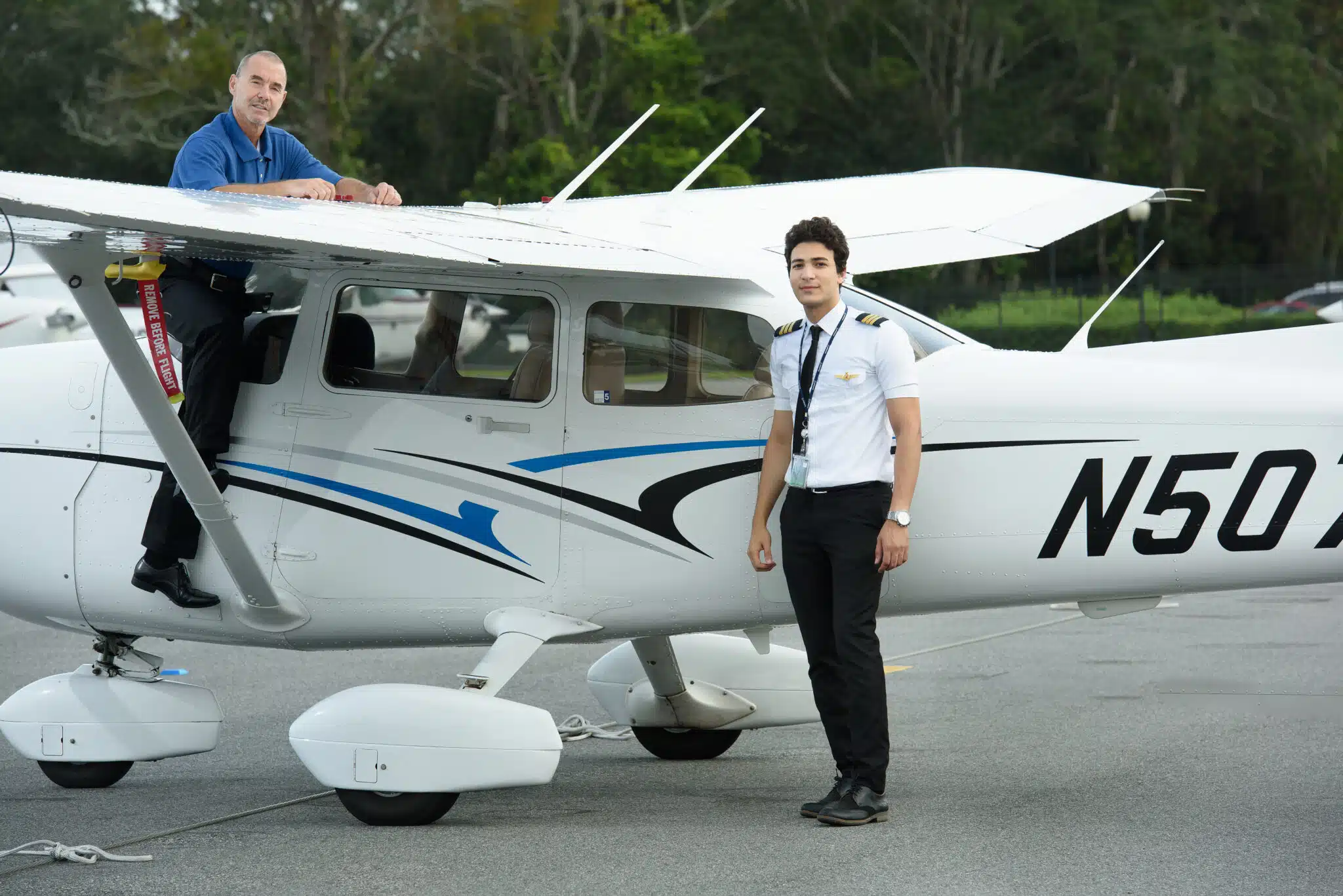

Pilots know that familiar feeling of stepping into the cockpit after a long break. A mix of excitement and uncertainty fills the air as they return to the controls. The time away from flying – months or even years – makes maintaining proficiency a vital part of safe and confident aviation.
A pilot refresher course is a great way to get back in command. These well-laid-out training programs help pilots brush up on everything from instrument procedures to emergency protocols. The training ensures a confident return to the skies.
This piece covers topics from rusty pilot courses to specialized instrument refresher options. You’ll find the right program that fits your needs and learn what training involves. The guide also shows you how to build an environmentally responsible plan to stay current with your aviation skills.
What you’ll learn:
-How to rebuild your confidence and manage anxiety
-Everything in recurrent training
-Specialized refresher options for different pilot certificates
-Hands-on training techniques and evaluation methods
-Strategies to maintain long-term proficiency
The Psychology of Returning to Flight
Returning to aviation after a break can trigger complex psychological responses that many pilots don’t anticipate. Studies show that about 25% of aviators feel anxious about flying. This makes mental preparation as vital as technical training in your pilot refresher training.
Building confidence after breaks
Feeling uncertain is natural when you get back in the cockpit. Research shows that pilots with over 700 hours still need time to rebuild their confidence. Your pilot refresher training should focus on mental preparation along with skills development. Here’s how to rebuild your confidence:
1.Start with ground preparation
2.Practice mental rehearsal techniques
3.Take an instructor with you on your first flights
4.Begin with familiar routes and conditions
Managing pilot anxiety
You need to understand your body’s stress response to stay in control while flying. Mental health experts have found that 3% of in-flight emergencies link to mental health issues. A thorough pilot refresher course should teach these anxiety management techniques:
-Practice deep breathing exercises before and during flight
-Use positive self-talk and visualization
-Keep regular pre-flight routines
-Talk openly with your instructor about your concerns
Setting realistic expectations
Your return to flying should be steady and methodical. Research indicates pilots typically need one hour of instruction for each year away from flying. Proficiency goes beyond logged hours – it’s about feeling comfortable and capable in different situations.
The Role of Professional Support Working with seasoned instructors during your refresher course can boost your confidence. They know returning pilots might face what experts call “existential anxiety” – a general fear about experiencing fear itself. Your instructor will help you develop strategies to handle these concerns while you rebuild your skills.
Mental sharpness needs ongoing practice. Regular instrument refresher courses and type-specific training programs should be part of your schedule. This active approach maintains your technical skills and psychological readiness, so you’re ready for any challenges in the cockpit.
Critical Components of Aviation Recurrent Training
Your pilot refresher course begins with becoming skilled at three vital components that are the foundations of safe flying. Modern aviation just needs continuous updates of these skills to maintain the highest safety standards.
Airspace Knowledge Updates in Your Pilot Refresher Course
Pilots must stay current with airspace regulations in today’s complex aviation environment. Your complete pilot refresher course should cover the latest changes in airspace classifications and requirements. Studies show that pilots who keep updating their airspace knowledge through an instrument refresher course make better navigation decisions by a lot.
Weather Interpretation Skills: A Core Focus of Your Pilot Refresher Course
Weather interpretation is a vital skill in your private pilot refresher course. The National Weather Service provides extensive aviation weather products that your commercial pilot refresher course should cover fully. Here’s how to boost your weather interpretation during your pilot refresher course:
1.Analyze current and forecast conditions
2.Assess ceiling and visibility effects
3.Review wind conditions for all flight phases
4.Assess temperature effects on aircraft performance
Risk Management Techniques
Every pilot refresher course must emphasize modern risk management approaches. The main goal is accident prevention through proactive identification and mitigation of safety hazards. Your IFR refresher course should cover these vital risk management components:
-Hazard identification and systematic assessment
-Risk mitigation strategies development
-Decision-making process improvement
-Personal minimums establishment
Critical Safety Statistics Recent data shows that pilots who complete a structured pilot refresher course make better decisions. The analysis reveals that pilots assess and manage risks better during early planning stages. This highlights why your pilot refresher course should emphasize pre-flight preparation.
Your pilot refresher course should combine all three components through practical scenarios. Modern training approaches show that effective risk management starts days or weeks before planned flights. This makes complete preparation the life-blood of your refresher training.
Note that your pilot refresher course should adapt to new technologies and procedures. Today’s flight operations increasingly use automation. Your training must include both proactive and reactive methods to assess risks, preparing you for today’s complex aviation environment.
Specialized Pilot Refresher Course Options
The right specialized pilot refresher course can affect your aviation career path greatly. Average salaries range from $41,000 to $239,000, and advanced training opens doors to better-paying opportunities.
Instrument Rating Renewal: Your IFR Refresher Course
Modern online training with new features makes up your instrument pilot refresher course options. You can complete engaging, interactive lessons at your own pace. Latest IFR refresher programs offer:
-Ground scenario training with detailed briefings
-Simulator-based instruction you can apply
-Well-laid-out ground school review
-Ways to evaluate performance
Type-specific Training Programs
Specialized type ratings for aircraft of all sizes are now part of advanced refresher options. ATP-CTP program is a vital refresher component that covers aerodynamics, automation, and adverse weather operations. Airbus pilots with over 300 hours can take Cross Crew Qualification (CCQ) with shorter training periods.
A type-specific refresher course gives you:
1.Advanced systems training
2.Crew resource management
3.Simulator-based proficiency checks
4.Emergency procedure practice
Advanced Certification Courses
Airline Transport Pilot certification stands at the top of your refresher course path. Select training providers now offer the ATP-CTP program with options for both restricted and unrestricted ATP certificates. Military pilots need only 750 hours total time to qualify. Other paths need 1,000 to 1,500 hours based on education level.
Instructor Rating Enhancement Flight Instructor pilot refresher course gives you a strategic edge if you want to teach. You can maintain certification and earn income while building up the needed 1,500 flight hours for an ATPL.
Modern aviation standards shape your advanced refresher options through informed training approaches. These programs deliver top-quality individual and crew performance training through better curriculum development and quality checks.
Note that your career goals and current certification level should guide your refresher course choice. These specialized programs lay out clear paths for professional growth in aviation, whether you need an instrument rating renewal or want ATP certification.
Hands-on Training Essentials
Modern flight training technology has changed how pilots stay proficient. Your refresher course now features state-of-the-art simulation and evaluation methods that turn theory into practical flying skills.
Flight Simulator Scenarios in Your Pilot Refresher Course
Modern training programs employ advanced flight simulators that mirror real-life conditions with amazing precision. Research shows that pilots who train in simulators show substantially better decision-making capabilities. The commercial pilot course has these key simulator scenarios:
–Emergency procedure practice in controlled environments
–Weather-related challenges and instrument conditions
–Complex approach and landing scenarios
–System failure management
–Cross-wind landing techniques
Simulator sessions prove invaluable because pilots can practice scenarios too risky to attempt in actual aircraft. The instrument refresher course lets you tackle specific challenging situations to build your skills and confidence.
Real-life Practice Sessions
Once you master simulator scenarios, the training moves to actual aircraft. Studies show that the best programs follow a “Brief-Fly-Debrief” format. This well-laid-out approach will give a great foundation to your private pilot training.
The IFR course offers hands-on training with:
1.Pre-flight preparation and planning
2.Live weather interpretation
3.Advanced navigation techniques
4.Emergency procedure implementation
5.Complex airport operations
Performance Evaluation Methods
The course uses detailed evaluation techniques to verify you meet all standards. Modern assessments look at both technical proficiency and your ability to make decisions. Here’s how we evaluate your progress:
Continuous Assessment Instructors monitor and provide feedback as you train. This helps you correct and improve your techniques right away.
Competency-Based Evaluation A structured system measures specific skills against industry benchmarks. This ensures you meet or exceed all requirements.
Practical Scenario Testing Your evaluation centers on real-life scenarios. Data confirms that pilots who practice in a variety of conditions maintain higher levels of proficiency. The commercial pilot course challenges both your technical skills and decision-making abilities.
Note that effective monitoring goes beyond technical skills – it builds a detailed understanding of the entire flight environment. This integrated approach to training and evaluation prepares you for any situation you might face in the cockpit.
Creating Your Personal Currency Maintenance Plan
A detailed maintenance plan will help you keep your aviation skills sharp between pilot refresher courses. You need a well-laid-out approach to stay current and go beyond minimum requirements to maintain true proficiency.
Regular Skill Assessment Strategies for Your Pilot Refresher Course
Your trip between pilot refresher courses must include self-assessment. Look at your typical mission profile and create currency requirements beyond simple regulations. Here’s how to review your skills:
1.Look at your regular flight patterns
2Find gaps in current experience
3.Set personal minimums for different conditions
4.Document performance in each area
5.Schedule regular practice sessions
Quality flying matters more than quantity. Focused practice in your pilot refresher course gives better results than just adding flight time.
Continuous Learning Resources
Many resources can help maintain your knowledge and skills between scheduled pilot refresher course sessions. The FAA’s WINGS program offers flexible learning options that enhance your private pilot refresher course experience. These resources add value:
-Online training modules with progress tracking
-Interactive flight simulator scenarios
-Professional development courses
-Aviation seminars and workshops
-Type-specific training programs
Making the Most of Your Training Time Your commercial pilot refresher course should target make/model specific currencies. Each aircraft needs different skill sets. A pilot needs dedicated attention to stay proficient in each type. Moving between a Cessna 182 and a complex aircraft needs specific currency considerations.
Professional Development Tracking
Advanced certification tracking software has changed how pilots monitor their qualifications. This technology helps you prepare for your next instrument refresher course or IFR refresher course. The software gives you:
Immediate Updates and Alerts You’ll know about upcoming requirements and expiration dates for various certifications. This active approach means you won’t get caught off-guard when it’s time for your next pilot refresher course.
Detailed Record Keeping You can keep thorough documentation of all training activities, including pilot refresher course completions and currency requirements. This central system removes paperwork hassles and lets you access your certification history instantly.
Performance Monitoring You can track progress across different competencies and spot areas that need work before your next pilot refresher course. This analytical approach helps focus your training efforts effectively.
Note that staying current isn’t just about meeting regulations – it builds ground proficiency. Your personal currency plan should mix regular skill assessment, ongoing learning, and professional development tracking. This keeps you ready for flight challenges.
These strategies between scheduled pilot refresher course sessions will boost your proficiency and confidence. This detailed approach to currency maintenance takes you beyond minimum standards to become a better pilot.
Conclusion
Becoming skilled at aviation takes more than completing a pilot refresher course. You just need ongoing dedication to excellence and safety. Your experience toward confident flying combines structured training, psychological preparation, and practical training through complete pilot refresher courses.
Every pilot faces uncertainty when returning to flight. Modern pilot refresher courses provide specialized options that match your specific needs. These options help whether you want to renew an instrument rating or advance toward ATP certification. The programs blend simulator practice, real-life experience, and theoretical knowledge perfectly.
Aviation success comes from a proactive training approach. Your personal currency plan and regular refresher courses will prepare you for any situation. Safety should be your priority. Schedule recurring training sessions, stay current with regulations, and continue your aviation education consistently.
Your pilot skills are a valuable investment. Protect and improve them through consistent training and professional growth. A commitment to excellence through well-laid-out pilot refresher courses builds your foundation for safe and confident flying throughout your career.
Contact the Florida Flyers Flight Academy Team today at (904) 209-3510 to learn more about how to pay for flight school.