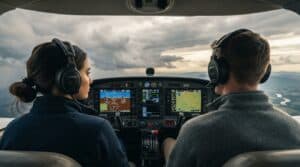
Mastering flight controls is essential for every pilot, from students to seasoned professionals. These instruments and mechanisms are the primary tools that allow pilots to direct an aircraft’s movement, ensuring safe takeoffs, smooth cruising, and precise landings.
Flight controls include the yoke or stick, rudder pedals, throttle, and other systems that adjust the aircraft’s direction, attitude, and altitude. Even gliders rely on basic controls, but advanced aircraft offer more sophisticated systems for fine-tuning performance.
A strong command of these controls—and the surfaces they manipulate—is what separates an accomplished pilot from a beginner. By mastering flight controls, pilots can ensure safe, efficient, and confident flying in any situation.
Flight controls are the essential systems that allow pilots to command an aircraft, guiding it through every phase of flight—from takeoff to landing. These systems are carefully engineered to harness the forces of physics, ensuring precise and safe operation.
Behind every set of flight controls is a team of experts. Aeronautical engineers, test pilots, mechanics, and computer programmers work together to design, refine, and test these systems. Their goal is to create controls that are not only effective but also intuitive and reliable.
Even the earliest aircraft relied on basic flight controls to achieve lift and maneuverability. While these systems were simple, they paved the way for the advanced technology we see today.
Modern aircraft feature sophisticated flight controls, including hydraulics, automation, and even fiber optics. Many use “fly-by-wire” systems, where computers interpret pilot inputs and adjust the controls accordingly. These systems offer benefits like improved efficiency, enhanced safety, and easier diagnostics, though they are often more expensive than traditional mechanical controls.
The complexity of flight controls varies depending on the aircraft. A small sports plane, for example, will have simpler, lightweight controls designed for ease of use. In contrast, a military fighter jet requires highly advanced systems to handle extreme performance demands.
Passenger airplanes strike a balance, focusing on reducing weight to improve fuel efficiency while maintaining precise control. Despite these differences, the core purpose of flight controls remains the same: to give pilots the tools they need to navigate the skies safely and efficiently.
At their core, flight controls are designed to manage three fundamental movements: pitch, roll, and yaw. These movements allow pilots to control the aircraft’s attitude and direction, ensuring safe and efficient flight.
These principles apply to all aircraft, from small gliders to massive commercial jets. While the complexity of flight controls may vary, the basic mechanics remain the same.
In addition to these primary controls, many aircraft feature secondary systems like flaps, slats, and spoilers. These enhance performance during specific phases of flight, such as takeoff, landing, or high-speed cruising.
Understanding these general principles is essential for pilots, as they form the foundation of safe and effective aircraft operation. Whether you’re flying a simple trainer plane or a state-of-the-art jet, mastering flight controls is key to becoming a skilled aviator.
An airplane’s primary flight controls are the essential systems that manage its movement along the three axes: pitch, roll, and yaw. These controls—ailerons, elevator, and rudder—work together to govern airflow and air pressure around the aircraft, affecting both lift and drag.
The ailerons control the aircraft’s roll, or its tilt to the left or right. Mounted on the edges of the wings, they work in opposition: when one aileron rises, the other lowers. This creates differential lift, allowing the aircraft to bank and turn smoothly.
The elevator manages the aircraft’s pitch, determining whether the nose points up or down. Located on the horizontal stabilizer at the tail, the elevator adjusts the angle of attack, helping the aircraft climb, descend, or maintain level flight.
The rudder controls the aircraft’s yaw, or its side-to-side movement. Hinged to the vertical stabilizer, the rudder is operated by pedals at the pilot’s feet. It helps maintain directional stability, especially during turns or crosswind landings.
Together, these primary flight controls form the foundation of aircraft maneuverability. By mastering their use, pilots can ensure precise and safe control in every phase of flight.
While primary flight controls are essential for basic aircraft maneuverability, secondary flight controls enhance performance and efficiency. These systems are not strictly necessary for safe takeoff, cruising, or landing, but they significantly improve an aircraft’s capabilities.
Secondary controls were introduced after early aviation pioneers proved the feasibility of powered flight. Today, they are a standard feature on most aircraft, helping pilots optimize performance in various phases of flight.
Flaps are critical during takeoff and landing. By extending from the wings, they increase lift at lower speeds, allowing for safer and more controlled operations.
These include slats, flaps, and cuffs attached to the wing’s leading edge. They reduce the wing’s angle of attack, delaying the onset of stalls and improving safety during low-speed flight.
Spoilers reduce lift and increase drag, helping the aircraft descend and decelerate more efficiently. They are particularly useful during landing and high-speed flight adjustments.
Trim systems allow pilots to maintain altitude without constant manual adjustments. By fine-tuning the aircraft’s balance, they reduce pilot workload and improve fuel efficiency.
Flight schools vary in how they introduce secondary flight controls. Some instructors wait until students are comfortable with primary controls, while others teach both systems simultaneously. Regardless of the approach, mastering these controls is key to becoming a skilled and efficient pilot.
Advancements in technology have transformed flight controls, making them more precise, efficient, and reliable. From mechanical systems to fly-by-wire technology, these innovations have revolutionized how pilots interact with their aircraft.
Fly-by-wire systems replace traditional mechanical linkages with electronic interfaces. Pilots’ inputs are transmitted to computers, which then adjust the control surfaces. This technology enhances precision, reduces weight, and improves safety by providing real-time feedback and automated corrections.
Modern aircraft often feature integrated systems that combine flight controls with navigation, communication, and monitoring tools. This integration allows for smoother operations, reduced pilot workload, and enhanced situational awareness.
Emerging technologies, such as artificial intelligence and advanced materials, promise to further enhance flight controls. These innovations could lead to even greater efficiency, safety, and adaptability in the years to come.
Understanding flight controls—both primary and secondary—is essential for every pilot. These systems are the foundation of safe and efficient flight, enabling precise control over an aircraft’s movement and performance.
From the basic principles of pitch, roll, and yaw to the advanced technology of fly-by-wire systems, flight controls have evolved significantly over the years. By mastering these systems, pilots can ensure safe takeoffs, smooth cruising, and precise landings.
As technology continues to advance, the future of flight controls looks brighter than ever. Whether you’re a student pilot or a seasoned aviator, staying informed and skilled in these systems is key to navigating the skies with confidence and expertise.
Contact the Florida Flyers Flight Academy Team today at (904) 209-3510 to learn more about how to do the foreign pilot license conversion in 4 steps.