
ⓘ TL;DR
Every student pilot walks into the FAA Private Pilot Exam expecting a memory test. That assumption is why so many walk out with a failing score and a hollow feeling in their stomachs.
The exam punishes memorization ruthlessly. Question banks and prep apps create a false confidence that evaporates the moment the FAA presents a scenario you have never seen before. You can study every answer and still fail because you never understood the question.
This article reveals the strategic thinking behind the test, the true cost of taking it, and a study approach built on understanding rather than recall. Passing on your first attempt is about how you think, not what you memorize. Here you’ll find the exact framework that separates pilots who pass from those who retake.
The FAA Private Pilot Exam punishes students who treat it like a vocabulary quiz. Memorizing correct answers without understanding the aeronautical reasoning behind them builds a fragile foundation that collapses under pressure. That pressure is real. The story, shared in a flying community forum, is not unusual. It is the predictable outcome of studying answers instead of concepts.
Prepware and Sporty’s are excellent resources. They are not substitutes for understanding. When the FAA rephrases a question or changes a scenario, the memorized answer becomes useless. The concept behind it does not.
The exam tests judgment, not recall. Every question presents a situation that demands a decision. The correct choice reflects a pilot’s ability to weigh risks, apply regulations, and prioritize safety. That is why a student can ace every practice test and still fail the real thing.
The failure is not a lack of intelligence. It is a lack of strategic preparation. More tools do not equal better preparation. A focused approach that builds understanding outperforms a scattered one that builds familiarity. The right way to study exists. It starts with how you think about the questions, not how many you can answer.
Watch how a student handles a weather question and you will see the difference. The memorizer recalls that rain reduces visibility. The prepared pilot asks what that means for the approach, the margins, and the go-around decision. That second habit is what the exam actually rewards. Build it during study and the test becomes a conversation with the regulations rather than a battle against them.
The FAA Private Pilot Exam is a map of how the FAA thinks a pilot should decide, not a list of facts to recall. Each subject area exists to test whether you can apply a rule to a situation you have never seen before.
The FAA bases the private pilot test on section 61.105 of its rules, which defines the aeronautical knowledge areas every pilot must master. The exam pulls questions from five dominant areas, and each one tests a different kind of judgment.
Questions here ask what you can do, where you can do it, and who has priority. You will see scenarios about right-of-way, minimum altitudes, and which airspace requires a clearance. The FAA tests this because a pilot who misreads airspace classification can create a midair collision risk.
Expect questions on interpreting METARs, TAFs, and weather radar imagery. The exam wants to know if you can look at a conditions report and decide whether a flight is safe. Pilots who skip this section are the ones who get trapped by afternoon thunderstorms.
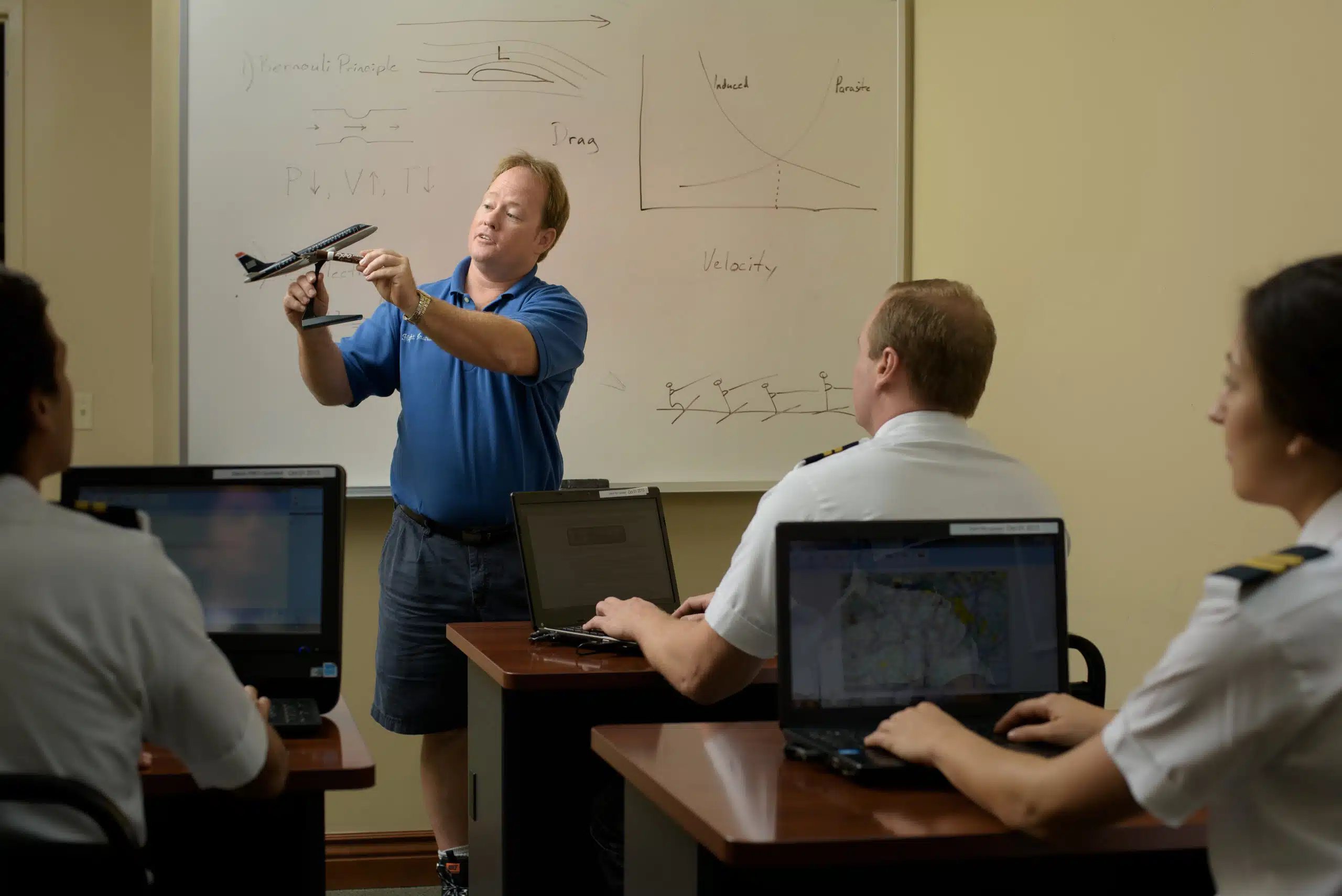
This area covers lift, drag, stalls, and the effects of weight and balance on your takeoff roll. The questions force you to compute density altitude and predict performance changes. Understanding the physics behind the numbers is what separates a pilot from someone who just memorized a chart.
You will plot courses, calculate fuel burn, and interpret VOR and GPS equipment. The FAA tests your ability to plan a route that accounts for winds, terrain, and alternate airports. A wrong calculation here means a real diversion, not just a wrong answer on a screen.
Questions cover preflight inspections, risk management, and the physiological effects of flying. The FAA wants to see that you recognize when fatigue or pressure is compromising your judgment. This is where the exam becomes a test of character, not just knowledge. Every FAA knowledge tests question you face will trace back to one of these five areas. Master the reasoning behind each, and the specific question wording stops mattering.
Most student pilots budget for the exam fee and nothing else. That is a mistake that turns a manageable expense into a shock at the worst possible moment.
The FAA Private Pilot Exam costs more than the test itself. The real expense is the retest cycle that follows a failed attempt, and that cycle is entirely avoidable with the right preparation.
| Cost Component | What It Covers | Why It Matters |
|---|---|---|
| Knowledge Test Fee | The written exam itself | Paid directly to the testing center |
| Retest Fee | A second attempt after a failure | Full price again, plus lost time |
| Instructor Endorsement | Sign-off required to take the test | You cannot schedule without it |
| Prep Course | Study materials and practice tests | Ranges from free to several hundred dollars |
The FAA contracts knowledge test administration to PSI Services, so scheduling and payment happen through their network of testing centers. That means the fee structure varies slightly by location and is not negotiable.
Here is the part most guides bury: you do not need an expensive prep course to pass. Free resources cover the entire testable subject matter, and many students pass using only those materials plus the FAA’s own sample questions. Budget for the exam, the endorsement, and one retest. If you pass on the first attempt, that retest money becomes a celebration fund. If you do not, you are covered.
The gap between a passing score and a retest is often a single misunderstood concept. Weather theory and sectional chart reading cause more failures than complex aerodynamics ever will.
Treat the retest fee as a second tuition payment. Budget for it before you schedule, then build preparation around the topics that actually trip pilots up. Passing on the first attempt is the cheapest preparation strategy available.
Passing the FAA Private Pilot Exam on the first attempt comes down to how you study, not how long you study. Most students burn weeks grinding question banks and still walk into the testing center unprepared for questions they have never seen.
Step 1. Take a free practice test before you open a single study guide. This baseline tells you exactly where you stand and which subject areas need real work.
Step 2. Build your study plan around the FAA’s own materials. The agency publishes official sample tests and learning statements that show precisely what the exam covers.
These resources are free and they come straight from the source that writes your exam. The FAA provides these through its official testing resources, which include sample questions and detailed guidance on what each question is designed to assess.
Step 3. Attack your weak areas with targeted study instead of re-reading everything. If weather questions tripped you up in the baseline test, spend your next sessions on weather theory and weather services.
Step 4. Take multiple practice tests under timed conditions once you have covered your weak spots. The real exam gives you two and a half hours, and pacing is a skill you have to train like any other.
Step 5. Review every question you miss, not just the ones you got wrong. A correct guess teaches you nothing. A wrong answer shows you exactly which concept the FAA expects you to understand.
This process turns the exam into a feedback loop rather than a memory contest. Each practice test sharpens your understanding of the aeronautical decision-making the FAA actually rewards, and that understanding is what carries you through the real thing.
Work through these study tips consistently and you walk into the testing center knowing you have already seen the hardest version of what the exam can throw at you. That confidence outweighs any question bank.
The FAA Private Pilot Exam does not reward the students who memorize the most questions. It punishes them. Question banks and prep apps create a dangerous illusion of readiness that collapses the moment the FAA rewords a scenario.
This approach feels safe because it produces high practice scores. Students see familiar answers, assume they know the material, and walk into the test with confidence that has no foundation. The reasoning breaks down because the exam never asks the same question twice.
Before: A student buys two prep apps and grinds through every question bank for three weeks. Practice scores hit the high 80s, so the student books the exam expecting a formality. The actual test presents the same concepts wrapped in unfamiliar phrasing, and the student freezes. One pilot described this exact experience on Reddit after failing with a 67% despite using both Prepware and Sporty’s. The tools worked. The strategy did not.
After: The same student uses those apps as a diagnostic, not a curriculum. Each missed question triggers a review of the underlying regulation or aerodynamic principle using FAA resources. Practice tests happen under timed conditions, and every wrong answer gets dissected until the concept, not the answer, sticks. When the FAA changes the wording, the student still recognizes the decision being tested. That is the difference between recalling something and understanding it.
Memorization answers the question in front of you. Understanding answers the question the FAA will actually ask, which is never quite the one you studied. Question banks are a tool for identifying gaps, not a substitute for learning. The students who pass on the first attempt treat every practice question as a starting point for deeper study. The students who fail treat it as the finish line.
The emotional toll of failing the FAA Private Pilot Exam hits harder than the academic one. That gut punch is the real obstacle, not the subject matter.
The exam is unforgiving because it demands applied judgment, not recall. You can know every regulation cold and still freeze on a scenario that combines weather, airspace, and a performance chart into one decision. The test punishes students who memorized answers instead of building the mental muscle to reason through unfamiliar situations. Failure feels personal because aviation attracts high achievers.
That doubt is a liar. A failed attempt is data, not a verdict on your future as a pilot. The students who bounce back fastest treat the score report as a diagnostic tool, identifying the exact knowledge gaps and rebuilding from there. Resilience after a failure is a learned skill, and it is the one that separates pilots who finish from those who quit.
Structured training programs, like those at Florida Flyers Flight Academy, build this confidence from day one by threading written test preparation into every flight lesson. When the ground and the cockpit reinforce each other, the exam stops being a separate mountain to climb. It becomes a checkpoint on a road you are already traveling.
Pass rates tell a different story than the fear does. Most students who reach the exam room have already proven they can learn the material, which is why the failure rate has less to do with intelligence and more to do with test-day nerves and weak preparation habits.
Walk into the exam the way you would walk into a flight review. Bring a clear head, a calculator you know how to use, and the willingness to skip a question that is eating your time. The exam rewards pilots who manage their energy as deliberately as they manage their altitude.
Three months is enough time to earn a private pilot license, but only under the right conditions. That timeline demands full-time commitment, not weekend hobby hours. The FAA Private Pilot Exam fits into this window only when training and study run in parallel.
The three-month promise falls apart for students who treat flying like a casual side project. Weather cancellations, maintenance delays, and instructor availability all eat into the calendar.
Florida’s afternoon thunderstorms routinely ground afternoon flights from spring through fall. Students who book lessons only on weekends lose entire weeks to weather. Morning schedules and flexible availability keep training moving when conditions cooperate.
Flight schools with larger fleets recover faster from maintenance issues. Multiple aircraft options mean one mechanical problem does not erase a week of progress.
An instructor who flies with multiple students back-to-back cannot give any of them the attention a tight timeline requires. Dedicated instructor pairing matters more than most students realize. The relationship between instructor and student determines how quickly weak areas get identified and corrected.
Accelerated programs at schools like Florida Flyers Flight Academy structure training so ground and flight lessons reinforce each other daily. That integration is what makes a compressed private pilot license timeline realistic rather than aspirational.
The FAA sets a minimum of 40 flight hours, but that floor rarely reflects reality. Most students need more hours to reach checkride standards, and those extra hours add days to the calendar. Training intensity matters more than total hours. Flying several times per week builds skill faster than spreading the same hours across months.
Three months works when every flight has a purpose and every ground lesson prepares the next cockpit session. Sporadic training forces students to relearn skills between lessons, quietly extending the timeline beyond any plan.
The honest answer is that three months is achievable, not guaranteed. Students who commit full-time, train at a school built for pace, and treat the written exam as part of the flight training process will make that window. Everyone else should plan for longer.
The FAA Private Pilot Exam rewards pilots who understand the logic behind each rule, not those who memorize the answers. That distinction changes everything about how you prepare. You now know the difference between studying to pass and studying to fly.
Walk into that testing center with a structured plan and the confidence that comes from genuine understanding. The pilot who comprehends the material does not fear reworded questions. That pilot walks out with a passing score and the knowledge that will keep them safe in the air.
Start with the free FAA resources and a baseline practice test today. Build your study around the concepts, not the question bank. The cockpit is waiting for someone who thinks like a pilot, not someone who memorized like a student.
The FAA Private Pilot Exam is challenging because it tests applied aeronautical decision-making, not simple recall of facts. A passing score requires understanding the reasoning behind each rule, which is why students who memorize question banks often fail when they encounter reworded scenarios.
The exam fee itself is only part of the total cost, with retest fees and testing center charges adding up quickly for those who fail. Scheduling goes through PSI Services, and the fee structure applies every time you sit for the test, so a first-attempt pass is the most budget-friendly outcome.
Yes, the FAA publishes official sample tests and learning statements at no cost through its training and testing resources. These free materials mirror the actual exam format more closely than many paid question banks, making them the smartest starting point for any study plan.
Three months is a realistic timeline for a private pilot license, but only with full-time commitment and a structured training schedule. Weather, aircraft availability, and instructor schedules all influence the pace, which is why accelerated programs are designed around these constraints from day one.
A failed attempt means paying the full exam fee again and getting an instructor endorsement before retaking the test. The score report identifies the exact knowledge areas that need work, which turns the failure into a targeted study plan for the retake.


You May Like
