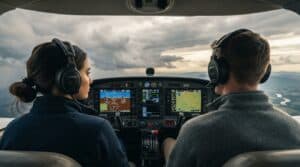
Soaring through the skies, navigating vast expanses of airspace, and experiencing the thrill of flight – these are the dreams that fuel the aspirations of countless individuals worldwide. However, in the realm of aviation, safety is paramount, and stringent regulations govern the skies. This is where the European Union Aviation Safety Agency (EASA) Certification comes into play, serving as the gold standard for pilots seeking to embark on an aviation career in Europe’s aviation industry.
As an aspiring pilot, obtaining your EASA Certification is not just a formality; it’s a testament to your dedication, knowledge, and commitment to upholding the highest standards of safety and professionalism. This comprehensive certification process ensures that you possess the necessary skills, training, and expertise to navigate the skies with confidence and precision.
The EASA Certification is a crucial requirement for any individual seeking to pursue a career as a pilot within the European Union and beyond. This certification not only validates your competence but also opens doors to a vast array of opportunities within the aviation industry. Here are a few compelling reasons why obtaining your EASA Certification is essential:
Compliance with Regulations: The EASA Certification ensures that you meet the rigorous standards and regulations set forth by the European Union Aviation Safety Agency, making you eligible to operate aircraft within the European airspace.
Global Recognition: The EASA Certification is recognized and respected worldwide, allowing you to pursue piloting opportunities across international borders and expand your career horizons.
Enhanced Safety Standards: By undergoing the comprehensive training and assessments required for EASA Certification, you demonstrate your commitment to upholding the highest levels of safety, which is paramount in the aviation industry.
Career Advancement: Possessing an EASA Certification can significantly enhance your career prospects, enabling you to explore a wide range of piloting roles, from commercial airlines to private aviation, and even military aviation.
Embarking on the journey to become an EASA-certified pilot requires dedication, perseverance, and a structured approach. Here are the essential steps you’ll need to follow:
Choosing the Right Flight School: The first step is selecting a reputable and EASA-approved flight school that offers comprehensive training programs tailored to meet the certification requirements.
Meeting the Prerequisites: Ensure that you meet the necessary prerequisites, such as age, educational qualifications, and medical fitness, as outlined by the EASA regulations.
Theoretical Knowledge Training: Undergo extensive theoretical knowledge training, covering subjects like aviation law, flight planning, meteorology, navigation, and aircraft systems.
Flight Training: Engage in practical flight training under the guidance of experienced instructors, mastering various aircraft maneuvers and developing essential piloting skills.
Skill Tests and Examinations: Successfully complete the required skill tests, written examinations, and assessments to demonstrate your proficiency and readiness for certification.
Obtaining the EASA License: Once you’ve fulfilled all the requirements, you’ll be awarded the coveted EASA license, granting you the authority to operate aircraft within the European Union and beyond.
Selecting the right flight school is a critical decision that can significantly impact your journey towards EASA Certification. When evaluating potential flight schools, consider the following factors:
Accreditation and Approval: Ensure that the flight school is EASA-approved and has the necessary accreditations to provide comprehensive training programs.
Experienced Instructors: Seek a flight school with a team of highly qualified and experienced instructors who can impart their knowledge and expertise effectively.
Training Facilities and Resources: Assess the quality of the training facilities, including modern aircraft, simulators, and well-equipped classrooms, to ensure a comprehensive learning experience.
Reputation and Student Success Rate: Research the flight school’s reputation within the industry, and inquire about their student success rates in obtaining EASA Certification.
Flexible Scheduling and Support: Consider flight schools that offer flexible scheduling options and comprehensive support services to accommodate your unique needs and circumstances.
To obtain your EASA Certification, you must meet a set of stringent requirements outlined by the European Union Aviation Safety Agency. These requirements are designed to ensure that pilots possess the necessary knowledge, skills, and competencies to operate aircraft safely and efficiently. Here are some of the key requirements:
Age: You must meet the minimum age requirement, which varies depending on the type of pilot license you’re pursuing.
Educational Qualifications: Certain educational qualifications, such as a high school diploma or equivalent, may be required for specific pilot licenses.
Medical Fitness: You must undergo a comprehensive medical examination and meet the required physical and mental fitness standards set by EASA.
Theoretical Knowledge: You’ll need to demonstrate a thorough understanding of various subjects, including aviation law, flight planning, meteorology, navigation, and aircraft systems, through written examinations.
Flight Training: Completing a specific number of hours of flight training, both in the air and in simulators, is mandatory to develop the necessary practical skills.
Skill Tests and Assessments: You’ll be required to pass various skill tests and assessments, demonstrating your proficiency in areas such as aircraft handling, navigation, and emergency procedures.
Language Proficiency: Depending on the type of pilot license, you may need to demonstrate proficiency in the English language, as it is the universal language of aviation.
It’s important to note that the specific requirements may vary based on the type of pilot license you’re pursuing, such as a Private Pilot License (PPL), Commercial Pilot License (CPL), or Airline Transport Pilot License (ATPL). Consult with an EASA-approved flight school or refer to the official EASA regulations for the most up-to-date and comprehensive information.
To obtain your EASA Certification, you’ll need to complete a comprehensive training program that combines theoretical knowledge and practical flight training. Many flight schools offer a variety of training programs tailored to meet the specific needs and goals of aspiring pilots. Here are some of the common training programs:
Integrated Training Programs: These programs provide a structured and streamlined approach to obtaining your EASA Certification. They typically combine theoretical knowledge instruction with flight training, allowing you to progress through the various stages of training in a seamless manner.
Modular Training Programs: If you have prior aviation experience or prefer a more flexible approach, modular training programs may be a suitable option. These programs allow you to complete the theoretical knowledge and flight training components separately, at your own pace.
Airline Cadet Programs: Several airlines offer cadet programs, which provide aspiring pilots with the opportunity to receive comprehensive training and potentially secure employment with the airline upon successful completion of the program.
Conversion Courses: If you already hold a pilot license from another country or organization, conversion courses are available to help you meet the EASA requirements and obtain the necessary certifications.
When choosing a training program, consider factors such as the duration, cost, flexibility, and the program’s reputation and success rate. Additionally, ensure that the program is approved by EASA and meets all the necessary requirements for certification.
Obtaining your EASA Certification can be a significant investment, both in terms of time and financial resources. The costs associated with the certification process can vary depending on several factors, including the type of pilot license you’re pursuing, the training program you choose, and the location of the flight school. Here’s an overview of some of the common costs you may encounter:
Tuition Fees: The tuition fees for EASA-approved training programs can range from tens of thousands to hundreds of thousands of euros, depending on the program’s duration and scope.
Flight Training Costs: Flight training is a substantial portion of the overall cost, as it involves the rental of aircraft, fuel, and instructor fees. These costs can vary based on the type of aircraft, the number of flight hours required, and the location of the flight school.
Accommodation and Living Expenses: If you’re attending a flight school away from your home, you’ll need to factor in the costs of accommodation, transportation, and living expenses for the duration of your training.
Examination and Licensing Fees: You’ll need to pay fees for the various examinations, assessments, and licensing processes required for EASA Certification.
Additional Costs: Other costs may include textbooks, study materials, medical examinations, and personal equipment such as flight bags, headsets, and navigation tools.
It’s important to carefully research and compare the costs of different training programs and flight schools to find an option that aligns with your budget and financial capabilities. Additionally, explore potential financing options, such as student loans, scholarships, or sponsorships, to help alleviate the financial burden.
To obtain your EASA Certification, you’ll need to accumulate a specific amount of flight experience, both in the air and in simulators. The flight experience requirements vary depending on the type of pilot license you’re pursuing and the training program you choose. Here’s an overview of the typical flight experience requirements:
Private Pilot License (PPL): For a PPL, you’ll need to complete a minimum of 45 hours of flight time, including at least 25 hours of dual instruction and 10 hours of solo flight.
Commercial Pilot License (CPL): To obtain a CPL, you’ll need to accumulate a minimum of 200 hours of flight time, including specific requirements for cross-country flights, night flying, and instrument training.
Airline Transport Pilot License (ATPL): For an ATPL, which is the highest level of pilot certification, you’ll need to complete a minimum of 1,500 hours of flight time, including specific requirements for multi-engine aircraft, instrument flight rules (IFR) operations, and other advanced training.
It’s important to note that these flight experience requirements are subject to change and may vary based on the specific regulations of your country or region. Additionally, some flight schools or training programs may have additional requirements or recommendations for flight experience to ensure that you’re well-prepared for the certification process.
To demonstrate your knowledge, skills, and competencies, you’ll need to successfully complete a series of exams and assessments as part of the EASA Certification process. These assessments are designed to evaluate your theoretical knowledge, practical flying abilities, and overall readiness to operate aircraft safely and efficiently. Here’s an overview of the typical exams and assessments:
Theoretical Knowledge Exams: You’ll need to pass written examinations covering a range of subjects, including aviation law, flight planning, meteorology, navigation, and aircraft systems. These exams are typically conducted in a controlled environment and are designed to test your understanding of the theoretical concepts.
Skill Tests: Practical skill tests are conducted in an aircraft or simulator to evaluate your flying abilities, such as aircraft handling, navigation, and emergency procedures. These tests are conducted by certified EASA examiners and are designed to assess your proficiency in real-world scenarios.
Progress Checks: Throughout your training, you’ll undergo periodic progress checks to ensure that you’re meeting the required standards and to identify areas for improvement. These checks may include both theoretical and practical assessments.
Language Proficiency Assessments: Depending on the type of pilot license you’re pursuing, you may need to demonstrate proficiency in the English language, which is the universal language of aviation. These assessments typically involve oral and written components.
Medical Examinations: You’ll need to undergo regular medical examinations to ensure that you meet the required physical and mental fitness standards for piloting aircraft. These examinations are conducted by EASA-approved aeromedical examiners.
It’s important to prepare thoroughly for these exams and assessments, as they play a crucial role in determining your eligibility for EASA Certification. Additionally, it’s essential to stay up-to-date with any changes or updates to the assessment requirements, as they may be subject to periodic revisions.
Obtaining your EASA Certification opens up a world of exciting career opportunities in the aviation industry, both within Europe and globally. With your certification in hand, you’ll be qualified to pursue a variety of roles, each offering its own unique challenges and rewards. Here are some of the potential career paths you can explore:
Commercial Airline Pilot: One of the most coveted careers for EASA-certified pilots is becoming a commercial airline pilot. You can fly for major airlines, regional carriers, or charter operations, transporting passengers and cargo across domestic and international routes.
Corporate and Private Aviation: If you prefer a more personalized flying experience, you can explore opportunities in corporate and private aviation. This could involve piloting corporate jets for businesses, flying private charters, or providing air transportation services for high-net-worth individuals.
Flight Instruction: Share your knowledge and passion for aviation by becoming a certified flight instructor. You can teach aspiring pilots at flight schools, universities, or aviation academies, helping to shape the next generation of aviators.
Air Ambulance and Rescue Operations: Use your piloting skills to make a difference by joining air ambulance or rescue operations, transporting patients or providing support during emergency situations.
Aerial Photography and Survey: Combine your love for flying with your passion for photography or surveying by pursuing careers in aerial photography, mapping, or surveying industries.
Military Aviation: Many EASA-certified pilots also explore opportunities in military aviation, serving as pilots for air forces or other military branches, both within Europe and internationally.
Aviation Management and Administration: With your extensive knowledge and experience in the aviation industry, you can transition into management or administrative roles, overseeing operations, training programs, or regulatory compliance for airlines, airports, or aviation organizations.
The possibilities are vast, and your EASA Certification will serve as a valuable asset, opening doors to a variety of rewarding careers in the dynamic and ever-evolving aviation industry.
Obtaining your EASA Certification is a significant achievement, but it’s important to remember that maintaining and renewing your certification is an ongoing process. The aviation industry is constantly evolving, and pilots must stay current with the latest regulations, procedures, and best practices to ensure the highest levels of safety and professionalism. Here are some key aspects of maintaining and renewing your EASA Certification:
Recurrent Training: Pilots are required to undergo regular recurrent training to maintain their skills and knowledge. This may include simulator sessions, ground school refreshers, and flight training to ensure proficiency in various areas, such as aircraft systems, emergency procedures, and instrument flying.
Medical Examinations: To maintain your medical fitness for flying, you’ll need to undergo periodic medical examinations as specified by EASA regulations. These examinations are conducted by EASA-approved aeromedical examiners and ensure that you meet the required physical and mental health standards.
License Renewal: EASA pilot licenses have expiration dates, and you’ll need to renew your license periodically to maintain its validity. The renewal process typically involves demonstrating recent flight experience, completing any required training or assessments, and meeting the applicable EASA requirements.
Continuing Professional Development (CPD): Many airlines and aviation organizations encourage or require pilots to engage in ongoing professional development activities, such as attending seminars, workshops, or taking additional training courses. This helps pilots stay up-to-date with industry developments, new technologies, and best practices.
Record Keeping: It’s essential to maintain accurate and detailed records of your flight experience, training, medical examinations, and any other relevant documentation. These records will be required during license renewals, job applications, or when transitioning to new roles within the aviation industry.
By adhering to these requirements and maintaining a proactive approach to professional development, you’ll ensure that your EASA Certification remains valid and that you continue to meet the highest standards of safety and professionalism in the aviation industry.
Embarking on the journey to become an EASA-certified pilot is a challenging yet rewarding endeavor. By obtaining this prestigious certification, you’ll not only gain the skills and knowledge necessary to navigate the skies safely but also open up a world of exciting career opportunities within Europe’s dynamic aviation industry.
Remember, the path to EASA Certification requires dedication, perseverance, and a commitment to excellence. From choosing the right flight school and completing comprehensive training programs to passing rigorous exams and assessments, each step along the way will shape you into a highly skilled and competent pilot.
As you progress through this journey, embrace the challenges and embrace the thrill of flight. Surround yourself with experienced mentors, seek out opportunities for continuous learning, and stay abreast of the latest industry developments and best practices.
As you navigate through the challenges and triumphs of this journey, remember that your EASA Certification is more than just a piece of paper – it’s a testament to your unwavering commitment, resilience, and passion for aviation. With this certification in hand, you’ll join the ranks of elite pilots who uphold the highest standards of safety and professionalism, soaring through the skies and leaving a trail of excellence in your wake.
Embrace the adventure that lies ahead, and let your EASA Certification be the catalyst that propels you towards a fulfilling and exhilarating career in the skies. The journey may be arduous, but the rewards are immeasurable – a life filled with the thrill of flight, the freedom of exploration, and the pride of being part of the esteemed community of EASA-certified pilots.
If you’re ready to take the first step towards your dream of becoming an EASA-certified pilot, reach out to our team of aviation experts at Florida Flyers Flight Academy. We offer comprehensive training programs tailored to meet the EASA requirements, delivered by experienced instructors and utilizing state-of-the-art facilities.
Contact the Florida Flyers Flight Academy Team today at (904) 209-3510 to learn more about the Private Pilot Ground School Course.