

Did you know the median airline pilot salary in the United States has reached a record $226,600 as of late 2026? For many aspiring aviators, the path to these elite earnings feels obscured by a dense fog of hourly rates, per diems, and complex union contracts. It’s common to feel a sense of urgency and perhaps a bit of confusion when comparing the initial cost of professional training against the high-velocity pay scales of major carriers.
We understand that you’re looking for more than just a job; you’re pursuing a high-stakes career that demands excellence and rewards it with unparalleled financial security. This guide provides the strategic clarity you need to navigate the current compensation landscape. We’ll show you how to master the transition from regional first officer to legacy captain, where total packages for widebody pilots can now exceed $500,000 per year.
You will discover a comprehensive breakdown of the 2026 pay tiers, including signing bonuses and 401(k) direct contributions. We will also examine the long-term ROI of elite flight training, ensuring you have the confidence to secure your position in the cockpit of a major airline. This is your definitive roadmap to the summit of professional aviation.
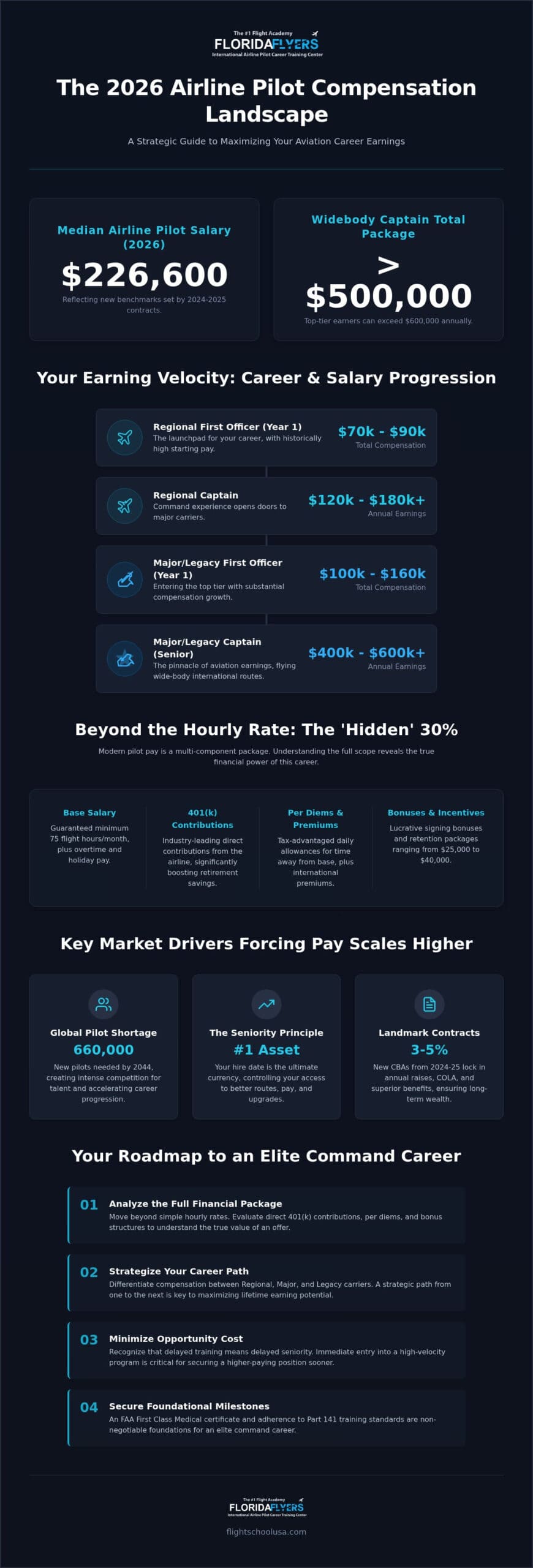
The modern airline pilot salary is no longer a simple hourly calculation. It’s a sophisticated, multi-component financial package designed to attract and retain elite talent. In 2026, the median annual wage for airline pilots has reached $226,600, reflecting the intense competition among carriers. Understanding this landscape requires looking beyond the base rate to include signing bonuses, retention incentives, and substantial retirement contributions. This shift is a direct result of the 2024-2025 contract cycles, where legacy carriers established new benchmarks for professional compensation. These agreements have transformed pilot pay from a variable income into a high-yield career asset.
Collective Bargaining Agreements (CBAs) are the legal frameworks that dictate your financial trajectory. The contracts signed in the mid-2020s introduced aggressive cost-of-living adjustments (COLA) that ensure pay scales remain competitive against inflation through 2026. At the regional level, the focus has pivoted toward retention. Carriers like SkyWest now utilize retention bonuses ranging from $25,000 to $40,000 to stabilize their workforces. These agreements turn a standard job into a protected, long-term career path with transparent, non-negotiable raises. You aren’t just earning a paycheck; you’re operating under a legally binding financial roadmap.
The global demand for aviators remains a primary catalyst for rising pay scales. According to a Aircraft Pilot Overview, the industry faces a projected need for 660,000 new pilots through 2044. This shortage accelerates career progression. Mandatory retirements at legacy carriers create a vacuum that forces rapid upgrades from First Officer to Captain. The Seniority Principle dictates that your date of hire determines your relative rank, directly controlling your ability to bid for high-paying routes, preferred schedules, and rapid equipment upgrades in 2026.
Financial success in this field depends on understanding the gap between guaranteed pay and actual earnings. Most airlines guarantee a minimum of 75 flight hours per month. However, active pilots often exceed this through overtime, holiday pay, and international premiums. When you factor in per diem rates, which have risen by 18-25% following recent union negotiations, the take-home pay significantly exceeds the figures found in standard recruitment brochures. Elite earnings are reserved for those who master the system’s complexities. Your earning potential is limited only by your seniority and your commitment to the flight deck.
The hierarchy of the aviation industry dictates your earning velocity. In 2026, the airline pilot salary is stratified into three distinct tiers: Legacy, Major, and Regional carriers. While the financial pinnacle remains at the Legacy level, the “Regional Premium” has fundamentally altered the entry-level landscape. Historically, starting pay at regional airlines was a barrier to entry; however, 2026 market conditions have pushed first-year total compensation for regional first officers to between $70,000 and $90,000. This shift ensures that the investment in high-level training translates into immediate financial viability.
Seniority remains the ultimate currency. Pay scales are structured around years of service, typically reaching a peak at the 12-year mark. Moving from the right seat to the left seat as a Captain isn’t just a change in responsibility; it’s a massive financial upgrade. According to the BLS Occupational Outlook, this progression is supported by a robust job market, with median pay reflecting the high value placed on command experience. Regional captains now earn from $120,000 to over $180,000, illustrating that the left seat at any level is a position of significant prestige.
Legacy carriers represent the elite tier of compensation. A first-year first officer at a major airline can expect between $100,000 and $160,000 in total compensation. The true financial peak occurs in international long-haul operations. Senior wide-body captains frequently earn between $400,000 and $500,000 annually, with some top-tier earners exceeding $600,000. Narrow-body domestic operations offer slightly lower scales but provide more frequent schedule rotations. Most elite contracts now include year-over-year percentage increases of 3% to 5% to maintain competitive parity across the industry.
For new aviators, regional airlines serve as the critical proving ground. Year 1 first officers benefit from aggressive signing bonuses that range from $15,000 to $20,000. These incentives, combined with retention bonuses, provide a hidden boost to the base hourly rate. Many pilots leverage “Flow-Through” agreements, which provide a guaranteed, non-interview path to a major carrier once seniority requirements are met. This structured progression is best navigated through an Airline Ready Program that prepares you for the rigors of a professional cockpit from day one.
The gross airline pilot salary is only one component of a sophisticated financial engine. Professional aviators recognize that the hourly flight rate represents the baseline, while the total compensation package typically includes an additional 30% in “hidden” value. These components are contractually mandated and provide a level of financial security rarely found in other sectors. For instance, per diem rates for legacy carriers in 2026 have reached between $2.85 and $3.45 per hour. Because this is tax-free reimbursement for expenses incurred while away from base, it functions as a direct net-income boost that bypasses federal withholding entirely.
Maximizing your earnings also requires a strategic approach to scheduling. Premium pay and overtime offer the most direct path to exceeding your base salary. Most contracts offer 150% to 200% of the standard hourly rate for pilots who pick up open trips or work during holiday periods. By mastering the bidding system and positioning yourself for high-value routes, you can significantly increase your annual take-home pay without waiting for a seniority-based raise. This tactical management of your schedule is what separates high-earning professionals from the industry average.
The value of a pilot’s contract extends to robust insurance and profit-sharing mechanisms. Loss-of-license insurance is a critical safeguard, protecting your earning capacity if a medical condition prevents you from maintaining your FAA First Class Medical. Additionally, profit-sharing programs at major airlines often deliver annual bonuses ranging from 5% to 15% of your annual salary. Commuter and deadheading benefits also preserve your capital by ensuring the airline covers the costs of positioning you for duty. These benefits, combined with comprehensive health and dental coverage, create a protective financial shell around your career.
Seniority is not merely a ranking; it’s a multi-million dollar career asset. Every month you delay entering the cockpit of a major carrier, you risk losing your position on the seniority list. This isn’t just about schedule preference. It’s about reaching the peak airline pilot salary faster. A single month of seniority can equate to $100,000 in career earnings during your final years as a widebody captain. To mitigate this risk, professional aviators utilize a Fixed-Price Flight Training Program. This strategic choice locks in costs and serves as a critical hedge against training inflation, ensuring your capital is deployed with maximum efficiency.
Speed is the most significant variable in your ROI calculation. Reaching the 1,500-hour milestone 12 months earlier translates into a full year of major airline seniority and a year of legacy-tier pay. The CFI Fast Track Program is the most efficient mechanism for this progression. It allows you to build hours while earning, effectively reducing the net cost of your education. When you compare the interest on training loans to the projected Year 1-3 earnings at a major carrier, the math is undeniable. Velocity is the only metric that matters in a high-stakes hiring market. Excellence demands a fast-track approach.
Precision in budgeting is mandatory for professional development. Hourly rates are often a trap for the unprepared, leading to unexpected costs that can derail a student’s financial standing. By selecting Airline Pilot Career Training, you ensure transparency and immediate marketability. Elite academies also provide integrated solutions like Student Housing, which eliminates administrative friction and logistical delays. This allows for total immersion in the rigors of flight training, protecting your investment from the distractions of the traditional student experience. Excellence requires a focused environment, and a structured housing plan is a prerequisite for high-performance training.
Take control of your financial future by applying for our Fixed-Price Career Program to lock in your training velocity.
Securing an elite airline pilot salary requires more than technical skill; it demands a disciplined adherence to regulatory and professional milestones. The first mandatory step is obtaining your FAA First Class Medical certificate. This is the gatekeeper of your career. Without this certification, you can’t legally exercise the privileges of an Airline Transport Pilot. Completing this medical evaluation early protects your investment by confirming you meet the rigorous health standards required for long-haul command before you begin the intensive flight training process.
Professional progression in 2026 favors those who train within a Part 141 environment. These academies provide the structured, high-velocity curriculum necessary to move from zero experience to a commercial cockpit with precision. By following a syllabus approved by the FAA, you ensure your training meets the exact standards expected by major carriers. This methodical approach reduces the risk of training delays and prepares you for the high-stakes evaluation cycles common in airline training centers.
Success in aviation is built on a three-phase asset development strategy. Phase 1 focuses on moving from zero experience to your Commercial Pilot certificate. This phase is the foundation of your professional standing. Phase 2 involves strategic time building, primarily through the role of a Certified Flight Instructor. This is the most efficient, low-cost path to reaching the 1,500-hour requirement for your ATP certificate. Finally, Phase 3 is your entry into a regional carrier, where your training investment begins to deliver a professional ROI through first-year bonuses and seniority accumulation.
Our programs are engineered to produce aviators who are “Airline Ready” from their first hour of instruction. We align our training standards with the hiring requirements of the world’s premier carriers, ensuring our graduates possess the discipline and technical accuracy needed to excel in competitive interviews. In a market that demands excellence, training in an elite environment is a significant differentiator. We provide the resources and mentorship required to navigate the complex transition from student to professional pilot with unwavering confidence. Our Airline Ready Program ensures you don’t just meet the minimums; you exceed the expectations of legacy recruiters.
Launch your high-earning aviation career with Flight School USA today.
The trajectory of an airline pilot salary in 2026 is defined by more than just flight hours; it’s a strategic asset built on contractually mandated benefits and rapid seniority progression. You’ve seen that total compensation now encompasses aggressive direct retirement contributions and tax-free per diems that fundamentally reshape your lifetime net worth. The math is clear: every month of delay in your training represents a significant loss in career-end earnings. Securing your seniority number today is the most critical financial decision of your professional life.
Flight School USA provides the rigorous, high-stakes environment required to master this landscape. With our FAA Part 141 Certified Training Excellence and Fixed-Price Career Tracks, we deliver the financial predictability and professional discipline that legacy carriers demand. From comprehensive student housing to M1 Visa support, we handle the logistics so you can focus on excellence. It’s time to transition from the classroom to the command seat.
Secure Your Professional Future: View Our Career Training Programs
The flight deck of a major airline is within your reach. Take the first step toward elite command and claim your position among the industry’s top earners.
First-year regional first officers typically earn between $70,000 and $90,000 in total compensation. This figure includes base hourly pay, per diem rates, and initial signing bonuses. While the base rate is the foundation, the “Regional Premium” introduced in recent contract cycles has elevated entry-level pay to historic highs. This ensures that new aviators can maintain financial stability while building the seniority required for transition to major carriers.
Senior captains at legacy airlines can earn between $350,000 and over $500,000 annually. Widebody captains on international routes often reach the higher end of this spectrum, especially when factoring in profit-sharing and retention bonuses. This elite airline pilot salary tier is the reward for decades of disciplined service and command experience. These earnings are protected by robust collective bargaining agreements that ensure consistent year-over-year increases for the industry’s most senior professionals.
No, the hourly rate only applies to “block time,” which is the period from when the aircraft moves under its own power until it reaches the destination gate. Time spent during pre-flight briefings, airport transits, or hotel stays is compensated through per diem rates. These tax-free reimbursements, which range from $2.85 to $3.45 per hour for legacy pilots in 2026, cover expenses while away from base and are separate from the flight pay.
Most pilots reach the $200,000 bracket within five to seven years of entering the industry. This timeline typically involves two years at a regional carrier followed by a transition to a major airline. Once you secure a first officer position at a legacy carrier, your total compensation, including 401(k) direct contributions and overtime, often exceeds this threshold by your third year of service. Seniority progression is the primary driver of this rapid income growth.
The “Big Three” legacy carriers, United Airlines, Delta Air Lines, and American Airlines, consistently offer the highest compensation packages in the United States. These airlines provide the most aggressive pay scales, retirement contributions, and profit-sharing programs. Other major carriers like Southwest and Alaska Airlines also offer competitive rates that often mirror legacy standards. Selecting a career path that leads to these institutions is the most effective way to maximize your long-term earning potential.
Signing bonuses are one-time payments issued upon the successful completion of initial training or after a specific period of service. In 2026, regional airlines offer bonuses between $15,000 and $20,000, while major carriers may provide significantly higher incentives to attract experienced captains. These funds are usually subject to “clawback” provisions, meaning you must remain with the airline for a predetermined duration, often one to two years, to keep the full amount.
Yes, the return on investment for professional flight training is exceptionally high. While the initial cost can range from $80,000 to $150,000, the lifetime earnings of a professional pilot can exceed $10 million. Utilizing a Fixed-Price Career Program provides the financial predictability needed to hedge against inflation. When compared to the rapid ascent into the $226,600 median salary bracket, the upfront training costs are a necessary and highly profitable capital deployment.
During the time-building phase, most pilots earn a modest income as a Certified Flight Instructor (CFI). While this pay is lower than a professional airline pilot salary, it allows you to build the 1,500 hours required for an ATP certificate without incurring further debt. Our CFI Fast Track Program is designed to move you through this phase with maximum velocity. This period is a critical investment in your seniority, serving as the bridge to high-earning commercial roles.


