

How can I get a Commercial Pilot License
You dream of flying for a living, right? Not just watching aircraft glide across the sky but being the one at the controls.
Understanding the commercial pilot license requirements is the first step toward that dream. A commercial pilot license is your official permission to fly for hire, showing you have the training, knowledge, and confidence to handle professional aviation.
Whether you plan to fly for airlines, private charters, or cargo operations, knowing the commercial pilot license requirements helps you prepare the right way. It ensures you meet every standard that leads to certification and a global aviation career.
This guide breaks everything down simply. You will learn what it takes, how to qualify, and what to expect from your first flight hour to your final checkride.
What Is a Commercial Pilot License (CPL)?
A commercial pilot license is the qualification that allows a pilot to fly an aircraft for payment or hire. It is the difference between flying for passion and flying as a profession.
To earn it, you must meet several commercial pilot license requirements that confirm your knowledge, flight experience, and decision-making skills. These standards are set by aviation authorities such as the FAA, EASA, or DGCA, depending on your country.
Holding a CPL means you can work as a pilot for airlines, cargo companies, or private charters. It also opens the door to advanced licenses such as the Airline Transport Pilot License (ATPL).
In short, once you complete all commercial pilot license requirements, you become eligible to earn from what most people only dream of; flying for a living.
Basic Eligibility Requirements
Every aspiring pilot must meet specific commercial pilot license requirements before starting training. These standards confirm that you have the educational background, communication skills, and maturity needed to handle the responsibility of flight.

Key eligibility requirements include:
- Minimum age
- Educational qualification
- English proficiency
- Valid identification
To begin, you must be at least 18 years old when you apply for your commercial pilot license. This ensures you are mentally and emotionally ready to make critical decisions in the cockpit. Aviation authorities across the world set this as the minimum age for professional training.
Your education also matters. You must have completed secondary school or its equivalent, with Physics and Mathematics as core subjects. These two subjects are the foundation of navigation, aerodynamics, and flight planning.
Another requirement is English proficiency. Since all communication between air traffic control and pilots is conducted in English, being fluent ensures safety and accuracy throughout your flight career.
Finally, your identification documents must meet the standards of your country’s aviation authority. This confirms your nationality and helps in the verification of your flight records and certifications.
Meeting these commercial pilot license requirements places you among candidates who are officially qualified to begin ground school, medical exams, and flight training.
Medical and Physical Fitness Requirements
Every pilot must be in top physical and mental shape to handle the demands of professional flying. For this reason, meeting the commercial pilot license requirements also means passing strict medical and fitness evaluations before training begins.
Medical requirements include:
- Class 1 medical certificate
- Vision and hearing standards
- Mental and physical stability
- Approved aviation medical examiner
To start, you must obtain a Class 1 medical certificate from an approved aviation medical examiner. This certificate confirms that your body and mind are capable of handling high-altitude pressure, changing environments, and extended hours of focus during flights.
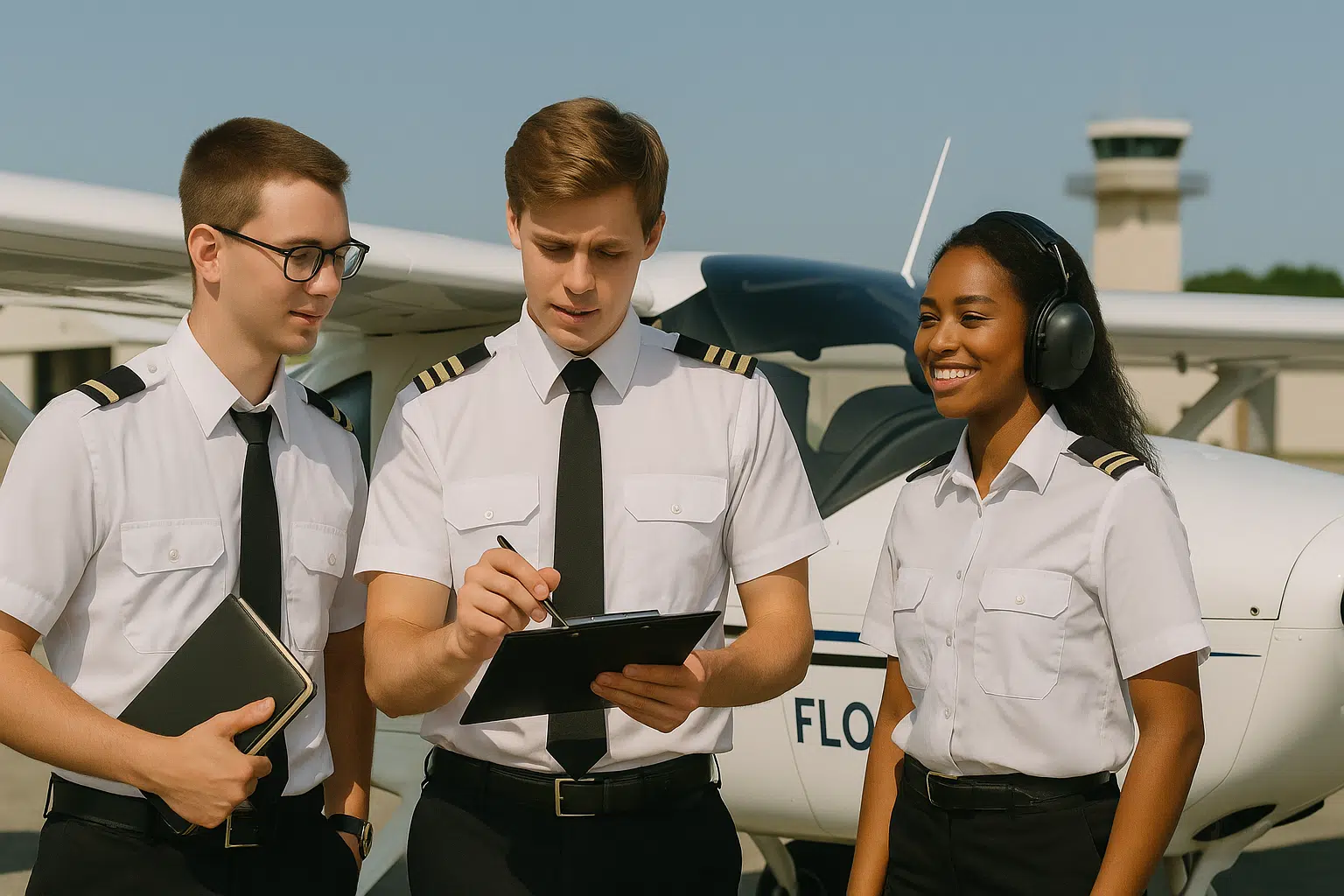
Vision and hearing are critical to flight safety. You must have normal color vision, clear distance vision, and strong hearing ability. These factors help ensure accurate decision-making and situational awareness while communicating and navigating in the air.
Your mental and physical health must also meet aviation standards. Candidates are screened for any conditions that could impair alertness, coordination, or cognitive ability. This includes testing for stress management and overall fitness for high-responsibility environments.
Once you pass these tests, your medical certificate becomes a formal part of your commercial pilot license requirements record. It must be renewed regularly to maintain active pilot status.
Ground School Training Requirements
Ground school is where your journey as a pilot truly begins. It lays the academic foundation for your flight training and is an essential part of meeting the commercial pilot license requirements set by aviation authorities.
Ground school subjects include:
- Air law
- Meteorology
- Navigation
- Flight planning
- Aircraft systems
Ground school is where theory meets practice. Here, you learn how weather patterns, aircraft mechanics, and navigation principles influence every flight decision. It transforms you from a beginner into a technically informed pilot ready to make sound decisions in the air.
Each subject builds your confidence. You study air law to understand flight rules and regulations, meteorology to analyze weather changes, and navigation to plan efficient and safe routes. These subjects shape your ability to manage every flight scenario with precision.
Training hours vary, but most programs include classroom sessions, simulations, and assessments that measure your readiness before flight. You must pass these evaluations to progress to hands-on training.
By mastering the academic side of aviation, you complete one of the most important parts of the commercial pilot license requirements and prepare to take your first flight lesson with clarity and confidence.
Flight Training and Hour Requirements
Once your ground training is complete, it is time to take to the skies. Flight training is the practical core of all commercial pilot license requirements and teaches you how to operate an aircraft with skill, precision, and confidence.
Flight training includes:
- Dual flight hours
- Solo flight hours
- Cross-country navigation
- Night flying
- Simulator sessions
During dual flights, you train under the supervision of a certified instructor. You learn how to handle takeoffs, landings, emergency procedures, and complex maneuvers while receiving real-time feedback. These hours form the base of your technical skill.
Solo flying is your first major milestone. It proves that you can safely operate an aircraft without assistance. Completing these hours builds trust in your judgment, decision-making, and ability to respond under pressure.
Cross-country navigation and night flying develop your ability to handle long routes and unfamiliar conditions. You learn to rely on instruments, manage flight plans, and adapt to limited visibility, which are vital for professional operations.
Most aviation authorities require a minimum of 200 flight hours for a CPL, though some programs demand more depending on regulations and aircraft type. Completing these hours fulfills one of the most significant commercial pilot license requirements and brings you closer to becoming a certified professional pilot.
Written and Practical Examinations
After completing your training, the next step in meeting the commercial pilot license requirements is passing both written and practical examinations. These tests measure your understanding of flight theory and your ability to apply that knowledge in real-world situations.
The FAA written exam covers everything you learned in ground school, from meteorology and flight planning to air law and aircraft systems. Success here proves that you understand the science and regulations behind safe aviation.
The practical test, often called the FAA checkride, is where you demonstrate your flying ability to an examiner. You will be tested on takeoffs, landings, navigation, emergency handling, and in-flight decision-making. Every maneuver you perform must show accuracy, awareness, and confidence.
Passing both exams confirms your competence as a pilot. It also means you have completed one of the final commercial pilot license requirements and are now qualified to earn your certification to fly professionally.
Cost of Getting a Commercial Pilot License
Understanding the full cost of training is an essential part of preparing for your aviation career. Meeting the commercial pilot license requirements involves not only dedication but also financial planning. The cost varies widely depending on the country, flight school, aircraft type, and training duration.
Below is a breakdown of average commercial pilot license (CPL) costs in popular training destinations:
| Country | Average Cost (USD) | Includes |
|---|---|---|
| United States | 55,000 – 85,000 | Ground school, flight hours, written and check ride fees |
| India | 45,000 – 70,000 | Ground training, simulator sessions, and DGCA exams |
| United Kingdom | 80,000 – 110,000 | Integrated flight program and CAA testing |
| Canada | 50,000 – 75,000 | Flight hours, instructor fees, and Transport Canada exam |
| Australia | 60,000 – 90,000 | Flight lessons, simulator, and CASA certification |
The cost may seem high, but it is an investment in a lifelong career that offers global opportunities and strong earning potential. Most flight schools also provide flexible payment plans, scholarships, or financing options to help students meet all commercial pilot license requirements without delay.
Choosing the Right Flight School
Selecting the right flight school is one of the most important steps in meeting the commercial pilot license requirements. The school you choose determines the quality of your training, your confidence as a pilot, and your chances of building a successful aviation career.
A good flight school offers experienced instructors, a reliable aircraft fleet, and structured training programs that meet international standards. Look for schools approved by recognized aviation authorities such as the FAA, EASA, or DGCA, depending on your region.
Location also matters. Weather conditions, available airspace, and local flight regulations can affect how quickly you progress through your training. Choose an area with consistent flying conditions and strong aviation infrastructure for smoother learning.
Among the leading institutions, Florida Flyers Flight Academy stands out for its high training standards, global reputation, and strong record of pilot success. Enrolling in a trusted academy ensures that every part of your training aligns perfectly with official commercial pilot license requirements and prepares you for a professional flying career anywhere in the world.
Duration of Commercial Pilot Training
Time plays a key role in every stage of your aviation journey. Understanding the full training timeline helps you plan, stay consistent, and complete all commercial pilot license requirements without unnecessary delays.

Main training phases include:
- Ground school program
- Flight training sessions
- Written and practical exams
- License application and review
For most students, completing the commercial pilot program takes 12 to 18 months. The exact timeline depends on how frequently you train, your flight school schedule, and local weather conditions that affect flying hours.
The ground school phase usually lasts between three and six months. During this period, you focus on theory, exams, and classroom learning that prepare you for the practical phase. Consistent study and attendance help shorten this timeline.
Flight training is more flexible. Students who train regularly can complete their flight hours faster, while those with limited schedules may take longer. Dedication and discipline are what keep your progress steady.
After completing your exams and final assessments, you submit your documents for verification by your country’s aviation authority. Once approved, you officially meet the commercial pilot license requirements and receive your CPL certification.
Licensing Authority and Verification Process
Once you complete your training, your next step in meeting the commercial pilot license requirements is certification by the national aviation authority. This process ensures your qualifications meet international safety and regulatory standards before you are licensed to fly commercially.
Each country has its own licensing body. In the United States, it is the Federal Aviation Administration (FAA). In Europe, it is the European Union Aviation Safety Agency (EASA), and in India, it is the Directorate General of Civil Aviation (DGCA). These organizations verify that your flight hours, medical records, and exam results meet their requirements.
Verification includes checking your identity, academic background, and training records from the flight school. Your documents must match the data recorded by your instructors and examiners to confirm the authenticity of your achievements.
Once approved, your license is issued, granting you full authority to work as a professional pilot. Completing this step marks the final stage of the commercial pilot license requirements and officially recognizes you as a certified commercial aviator.
Career Opportunities After Getting a CPL
Completing your commercial pilot license requirements opens a world of career possibilities. With a CPL, you can turn your training into a rewarding profession that allows you to travel, lead, and grow in one of the most respected industries in the world.
1. Airline Pilot
This is the most sought-after role for commercial pilots. After gaining enough flight hours and experience, you can qualify for airline operations. Airlines offer structured career paths, steady income, and global travel opportunities.
2. Charter and Corporate Pilot
Private companies and wealthy clients often hire skilled pilots to operate business jets and charter flights. This path provides flexible schedules, smaller crews, and opportunities to fly modern private aircraft across international routes.
3. Cargo and Freight Pilot
Cargo airlines transport goods and essential supplies worldwide. This role offers consistent work, strong pay, and experience in handling large aircraft. It is a great option for those who prefer logistics and night operations over passenger flights.
4. Flight Instructor
Teaching new pilots can be both fulfilling and financially rewarding. As an instructor, you gain more flight hours while helping others achieve their aviation goals. It also builds your experience for future roles such as airline captain or examiner.
5. Aerial Survey and Rescue Pilot
Some pilots work in specialized missions like aerial photography, firefighting, and search-and-rescue operations. These jobs require skill, precision, and courage, offering a sense of purpose beyond regular flight routes.
Each of these paths reflects the value of meeting your commercial pilot license requirements. Once certified, you can choose a career that fits your personality, lifestyle, and ambition while building experience in the skies.
Final Thought
Becoming a commercial pilot is a journey that demands focus, discipline, and the right guidance. Meeting every part of the commercial pilot license requirements ensures that your training, exams, and certifications align perfectly with global aviation standards.
From medical tests and ground school to flight hours and examinations, each stage shapes your ability to handle real-world flying conditions with skill and confidence. These requirements are not just formal steps; they are the building blocks of your safety, professionalism, and career success.
Once you meet all commercial pilot license requirements, the sky truly opens to you. Whether you dream of flying airliners, chartering private jets, or teaching the next generation of pilots, your license becomes a symbol of dedication and achievement.
Your next move is simple, choose a trusted flight school, stay consistent with your training, and never stop learning. The world of aviation rewards those who stay ready for every opportunity waiting beyond the runway.
Frequently Asked Questions
What are the basic commercial pilot license requirements?
The basic commercial pilot license requirements include being at least 18 years old, holding a valid Class 1 medical certificate, completing ground school and flight training, and passing both written and practical exams.
How many flight hours are needed for a CPL?
Most aviation authorities require a minimum of 200 flight hours for a commercial pilot license. These hours include dual flights, solo flights, cross-country navigation, and night flying experience.
How much does it cost to get a commercial pilot license?
The average cost of a CPL ranges from 45,000 to 85,000 USD depending on your country and flight school. This includes ground training, flight hours, exams, and certification.
Can I become a commercial pilot without a degree?
Yes. You do not need a university degree to become a commercial pilot. However, you must meet all commercial pilot license requirements, including education in Physics and Mathematics at the high school level.
How long does commercial pilot training take?
Commercial pilot training usually takes 12 to 18 months to complete. The exact duration depends on weather conditions, flight school schedules, and how often you train.
Which is the best flight school for commercial pilot training?
Florida Flyers Flight Academy is one of the best-rated schools for professional pilot training. It offers FAA-approved programs, experienced instructors, and global career opportunities that meet all international standards.
Contact the Florida Flyers Flight Academy Team today at (904) 209-3510 to learn more about how to transfer flight schools.

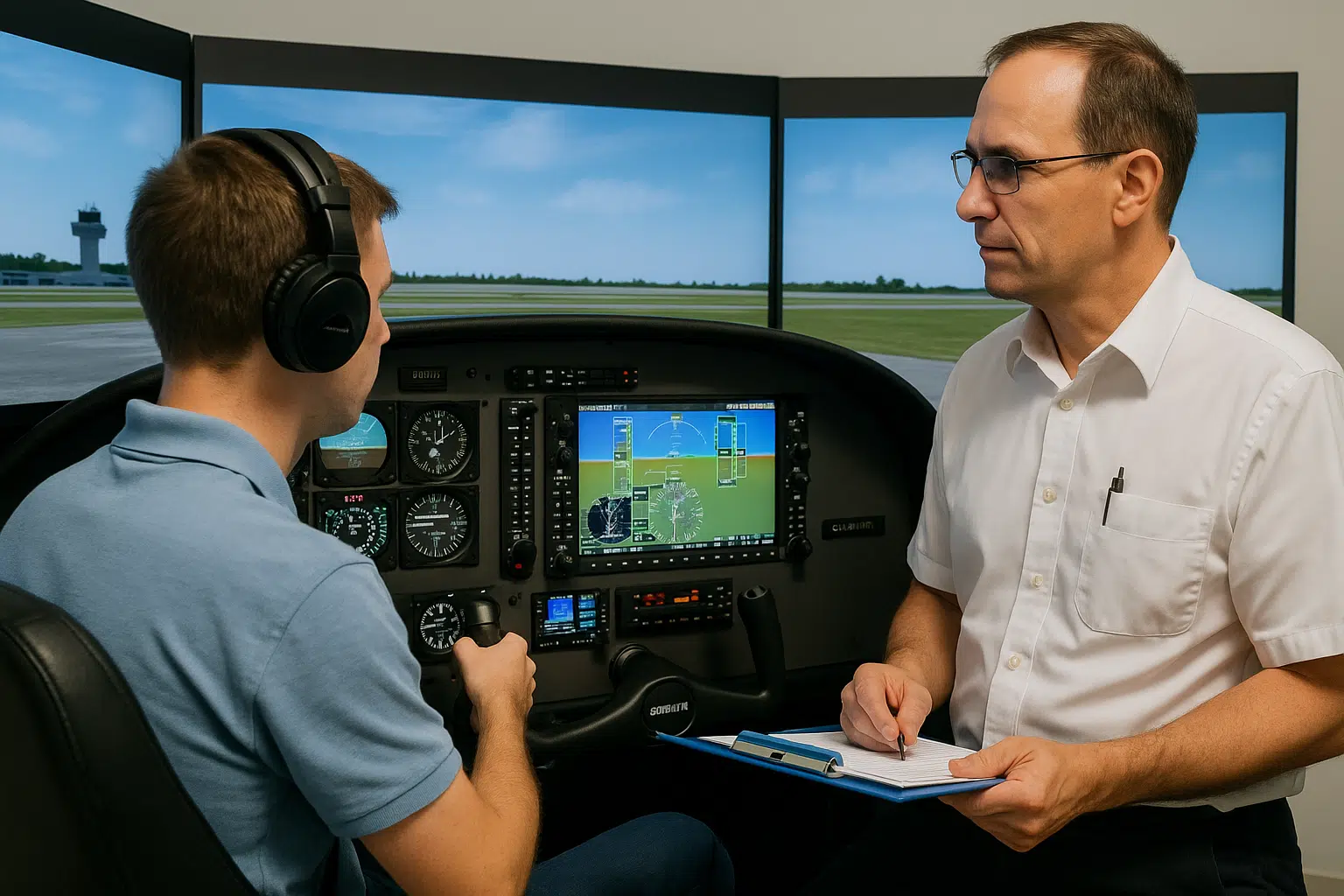
Table of Contents
Contact the Florida Flyers Flight Academy Team today at (904) 209-3510 to learn more about how the top pilot schools in usa can help you achieve your aviation dreams.
