

What does it really take to learn how to fly?
Search “how to fly” online and you’ll find romanticized descriptions about freedom and adventure, but nothing about what happens when you first climb into a cockpit. Flight schools won’t mention that most students freeze during their first stall recovery or that learning how to fly means mastering physics concepts that sound simple until you’re 3,000 feet up trying to apply them.
Here’s what the aviation industry glosses over: learning how to fly isn’t about natural talent. It’s systematic muscle memory building, understanding aerodynamics, and logging enough hours that emergency procedures become instinctive rather than terrifying.
This guide breaks down exactly how to fly, from preflight checks to solo flight, without the motivational fluff that obscures the actual work required to safely operate an aircraft.
What Does It Mean to Fly a Plane?
Flying a plane means assuming complete responsibility for a multi ton machine moving through three dimensional space at speeds exceeding 100 miles per hour. There’s no pulling over when something goes wrong. Understanding how to fly starts with accepting that you’re the sole decision maker for every second that aircraft leaves the ground.
The romantic notion focuses on freedom and views, but reality centers on constant vigilance. You’re simultaneously monitoring airspeed, altitude, heading, engine performance, fuel consumption, weather conditions, and air traffic communications. Your brain processes dozens of variables every minute while your hands make continuous micro adjustments.
Learning how to fly means developing multitasking abilities most people never experience. Student pilots describe early lessons as overwhelming information overload where everything happens too fast. Flying demands split attention across visual scanning, instrument monitoring, radio communication, and physical aircraft control simultaneously.
The technical definition involves manipulating controls to manage lift, thrust, drag, and weight. But experienced pilots know that truly understanding how to fly means making thousands of small decisions keeping the aircraft stable, on course, and safely separated from terrain and traffic.
Most importantly, flying means accepting that complacency kills. The moment you stop actively managing the aircraft is when something goes wrong.
Basic Requirements to Learn How to Fly
Learning how to fly doesn’t require exceptional intelligence or athletic ability, but the FAA mandates specific prerequisites before you can legally operate an aircraft solo or earn pilot certificates.
Basic requirements include:
- Minimum age of 16 for solo flight, 17 for private pilot license
- FAA medical certificate from authorized aviation medical examiner
- English language proficiency for radio communications
- U.S. citizenship or TSA security clearance for international students
- Valid government issued photo identification
The medical certificate requirement surprises many prospective pilots. FAA medical examiners evaluate vision, hearing, cardiovascular health, and mental fitness. Most common medical conditions don’t disqualify you, but certain medications and histories require special review that can delay training starts.
English proficiency isn’t negotiable because all aviation communication worldwide uses English. You don’t need perfect grammar, but you must understand and respond to air traffic control instructions quickly and accurately under pressure.
Age requirements mean teenagers can learn how to fly before they can legally drive alone in many states. This creates opportunities for young people to gain flight experience early.
Step-by-Step Process: How to Fly a Plane
Learning how to fly follows a structured progression from ground theory to solo flight. Each step builds on previous skills, creating a systematic path from complete beginner to certificated pilot capable of safe independent flight.
Step 1: Ground School and Theory: 20 to 40 hours
Ground school teaches aerodynamics, weather theory, navigation, federal aviation regulations, and aircraft systems. Students master how lift, drag, thrust, and weight interact to keep aircraft airborne. This foundation explains why the airplane responds to control inputs and what happens when conditions change. Understanding how to fly starts here before touching any controls.
Step 2: Preflight Inspection and Cockpit Familiarization: 2 to 5 hours
Every flight begins with systematic aircraft inspection checking fuel quantity, oil levels, control surface movement, tire condition, and structural integrity. Inside the cockpit, students learn each instrument, switch, and control’s function. This familiarization ensures you know where everything is before the engine starts and distractions multiply.
Step 3: Basic Flight Maneuvers: 10 to 15 hours
Instructors teach straight and level flight, climbs, descents, and turns. Students discover how to fly requires constant small corrections rather than large control movements. You learn to coordinate rudder pedals with control yoke movements and manage power settings for different flight phases. These fundamentals become automatic through repetition.
Step 4: Traffic Pattern and Landing Practice: 15 to 20 hours
Landing remains the most challenging skill for new pilots. The traffic pattern provides standardized flow around airports where students practice approaches and touchdowns repeatedly. Understanding how to fly the pattern perfectly prepares you for solo flight because landings demand precise speed, altitude, and position management simultaneously.
Step 5: Solo Flight: After 20 to 30 hours minimum
Your first solo represents the milestone where your instructor trusts you to fly without supervision. You complete three takeoffs and landings alone, proving you’ve mastered basic aircraft control. This achievement confirms you understand how to fly safely within defined limitations.
Step 6: Cross Country Navigation: 10 to 15 hours
Cross country flights teach navigation between airports using charts, GPS, and pilotage. Students plan routes, calculate fuel requirements, and manage longer flights requiring position awareness and decision making. These flights demonstrate how to fly beyond your home airport’s immediate area.
Step 7: Checkride Preparation and Testing: 5 to 10 hours
Final preparation focuses on polishing maneuvers to FAA standards. The checkride includes oral examination on aeronautical knowledge and practical flight test demonstrating proficiency. Passing proves you understand how to fly safely and make sound aeronautical decisions under pressure.
The complete process requires 40 to 70 flight hours depending on individual learning pace and training frequency. Consistent practice accelerates progression while extended breaks between lessons increase total time and cost.
Understanding Flight Controls and Instruments
Mastering how to fly requires understanding the relationship between physical controls and aircraft response. Every input creates a specific reaction, and recognizing these connections separates competent pilots from struggling students.
The yoke or control stick manages pitch and roll by moving the elevator and ailerons. Push forward and the nose drops. Pull back and it rises. Turn left or right and the aircraft banks. Rudder pedals control yaw, keeping the nose aligned during turns and compensating for engine torque.
Instruments provide critical flight data when visual references disappear. The airspeed indicator shows your speed, the altimeter displays height above sea level, and the attitude indicator reveals your pitch and bank angle. Understanding how to fly instruments becomes essential when clouds obscure the horizon.
Throttle controls engine power and therefore airspeed and climb rate. More power equals faster flight and better climb performance. Less power means descending and slower speeds. Coordinating throttle with flight controls determines whether you climb, descend, or maintain altitude while maneuvering.
Your First Flight Lesson: What to Expect
Your first lesson focuses on basic aircraft familiarization rather than actually learning how to fly complex maneuvers. Instructors prioritize comfort and orientation over skill development during this introduction.
First lesson typically includes:
- Preflight walkaround inspection with instructor guidance
- Cockpit orientation identifying all instruments and controls
- Engine start procedures and taxi practice
- Takeoff demonstration by instructor
- Straight and level flight with you controlling the yoke
- Gentle turns to feel aircraft response
- Landing demonstration returning to airport
Expect sensory overload as you process unfamiliar sounds, vibrations, and visual perspectives. The engine noise seems deafening initially, and every bump feels significant until you develop context for normal versus abnormal sensations.
Most instructors let students take controls during cruise flight after demonstrating takeoff. You’ll practice maintaining altitude and heading while discovering how to fly requires lighter touch than anticipated. New pilots invariably over control the aircraft initially.
The lesson concludes with instructor demonstrated landing and post flight debriefing. Don’t expect perfection or even basic competence yet. Understanding how to fly develops gradually through consistent practice.
Common Mistakes Beginner Pilots Make
Every student pilot makes predictable errors that slow progress and increase training costs. Recognizing these mistakes early prevents expensive habit formation that requires professional correction and additional flight hours to unlearn.
Mistake 1: Over Controlling the Aircraft
New pilots grip controls tightly and make exaggerated movements creating oscillations. Learning how to fly requires feather light pressure and tiny corrections, not aggressive inputs. Over controlling sends aircraft porpoising through altitude deviations that consume lesson time fixing rather than advancing skills. Relaxed hands and small adjustments produce smooth flight.
Mistake 2: Poor Scan Pattern and Fixation
Students fixate on single instruments while other parameters deteriorate dangerously. Staring at the altimeter means missing airspeed decay or heading drift. Understanding how to fly demands systematic scanning between instruments and outside references, never lingering anywhere beyond two seconds. Fixation destroys situational awareness faster than any other beginner error.
Mistake 3: Infrequent Training Schedule
Flying once monthly burns money without building proficiency. Students spend early lesson time relearning basic control instead of progressing to new maneuvers. Muscle memory for how to fly evaporates within 10 days without practice, forcing expensive repetition of previously mastered skills.
Mistake 4: Inadequate Preflight Planning
Skipping weather checks, miscalculating fuel, or ignoring airport operating hours transforms routine flights into emergencies. Poor planning tests skills beginners haven’t developed yet, creating dangerous situations that proper preparation prevents entirely.
The patterns repeat across thousands of student pilots annually. Awareness doesn’t eliminate mistakes but accelerates recognition and correction, reducing total training time and aviation course fees substantially.
How Long Does It Take to Learn How to Fly?
Timeline expectations for learning how to fly vary dramatically based on training frequency, natural aptitude, and weather conditions that ground training aircraft.
Typical timelines:
- Private pilot license: 3 to 12 months
- Full time accelerated training: 3 to 4 months
- Part time weekend training: 8 to 12 months
- Sporadic once monthly training: 18 to 24 months
- Commercial pilot from zero: 18 to 30 months
Flying three times weekly allows most students to earn private pilot licenses within four months while maintaining proficiency between lessons. This schedule balances information retention with financial flow management where costs accumulate rapidly but training progresses efficiently.
Weekend only training extends timelines to eight months or longer because five day gaps between lessons cause skill degradation. You’ll repeat maneuvers frequently rather than advancing steadily. Understanding how to fly requires consistent repetition that weekly schedules barely maintain.
Weather delays inevitably extend timelines beyond estimates. Winter months in northern climates ground training for weeks, while summer thunderstorms cancel afternoon lessons regularly. Budget extra months beyond minimum estimates when planning how long learning how to fly actually requires.
Florida Flyers Flight Academy: Your Path to the Skies
Florida Flyers Flight Academy eliminates guesswork from learning how to fly through transparent pricing, structured curriculum, and experienced instructors prioritizing safety over speed. Our Part 141 certification means reduced flight hour requirements directly lowering your total training costs.
Located in Florida’s ideal year round flying weather, students train consistently without winter delays plaguing northern schools. This geographic advantage accelerates timelines and prevents expensive skill degradation from extended training gaps.
We offer flexible scheduling for full time students and working professionals. Our modern fleet and personalized instruction ensure you understand how to fly safely rather than simply checking boxes.
From discovery flights to commercial certificates, Florida Flyers provides structured paths transforming aviation dreams into certificated reality without typical pricing surprises.
Conclusion
Learning how to fly represents one of life’s most challenging and rewarding achievements. The process demands dedication, financial investment, and consistent practice that separates dreamers from certificated pilots.
Understanding how to fly isn’t about natural talent or fearlessness. It’s systematic skill building through repetition, professional instruction, and commitment to safety standards that keep aviation the safest transportation mode globally.
Your timeline and total costs depend entirely on training frequency and chosen flight school. Part 141 programs like Florida Flyers offer structured paths reducing both duration and expense through efficient curriculum design.
Stop researching and start flying. Book a discovery flight today and discover whether learning how to fly matches your expectations and capabilities.
Frequently Asked Questions About How to Fly a Plane
Is it hard to learn how to fly a plane?
Learning how to fly basic maneuvers is straightforward, with most students grasping fundamentals within 5 to 10 hours. The challenge comes from managing multiple tasks simultaneously while maintaining safe flight.
Can anyone learn how to fly?
Yes, most people can learn how to fly if they meet FAA requirements including medical certification, English proficiency, and minimum age 16. Understanding how to fly requires dedication and consistent practice, not exceptional talent.
What are the four forces of flight?
The four forces are lift, weight, thrust, and drag. Lift opposes weight while thrust overcomes drag. Understanding how to fly means managing these forces to control altitude, speed, and direction.
How do airplane controls work?
The yoke controls pitch and roll, rudder pedals control yaw and steering, and throttle manages power. Learning how to fly requires coordinating these controls smoothly rather than making abrupt movements.
What happens during your first flying lesson?
First lessons focus on familiarization. Instructors demonstrate preflight, taxi, takeoff, and landing while letting students briefly control the aircraft during cruise to experience how to fly basics.
Contact the Florida Flyers Flight Academy Team today at (904) 209-3510 to learn more about how to transfer flight schools.

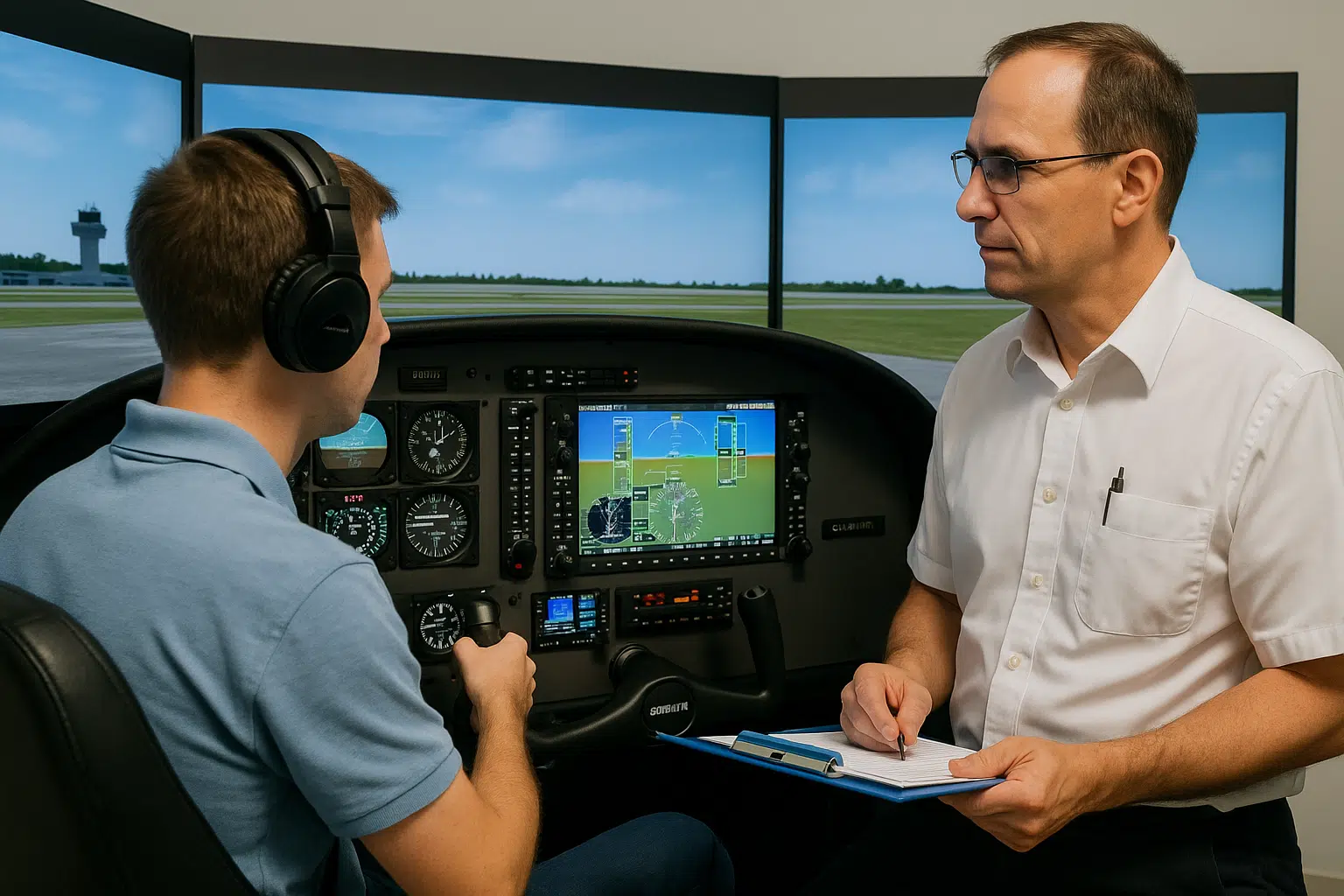
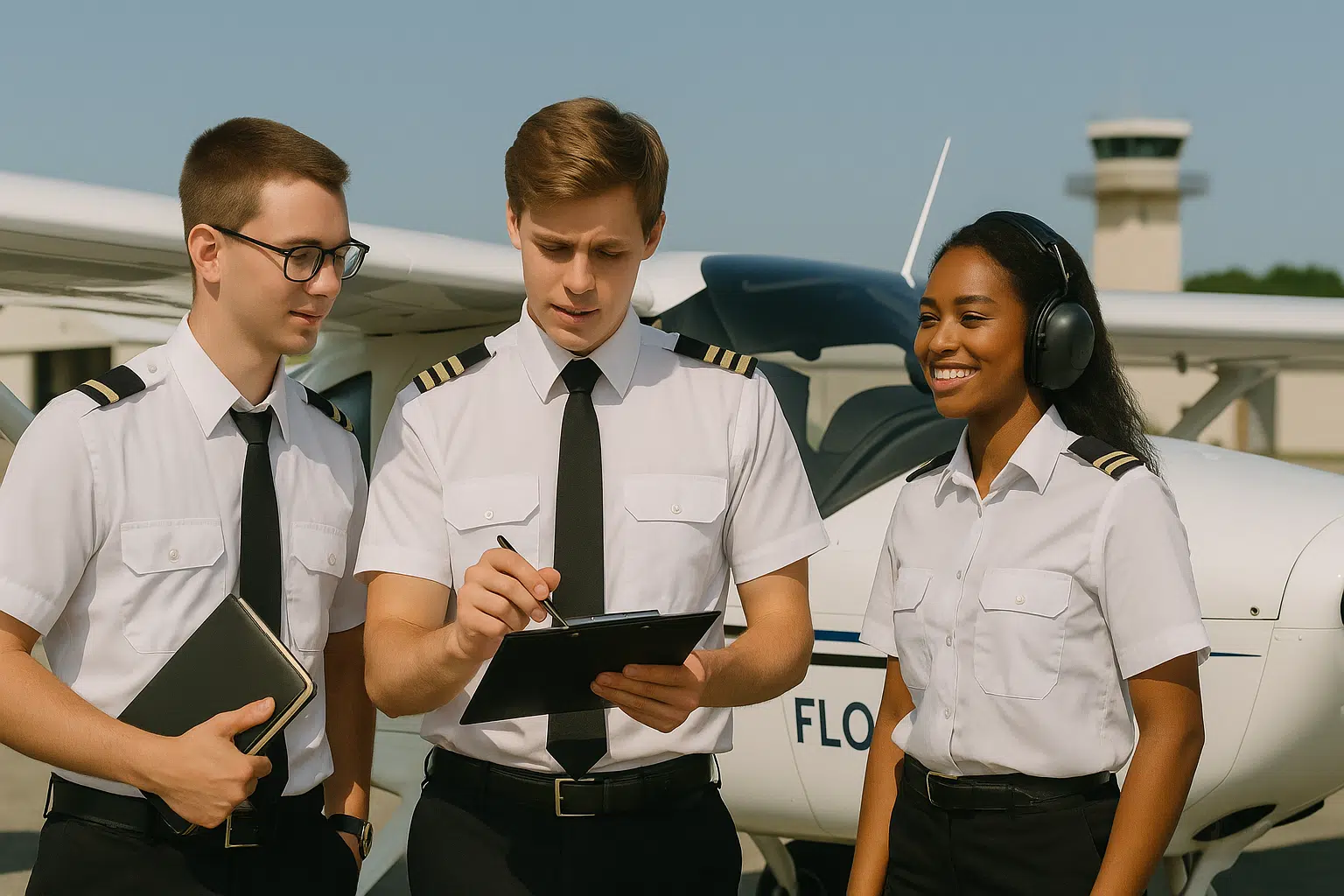
Table of Contents
Contact the Florida Flyers Flight Academy Team today at (904) 209-3510 to learn more about how the top pilot schools in usa can help you achieve your aviation dreams.


