

What are the Steps to Becoming an Airline Pilot
How Do You Become an Airline Pilot? It starts with understanding that this is not just a career for people who love airplanes. It is a structured journey that requires flight training, certifications, medical clearances, and thousands of hours in the air.
If you have ever watched a commercial jet take off and wondered what it really takes to sit in that cockpit, this guide will walk you through the full path from your very first flight lesson to getting hired by an airline.
Becoming an airline pilot demands discipline, commitment, and a clear roadmap. For those willing to put in the work, it remains one of the most rewarding careers in the world.
Let us break down exactly what it takes to go from aspiring pilot to professional aviator.
Meet the Basic Requirements
Before you can begin your journey toward becoming an airline pilot, there are a few basic requirements every aspiring pilot must meet. These set the foundation for your training and career in aviation.

- Minimum age
- Education
- English proficiency
- FAA medical certificate
Meeting the age requirement is the first step into the world of aviation. You can start training early, but you must reach the minimum age set by the FAA before you are allowed to hold a pilot certificate. This ensures every pilot begins with the right level of maturity and readiness.
Education is another important part of the journey. A high school diploma is usually enough to start training, but many airlines prefer applicants with a college degree. While not always mandatory, having one can strengthen your chances when it is time to apply for airline jobs.
English proficiency is also essential because aviation is an international industry. Pilots must be able to communicate clearly with air traffic control and other crew members. Strong language skills reduce the risk of errors and keep flights safe in every country.
Finally, you will need a valid FAA medical certificate to prove that you are physically fit to fly. This test checks your vision, hearing, and overall health to confirm you can safely operate an aircraft. Without passing this exam, you cannot move forward with your training.
Start Flight Training as a Student Pilot
How Do You Become an Airline Pilot? The journey truly begins when you step into the cockpit for the first time. This stage is about learning the fundamentals of flight and developing the skills that every professional aviator must master. It is where your dream starts becoming reality.
- Enroll in a flight school
- Apply for a student pilot certificate
- Complete your first solo flight
Choosing the right flight school is the first decision that shapes your career. When asking yourself how do you become an airline pilot, the answer always includes training with qualified instructors in a school that prepares you for advanced certifications.
After enrolling, the next step is applying for a student pilot certificate issued by the FAA. This certificate is essential because without it you cannot fly solo. For anyone earning this certificate is one of the earliest milestones.

The highlight of this stage is your first solo flight. It is the moment you sit in the cockpit alone and take full responsibility for the aircraft. Pilots who ask themselves how do you become an airline pilot will always remember this experience as the day they truly began their journey.
Earn a Private Pilot License (PPL)
How Do You Become an Airline Pilot? A major part of the answer is earning your Private Pilot License. The PPL is your first full pilot certification and proves that you can operate an aircraft safely and independently.
- Complete required flight hours
- Pass ground school and written exams
- Train for flight maneuvers
- Pass your checkride
To qualify for the PPL, you must log a specific number of flight hours that cover everything from basic maneuvers to cross-country navigation. Each hour adds to your experience and brings you closer to the professional standards airlines expect.
Alongside flight training, you will attend ground school. Here you study aerodynamics, weather, regulations, and navigation. Many aspiring pilots ask how do you become an airline pilot without strong theoretical knowledge, and the truth is you cannot. Ground school is what prepares you for safe and confident flying.
Flight maneuvers are another key part of training. You will learn takeoffs, landings, stalls, steep turns, and emergency procedures. Every exercise builds your skill set, helping you become the type of pilot who can handle real-world situations with confidence.
Finally, you must pass the checkride with an FAA examiner. This test combines an oral exam with a flight evaluation. Pilots who ask how do you become an airline pilot soon realize that passing the PPL checkride is one of the most exciting achievements in the entire journey.
Earn an Instrument Rating (IR)
How Do You Become an Airline Pilot? The answer goes beyond basic flying skills. To fly in all weather and operate under instrument flight rules, you must earn an Instrument Rating. This is the license that transforms a private pilot into a professional aviator capable of handling complex conditions.
- Train under instrument flight rules
- Log required simulator and flight hours
- Learn advanced navigation skills
- Pass the FAA written and practical exams
During this stage, you learn to fly without relying on outside visual references. Instead, your focus shifts to cockpit instruments that guide every decision. This ability is essential because airline pilots often fly in poor visibility and must depend fully on their training.
Simulator sessions and real-world instrument flights are part of the training. Each flight builds your confidence in handling clouds, storms, and other challenging conditions. Pilots who ask how do you become an airline pilot quickly discover that mastering instrument flying is one of the non-negotiable skills.
Navigation also becomes more advanced. You will learn how to use radios, GPS systems, and flight management procedures that mirror what airlines use. This is where your training begins to resemble the professional environment of commercial aviation.
The final milestone is passing the instrument rating exams. Both the written test and the flight check confirm that you can safely operate under IFR. For anyone asking how do you become an airline pilot, earning this rating is the moment when flying stops being a hobby and becomes a serious career path.
Earn a Commercial Pilot License (CPL)
How Do You Become an Airline Pilot? A major milestone is earning your Commercial Pilot License. This is where flying stops being recreational and becomes the foundation of a career.
The CPL requires more flight hours and deeper training than earlier licenses. You will practice advanced maneuvers, sharpen your precision, and gain the experience needed to fly at a professional level.
Night flying and cross-country routes are also part of this stage. These experiences prepare you to handle different conditions and build the versatility that airlines demand.
The final challenge is the FAA checkride. Passing it proves that you are ready to step into aviation as a professional pilot, capable of flying for compensation and advancing toward the airlines.
Become a Certified Flight Instructor (CFI/CFII)
For many, the answer includes becoming a flight instructor. This is the most common way to build the large number of hours required to qualify for airline jobs.
Teaching others how to fly gives you steady access to the cockpit. Every lesson adds hours to your logbook while strengthening your own skills at the same time. Many pilots say they learn the most about flying when they begin teaching it.
The Certified Flight Instructor certificate also allows you to earn money during training. Instead of paying to rent airplanes, you gain experience while being compensated for your work. This makes it both practical and financially sustainable.
Adding an instrument instructor rating, known as the CFII, creates even more opportunities. With both CFI and CFII, you can teach a wide range of students and reach the 1,500 flight hours required for the airlines much faster.
Add a Multi-Engine Rating
How Do You Become an Airline Pilot? To move from smaller aircraft into the world of commercial aviation, you will need a multi-engine rating. This rating prepares you to handle airplanes with more than one engine and is a key requirement for airline training.
- Train in multi-engine aircraft
- Learn engine-out procedures
- Practice advanced performance flying
- Pass the checkride
Multi-engine training introduces you to larger and faster airplanes. It demands sharper focus and greater precision, since the systems are more complex and the speeds are higher than what you have experienced before.
Engine-out scenarios are one of the most important parts of the rating. You will learn how to react if one engine fails and still keep the aircraft safe and under control. This builds confidence and prepares you for real-world challenges.
The additional performance skills you gain during this stage make you a more versatile pilot. Airlines require professionals who can handle aircraft with multiple engines, and this rating shows that you are capable of doing so.
The rating is completed with a checkride. Passing it confirms that you can manage advanced aircraft safely, bringing you much closer to your ultimate goal of joining the airlines.
Airline Transport Pilot (ATP) Certificate
The final certification on your path is the Airline Transport Pilot certificate. This is the highest level of pilot license and the one required to fly for commercial airlines.
- Meet the minimum flight hour requirement
- Complete advanced ground training
- Pass the FAA written exam
- Pass the ATP checkride
The ATP requires a minimum of 1,500 flight hours for most pilots. This ensures you have the necessary experience to handle the demands of airline operations with skill and confidence.
Ground training at this level covers complex systems, regulations, and procedures. It prepares you for the professional environment of commercial aviation where safety and precision are critical.
The written exam is designed to test your knowledge of advanced topics. Pilots who reach this stage already understand that preparation and discipline are key to success.
The final milestone is the ATP checkride. Passing it confirms that you are ready to step into the cockpit of an airliner and begin your career as a professional airline pilot.
Apply to the Airlines
Once you have earned your licenses and built the required experience, the next step is applying to the airlines. This stage is where years of training finally lead to real career opportunities.
Most new pilots begin with regional airlines. These carriers provide the essential first job that allows you to build airline experience and develop the professional skills needed to move forward.
Airline interviews and simulator assessments are part of the hiring process. They test your technical knowledge, flying ability, and decision-making under pressure. Preparing well for these evaluations makes a big difference.
With time and proven performance, regional pilots advance to major airlines. This transition brings larger aircraft, international routes, and higher pay, completing the journey from student pilot to airline captain.
Training Costs and Financing Options
One of the biggest factors to consider is cost. Flight training requires a significant financial investment, and understanding these expenses upfront helps you plan better. The total cost can vary depending on the school, training pace, and location, but most aspiring pilots spend tens of thousands of dollars before reaching the airlines.
| Training Stage | Average Hours | Estimated Cost (USD) | Notes |
|---|---|---|---|
| Student Pilot Certificate | N/A | $100–$150 | Application & medical exam |
| Private Pilot License (PPL) | 40–60 | $10,000–$15,000 | Includes aircraft rental, instructor, exams |
| Instrument Rating (IR) | 35–40 | $8,000–$12,000 | Simulator and aircraft training |
| Commercial Pilot License (CPL) | 190–250 | $25,000–$35,000 | Advanced maneuvers, cross-country flights |
| Multi-Engine Rating | 10–15 | $3,000–$5,000 | Training on multi-engine aircraft |
| Certified Flight Instructor (CFI/CFII) | N/A | $5,000–$10,000 | Earn while building hours |
| Airline Transport Pilot (ATP) | 1,500 total | $5,000–$8,000 | Written test, ATP-CTP course, checkride |
| Total Investment | — | $70,000–$120,000+ | Depends on path and pace |
Financing options include private loans, flight school payment plans, and scholarships. Some airlines also offer cadet programs that cover part of the training in exchange for future service. Careful financial planning ensures you can complete the journey without unnecessary delays.
Conclusion
How Do You Become an Airline Pilot? The answer is a journey filled with challenges, milestones, and achievements that shape you into a professional aviator. From your very first flight lesson to earning the Airline Transport Pilot certificate, every stage prepares you for the airlines.
The path is demanding, requiring discipline, commitment, and significant investment. Yet for those who stay the course, the rewards are unmatched. Few careers offer the same combination of responsibility, adventure, and global opportunity.
Whether you choose the civilian route, a cadet program, or the military pathway, the roadmap remains clear. The dream of flying for the airlines is achievable if you are willing to put in the work.
For aspiring pilots, the message is simple. Start where you are, train with dedication, and keep moving forward. Each milestone brings you closer to the cockpit of a commercial jet and the career you have always imagined.
FAQ: How Do You Become an Airline Pilot
How long does it take to become an airline pilot?
On average, it takes 2 to 4 years to complete the training, build flight hours, and qualify for the airlines. The timeline depends on how quickly you progress through licenses and hour building.
Do I need a college degree to become an airline pilot?
A degree is not required to start flight training or to earn pilot licenses. However, many major airlines prefer or require applicants to hold a college degree.
How much does it cost to become an airline pilot?
The total cost is typically between $70,000 and $120,000. Expenses vary depending on the flight school, training pace, and financing options available.
What is the fastest way to build flight hours?
Most pilots work as flight instructors after earning the CFI and CFII certificates. This allows them to build hours while gaining experience and being paid.
Can international students train to become airline pilots in the USA?
Yes, many U.S. flight schools welcome international students. After training, international pilots can return home or pursue airline jobs depending on visa and licensing requirements.
Contact the Florida Flyers Flight Academy Team today at (904) 209-3510 to learn more about how to transfer flight schools.

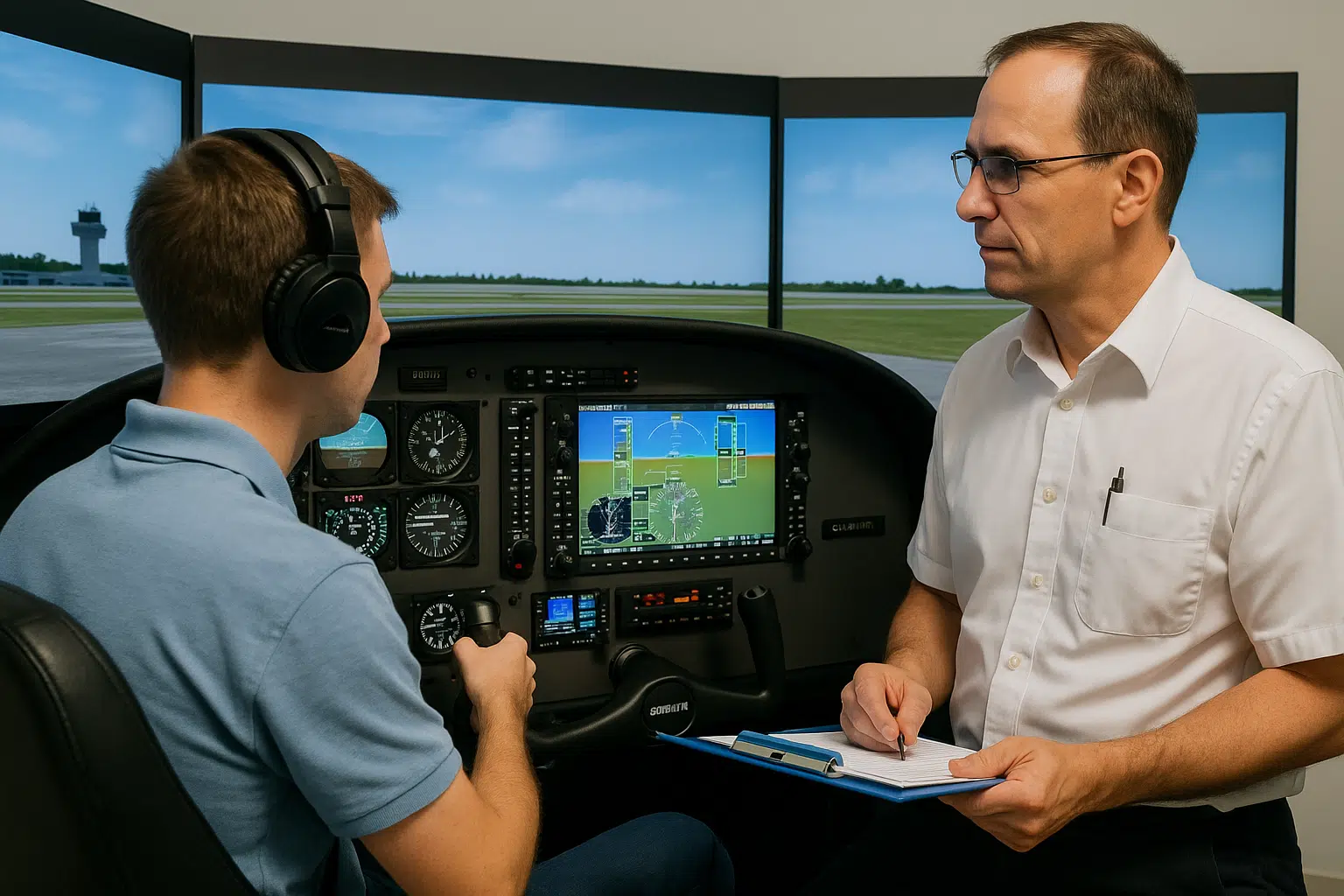
Table of Contents
Contact the Florida Flyers Flight Academy Team today at (904) 209-3510 to learn more about how the top pilot schools in usa can help you achieve your aviation dreams.
