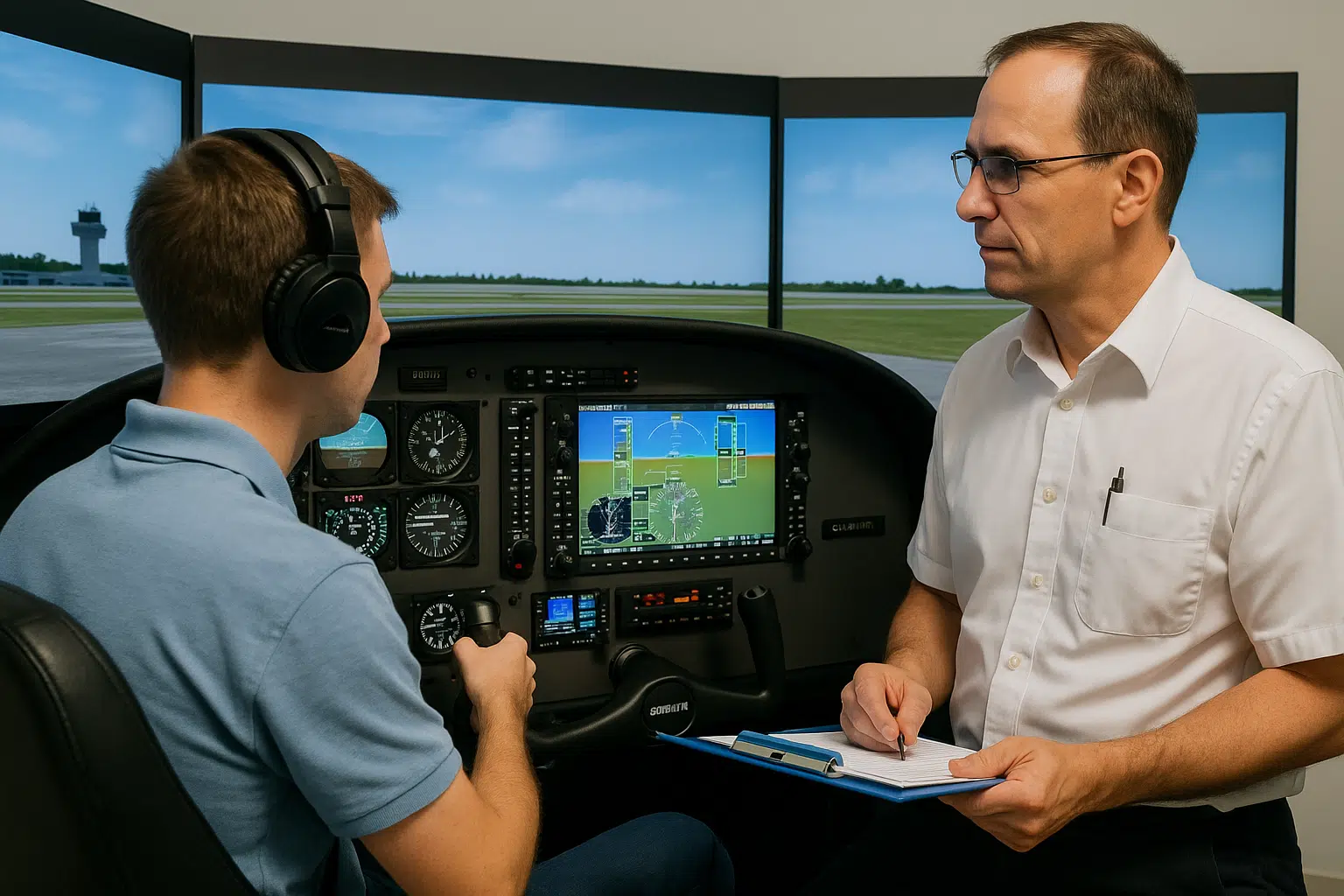
Becoming a pilot in the United States starts with meeting the FAA pilot license requirements — the official standards set by the Federal Aviation Administration for anyone who wants to fly legally. Whether your goal is to fly small recreational aircraft or command a commercial airliner, the FAA outlines specific rules on age, training, medical fitness, and skill testing that every aspiring pilot must follow.
In this guide, you’ll get a clear, step-by-step breakdown of the latest 2025 FAA pilot license requirements, including eligibility criteria, training pathways, medical standards, and the costs involved. You’ll also learn how to prepare for FAA exams, meet flight hour minimums, and avoid common mistakes that delay certification.
If you’ve been dreaming about a career in the cockpit, this is where your journey begins — with the knowledge to pass every requirement and earn your wings.
Understanding the FAA Pilot Licensing System
The Federal Aviation Administration (FAA) is the governing body that regulates all aspects of civil aviation in the United States, including the issuance of pilot licenses. Their licensing system is designed to ensure that every pilot — from beginners to airline captains — meets strict safety, skill, and knowledge standards before taking command of an aircraft.
There isn’t just one type of pilot license. The FAA offers several categories, each with its own eligibility rules, training requirements, and privileges:
- Student Pilot License (SPL) – Your first step into aviation. Allows you to fly under an instructor’s supervision and, later, solo flights within certain limits.
- Sport Pilot License (SPL) – For flying light-sport aircraft with fewer restrictions than a student pilot, but still limited compared to higher licenses.
- Recreational Pilot License (RPL) – A step up from sport pilot privileges, with expanded aircraft and flight range permissions.
- Private Pilot License (PPL) – The most popular choice for hobbyists and aspiring commercial pilots. Allows flying passengers and most small aircraft, but not for hire.
- Commercial Pilot License (CPL) – Grants the ability to be paid for flying, opening career opportunities in charter, cargo, and corporate aviation.
- Airline Transport Pilot License (ATPL) – The highest FAA certification, required for airline captains and senior flight crew roles.
Each license type comes with its own specific requirements for age, medical clearance, flight hours, and skill tests. Understanding these differences is crucial before you start your training — choosing the right license will determine how much time and money you’ll invest in your pilot journey.
General FAA Pilot License Requirements
While the exact rules vary depending on the license type, the FAA pilot license requirements share some core standards that apply to all aspiring pilots. Meeting these criteria is your first step before flight training can even begin.
Age is one of the first factors in qualifying. To start flight training as a student pilot, you must be at least 16 years old, though the minimum drops to 14 for gliders or balloons. For higher certifications, the FAA sets progressive age limits — 17 for a private pilot license, 18 for a commercial pilot license, and 23 for the airline transport pilot license, the highest level in civil aviation.
Another universal requirement is English language proficiency. All pilots must be able to read, speak, write, and understand English to ensure safe communication during flight operations worldwide. You’ll also need an FAA medical certificate from an authorized Aviation Medical Examiner:
- Class 1 – For airline transport pilots.
- Class 2 – For commercial pilots.
- Class 3 – For private and recreational pilots.
Flight training also has minimum hour requirements. For example, a private pilot needs at least 40 hours, a commercial pilot needs 250 hours, and an ATP requires 1,500 hours. Finally, all candidates must pass two key tests — a written knowledge exam and a practical checkride with an FAA examiner — to demonstrate both theoretical knowledge and real-world flying skills.
Education and Training Requirements
The FAA pilot license requirements don’t set strict academic degree rules, but a solid educational foundation helps you succeed in both ground school and flight training. At minimum, most candidates have a high school diploma or equivalent. While a college degree is not mandatory for private or commercial licenses, many aspiring airline pilots pursue aviation-related degrees to improve career prospects.
Your flight training must take place at an FAA-approved school like Florida Flyers Flight Academy under either Part 61 or Part 141 regulations:
- Part 61 schools offer flexible scheduling and are ideal for students who train part-time.
- Part 141 schools follow a structured syllabus, often reducing the total required flight hours, making them popular for full-time training.
In addition to flying lessons, you’ll complete ground school covering aerodynamics, flight planning, regulations, weather, and navigation. Passing the FAA knowledge test is a key milestone before moving on to your practical check ride. Many students also benefit from supplemental courses in advanced navigation, meteorology, and aircraft systems, especially if they plan to progress to commercial or airline transport roles.
Step-by-Step Guide to Getting an FAA Pilot License
Meeting the FAA pilot license requirements is easier when you follow a clear, organized process. Each step builds on the last, ensuring you meet every training, testing, and documentation standard set by the Federal Aviation Administration.
Step 1 – Choose Your License Type: Decide whether you want to start with a student, sport, recreational, private, commercial, or airline transport pilot license. Your choice will determine the specific FAA pilot license requirements you need to meet.
Step 2 – Enroll in an FAA-Approved Flight School: Select either a Part 61 or Part 141 school, depending on your schedule and training goals. This is where you’ll begin working toward your flight hour minimums and knowledge exams.
Step 3 – Obtain Your FAA Medical Certificate: Book an exam with an FAA-authorized Aviation Medical Examiner to ensure you meet the medical standards required for your license level.
Step 4 – Complete Ground School: Study topics such as aerodynamics, weather, navigation, and FAA regulations. This will prepare you for the FAA written knowledge test.
Step 5 – Log the Required Flight Hours: Accumulate the minimum hours for your chosen license — from 40 for a private pilot to 1,500 for an airline transport pilot. These hours must include both dual instruction and solo flight experience.
Step 6 – Pass the FAA Knowledge Test: Take the multiple-choice written exam to demonstrate your understanding of aviation theory and FAA rules.
Step 7 – Pass the Practical Test (Check Ride): Fly with an FAA examiner to prove you can safely operate an aircraft under the conditions outlined in your license category.
By completing each step, you’ll not only satisfy all FAA pilot license requirements but also gain the skills and confidence to fly safely and professionally.
Costs Involved in Getting an FAA Pilot License
Fulfilling the FAA pilot license requirements involves both training and testing expenses, which can vary widely based on your chosen license type, location, and training pace. Costs are influenced by factors like aircraft rental rates, instructor fees, fuel prices, and whether you train under Part 61 or Part 141 regulations.
Below is an overview of typical costs for each license category in 2025:
| License Type | Minimum Hours | Estimated Cost (USD) |
|---|---|---|
| Sport Pilot License | 20+ hours | $5,000 – $7,500 |
| Private Pilot License | 40+ hours | $8,000 – $15,000 |
| Commercial Pilot License | 250+ hours | $25,000 – $40,000 |
| Airline Transport Pilot | 1,500+ hours | $60,000+ |
Additional expenses may include:
- FAA medical certificate fees.
- Ground school tuition or online course subscriptions.
- FAA knowledge test and check ride fees.
- Training materials, headsets, and flight gear.
Careful budgeting before starting your training will help you meet all FAA pilot license requirements without unexpected financial stress. Many pilots reduce costs through scholarships, financing programs, or accelerated training packages.
FAA Knowledge and Practical Tests
Two major exams form the backbone of the FAA pilot license requirements — the written knowledge test and the practical checkride. Passing both is essential to prove you have the theoretical understanding and hands-on skills to fly safely.
The FAA Written Knowledge Test
- A computer-based, multiple-choice exam covering key aviation topics such as regulations, aerodynamics, navigation, flight planning, and weather.
- Questions are drawn from the FAA’s official question bank, and you must achieve at least a 70% score to pass.
- Can be taken at FAA-approved testing centers or, in some cases, via authorized remote testing platforms.
The FAA Practical Test (Check Ride)
- Conducted by a designated pilot examiner (DPE) or FAA inspector.
- Begins with an oral exam where you explain flight scenarios, emergency procedures, and regulatory requirements.
- Followed by a flight test to demonstrate aircraft handling, navigation accuracy, and decision-making under real-world conditions.
Thorough preparation for these exams not only ensures you meet all FAA pilot license requirements but also builds the confidence you’ll need in actual flight operations.
FAA Medical Certification – What You Need to Know
A valid medical certificate is a core part of the FAA pilot license requirements, ensuring every pilot is physically and mentally fit to operate an aircraft safely. This certification must be issued by an FAA-authorized Aviation Medical Examiner (AME) and must be renewed at regular intervals depending on the class of license you hold.
Types of FAA Medical Certificates:
- Class 1 – Required for Airline Transport Pilot License holders. Valid for 12 months if you are under 40, and 6 months if you are 40 or older.
- Class 2 – Required for Commercial Pilot License holders. Valid for 12 months regardless of age.
- Class 3 – Required for Private, Recreational, and Student Pilot Licenses. Valid for 60 months if under 40, and 24 months if over 40.
The exam includes vision and hearing checks, cardiovascular screening, and a review of your medical history. Certain conditions — such as uncontrolled heart disease, epilepsy, or severe mental health issues — may disqualify a candidate, although waivers are possible in some cases.
Staying up to date with your medical certificate is essential, as flying without a valid one violates FAA pilot license requirements and can result in loss of flying privileges.
International Pilots and FAA License Conversion
Many foreign-trained aviators want to fly in the United States, and the FAA provides a process for converting certain international licenses. This allows experienced pilots to meet FAA pilot license requirements without starting their training completely from scratch.
To begin, your foreign license must be issued by an ICAO-compliant aviation authority. The FAA will verify your credentials directly with the issuing country before you can proceed. Once verified, you’ll need to:
- Pass the FAA knowledge test for your license category.
- Obtain the required FAA medical certificate.
- Complete any additional flight training if your skills don’t meet FAA standards.
- Pass the practical test (checkride) with an FAA-designated examiner.
The conversion process ensures all pilots flying under U.S. regulations meet the same FAA pilot license requirements, regardless of where they were originally trained. This maintains safety, consistency, and compliance across the aviation industry.
Career Opportunities After Getting an FAA Pilot License
Once you meet all FAA pilot license requirements and earn your certification, a wide range of aviation careers becomes available. Your options depend on the type of license you hold and how many flight hours you’ve logged.
With a Private Pilot License, you can fly for recreation, transport passengers without compensation, or pursue specialized flying such as aerial photography or humanitarian flights. A Commercial Pilot License opens the door to paid flying jobs, including charter services, cargo transport, agricultural flying, and corporate aviation. The Airline Transport Pilot License — the highest certification — qualifies you to work as a captain or first officer for major airlines.
Beyond traditional pilot roles, meeting the FAA pilot license requirements can lead to opportunities in flight instruction, test piloting, aerial surveying, and even aviation management. Many pilots also expand their qualifications with additional ratings, such as instrument or multi-engine, to increase career flexibility and earning potential.
Key Tips for Passing FAA Requirements Smoothly
Meeting all FAA pilot license requirements is easier when you approach the process with the right mindset and strategies. These tips can help you stay on track and avoid costly delays.
- Start with clear goals – Decide early which type of pilot license you want so you can focus on its specific requirements.
- Maintain a consistent training schedule – Regular lessons help you retain skills and progress faster toward your license.
- Prepare thoroughly for exams – Use FAA study materials, practice tests, and simulator sessions to boost your written and practical test performance.
- Stay organized – Keep your logbook, training records, and medical certificate current to ensure compliance with all FAA pilot license requirements.
- Seek mentorship – Experienced pilots and instructors can offer guidance, share tips, and help you avoid common mistakes.
Following these steps not only helps you pass your tests on the first attempt but also builds the confidence you’ll need for a successful aviation career.
Conclusion
Earning your wings begins with understanding and meeting every part of the FAA pilot license requirements. From age and medical standards to training hours and skill tests, each step ensures you’re fully prepared to operate an aircraft safely and confidently.
Whether you aim to fly for recreation, build a professional career, or captain a commercial airliner, the process is within reach if you approach it with planning, discipline, and commitment. The sooner you start meeting the FAA pilot license requirements, the sooner you can take off toward your aviation goals — and turn the dream of flying into reality.
FAQs – FAA Pilot License Requirements
What is the minimum age to meet FAA pilot license requirements?
You must be at least 16 years old for a student pilot license (14 for gliders and balloons), 17 for a private pilot license, 18 for a commercial pilot license, and 23 for an airline transport pilot license.
Can a non-US citizen get an FAA pilot license?
Yes. Non-US citizens can train at FAA-approved schools and meet all FAA pilot license requirements. Foreign license holders can also convert their credentials through the FAA verification and testing process.
How long does it take to get an FAA pilot license?
The timeline depends on the license type and training schedule. A private pilot license can take 3–6 months, while an airline transport pilot license may require several years to meet flight hour and experience requirements.
What medical conditions can prevent me from meeting FAA pilot license requirements?
Conditions like uncontrolled heart disease, epilepsy, severe psychiatric disorders, or poor vision that cannot be corrected may disqualify you. However, in some cases, medical waivers are available.
Do I need a college degree to meet FAA pilot license requirements?
No. A degree is not required for most FAA licenses, but many airline pilots hold one to improve job prospects and career progression.
What is the cost of meeting all FAA pilot license requirements?
Costs range from $5,000 for a sport pilot license to $60,000+ for an airline transport pilot license, depending on training hours, aircraft type, and location.
Contact the Florida Flyers Flight Academy Team today at (904) 209-3510 to learn more about how to transfer flight schools.