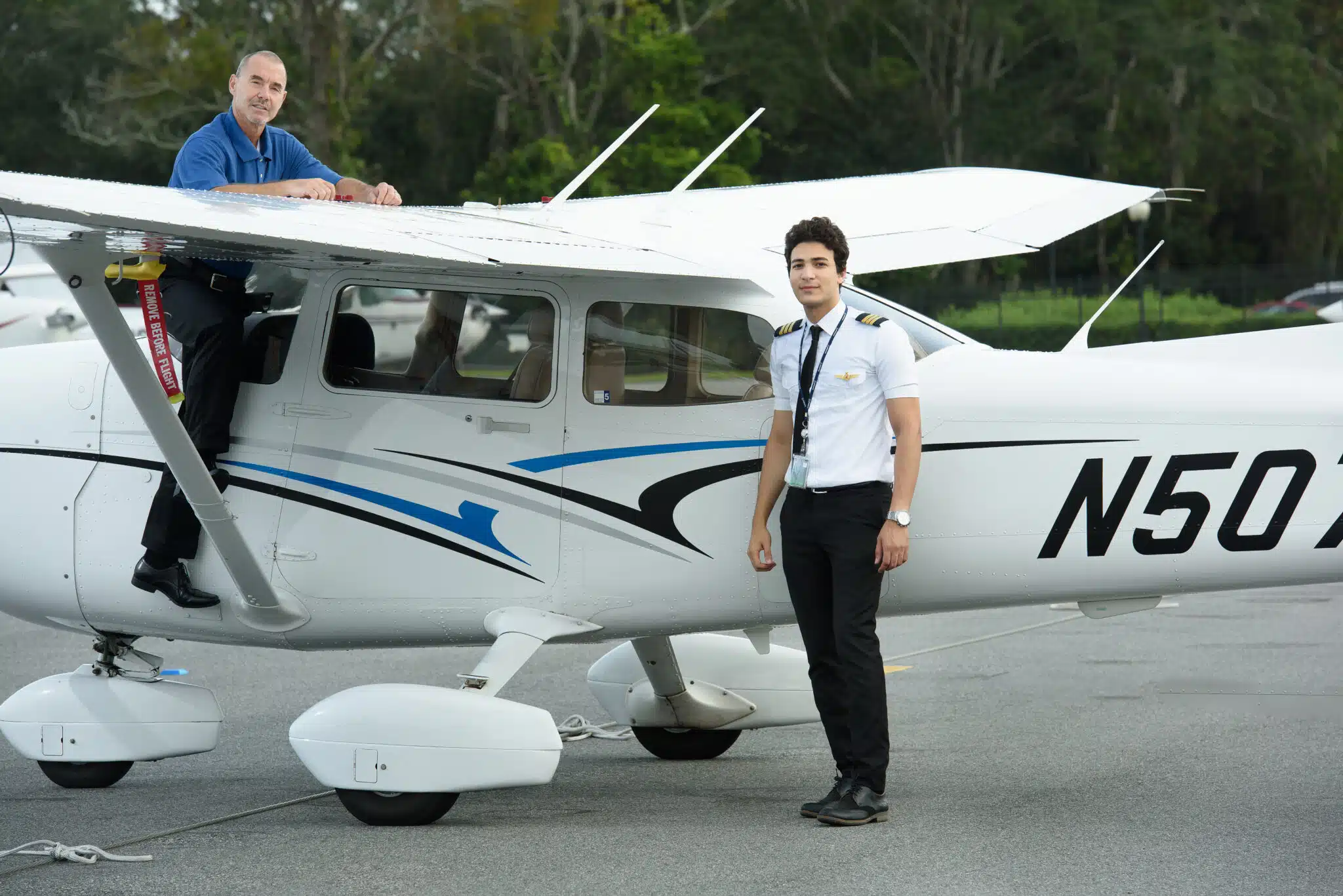
Flying an aircraft is an exciting and rewarding skill, but it requires proper certification to ensure safety and compliance with aviation regulations.
Pilot licenses are official certification that grants individuals the legal authority to operate aircraft based on their level of training and experience. Whether flying for personal enjoyment or pursuing a professional aviation career, obtaining the right license is crucial.
Different types of pilot licenses exist to accommodate various levels of flying expertise, from beginners to airline captains. These licenses are issued and regulated by aviation authorities worldwide, including:
- Federal Aviation Administration (FAA) – United States
- European Union Aviation Safety Agency (EASA) – Europe
- Directorate General of Civil Aviation (DGCA) – India
- Egyptian Civil Aviation Authority (ECAA) – Egypt
- General Authority of Civil Aviation (GACA) – Saudi Arabia
Each aviation authority has its own licensing requirements, covering eligibility, training hours, exams, and medical fitness. Choosing the right pilot license depends on several factors, including career goals, type of aircraft to be operated, and intended flight privileges.
This guide provides an in-depth look at the different types of pilot licenses, their requirements, privileges, and career prospects. Whether you’re a beginner exploring aviation or a professional advancing your career, understanding these licenses is the first step toward achieving your flying ambitions.
Understanding Pilot Licenses
A pilot license is an official certification issued by aviation authorities that grants individuals the legal right to operate aircraft. It serves as proof that a pilot has undergone the necessary training, met experience requirements, and demonstrated the ability to fly safely. Depending on the type of license, pilots may be restricted to recreational flying, commercial operations, or airline transport roles.
The Purpose of Different Pilot Licenses
Pilot licenses are structured to match different levels of expertise and career paths. Some are designed for beginners and hobbyists, while others focus on professional aviation careers. The primary purposes of obtaining a pilot license include:
- Legal Authorization: Ensuring compliance with aviation regulations.
- Safety and Competency: Verifying that a pilot has the skills and knowledge to operate an aircraft safely.
- Career Advancement: Serving as a prerequisite for commercial and airline pilot jobs.
- Aircraft Privileges: Determining what type of aircraft a pilot can fly and under what conditions (e.g., solo, multi-engine, night flying).
Pilot Licenses vs. Certifications vs. Ratings
The aviation industry uses different terms related to pilot qualifications, which can sometimes be confusing. Here’s how they differ:
- Pilot Licenses: A formal document that grants legal permission to operate an aircraft (e.g., Private Pilot License, Commercial Pilot License).
- Certifications: A broad term that may include both licenses and endorsements proving a pilot’s competency. For example, a Certified Flight Instructor (CFI) is a certification that allows a pilot to teach others.
- Rating: An additional qualification added to a license, allowing a pilot to operate specific types of aircraft or in certain conditions (e.g., Multi-Engine Rating, Instrument Rating).
Understanding these distinctions is crucial when navigating the different pathways in aviation. The next section will explore the different types of pilot licenses, their requirements, and their career prospects.
The Different Types of Pilot Licenses
Pilot licenses vary based on training level, aircraft type, and intended flight operations. Some are designed for recreational flying, while others lead to professional careers. Below is an in-depth look at the different types of pilot licenses, their requirements, and career prospects.
Student Pilot License (SPL)
A Student Pilot License (SPL) is the first step for individuals starting flight training. It allows student pilots to fly under the supervision of a certified instructor and, in some cases, solo after meeting specific requirements.
Eligibility & Requirements:
- Minimum age: 16-17 years (varies by country).
- Must pass a medical exam (Class 2 or equivalent).
- Enrollment in a recognized flight school like the Florida Flyers Flight Academy.
Privileges & Limitations:
- Can only fly under instructor supervision.
- May conduct solo flights once approved by the instructor.
- Cannot carry passengers or fly commercially.
Once students complete the necessary flight hours and pass basic assessments, they can upgrade to a Private Pilot License (PPL).
Recreational Pilot License (RPL) (Australia & Canada Only)
The Recreational Pilot License (RPL) is for hobbyist pilots who want a simplified alternative to the PPL. It requires fewer training hours but comes with strict limitations.
RPL holders can fly light aircraft for personal use within local airspace but cannot fly at night, in bad weather, or internationally.
Key Differences Between RPL & PPL:
| Feature | RPL | PPL |
|---|---|---|
| Flight Hours Required | ~25 hours | 40-50 hours |
| Passenger Carrying | Limited (1-2 max) | Allowed |
| International Flying | No | Yes |
| Night Flying | No | Yes |
| Career Path | Not eligible for commercial training | Can advance to CPL |
While an RPL is sufficient for basic flying, those seeking greater privileges or a pilot career should aim for a Private Pilot License (PPL).
Private Pilot License (PPL)
The Private Pilot License (PPL) is the most common entry-level license for individuals who want to fly for personal and leisure purposes. It provides pilots with the freedom to operate single-engine aircraft, carry passengers, and travel internationally, but it does not allow them to fly for commercial purposes.
Requirements
To obtain a PPL, aspiring pilots must meet the following criteria:
- Minimum Age: 17 years (varies by country).
- Medical Certification: At least a Class 2 medical certificate to ensure fitness to fly.
- Flight Training: Completion of 40-50 flight hours, including solo and cross-country flying (requirements differ by aviation authority).
Written & Practical Exams:
- Pass theoretical exams covering aerodynamics, navigation, air law, and meteorology.
- Successfully complete a checkride (practical flight test) with an examiner.
Privileges & Limitations
- Can fly single-engine aircraft for personal use.
- Can carry passengers, including family and friends.
- Can fly internationally, provided the regulations of the destination country allow it.
- Cannot earn money through flying (no commercial operations).
- Limited to visual flight rules (VFR), unless an instrument rating is obtained.
Can PPL Holders Earn Money?
No, a PPL is strictly for non-commercial use. Pilots who want to fly professionally or be compensated for flying services must upgrade to a Commercial Pilot License (CPL).
Commercial Pilot License (CPL)
A Commercial Pilot License (CPL) is the next step for pilots who want to fly professionally and earn money from aviation. It allows pilots to work in charter operations, aerial photography, cargo transport, and as flight instructors. A CPL is also the stepping stone toward an Airline Transport Pilot License (ATPL), which is required for airline jobs.
Training Requirements
To qualify for a CPL, pilots must complete:
- Minimum Age: 18 years.
- Medical Certification: Class 1 medical certificate, which has stricter health standards than a Class 2 medical.
Flight Experience:
- 200-250 flight hours (varies by aviation authority).
- Night flying, cross-country navigation, and advanced maneuvers.
Written & Practical Exams:
- Pass CPL theoretical exams on flight operations, meteorology, air law, and human factors.
- Successfully complete a practical flight test (checkride).
Jobs Available with a CPL
A CPL allows pilots to be paid for their flying skills in different roles, including:
- Charter Pilot – Flying private clients on small aircraft.
- Cargo Pilot – Transporting goods for logistics companies.
- Flight Instructor – Teaching new pilots (requires a Certified Flight Instructor (CFI) endorsement).
- Aerial Survey & Photography Pilot – Flying for mapping, photography, or agricultural spraying.
Pilot Licenses: CPL vs. ATPL – What’s the Difference?
| Feature | CPL | ATPL |
|---|---|---|
| Minimum Age | 18 | 21 |
| Flight Hours Required | 200-250 | 1,500+ |
| Job Eligibility | Charter, cargo, instructor | Airline first officer & captain |
| Career Advancement | Can upgrade to ATPL | Required for airline captaincy |
A CPL holder can work as a pilot, but to command large passenger jets, they must eventually upgrade to an ATPL.
Airline Transport Pilot License (ATPL)
The Airline Transport Pilot License (ATPL) is the highest level of pilot certification, required for pilots to operate as captains on commercial airliners. This license represents the pinnacle of professional aviation training and qualifies pilots to command large aircraft for airlines worldwide.
Minimum Flight Hours & Advanced Training
To obtain an ATPL, pilots must complete:
- Minimum Age: 21 years.
- Medical Certification: Class 1 medical certificate, meeting the highest aviation health standards.
Flight Experience:
- At least 1,500 total flight hours (FAA standard; varies by country).
- Experience in cross-country, night flying, and multi-engine aircraft operations.
Examinations & Checkride:
- Pass theoretical exams covering advanced aerodynamics, airline operations, flight planning, and emergency procedures.
- Successfully complete an ATPL checkride (practical flight test).
ATPL (Frozen) vs. ATPL (Unfrozen)
| Feature | ATPL (Frozen) | ATPL (Unfrozen) |
|---|---|---|
| Flight Hours | Less than 1,500 | 1,500+ |
| Job Eligibility | First Officer (co-pilot) | Captain |
| Training Completed | All ATPL theory exams passed | Full ATPL + experience requirements met |
| Can Act as Captain? | No | Yes |
A Frozen ATPL means the pilot has passed all required theoretical exams but has not yet reached 1,500 flight hours. They can work as a First Officer (co-pilot) for an airline. Once they complete the flight hour requirement, the ATPL becomes Unfrozen, allowing them to act as captain.
Career Opportunities & Salary Expectations
With an ATPL, pilots can advance to high-paying airline positions, including:
Airline Captain – The highest-paid pilot role commanding commercial jets.
Cargo Airline Pilot – Operating freight aircraft for logistics companies.
Corporate Jet Captain – Flying private jets for executives and VIP clients.
Flight Operations Manager – Managing airline flight schedules and crews.
Salary Expectations:
- First Officer: $50,000 – $100,000 annually (varies by airline and experience).
- Captain (Unfrozen ATPL): $120,000 – $300,000+ annually at major airlines.
An ATPL is essential for those aiming for long-term careers in airline operations, offering higher salaries and career stability.
Sport Pilot License (SPL) – USA Only
The Sport Pilot License (SPL) is a low-cost and simplified certification for pilots who want to fly light-sport aircraft (LSA) for recreational purposes. It is an ideal option for those who want to fly without the extensive training and medical requirements of a Private Pilot License (PPL).
Who is it For?
The SPL is designed for:
- Recreational pilots who want an easy and affordable way to fly.
- Pilots who do not want to undergo a full medical exam (a valid U.S. driver’s license is sufficient).
- Those who plan to fly only in clear weather and during daylight hours.
Training Requirements & Limitations
- Flight Hours Required: Minimum 20 hours of flight training (compared to 40-50 for a PPL).
- Medical Requirements: No FAA medical certificate needed (a valid driver’s license is sufficient).
Aircraft Limitations:
- Can only fly light-sport aircraft (LSA).
- Maximum two-seat aircraft (pilot + one passenger).
- Limited to lower-speed aircraft (max 120 knots).
Operational Restrictions:
- Daytime flying only (no night flying).
- No flights in controlled airspace (Class B, C, or D airports) without additional training.
- No international flights.
Differences Between SPL and PPL
| Feature | Sport Pilot License (SPL) | Private Pilot License (PPL) |
|---|---|---|
| Flight Hours Required | 20 | 40-50 |
| Medical Exam Required | No (driver’s license suffices) | Yes (Class 2 medical or equivalent) |
| Aircraft Type | Light-sport aircraft (LSA) | Single-engine aircraft |
| Passenger Limit | 1 | No set limit |
| Night Flying | No | Yes |
| International Flights | No | Yes |
While an SPL is cheaper and easier to obtain, it has significant restrictions compared to a PPL. Pilots looking for more flexibility, night flying privileges, and international flights should consider a Private Pilot License instead.
Flight Instructor License (CFI/CFII)
A Certified Flight Instructor (CFI) License allows experienced pilots to teach student pilots, providing them with essential flight training. Becoming a flight instructor is one of the most common ways for commercial pilots to gain flight hours while earning income before moving to airline careers.
Becoming a Certified Flight Instructor (CFI)
To become a CFI, a pilot must:
- Hold a Commercial Pilot License (CPL) or higher.
- Obtain a Flight Instructor Certificate by passing written, oral, and practical flight exams.
- Have a minimum of 250 total flight hours (varies by country).
- Demonstrate instructional skills and the ability to mentor students.
For those who want to teach instrument flight, an additional Certified Flight Instructor – Instrument (CFII) rating is required.
Teaching Others & Gaining Flight Experience
- CFI instructors train student pilots working toward their SPL, PPL, or CPL.
- CFIs gain valuable flight hours while working in aviation.
- Many aspiring airline pilots become flight instructors to build experience quickly.
Pathway to Accumulating Hours for Airline Jobs
| Step | Requirement | Hours Needed |
|---|---|---|
| Commercial Pilot (CPL) | Basic commercial flying jobs | 250+ |
| Flight Instructor (CFI) | Teaching student pilots | 250–1,500 |
| Airline Transport Pilot (ATPL) | Eligible for airline positions | 1,500+ |
Becoming a CFI is one of the fastest and most cost-effective ways to reach the 1,500-hour ATPL requirement, making it a crucial step for pilots aiming to fly for airlines.
Multi-Crew Pilot License (MPL)
The Multi-Crew Pilot License (MPL) is a fast-track airline training program that takes pilots directly from beginner training to a First Officer (co-pilot) position with an airline. Unlike the traditional CPL-ATPL route, the MPL focuses heavily on simulator-based training and multi-crew operations.
How MPL Differs from Traditional CPL + ATPL Pathways
| Feature | MPL | CPL + ATPL |
|---|---|---|
| Training Focus | Airline-specific, multi-crew | General flight skills, solo flying |
| Flight Hours | ~250 (mainly in simulators) | 1,500+ |
| Job Placement | Direct airline placement (First Officer) | Must gain hours before applying |
| Solo Flight Training | Minimal | Extensive solo flight experience |
The MPL program skips the traditional solo flying phase and instead trains students directly in airline cockpit environments using advanced flight simulators.
Pros & Cons of MPL Training
- Fastest route to an airline career (as little as 18 months).
- Airline-sponsored in some cases, reducing training costs.
- Less flight experience compared to CPL holders, limiting flexibility in other aviation roles.
- Tied to a specific airline, making it harder to switch jobs early in a career.
MPL is an excellent choice for students who are certain they want to fly for an airline, but it lacks the versatility of a traditional CPL-ATPL path.
Remote Pilot License (RPL) / Drone Pilot License
A Remote Pilot License (RPL), also known as a Drone Pilot License, is required for individuals who want to operate drones commercially for services such as aerial photography, inspections, and deliveries.
Regulations Under FAA Part 107, EASA, and DGCA
- FAA (USA): Requires passing the Part 107 Knowledge Test.
- EASA (Europe): Pilots must obtain an EU Drone Operator Certificate.
- DGCA (India): Requires completion of an approved drone training course.
Career Opportunities in Drone Piloting
Aerial Photography & Videography – Real estate, filmmaking, journalism.
Industrial Inspections – Infrastructure, construction, oil & gas.
Surveying & Mapping – Agriculture, land development.
Drone Delivery Services – Amazon, medical supply transport.
With the drone industry expanding rapidly, obtaining an RPL is a valuable certification for those interested in aviation careers outside of traditional piloting.
Pilot Licenses: Choosing the Right
Selecting the right pilot license depends on factors such as career goals, training costs, and the time commitment required. While some licenses are suitable for recreational flying, others are essential for professional pilots.
Pilot Licenses Factors to Consider
A pilot’s career goals play a crucial role in choosing a license. Recreational pilots often start with a Sport Pilot License (SPL) or Private Pilot License (PPL), while those aiming for professional careers require a Commercial Pilot License (CPL) or Multi-Crew Pilot License (MPL). Aspiring airline captains must eventually obtain an Airline Transport Pilot License (ATPL).
Training costs also vary significantly. A Sport Pilot License (SPL) can cost between $5,000 and $10,000, while a full ATPL program can range from $80,000 to $150,000. The duration of training depends on the license type, with SPLs completed in a few months, whereas ATPL training can take several years.
Pilot Licenses Which Suits Your Aviation Career?
| Career Path | Recommended License |
|---|---|
| Hobby & Leisure | PPL or SPL |
| Private Jet Pilot | PPL → CPL |
| Charter or Cargo Pilot | CPL |
| Airline First Officer | CPL → ATPL (Frozen) or MPL |
| Airline Captain | ATPL (Unfrozen) |
| Drone Operator | Remote Pilot License (RPL) |
Can You Upgrade from One License to Another?
Yes, pilots can upgrade pilot licenses as they gain experience. For example, an SPL holder can train further to earn a PPL, while a CPL pilot can progress to an ATPL after accumulating the required flight hours. Additionally, pilots can add ratings (such as Multi-Engine or Instrument Ratings) or become Certified Flight Instructors (CFI) to build experience before moving to airline jobs.
Pilot Licenses Requirements by Region
Aviation authorities worldwide regulate pilot training, medical requirements, and flight hour minimums. Below is a summary of the key pilot licensing requirements in different regions.
FAA (United States)
The Federal Aviation Administration (FAA) oversees aviation in the U.S., offering Part 61 (flexible) and Part 141 (structured) training options.
Medical Requirements: Class 3 (PPL), Class 2 (CPL), Class 1 (ATPL).
Flight Hour Requirements:
- PPL: 40 hours
- CPL: 250 hours
- ATPL: 1,500 hours
Drone pilots must obtain FAA Part 107 certification for commercial drone operations.
EASA (Europe)
The European Union Aviation Safety Agency (EASA) follows a structured licensing system. Pilots can take integrated or modular training routes.
Medical Requirements: Class 2 (PPL), Class 1 (CPL/ATPL).
Flight Hour Requirements:
- PPL: 45 hours
- CPL: 200 hours
- ATPL (Frozen): 650+ hours in an integrated course
MPL programs are widely used for airline-sponsored training.
DGCA (India)
India’s Directorate General of Civil Aviation (DGCA) follows International Civil Aviation Organization (ICAO) standards for pilot training.
Medical Requirements: Class 2 (PPL), Class 1 (CPL/ATPL).
Flight Hour Requirements:
- PPL: 40 hours
- CPL: 200 hours (including 100 solo hours)
- ATPL: 1,500 hours
CPL candidates must pass theoretical exams in air regulations, navigation, meteorology, and technical subjects.
ECAA (Egypt)
The Egyptian Civil Aviation Authority (ECAA) regulates aviation training, ensuring compliance with ICAO standards.
Medical Requirements: Class 2 (PPL), Class 1 (CPL/ATPL).
Flight Hour Requirements:
- PPL: 40 hours
- CPL: 200 hours
- ATPL: 1,500 hours
English proficiency is mandatory for all license holders.
GACA (Saudi Arabia)
The General Authority of Civil Aviation (GACA) oversees aviation licensing in Saudi Arabia.
Medical Requirements: Class 2 (PPL), Class 1 (CPL/ATPL).
Flight Hour Requirements:
- PPL: 40-45 hours
- CPL: 200 hours
- ATPL: 1,500 hours
Saudi pilots can train at local flight academies or internationally recognized schools.
Pilot Licenses Costs and Training Duration
The cost and duration of obtaining pilot licenses vary depending on the type of license, flight school, country, and aircraft used for training. Pilots must carefully consider these factors when choosing a training program to ensure it aligns with their budget and career goals.
Average Costs for Pilot Licenses
The following table outlines the estimated costs for different pilot licenses across various aviation authorities:
| Pilot Licenses | Estimated Cost (USD) | Regulatory Body |
|---|---|---|
| Sport Pilot License (SPL) | $5,000 – $10,000 | FAA (USA) |
| Private Pilot License (PPL) | $10,000 – $20,000 | FAA, EASA, DGCA, ECAA, GACA |
| Commercial Pilot License (CPL) | $50,000 – $80,000 | FAA, EASA, DGCA, ECAA, GACA |
| Multi-Crew Pilot License (MPL) | $80,000 – $150,000 | EASA, FAA, DGCA |
| Airline Transport Pilot License (ATPL) | $100,000 – $200,000 | FAA, EASA, DGCA, ECAA, GACA |
| Remote Pilot License (RPL) / Drone Pilot License | $500 – $2,000 | FAA, EASA, DGCA |
The cost of pilot licenses includes tuition, flight training, aircraft rental, instructor fees, and examination costs. Prices vary depending on location, fuel costs, and the type of aircraft used during training.
How Long It Takes to Complete Different Pilot Licenses
The time required to obtain a pilot license depends on the training program structure and the number of flying hours required.
| Pilot License | Training Duration |
|---|---|
| Sport Pilot License (SPL) | 2 – 3 months |
| Private Pilot License (PPL) | 3 – 6 months |
| Commercial Pilot License (CPL) | 1 – 2 years |
| Multi-Crew Pilot License (MPL) | 18 – 24 months |
| Airline Transport Pilot License (ATPL) | 2 – 4 years |
| Remote Pilot License (RPL) / Drone Pilot License | 1 – 2 weeks |
Training can take longer if a student is completing lessons on a part-time basis or if weather conditions and scheduling conflicts delay flight hours.
Factors Affecting Pilot Licenses Costs
Several factors influence the overall cost of obtaining a pilot license:
- Flight School Location: Training costs in the United States, Canada, and South Asia are generally lower than in Europe and the Middle East.
- Type of Aircraft: Training on larger, complex aircraft is more expensive than training on standard single-engine planes.
- Instructor Fees: Flight instructor rates vary based on experience, location, and flight school reputation.
- Fuel Costs: Fuel price fluctuations can significantly impact the hourly cost of training aircraft.
- Regulatory Requirements: Some aviation authorities require additional exams and simulator training, increasing overall costs.
A cost-effective way to obtain a pilot license is to train in a country with lower training fees while ensuring that the license is recognized internationally.
Final Thoughts
Choosing the right pilot license is a crucial step toward achieving aviation goals, whether for personal flying or a professional career. Pilot licenses offers different privileges, and selecting the appropriate one depends on factors such as career aspirations, financial capacity, and available training opportunities.
Aspiring pilots should consider:
- The long-term career impact of their chosen license.
- Whether they want to fly recreationally or professionally.
- The time and financial investment required.
Next Steps for Aspiring Pilots
After selecting the appropriate pilot license, the next steps involve:
- Researching accredited flight schools like the Florida Flyers Flight Academy that meet regulatory standards (FAA, EASA, DGCA, etc.).
- Meeting medical certification requirements (Class 1 for professional pilots, Class 2 for recreational pilots).
- Enrolling in ground school and flight training to gain necessary knowledge and hands-on flying experience.
- Taking the necessary theoretical exams and flight tests to obtain certification.
For those ready to begin their journey toward obtaining a pilot license, the best approach is to Florida Flyers Flight Academy and explore available training programs. Many aviation academies offer financing options and accelerated courses to help students achieve their pilot certification efficiently.
Contact the Florida Flyers Flight Academy Team today at (904) 209-3510 to learn more about how to do the foreign pilot license conversion in 4 steps.