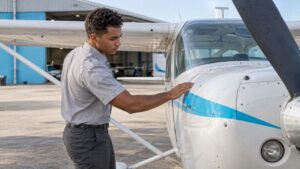
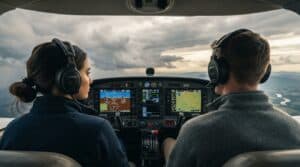
Cessna 172 Skyhawk training dominates flight schools worldwide, accounting for 80% of new pilot certifications annually. This isn’t sentiment or tradition. Flight schools choose the Cessna 172 Skyhawk because decades of data prove it delivers the optimal balance between safety, operating costs, and student success rates that other trainers can’t match.
Here’s the reality aviation schools quietly understand: the Cessna 172 Skyhawk wasn’t designed to be exciting. It was engineered to be predictable, with handling characteristics that accelerate student learning while minimizing expensive accidents and insurance claims that bankrupt flight schools.
This breakdown reveals why Cessna 172 Skyhawk training remains the industry standard, what you’ll actually pay compared to alternatives, and whether newer aircraft genuinely offer advantages worth premium hourly rates.
The Cessna 172 Skyhawk is a four seat, single engine aircraft that has been in continuous production since 1956. Over 44,000 units have been built, making it the most manufactured airplane in aviation history. Flight schools worldwide rely on this high wing trainer as their primary training platform.
The aircraft is powered by a 160 to 180 horsepower Lycoming engine depending on model year. It cruises at approximately 122 knots with a range exceeding 600 nautical miles. These specifications make it practical for flight training rather than speed focused aviation.
Cessna 172 Skyhawk training became the industry standard for several practical reasons. The high wing configuration provides excellent visibility for students learning navigation and traffic pattern work. Tricycle landing gear with steerable nose wheel simplifies ground operations that challenge beginners in tailwheel aircraft.
The aircraft forgives common student errors through slow stall speeds and docile handling characteristics. The wide speed range between stall and maximum velocity creates safety margins that protect beginners making inevitable mistakes during early training.
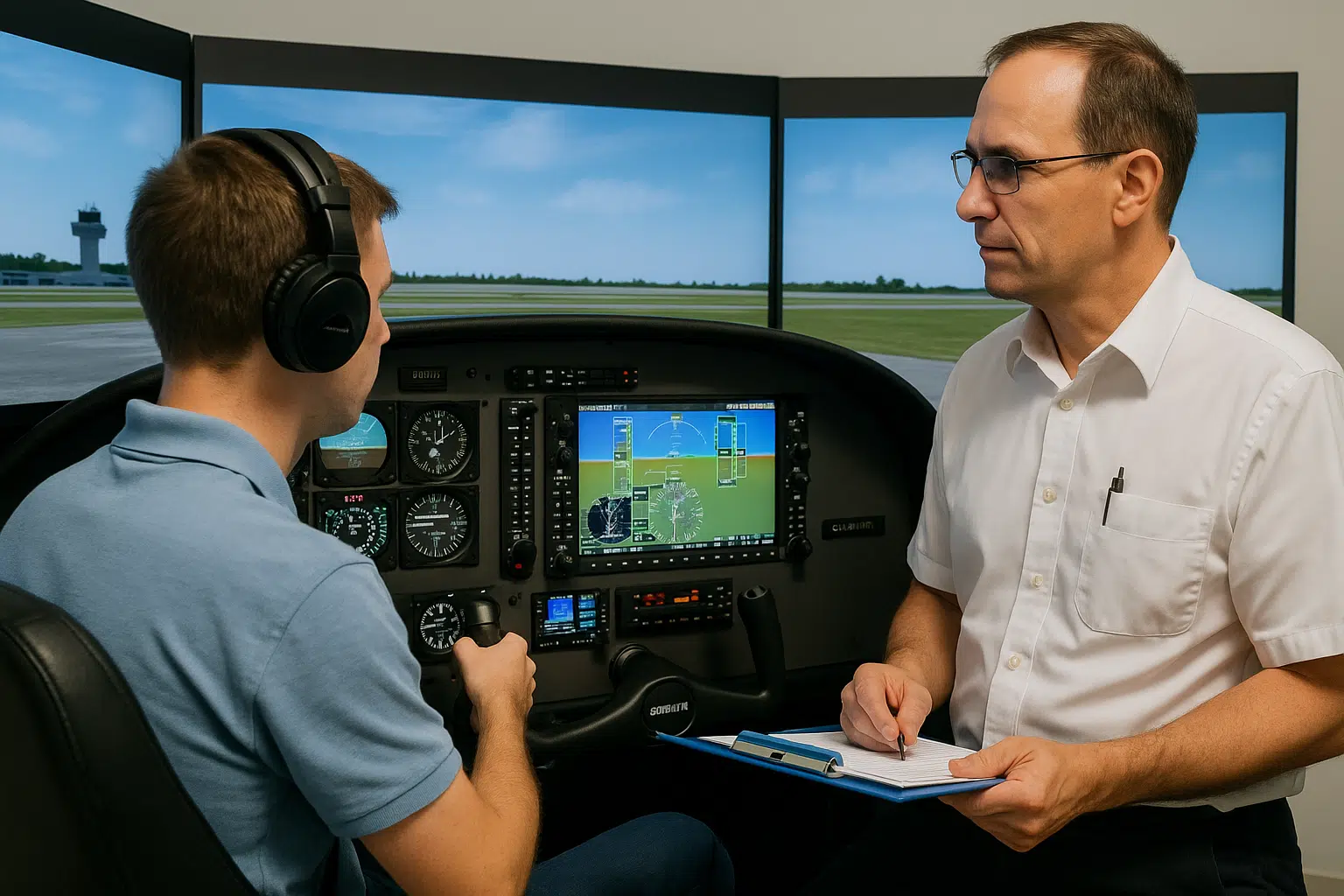
Modern variants feature Garmin glass cockpit avionics while older models use traditional analog instruments, giving schools flexibility in matching aircraft to student experience levels and budgets.
Flight schools don’t choose the Cessna 172 Skyhawk because of nostalgia or brand loyalty. They choose it because the economics work better than any competing trainer, creating a self reinforcing cycle where availability drives instruction standardization.
Key factors driving Cessna 172 dominance:
Insurance companies reward schools operating Cessna 172 Skyhawk training fleets with lower premiums because decades of actuarial data prove these aircraft generate fewer claims. That cost advantage compounds when schools can source parts overnight rather than grounding aircraft for weeks waiting on obscure components.
The standardization creates network effects. Students trained in Cessna 172 Skyhawk aircraft transition easily between schools, instructors understand the platform intimately, and examiners know exactly what performance to expect during checkrides.
Most importantly, the aircraft rarely surprises pilots. Cessna 172 Skyhawk training builds confidence through predictability rather than challenging students with handling quirks that slow progression and increase total training costs.
Understanding Cessna 172 Skyhawk training requires knowing the aircraft’s actual capabilities rather than marketing claims that exaggerate performance numbers most students never achieve in real world conditions.
Core specifications:
These numbers reveal why Cessna 172 Skyhawk training focuses on fundamentals rather than performance flying. The aircraft climbs at 730 feet per minute, adequate for training but unimpressive compared to high performance singles climbing twice as fast.
Fuel burn averages 8 to 10 gallons per hour depending on power settings, making hourly operating costs predictable for flight schools managing tight budgets. The 56 gallon capacity provides four hours endurance with reserves, sufficient for cross country training without frequent fuel stops.
The wide speed envelope between 47 mph stall and 163 mph maximum creates forgiving margins where student errors rarely become emergencies requiring advanced recovery techniques.
Cessna 172 Skyhawk training costs vary significantly based on aircraft age, avionics equipment, and whether schools charge wet or dry rates. Understanding the complete cost structure prevents budget surprises that derail training halfway to certification.
| Training Component | Cost Range | Notes |
|---|---|---|
| Cessna 172 Rental (per hour) | $150 – $180 | Wet rate includes fuel |
| Glass Cockpit Cessna 172 (per hour) | $170 – $210 | Premium for G1000 avionics |
| Flight Instructor (per hour) | $60 – $80 | Dual instruction rate |
| Ground Instruction (per hour) | $60 – $80 | Pre/post flight briefings |
| Solo Flight Time (per hour) | $150 – $180 | Aircraft only, no instructor |
| Private Pilot License (complete) | $15,000 – $25,000 | Based on 60-70 total hours |
| Instrument Rating Add-On | $8,000 – $12,000 | Additional 40-50 hours |
| Commercial License (time building) | $12,000 – $18,000 | Building to 250 hours minimum |
| Hourly Operating Cost (ownership) | $110 – $140 | For owners, includes all expenses |
Wet rates include fuel while dry rates require separate payment at $50 to $70 per flight. Glass cockpit Cessna 172 Skyhawk training aircraft command premiums despite not accelerating basic skill development. Most students need 60 to 70 hours for private pilot certification, making advertised minimum cost estimates misleading marketing rarely matching actual spending.
Cessna 172 Skyhawk training dominates the market, but competing aircraft offer distinct advantages depending on student goals, budget constraints, and desired flying characteristics that influence long term pilot development.
| Aircraft Model | Hourly Rental Rate | Cruise Speed | Fuel Burn (GPH) | Seating | Primary Advantage |
|---|---|---|---|---|---|
| Cessna 172 Skyhawk | $150 – $180 | 122 knots | 8 – 10 | 4 seats | Industry standard, universally available |
| Piper Cherokee 140 | $130 – $160 | 108 knots | 7 – 9 | 4 seats | Lower hourly costs |
| Diamond DA40 | $180 – $220 | 142 knots | 6 – 8 | 4 seats | Modern composite, fuel efficient |
| Piper Warrior | $140 – $170 | 115 knots | 8 – 10 | 4 seats | Low wing transition training |
| Cessna 152 | $110 – $140 | 107 knots | 5 – 6 | 2 seats | Budget option for solo building |
The Piper Cherokee costs $20 to $30 less per hour than Cessna 172 Skyhawk training but offers limited parts availability nationwide. Diamond DA40 burns significantly less fuel with glass cockpit standard, though higher acquisition costs push rental rates above Cessna 172 pricing.
Low wing Pipers provide different visibility and handling characteristics. Students trained exclusively in high wing Cessna 172 Skyhawk aircraft sometimes struggle transitioning to low wing designs where fuel management and landing sight pictures differ substantially from their initial training experience.
The Cessna 152 cuts hourly costs dramatically but weight restrictions prevent larger students from flying with instructors simultaneously, limiting dual instruction effectiveness for primary training phases requiring constant supervision and immediate intervention capability.
Student pilots benefit from Cessna 172 Skyhawk training because the aircraft forgives mistakes that would create emergencies in less stable designs, accelerating skill development without compromising safety.
The high wing configuration provides unobstructed downward visibility essential for traffic pattern work and ground reference maneuvers. Students see the runway throughout approach without structural components blocking critical sightlines.
Tricycle landing gear eliminates ground handling challenges inherent in tailwheel aircraft. Cessna 172 Skyhawk training focuses on airborne skills rather than forcing students to master complex taxi operations before achieving basic flight proficiency.
Slow stall speeds around 47 knots create generous safety margins with progressive warning through buffeting rather than abrupt wing drops. Recovery requires minimal altitude and straightforward control inputs that build student confidence.
The aircraft naturally returns to trimmed conditions after disturbances, providing thinking time during high workload scenarios. Wide center of gravity envelopes accommodate varying loads without dangerous weight and balance calculations preventing flight.
Cessna 172 Skyhawk training follows predictable progression milestones where students demonstrate specific competencies before advancing to more complex maneuvers requiring mastery of foundational skills.
Students complete three takeoffs and landings alone after demonstrating consistent aircraft control in the traffic pattern. This milestone proves basic proficiency in Cessna 172 Skyhawk operations without instructor intervention. Most students describe first solo as the most memorable flight of their training.
After mastering local operations, students plan and execute solo flights to airports 50 nautical miles away. These flights require navigation, weather analysis, and fuel management without instructor backup. Cross country experience builds decision making confidence essential for practical test success.
FAA requires three hours night training including takeoffs and landings at towered airports. Cessna 172 Skyhawk training introduces visual illusions and instrument reliance that daytime operations don’t demand. Students discover how darkness changes depth perception and runway judgment fundamentally.
Final training polishes maneuvers to practical test standards. Mock checkrides expose weaknesses requiring additional practice. Most students complete Cessna 172 Skyhawk training between 60 to 70 total hours before feeling checkride ready despite 40 hour FAA minimums.
Cessna 172 Skyhawk training dominates flight schools not through marketing but through proven economics and safety records that alternatives can’t match. The aircraft’s forgiving characteristics, widespread availability, and predictable operating costs create the optimal environment for transforming beginners into certificated pilots.
Your training costs and timeline depend entirely on frequency and chosen school. Part 141 programs offering structured Cessna 172 Skyhawk training typically reduce total hours and expenses compared to flexible Part 61 approaches.
Stop researching aircraft comparisons and start flying. The Cessna 172 Skyhawk became the training standard because it works, not because it’s perfect. Book your discovery flight today.
Most students solo a Cessna 172 Skyhawk after 15 to 25 flight hours once demonstrating consistent landing proficiency.
The Cessna 172 Skyhawk seats four versus two, has 180 horsepower versus 110, and accommodates larger students. Cessna 172 Skyhawk training costs more hourly but provides superior performance and versatility.
Yes, Cessna 172 Skyhawk training excels for beginners with slow stall speeds, stable handling, and forgiving characteristics that prevent student errors from becoming emergencies.
Cessna 172 Skyhawk training costs $150 to $180 per hour for aircraft rental plus $60 to $80 for instructors. Complete private pilot certification totals $15,000 to $25,000 based on typical 60 to 70 flight hours.
The Cessna 172 Skyhawk training aircraft dominates because of forgiving flight characteristics, tricycle landing gear, and high wing visibility. Its proven safety record and worldwide parts availability make Cessna 172 Skyhawk training economically practical for flight schools.
Contact the Florida Flyers Flight Academy Team today at (904) 209-3510 to learn more about how to transfer flight schools.

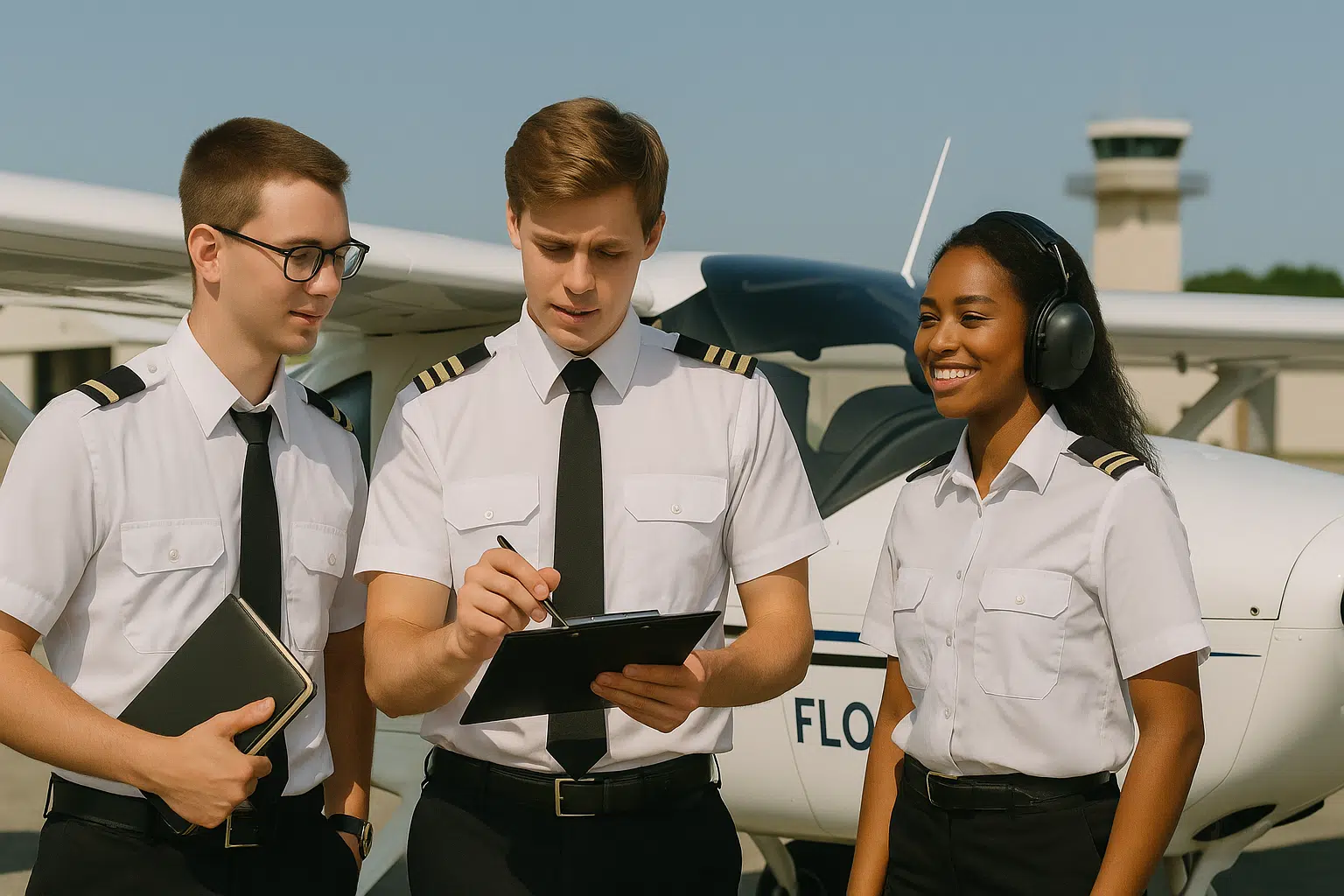
Contact the Florida Flyers Flight Academy Team today at (904) 209-3510 to learn more about how the top pilot schools in usa can help you achieve your aviation dreams.