
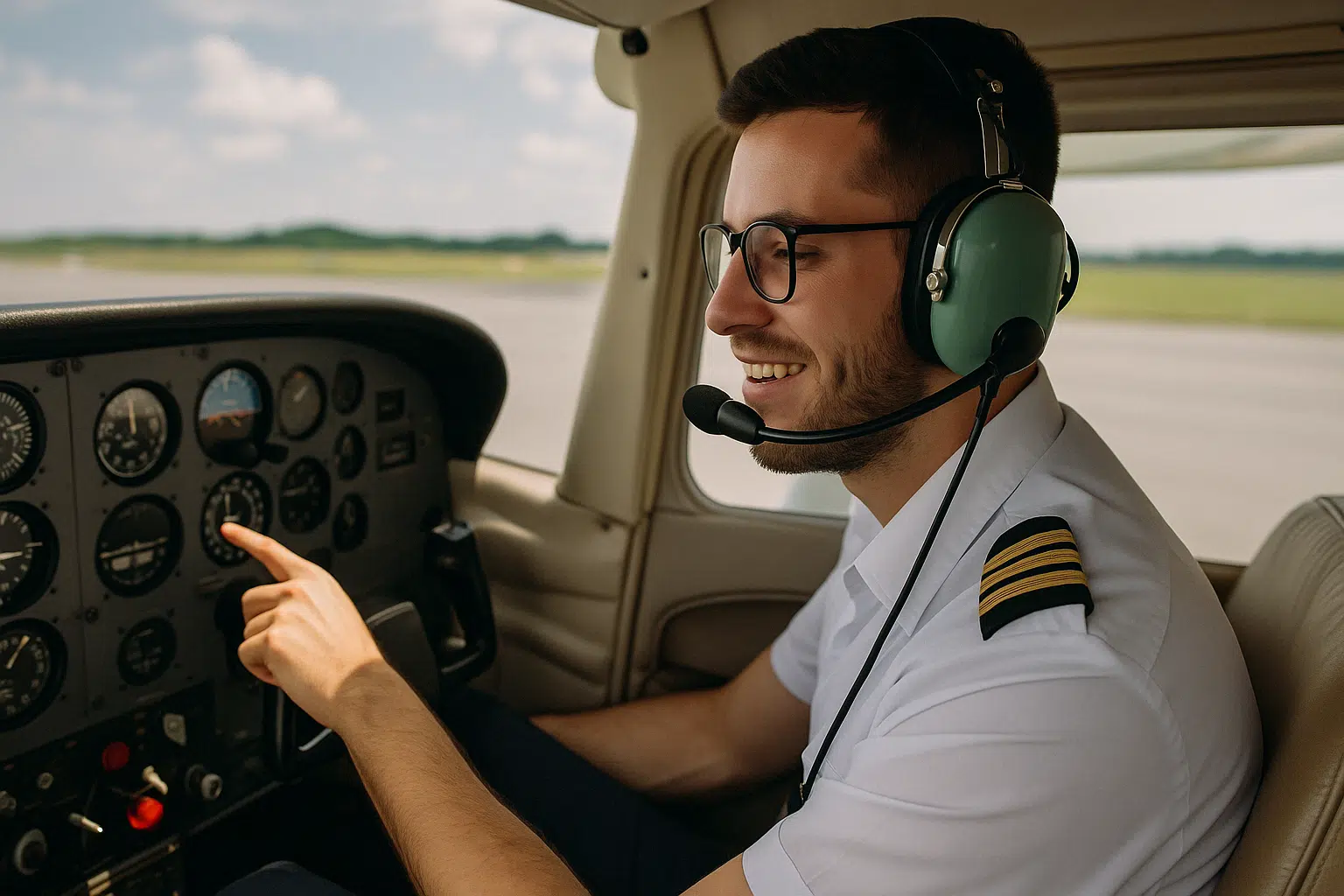
Commercial pilots are the reason passengers can reach other continents and why goods move safely and on time across the world. Behind every flight is years of training, discipline, and investment. But before you ever step into the cockpit, the first step is understanding what it really takes financially.
If you want to become a commercial pilot in the USA, you need a clear picture of flight school costs. From your very first private pilot lessons to full commercial certification, every stage requires planning and budgeting. Training is an investment in a career that offers global opportunities, steady demand, and long-term rewards — but it begins with knowing the price tag.
This guide breaks down the costs of flight school, tuition fees per year, and even what to expect in return through pilot salaries, so you can plan your path to the skies with confidence.
Before you can become a commercial pilot, you must first earn your Private Pilot License (PPL). This is the foundation of all advanced training and where most students begin their aviation journey.
In the United States, the cost of a PPL usually ranges between $12,000 and $18,000, depending on the flight school, location, and the type of aircraft used. The FAA requires a minimum of 40 flight hours, but most students need closer to 60–70 hours to reach the proficiency needed to pass their checkride. More hours mean more fuel, instructor time, and aircraft rental fees, which directly affect the total cost.
Here’s a quick breakdown of typical PPL expenses:
By the time you complete your private pilot training, you’ll not only gain the skills to fly solo and carry passengers but also lay the groundwork for the advanced courses that follow on the road to your commercial pilot license.
Once you’ve earned your Private Pilot License, the next step toward your goal to become a commercial pilot is advanced training. This includes your Instrument Rating (IR), Multi-Engine Rating (ME), and ultimately your Commercial Pilot License (CPL). Each stage adds both skills and costs.
On average, the total investment to become a commercial pilot in the USA falls between $70,000 and $100,000. At structured flight academies like Florida Flyers, the program is designed to move you efficiently from zero experience through commercial certification.
Here’s what contributes to the cost:
The FAA requires 250 total flight hours for a CPL, and reaching this number is often where costs increase. Students usually log additional hours through time-building packages, which are factored into the overall tuition.
While the numbers may seem high at first, this training is not just an education — it’s a career investment. Once completed, you’re eligible to apply for airline and charter jobs, setting you on the path to higher earnings and job security in a growing aviation industry.
When planning how to become a commercial pilot, it helps to break down the expenses into yearly tuition estimates. Unlike traditional universities, flight training programs are skill and hour-based, so the timeline can vary depending on your pace, weather, and school structure. Still, most students finish their training in about 2 to 3 years.
Here’s what a typical yearly breakdown looks like at U.S. flight schools:
| Year | Training Stage | Estimated Cost | What’s Included |
|---|---|---|---|
| Year 1 | Private Pilot License (PPL) | $15,000–$20,000 | Ground school, aircraft rental, instructor fees, exams, and first solo flights. Builds the foundation of your flying skills. |
| Year 2 | Instrument & Multi-Engine Ratings (IR + ME) | $15,000–$25,000 | Instrument training for flying in all weather conditions and multi-engine aircraft operations — essential for airline readiness. |
| Year 3 | Commercial Pilot License (CPL) + Hour Building | $30,000–$45,000 | Advanced maneuvers, cross-country flying, and accumulating FAA-required 250 flight hours. |
By the end of your program, total tuition typically reaches $70,000–$100,000 depending on the school and how quickly you complete your required hours.
Structured academies like Florida Flyers Flight Academy offer all-inclusive programs, meaning your training is streamlined with predictable costs each year. This not only helps with budgeting but also accelerates your progress toward a commercial cockpit.
One of the biggest questions future aviators ask is whether the cost of flight school pays off. The good news is that once you become a commercial pilot, the return on investment can be significant.
In the United States, entry-level commercial pilots often start with salaries ranging from $50,000 to $70,000 per year at regional airlines or charter companies. As experience grows and pilots transition to major airlines, annual earnings can quickly rise to $120,000–$200,000+, with senior captains at large carriers often making well above that.
Beyond salary, commercial pilots enjoy additional benefits such as:
When compared to the $70,000–$100,000 investment in flight school, the career potential makes aviation one of the few professional paths where training costs can be recovered within just a few years of employment. For many, the decision to pursue this career isn’t just about money — it’s about passion, lifestyle, and the opportunity to build a career in the sky.
Flight school is not just about learning to operate an aircraft, it’s about transforming into a professional aviator. To become a commercial pilot, students in Florida Flyers Flight Academy progress through a structured training path that combines ground theory, simulator sessions, and hands-on flying.
Here’s what you can expect during training:
Ground School: Covers essential subjects like aerodynamics, meteorology, navigation, aviation regulations, and aircraft systems. A strong foundation in theory ensures you’re ready for both written exams and real-world decision-making.
Simulator Training: Flight simulators allow you to practice complex procedures and emergency scenarios in a safe, controlled environment. This builds confidence before entering the cockpit.
Flight Training: The heart of becoming a pilot is time spent in the aircraft. You’ll learn advanced maneuvers, night flying, cross-country navigation, and multi-engine operations. Each phase builds toward the FAA-required 250 flight hours for your Commercial Pilot License.
Checkrides and FAA Exams: At each stage, you’ll demonstrate your skills to FAA examiners through written tests, oral exams, and practical checkrides. Passing these is what earns you each new rating and, finally, your commercial certificate.
The training is intense but rewarding. By the end, you’ll not only have the technical skills but also the professional mindset to operate aircraft safely and confidently in a commercial environment.
The journey to become a commercial pilot in the USA typically takes 2 to 3 years, depending on your pace, the flight school, and how consistently you can train. Some intensive academies, like Florida Flyers, offer structured programs that allow motivated students to finish in as little as 18–24 months.
Here’s a rough timeline:
Factors such as weather delays, exam availability, and personal schedules can extend training time. However, students who train full-time and follow their academy’s curriculum closely often progress much faster than those training part-time at local flight schools.
Yes, scholarships can significantly reduce the financial burden of flight training and make it easier to become a commercial pilot. While flight training is a major investment, there are organizations, airlines, and aviation groups that offer financial aid, grants, and sponsorships.
Some common options include:
While scholarships may not always cover the full $70,000–$100,000 cost, they can make a noticeable difference — especially when combined with financing options or pay-as-you-go flight hour packages. For determined students, these opportunities can be the stepping stone that makes training affordable.
Choosing to become a commercial pilot is more than just enrolling in flight school, it’s a commitment to building a career that offers stability, global travel, and long-term rewards. The investment in tuition, flight hours, and ratings may appear significant, but when measured against the career potential, it quickly proves worthwhile.
From your first private pilot license to completing your commercial certification, each step is an essential milestone on your journey to become a commercial pilot in the USA. With pilot demand continuing to rise, those who start training now position themselves for a future filled with opportunity.
At Florida Flyers Flight Academy, our structured, FAA-approved programs make it easier to budget and complete training on schedule. With transparent tuition, dedicated instructors, and a track record of successful graduates, we ensure every student has the tools to succeed.
Contact the Florida Flyers Flight Academy Team today at (904) 209-3510 to learn more about how to transfer flight schools.


