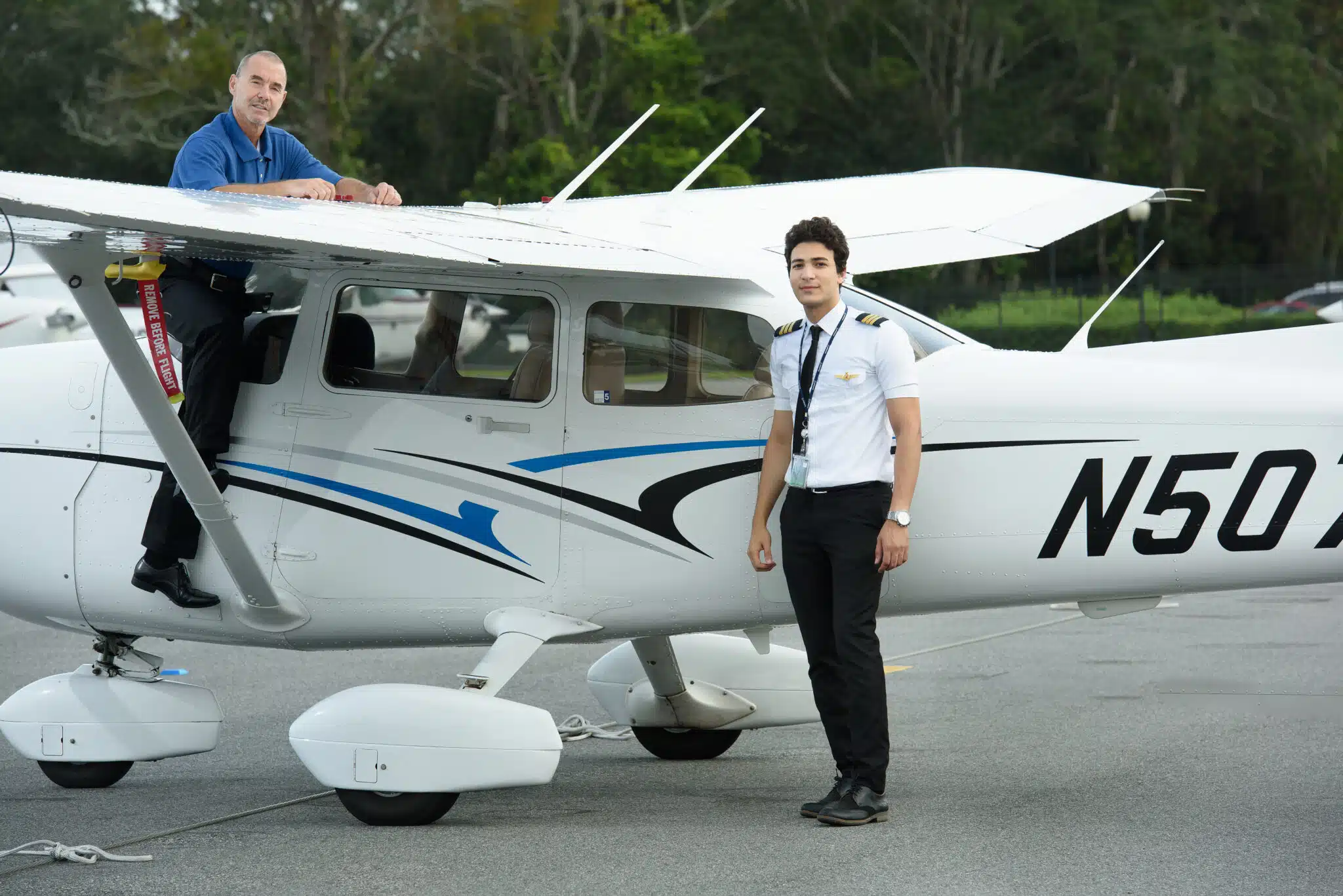
According to AOPA, Airline pilot demand is rising fast, and 2025 is shaping up to be one of the best times in recent years to start training. Airlines are hiring, flight schools are adapting, and career-focused pilot training programs are evolving to meet industry needs.
But here’s what most people don’t realize — choosing the right pilot training program makes all the difference.
Not every program is built to get you airline-ready. Some stretch out the process with unnecessary delays or outdated instruction. Others offer fast-track paths designed to take students from zero flight hours to commercial pilot in just 12 to 14 months.
This guide breaks it all down — what pilot training programs actually include, how long they take, what they cost, and what to look for if you’re serious about starting a professional flying career in 2025.
What Are Pilot Training Programs?
Pilot training programs are structured courses designed to teach students how to fly aircraft and earn the pilot licenses required to operate as a private or commercial pilot. These programs typically follow a progression of certifications that include:
- Private Pilot License (PPL) – the foundational license that allows you to fly solo and carry passengers (non-commercially).
- Instrument Rating (IR) – enables flying in various weather conditions using instrument navigation.
- Commercial Pilot License (CPL) – permits you to be paid for flying services.
- Multi-Engine Rating (optional) – allows operation of aircraft with more than one engine.
- Instructor Ratings (CFI, CFII, MEI) – used to build hours while teaching others.
It’s important to distinguish between recreational pilot training — designed for hobbyists or those flying for leisure — and career-focused programs, which are built to produce airline-ready pilots with the right combination of licenses, flight hours, and professionalism.
There are two main formats:
- Modular training: Students complete each license one at a time, often at their own pace and across different schools.
- Integrated training: A full-time, fast-track program designed to take a student from zero experience to commercial pilot in one continuous pathway — often preferred by airlines and training academies.
Key Components of an Airline-Ready Program
Not all flight schools prepare students for airline careers. A program built for professional readiness includes several key components:
FAA-Approved Curriculum: Programs must meet FAA (or equivalent) training standards to ensure license eligibility and flight safety compliance.
Structured, Zero-to-Commercial Training Path: An airline-ready program maps out the full training journey — from first flight to commercial certification — with minimal downtime between phases.
Emphasis on Safety and Flight Standards: High-quality instruction, regular check-ins, and adherence to safety protocols are non-negotiable. These programs focus on developing not just skills, but disciplined, decision-ready pilots.
Modern Fleet and Simulators: Training should include access to well-maintained aircraft and advanced flight simulators that reflect real-world airline operations and cockpit environments.
Career Placement Support: Some schools like the Florida Flyers Flight Academy offer airline partnerships, job placement assistance, or bridge programs that connect graduates directly to regional carriers or flight instructor positions.
These components aren’t just extras — they’re essential for students who want to be taken seriously by airlines and move into the cockpit quickly and confidently.
Types of Pilot Training Programs
Choosing the right pilot training program is more than just signing up for flight lessons — it’s about following a structured, outcome-driven path that prepares you for a professional flying career. The best pilot training programs are designed to move students through each critical phase of licensing, building both technical skill and airline-level readiness.
In this section, we’ll explore the core types of pilot training programs that make up the full pathway to becoming a commercial pilot. Whether you’re starting from zero or adding certifications, these programs form the foundation of every successful aviation career.
Private Pilot License (PPL)
The PPL is the entry point into all professional pilot training programs and sets the stage for every certification that follows.
This phase teaches fundamental skills — including takeoffs, landings, aircraft control, VFR navigation, and emergency procedures. It gives students their first taste of solo flight and real cockpit experience. Most full-time students complete this part of the training in about two to three months.
In the context of airline-focused pilot training programs, the goal of the PPL stage is to develop safety-minded, confident pilots who are ready to move quickly into more advanced phases.
Commercial Pilot License (CPL)
The CPL is where pilot training programs transition from basic flight instruction to professional-level operations.
This phase covers more complex maneuvers, in-depth systems knowledge, and high-performance aircraft handling. Students also log time flying at night and completing long cross-country flights to meet FAA requirements. On average, this segment takes four to six months.
In any career-oriented pilot training program, the CPL is a major milestone — it’s the certification that allows pilots to fly for hire, whether in charter, cargo, or scheduled passenger roles.
Instrument Rating (IR)
The IR is a required step in most airline-focused pilot training programs, particularly for pilots aiming to work in commercial airspace.
This stage focuses on flying solely by reference to cockpit instruments, allowing pilots to operate in clouds, rain, fog, or other low-visibility conditions. Students are trained in IFR procedures, instrument approaches, airspace navigation, and working closely with ATC.
Most structured pilot training programs integrate the IR within one to two months after earning the PPL. It’s a non-negotiable qualification for any pilot intending to fly in professional or airline environments.
Multi-Engine Rating
For pilots looking to join the airline industry, this rating is a key part of most advanced pilot training programs.
It allows students to fly aircraft with more than one engine — the standard configuration in most commercial fleets. The training includes handling engine failures, dealing with asymmetric thrust, and mastering emergency protocols in multi-engine aircraft.
A full-time student can complete this phase in as little as two to three weeks. For any pilot enrolled in an airline-oriented pilot training program, this rating is essential preparation for real-world operations.
Flight Instructor Certifications (CFI, CFII, MEI) (Optional)
Many comprehensive pilot training programs offer instructor certifications as an optional but strategic addition, especially for hour-building.
These ratings allow pilots to teach others while building flight time toward the 1,500-hour ATP minimum. The CFI, CFII, and MEI each focus on different teaching specialties, such as basic flight, instrument instruction, and multi-engine training.
Instructor phases typically take one to two months. In many pilot training programs, they’re seen as a smart route for pilots to stay active, sharp, and employable while gaining experience.
Airline Transport Pilot License (ATP)
The ATP is the final step in most full-scope pilot training programs and is required for pilots flying as first officers or captains in commercial airlines.
Although this license is usually earned after building 1,500 hours of flight time, most training programs are structured to prepare students early — with ATP theory, airline procedures, and simulator training included in the curriculum.
This certification represents the highest standard in pilot training programs, signifying that the pilot is fully qualified for airline operations under FAA regulations.
How Long Do Pilot Training Programs Take?
The length of a pilot training program depends heavily on how the training is structured — and how committed the student is to flying consistently. Most professional pilot training programs follow a step-by-step progression through multiple certifications, each with its own learning curve and time requirement.
For full-time students enrolled in fast-track programs, it’s possible to progress from zero experience to commercial pilot certification in as little as 12 to 14 months. The timeline typically looks like this: around three months to complete the Private Pilot License (PPL), one to two months for the Instrument Rating (IR), and another four to six months for the Commercial Pilot License (CPL). Additional ratings like multi-engine and flight instructor certifications may add another two to three months but are often integrated into the overall training schedule.
Part-time students, on the other hand, may take anywhere from 18 to 24 months or more, depending on how frequently they fly. While part-time programs offer more flexibility, they also tend to introduce delays due to weather, scheduling gaps, and less consistency in flight experience.
The most efficient pilot training programs are structured for daily or near-daily flying, with clear milestones and minimal downtime between phases. These fast-track programs are designed specifically for students looking to complete training quickly and enter the workforce as soon as possible.
Cost Breakdown: What to Expect in 2025
Understanding the true cost of pilot training programs is essential before you commit. Below is a breakdown of each major training phase and what you can expect to pay in 2025. These are average estimates and may vary slightly based on the flight school, location, and aircraft type used.
1. Private Pilot License (PPL): This is your entry point into aviation and typically the first expense. Most students spend between $10,000 and $20,000 to earn their PPL, depending on how many hours they take to meet FAA minimums and how efficiently they progress.
2. Instrument Rating (IR): Adding an IR allows pilots to fly in low-visibility conditions under instrument flight rules. The cost for this rating ranges from $5,000 to $10,000, covering aircraft rental, instruction, and simulator training where applicable.
3. Commercial Pilot License (CPL): This is the most expensive phase of training. To meet the required 250 hours and FAA standards, students can expect to pay between $20,000 and $30,000, depending on the aircraft used and whether it’s integrated with other training modules.
4. Multi-Engine Rating: If your training includes multi-engine aircraft, this rating will cost an additional $5,000 to $10,000. It’s often taken near the end of the program or alongside the CPL to prepare for airline-style aircraft.
5. Instructor Ratings (CFI, CFII, MEI) (Optional): For pilots planning to build flight hours through instruction, adding one or more instructor certifications will add around $5,000 to $10,000, depending on how many ratings you pursue.
Estimated Total Cost: $50,000 – $100,000
A full, career-oriented pilot training program — from zero experience to commercial readiness — typically costs between $50,000 and $100,000. This total includes all major certifications and optional ratings, assuming a fast-track or structured timeline.
Additional Costs to Keep in Mind:
- FAA Written and Checkride Fees: These vary by certification but can range from $150 to $800 each.
- Medical Certification: A Class 1 or Class 2 FAA medical exam may cost between $100 and $200.
- Training Materials & Ground School: Expect to spend another $500–$1,000 for books, charts, and software.
- Pilot Equipment: A quality headset, kneeboard, logbook, and flight bag may cost an additional $500–$1,000.
- Accommodation and Living Expenses: If relocating for training, factor in rent, transport, and food for 12+ months.

Choosing the Right Pilot School
Not all pilot training programs are created equal. Where you train can significantly influence how fast you progress, how well you’re prepared, and how easily you transition into a professional role. Choosing the right pilot school is one of the most important decisions you’ll make in your aviation journey.
First, look for proper accreditation and FAA approval. Schools that meet regulatory standards follow structured curriculums and maintain compliance with safety and performance benchmarks. Equally important is instructor experience — flight instructors should be not only certified but also actively engaged in mentoring students toward professional readiness.
The training fleet matters as well. Aircraft should be well-maintained, modern, and suited for both basic and advanced training. Access to flight simulators is also a plus, especially for Instrument Rating and multi-engine training.
For international students, support services are crucial. The best pilot schools provide visa guidance, housing options, and transition assistance to help international students integrate smoothly. A strong alumni network and job placement track record are also signs of a reliable program.
One example of a school that checks these boxes is Florida Flyers Flight Academy. Based in Florida, USA, it offers structured career pilot programs for both domestic and international students, with a focus on fast-track training, a modern fleet, and airline-aligned instruction.
Career Pathways After Graduation
Completing a professional pilot training program opens the door to multiple career paths — each with unique opportunities, schedules, and growth potential. The most common entry point for new commercial pilots is a regional airline, where you can gain valuable turbine time and professional cockpit experience.
Other graduates take roles in cargo operations, charter services, or corporate aviation, while some choose to become flight instructors to build time toward airline minimums. Depending on certifications and visa status, international students may also explore opportunities with airlines or charter companies in their home countries or abroad.
To qualify for the Airline Transport Pilot License (ATP) in the U.S., pilots must accumulate at least 1,500 hours of total flight time. Most students reach this milestone by instructing, flying regionally, or working in commercial operations after completing their CPL.
Well-structured pilot training programs don’t just issue licenses — they build readiness. The best schools help students transition from training to employment through career support, networking opportunities, and airline partnerships, making the leap from cockpit to crew seat faster and more seamless.
Airline-Ready in 2025: What Sets a Program Apart?
The aviation industry is evolving fast — and so are the expectations placed on new pilots. In 2025, airline-ready pilot training programs must go beyond licenses and flight hours. They need to reflect the real-world systems, technologies, and standards used in professional flight operations worldwide.
Leading programs now integrate modern training tools, including glass cockpit aircraft, advanced simulators, and digital learning platforms. Students are exposed to the same avionics systems found in regional and commercial jets, building familiarity with the kind of cockpit environments they’ll encounter in the field.
Equally important is the focus on Crew Resource Management (CRM), Standard Operating Procedures (SOPs), and aviation safety culture. These aren’t just buzzwords — they’re fundamental competencies for any pilot entering the airline pipeline.
Strong programs are also designed with global adaptability in mind. Whether you’re training under FAA regulations in the U.S., EASA standards in Europe, or aiming for a career in the Middle East or Asia, your training should prepare you for a range of regional hiring requirements and professional environments.
Final Thoughts
Choosing the right pilot training program isn’t just about cost or convenience — it’s about building a strong, future-ready foundation for your aviation career. The right program will guide you through every license, sharpen your skills, and connect you to real job opportunities — all while keeping your training aligned with the standards airlines expect today.
If you’re serious about flying professionally, the best time to start planning is now. Look for structure. Look for support. And most importantly, choose a school that puts your long-term success first.
Trusted academies like Florida Flyers Flight Academy offer structured, fast-track programs designed for students who want more than just a certificate — they want a career. Explore your options, ask the right questions, and start charting your course to the cockpit.
Contact the Florida Flyers Flight Academy Team today at (904) 209-3510 to learn more about how to do the foreign pilot license conversion in 4 steps.