
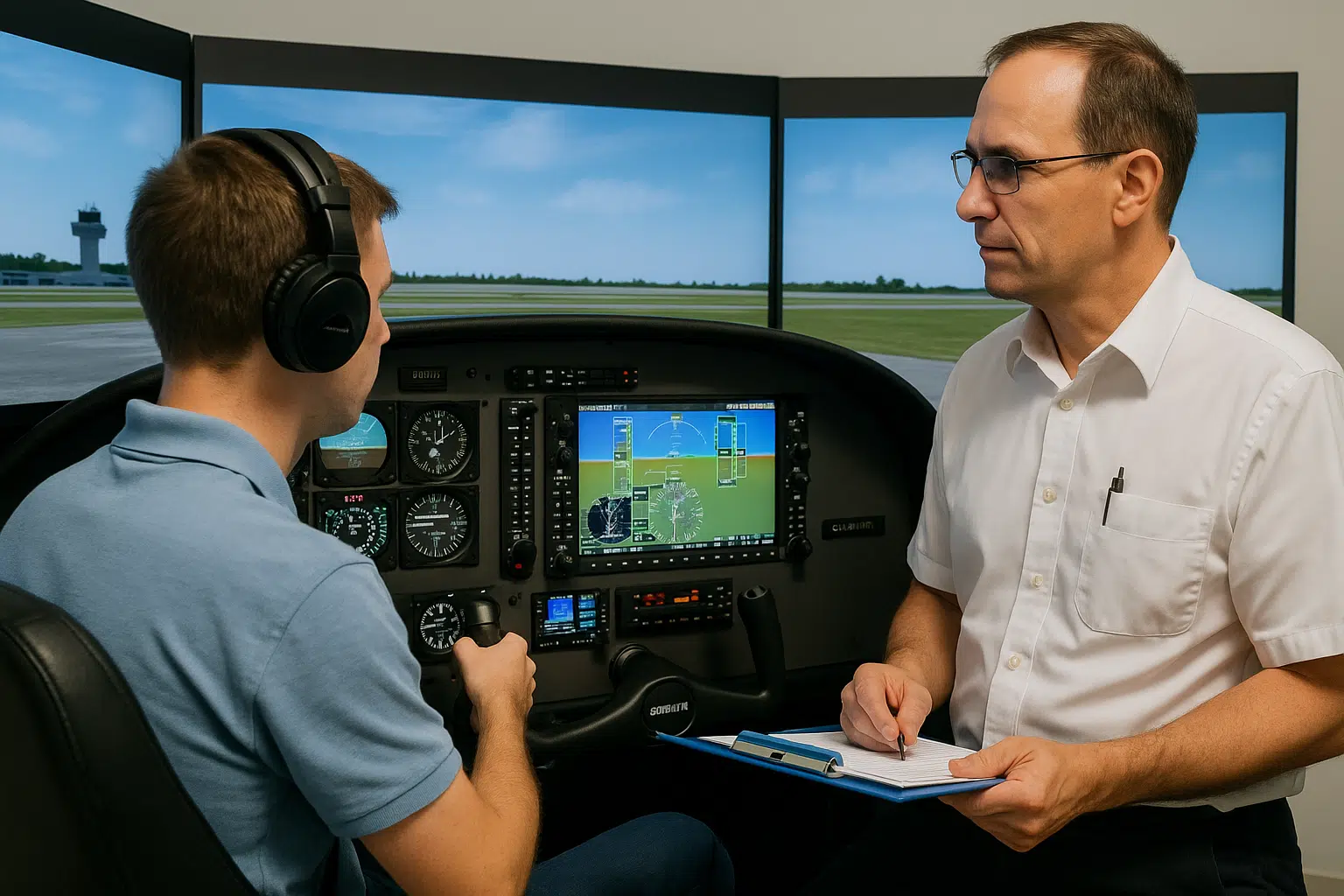
Airline pilot training USA remains the gold standard for aspiring aviators worldwide. With FAA-certified programs, cutting-edge aircraft, and structured license pathways, the U.S. offers an aviation training ecosystem that’s unmatched in both scale and reputation.
Whether you’re a recent graduate, a working professional seeking a career change, or an international student looking for globally recognized credentials, this guide will walk you through everything you need to know—step by step.
From eligibility requirements and licensing stages to program duration, costs, and career outcomes, we’ll break down each part of the process so you can plan with clarity and confidence.
If your goal is to become a commercial pilot, this is where your journey begins—with the most complete, updated, and practical guide to airline pilot training USA in 2025.
Let’s get started.
The United States is widely considered the top destination for pilot training—and for good reason. Thousands of domestic and international students choose airline pilot training USA programs each year to benefit from world-class instruction, diverse flying environments, and global recognition of FAA licenses.
Here’s why the U.S. stands out:
Global FAA Recognition: The Federal Aviation Administration (FAA) is respected worldwide. Licenses issued in the U.S. are often convertible to other civil aviation authorities with minimal additional testing.
English Language Advantage: English is the global language of aviation. Training in the U.S. helps you develop the required communication skills naturally and confidently—an advantage on international flights and job interviews.
High-Quality Infrastructure: U.S. flight schools operate modern fleets, advanced simulators, and structured syllabi, offering one of the most well-resourced environments for aviation education.
Diverse Weather and Terrain: Flying in the U.S. exposes students to a variety of weather patterns and landscapes—ideal for building real-world pilot experience.
Career Opportunities: Many U.S.-trained pilots go on to work for regional airlines, corporate aviation, or international carriers. The country’s strong aviation job market makes it attractive for long-term career planning.
Choosing the airline pilot training USA route gives you the technical, regulatory, and practical foundation to succeed as a commercial pilot—anywhere in the world.
Before enrolling in any airline pilot training USA program, you must meet specific requirements set by the FAA and, in some cases, by the flight school itself. These requirements ensure that all student pilots are physically, mentally, and legally prepared for flight training.
Here are the key eligibility criteria:
Minimum Age: You must be at least 17 years old to obtain a Private Pilot License (PPL) and 18 years old for a Commercial Pilot License (CPL). Most training programs accept students starting at age 16 or above.
Educational Background: A high school diploma or equivalent is usually sufficient. While a college degree is not required for pilot training, it may be necessary later for airline recruitment.
Medical Certification: All student pilots must obtain an FAA medical certificate.
English Language Proficiency: You must be able to read, speak, write, and understand English fluently, as required by ICAO and FAA standards.
TSA Clearance (for international students): Non-U.S. citizens must obtain Transportation Security Administration (TSA) approval through the Alien Flight Student Program (AFSP) before starting any flight training.
Some schools may have additional requirements such as entrance exams, interviews, or academic screening to ensure you’re ready for the demands of ground school and in-flight instruction.
By confirming your eligibility in advance, you’ll avoid unnecessary delays and position yourself to move through the airline pilot training USA process without interruptions.
Training to become an airline pilot in the U.S. follows a structured progression. Each stage builds your skills, expands your flying privileges, and moves you one step closer to a professional cockpit.
Here’s how the airline pilot training USA pathway typically unfolds:
This is the foundational license. It allows you to fly single-engine aircraft for personal use (non-commercial) and introduces core competencies like takeoffs, landings, radio communication, and basic navigation.
Training duration: 2–4 months
Flight hours required: Minimum 40 (most students log 55–70)
The instrument rating enables you to fly in low visibility and under Instrument Flight Rules (IFR). It’s a crucial skill for all professional pilots.
Training duration: 1–2 months
Flight hours required: Minimum 40 IFR hours
This is your gateway to flying professionally. It certifies that you’ve reached a higher standard of safety, control, and decision-making, and allows you to earn money as a pilot.
Training duration: 3–6 months
Flight hours required: Minimum 250 total time
Many airlines require experience in multi-engine aircraft. Adding this rating makes you a more competitive candidate.
Training duration: 1–2 weeks
If you need to build flight hours before applying to an airline, becoming a flight instructor is a common, cost-effective path. Many pilots log their required hours by teaching others to fly.
Each phase of airline pilot training USA is designed to refine your technical skillset and judgment—both of which are essential for commercial aviation.
The timeline for completing airline pilot training USA depends on several factors, including the type of program, your availability, and whether you’re training full-time or part-time. However, most full-time students complete the training required to qualify for airline placement in 12 to 18 months.
Here’s a general breakdown:
The typical duration for completing airline pilot training USA ranges from 12 to 18 months for full-time students, depending on program structure and personal pace. Most complete the Private Pilot License (PPL) in 2–4 months, followed by the Instrument Rating in 1–2 months, and the Commercial Pilot License (CPL), including hour-building, in 6–10 months. Add-ons like a Multi-Engine Rating can take 1–2 weeks, while the Certified Flight Instructor (CFI) rating—if pursued—takes about 1 month.
Students in full-time, fast-track academies can finish all core training in as little as 12–14 months, while part-time learners or those facing weather delays or financial pauses may take 18–24 months. Planning ahead, choosing the right location, and maintaining consistent flight hours are key to staying on schedule.
Factors that can extend your timeline include:
While many students aim to complete airline pilot training USA within a specific timeframe, real-world challenges can cause delays. Weather conditions, especially in areas with limited visual flight rule (VFR) days, can lead to unexpected gaps in flight hours. Similarly, high student-to-instructor ratios or limited aircraft availability may slow your progress.
For international students, visa processing or TSA clearance can also take time. Additionally, unplanned medical issues or financial interruptions can delay training continuity. Being proactive with scheduling, paperwork, and budgeting will help minimize these risks and keep your training on track.
One advantage of the airline pilot training USA system is flexibility. Whether you’re entering a full-time academy or training modularly, the system allows you to progress at your own pace—without compromising quality.
Careful planning and choosing the right school will help you stay on track and reach your license goals efficiently.
Pursuing airline pilot training USA requires careful financial planning. While costs vary between flight schools and training formats, most students spend between $70,000 and $100,000 from zero experience to commercial pilot certification with the required ratings.
Below is a breakdown of typical training costs:
| Training Component | Estimated Cost (USD) | Notes |
|---|---|---|
| Private Pilot License (PPL) | $12,000 – $15,000 | Includes basic flight hours and theory |
| Instrument Rating (IR) | $8,000 – $12,000 | Required for IFR flying and commercial ops |
| Commercial Pilot License (CPL) | $25,000 – $35,000 | Includes advanced maneuvers and hour-building |
| Multi-Engine Rating (MER) | $3,000 – $5,000 | Enhances employability for airline roles |
| Certified Flight Instructor (CFI) | $5,000 – $7,000 | Optional; helps build hours toward 1500 ATP |
| FAA Medical, Exams, Materials | $3,000 – $6,000 | Includes books, uniforms, test fees, medicals |
| Total Estimated Cost | $70,000 – $100,000+ | Varies based on training pace, location, and school |
Some flight schools offer accelerated or bundled packages, which can reduce overall cost and training time. Be sure to verify whether ground school, exam fees, checkrides, and fuel are included in your quote—or billed separately.
If you’re unable to pay upfront, there are multiple financing paths available to make airline pilot training USA more accessible:
Choosing the right funding method can help you stay focused on your training, without financial stress slowing you down.
With hundreds of training providers across the country, choosing the right airline pilot training USA program can feel overwhelming. But your flight school will directly impact your experience, exam success, and job-readiness—so selection should go beyond cost or location.
Look for schools that are:
One notable example is Florida Flyers Flight Academy, an FAA Part 141 school known for its structured training programs, global student base, and high standards. Located in sunny Florida with year-round flying conditions, it offers a clear path from PPL to CPL with multi-engine options, instructor programs, and international license conversion support.
Choosing the right academy ensures you’re not just learning to fly—you’re building the foundation for a safe, professional, and future-focused aviation career.
Completing your airline pilot training USA program is a major achievement—but it’s just the beginning of your career in aviation. The next step is building experience and accumulating the flight hours required for airline employment.
Most U.S.-based and international airlines require between 1,000 and 1,500 flight hours to qualify for first officer positions. After obtaining your Commercial Pilot License (CPL), there are several common paths pilots take to meet this requirement.
One of the most popular routes is becoming a Certified Flight Instructor (CFI). Instructing allows you to log flight time while being paid, and it also sharpens your skills and command ability—something airline recruiters value. Many academies, including Florida Flyers Flight Academy, offer structured CFI programs that transition students directly into teaching roles.
Other common options include:
For international students, additional licensing conversion may be required depending on your home country’s aviation authority. However, the reputation of FAA licenses makes this process easier in most regions.
Ultimately, completing airline pilot training USA positions you for global aviation careers with opportunities to fly domestically, internationally, and across a wide range of commercial operations.
Airline pilot training USA offers a direct, high-quality path to a global aviation career. From FAA-certified flight schools and modern training aircraft to structured license stages and diverse career outcomes, the U.S. remains one of the best places to train for aspiring commercial pilots.
But success in aviation begins long before your first airline job. It starts with the decisions you make today—choosing the right school, securing financing, and understanding what each step requires. With proper planning, focus, and commitment, you can complete your training within 12–18 months and launch a professional flying career that’s respected worldwide.
The cockpit isn’t as far away as it seems. Start your journey with the right preparation, and the rest will follow.
Ready to begin your flight career with the best? Florida Flyers Flight Academy is one of the leading FAA-approved flight schools in the U.S., offering structured airline pilot training USA programs tailored for both U.S. and international students.
| Question | Answer |
|---|---|
| How long does airline pilot training in the USA take? | Most students complete training in 12 to 18 months, depending on program structure and flight availability. |
| Can international students enroll in airline pilot training USA programs? | Yes. Most FAA-approved schools accept international students, provided they obtain M-1 visas and TSA clearance. |
| How many flight hours do I need to apply for an airline job? | Most regional and international airlines require 1,000 to 1,500 total flight hours. CFI roles are a common way to build time. |
| Is FAA training valid outside the United States? | Yes. FAA licenses are globally respected, and many countries offer conversion paths for pilots trained in the U.S. |
| Can I work while studying as an international student? | M-1 visa holders typically cannot work during training, but may stay for time-building or conversion under specific conditions. |
Contact the Florida Flyers Flight Academy Team today at (904) 209-3510 to learn more about how to do the foreign pilot license conversion in 4 steps.


