Before any pilot touches the controls of a commercial jet, they start with something smaller. Something simpler. Something that will not forgive bad habits but will teach you how to avoid them.
That is the Cessna 172S.
It is not the fastest plane. It is not the fanciest. But it has trained more pilots than any other aircraft in history. And there is a reason flight schools around the world keep coming back to it.
The Cessna 172S is not just a training airplane. It is the backbone of aviation education. In this guide, we will break down exactly what makes this single engine trainer so dependable, why it continues to shape pilot training programs worldwide, and why, if you are serious about flying, this is where your story begins.

It is a four seat, single engine trainer with a high wing and a reputation that speaks for itself.
First built in 1956, the Cessna 172 has been in continuous production longer than almost any aircraft in history. The 172S is the modern version, refined and updated, yet still built on the same rock solid foundation that has been turning students into pilots for decades.
Walk up to one on the tarmac and you will not be impressed by its size or speed. It is compact, straightforward, and free of unnecessary luxury. But sit in the cockpit, fire up that Lycoming engine, and you will understand why this plane has become the default first step in aviation.
It is stable in the air, predictable on the controls, and forgiving when you make mistakes. And you will make them. That is the point. The Cessna 172S does not try to be everything. It focuses on being the best at one thing, teaching you how to fly.
It has been doing that job, flight after flight, since before most of today’s pilots were even born.
The Cessna 172S was not designed to turn heads. It was designed to last.
High wing configuration. All metal airframe. Fixed tricycle landing gear. Nothing about it screams innovation, and that is exactly the point. This plane is built around function, not fashion.
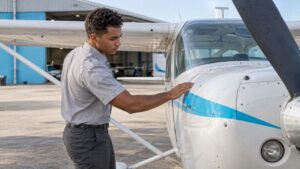
That high wing gives you visibility below and keeps the wings out of your way during preflight checks. The fixed gear means one less system to worry about when you are already juggling a dozen things as a student. The sturdy fuselage has taken decades of hard landings, countless training hours, and student mistakes, and it is still going strong.
Inside, the cockpit is simple. Analog gauges in older models, glass displays in newer ones. Either way, everything is within reach. No clutter. No guessing. You learn where the throttle is, where the trim wheel sits, and where your eyes need to go during takeoff and landing.
The build quality is not about luxury. It is about reliability. This is a plane that gets flown hard, day after day, by people who are still learning. And it handles that workload without falling apart. Cessna knew exactly what they were doing when they built it: make it tough, make it repairable, and make it last.
Seventy years later, it is still here. Still flying. Still teaching.
The Cessna 172S keeps it simple but smart.
Older models came with analog instruments. The classic six pack layout. Airspeed indicator, attitude indicator, altimeter, turn coordinator, heading indicator, and vertical speed indicator. Everything a pilot needs to stay in control, arranged in a way that has been standard for generations.
But the modern Cessna 172S is where things get interesting.
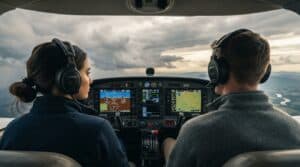
Most newer models come equipped with the Garmin G1000 NXi, a full glass cockpit system that replaces those analog dials with two large digital displays. The primary flight display sits on the left, and the multi function display on the right. GPS navigation, moving maps, engine monitoring, and traffic awareness all come together in one integrated system.
It is not just advanced technology for the sake of it. It is preparation. Because when you move up to commercial or advanced aircraft, you will see glass cockpits everywhere. Learning on the G1000 means you will not be starting from scratch later.
Here is the beauty of the 172S. Even with all that digital power, it does not overwhelm you. The interface is intuitive, the information is clear, and if something goes wrong, the fundamentals remain the same. You fly the plane first and troubleshoot second.
Whether you are learning on steam gauges or glass screens, the Cessna 172S teaches you to trust your instruments and understand what they are telling you. Because in the air, that awareness is what keeps you safe.

The Cessna 172S runs on a Lycoming IO 360 L2A engine. Four cylinders. 180 horsepower. Fuel injected and air cooled.
It is not a powerhouse. It is not meant to be.
What it is, is reliable, smooth, and more than enough to teach you what power management really means.
Cruise speed sits around 122 knots, roughly 140 miles per hour. You are not breaking records or outrunning weather. But you are learning how to handle the aircraft at a pace that allows you to think, react, and correct mistakes before they build up.
The engine responds predictably. Pull the throttle and you climb. Ease it back and you descend. Adjust the mixture at altitude and you feel the difference in performance. It is direct feedback, the kind that builds instinct.
Range is about 640 nautical miles with standard fuel tanks. That is enough for cross country training without constantly searching for the next fuel stop. The service ceiling tops out around 14,000 feet, which covers most training scenarios and gives you room to practice high altitude operations.
Takeoff distance is short, about 960 feet on a standard day. Landing distance is even shorter. That means you can operate out of smaller airports, which is exactly where most students log their early hours.
The Cessna 172S is not built for speed or spectacle. It is built to deliver consistent, dependable performance while you learn how to manage an aircraft from engine start to shutdown. And in flight training, that kind of reliability is worth more than all the horsepower in the world.
The Cessna 172S flies like it was designed for someone who has never flown before. Because it was.
It is stable, almost stubbornly so. In level flight, it wants to stay level. In a climb, it climbs predictably. Banking into a turn feels smooth and forgiving. This is not a twitchy aerobatic plane that punishes every input. It is a trainer that gives you time to feel what is happening before you need to react.
The controls are responsive without being overly sensitive. Move the yoke and the plane reacts, but it will not snap into a dive if you push too hard or stall if you pull too gently. There is a buffer zone, a margin for error, that allows students to learn the feel of flying without gripping the controls in fear.
And when things go wrong, the 172S lets you know. Stall it and you get clear warning signs. Buffeting, softness in the controls, and a gentle nose drop. It does not snap or spin unless you really push it. That predictability is what builds confidence in new pilots.
As for comfort, it is a small airplane. Four seats, but realistically it feels best with two or three people and some baggage. The cabin is not spacious. You sit close to your instructor. If you are tall, your knees may brush the panel. The noise level is what you would expect from a single engine piston aircraft. It is loud, even with a headset.
But you are not flying the Cessna 172S for luxury. You are flying it to learn. And in that cockpit, close, noisy, and honest, you get direct feedback from the airplane. Every input, every correction, every adjustment. You feel it all.
That is not a flaw. That is the feature.
The Cessna 172S is built like a workhorse. And like any workhorse, it needs care, but it does not ask for much.
This is one of the most maintainable aircraft in general aviation. Parts are everywhere, and mechanics know it inside and out. There is no need to hunt down rare components or wait weeks for specialized repairs. If something breaks, it gets fixed quickly.
The airframe is simple. All metal construction. No complex composite materials. No systems that demand constant attention. Regular inspections catch wear before it becomes a problem, and most issues are straightforward to address.
The Lycoming IO 360 engine is proven. Thousands of flight schools have run these engines hard, student after student, hour after hour, and they keep going. With proper maintenance, an IO 360 can easily reach its Time Between Overhaul at 2,000 hours. Some even go beyond that with careful monitoring.
Annual inspections are required, like any aircraft. Oil changes every 50 hours, routine checks on magnetos, spark plugs, and control cables. Nothing exotic. Nothing that requires advanced technical degrees.
And here is the key. Because the Cessna 172S is so common, maintenance costs stay reasonable. Flight schools operate fleets of them, and independent owners can always find competitive rates. There is no shortage of people who know how to keep these airplanes flying.
Reliability is legendary. The 172S does not have a reputation for breaking down mid flight or stranding pilots with mysterious failures. It has been refined over decades. The weak points have been fixed. What remains is a machine that shows up, does its job, and keeps going.
You cannot teach flying if the airplane will not fly. The Cessna 172S flies. Every time.
Flying comes with a price tag, but smart students learn to spend where it counts. The Cessna 172S remains one of the most cost-effective ways to train because it balances performance, reliability, and operating costs better than almost any other aircraft in its class.
Below is a quick breakdown of what you can expect whether you are renting or owning a Cessna 172S.
| Expense Category | Estimated Cost (USD) | Notes |
|---|---|---|
| Aircraft Purchase Price | $400,000+ | Varies with avionics and year |
| Rental Rate (per hour) | $130–$180 | Depends on equipment and location |
| Fuel Burn | 8–10 gallons/hour | Roughly $50–$70 per hour at current avgas prices |
| Operating Cost (Owners) | $100–$150 per hour | Includes fuel, maintenance, and insurance |
| Engine Overhaul (IO-360) | Around $25,000 | Every 2,000 hours (TBO) |
| Annual Inspection | $1,000–$2,000 | Routine regulatory requirement |
A new Cessna 172S costs more than four hundred thousand dollars, depending on configuration. That is a serious investment, but most students rent instead of buying. Hourly rental rates typically fall between 130 and 180 dollars depending on the location and avionics setup. Glass cockpit models with the Garmin G1000 sit at the higher end, while analog models are more affordable.
Fuel consumption averages between eight and ten gallons per hour, translating to roughly fifty to seventy dollars per hour in fuel alone. Adding maintenance, engine reserves, and insurance brings total hourly operating costs for owners to around one hundred to one hundred fifty dollars.
For flight schools, the Cessna 172S makes perfect sense financially. It is durable, requires minimal downtime, and retains value well. Because parts and expertise are so widely available, it remains one of the easiest aircraft to maintain.
For students, it is the smart choice. You need hours in the logbook, not luxury in the cabin. The Cessna 172S lets you gain those hours affordably, in a machine that teaches you more per dollar than almost anything else in the sky.

Because it does not lie to you.
Flying is hard. There is a lot to learn, a lot to manage, and a lot that can go wrong if you are not paying attention. The last thing a student needs is an aircraft that hides mistakes or makes flying seem easier than it truly is.
The Cessna 172S does not do that. It is honest.
Make a sloppy turn and you will feel it. Forget to trim and the airplane will let you know. Mismanage your speed on approach and the landing will remind you. But it does all of this gently. It does not punish you. It teaches you.
That is the balance. It is forgiving enough that you will not panic, but responsive enough that you learn cause and effect. You learn that your inputs matter. That small corrections add up. That flying is not about fighting the airplane. It is about working with it.
The high wing design gives you a clear view of the ground during turns and landings. The stable flight characteristics mean you are not constantly wrestling the controls. The predictable stall behavior allows you to practice recovery safely. And the simple systems mean you are not overwhelmed by complexity before you have mastered the basics.
Most importantly, the Cessna 172S builds confidence without building bad habits.
You learn to fly by feel, not by automation. You learn to read your instruments, manage your engine, communicate with air traffic control, and navigate by pilotage and dead reckoning. You learn to think like a pilot because the airplane requires you to.
And when you finally solo, when you lift off alone for the first time, the Cessna 172S will not surprise you. It will do exactly what it has always done. It will fly the way you have trained it to fly. Because by then, you have learned how to fly it.
That is why flight schools keep using it. That is why instructors trust it. And that is why decades from now, student pilots will still be learning in a Cessna 172S.
It is not just a trainer. It is the trainer.
Some aircraft make history by breaking records. Others by pushing boundaries. The Cessna 172S makes history by making pilots.
For nearly seventy years, this airplane has been the first step in thousands of aviation careers. From nervous first flights to confident solo landings, it has always been there. Steady, reliable, and unapologetically simple.
It is not the fastest. It is not the flashiest. But it has earned something far more valuable than numbers on a page. Trust. Trust from instructors who have taught in it. Trust from students who have learned in it. Trust from an entire industry that keeps returning to it generation after generation.
The Cessna 172S no longer needs to prove itself. It already has. Every time a student walks away from a lesson with new skills. Every time someone earns their wings after months of hard work in that cockpit. Every time a pilot looks back and remembers the airplane that started it all.
That is its legacy.
Not horsepower or speed or cutting edge technology, but something simpler and far more lasting. An honest aircraft that does one thing better than anything else. It teaches people how to fly.
And as long as there are people who dream of taking to the skies, the Cessna 172S will be there. Waiting on the ramp. Engine ready. Wings level. Ready to turn that dream into reality.
One flight at a time.
The Cessna 172S offers stable flight characteristics, predictable handling and a cockpit layout that is simple to understand, making it ideal for students to build foundational flying skills.
It uses the Lycoming IO-360 engine with 180 horsepower and typically cruises around 122 knots (≈140 mph), offering dependable performance without excessive speed.
Rental rates generally range between $130 and $180 per hour, while operating costs (fuel, maintenance, insurance) typically fall between $100 and $150 per hour for owner-operators.
Its all-metal airframe, widespread parts availability and longstanding use in flight schools worldwide mean mechanics understand it well and inspections catch issues early, keeping costs and downtime low.
Yes. The 172S is widely used for solo training and cross-country lessons. Its forgiving nature allows students to build confidence and hours before advancing to more complex aircraft.
Contact the Florida Flyers Flight Academy Team today at (904) 209-3510 to learn more about how to transfer flight schools.


Contact the Florida Flyers Flight Academy Team today at (904) 209-3510 to learn more about how the top pilot schools in usa can help you achieve your aviation dreams.