
Informations sur la carrière de pilote de ligne

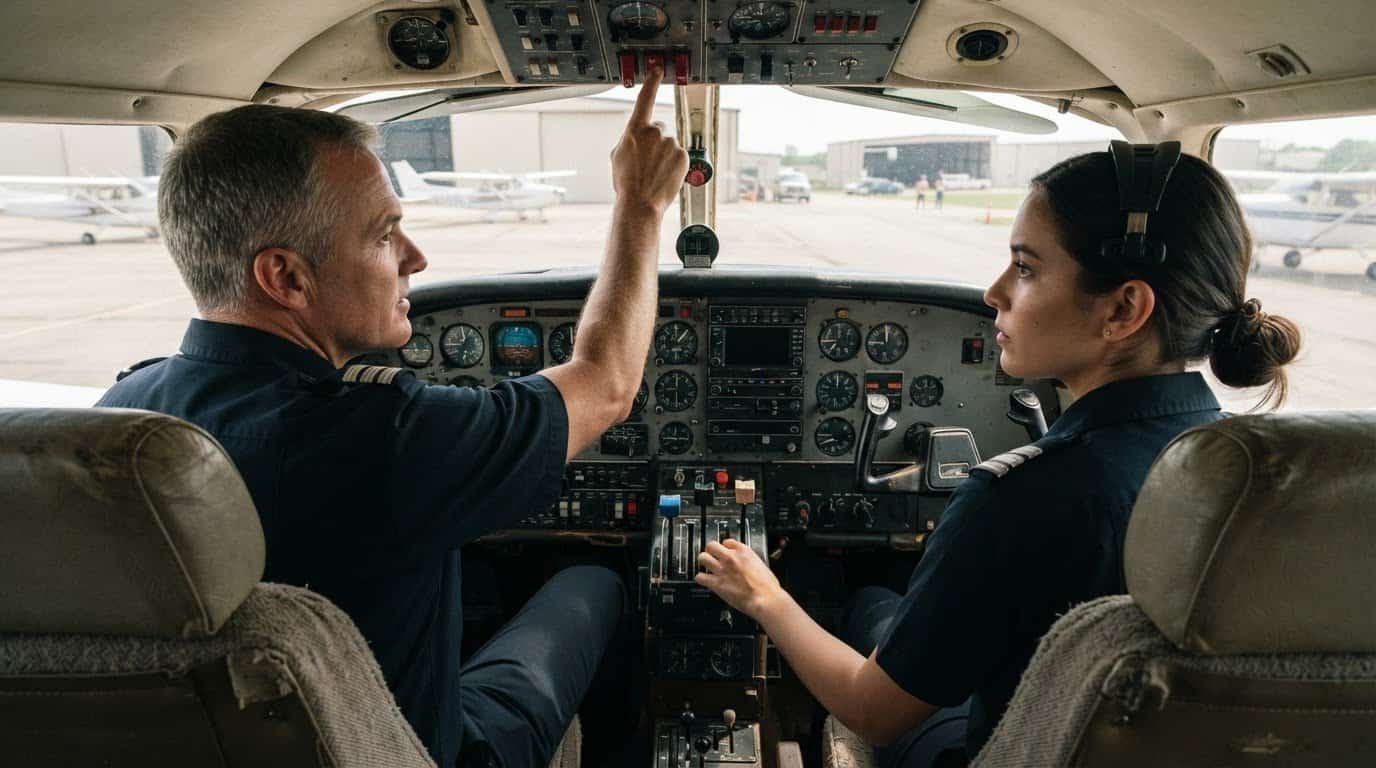
Integrity shows in routine decisions, not only in emergencies. The most practical tips for new first officers are to learn and follow company procedures, communicate professionally, ask experienced officers for guidance when uncertain, and find a mentor who can offer perspective as you adjust to the role.
It’s natural to want to prove yourself quickly, but sound judgment matters more than pretending to know every answer. Build trust by listening closely, taking feedback seriously, and using policies as the basis for consistent conduct. This article explains how to learn procedures, remain professional, ask for help when a situation exceeds your experience, and develop a useful mentoring relationship.
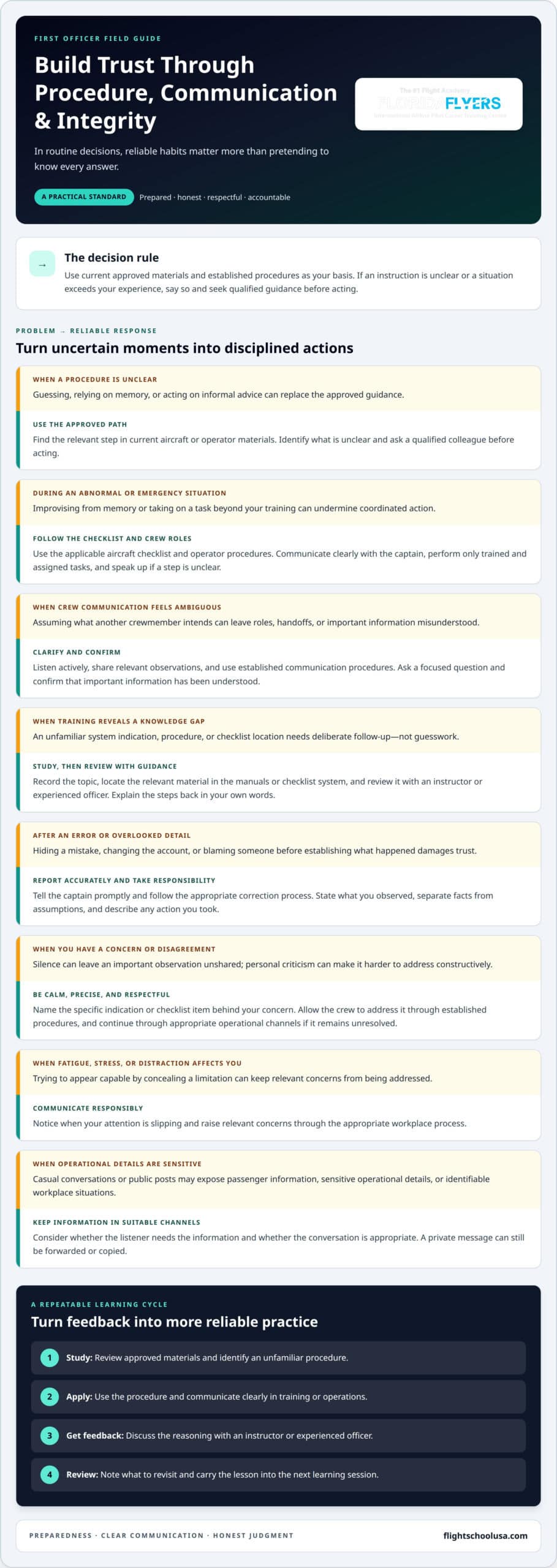
For a new airline first officer, procedures provide a disciplined framework for daily decisions. Learn the operator’s manuals, assigned duties, and aircraft-specific guidance through training and supervised practice. Use current approved materials for the aircraft and operation rather than relying on memory or informal advice. If an instruction is unclear, identify the step and ask a qualified colleague before acting. These tips for new first officers make preparation and communication deliberate habits.
What are the best cockpit resource management practices for new first officers? Communicate clearly, listen actively, share relevant observations, and confirm that important information has been understood. For example, state a concern directly and respectfully, then use the crew’s established communication procedures to address it. Good coordination depends on each crewmember understanding their assigned role, not guessing what someone else intends.
What should a new first officer do during an abnormal or emergency situation? Follow the applicable aircraft checklist and operator procedures, communicate clearly with the captain, and perform only tasks for which you’re trained and assigned. Don’t improvise from memory when an approved procedure applies. If a step is unclear, say so and use the crew’s training and guidance.
Technical competence means more than recognizing cockpit controls. During training, learn how to find relevant system information, interpret indications, and connect a display or alert with the applicable procedure. Practice locating material in the aircraft manuals and checklist system used for your operation. If a simulator session exposes a knowledge gap, record the topic and review it with an instructor before your next practice. Flight school builds foundational knowledge, while operational proficiency depends on continued study and disciplined application.
Learn the team as well as the equipment. Listen during briefings, observe how colleagues coordinate tasks, and clarify expectations before workload increases. If a handoff, checklist call, or communication seems ambiguous, ask a focused question instead of making an assumption. Notice how experienced crewmembers share information and manage competing tasks, while distinguishing sound habits from informal shortcuts. When the two differ, follow the applicable procedure.
Continuous learning turns policy into reliable practice. After a training event or flight, identify an unfamiliar procedure and review it using approved materials. Discuss the reasoning with an instructor or experienced officer, then explain the steps back in your own words. Keep notes on topics to revisit, such as system indications or checklist locations, and bring them to your next learning session. A cycle of study, application, feedback, and review strengthens judgment without replacing procedures with personal preference.
Professionalism in the cockpit shows in everyday conduct as much as in demanding situations. A first officer demonstrates it by arriving prepared, communicating respectfully, and taking assigned responsibilities seriously. If a briefing point is unclear, ask a direct question before the task begins rather than concealing uncertainty. Integrity means giving an accurate account of what happened, even when an error feels uncomfortable to report. A polished image cannot replace honest judgment.
Small choices can affect trust. If you make an incorrect entry or overlook a detail during preparation, tell the captain promptly and follow the appropriate correction process. Don’t alter your account to make your performance look better, or blame a colleague before establishing what happened. State what you observed, distinguish it from assumptions, and describe any action you took. This gives the crew reliable information for deciding what to do next.
Professional conduct also includes handling disagreement constructively. If you see a potential concern, raise it clearly and respectfully, using specific observations rather than personal criticism. For instance, identify the indication or checklist item that prompted your concern, then allow the crew to address it through established procedures. If it remains unresolved, continue communicating through the appropriate operational channels. Silence can leave an important observation unshared; a calm, precise statement supports coordination.
Confidentiality is another practical test of integrity. Don’t share sensitive operational details, passenger information, or identifiable workplace situations in casual conversations or public posts. Before discussing an event, consider whether the listener needs the information and whether the conversation is appropriate. A private message can still be forwarded or copied. Keeping details within suitable professional channels protects others and supports the trust needed for candid crew communication.
Accountability matters after a difficult flight or training session. Record a specific lesson while it’s fresh, such as a missed communication point or a task that took longer than expected. Then identify one change to make at the next briefing, simulator session, or flight. If feedback challenges your assumptions, listen fully before explaining your reasoning. You can acknowledge a valid point without taking every correction as a personal judgment.
Professionalism also means managing fatigue, stress, and personal distractions responsibly. Notice when your attention is slipping and communicate relevant concerns through the appropriate workplace process. Don’t conceal a limitation just to appear capable. These tips for new first officers point to a consistent standard: be truthful, prepared, respectful, and accountable. Repeated actions establish credibility more reliably than confident claims about character.
A first officer supports the captain by carrying out assigned duties, communicating observations, and contributing to coordinated flight operations. Specific tasks depend on the aircraft, operator procedures, and crew assignment. Ask an experienced crewmember to clarify responsibilities before a briefing or unfamiliar task. For example, confirm who handles a checklist item instead of assuming based on another aircraft or training scenario.
Ask for help early, while there’s time to understand the answer and apply it correctly. Make your question specific: identify the situation, explain what you understand, and state what remains unclear. Instead of saying, “I’m unsure,” try, “I understand this indication, but I’m unclear which procedure applies.” This gives an instructor or captain a clear starting point and helps you learn the reasoning, not just copy an action.
Choose the right moment and channel. During a briefing or debrief, ask about a system, handoff, or communication technique that needs review. In a time-sensitive situation, use the crew’s established communication procedures and state relevant information directly. Don’t delay raising an operational concern because you fear appearing inexperienced. A focused question can prevent confusion; pretending to know an answer can leave the crew with conflicting assumptions.
How do airline first officers manage fatigue, sleep, and changing schedules? They protect available rest opportunities, use a consistent wind-down routine when practical, and communicate fatigue through the appropriate company process. For example, plan sleep around a changing report time and avoid filling rest periods with unnecessary errands. Fatigue can affect attention, so treat difficulty concentrating as something to communicate, not a weakness to conceal.
Common mistakes include guessing at an unfamiliar procedure, staying silent about a concern, and assuming a previous aircraft or training scenario is identical to the current one. Avoid them by identifying the uncertainty, consulting applicable guidance, and asking a qualified crewmember. If a debrief reveals a missed callout or unclear handoff, note the specific lesson and review it before the next similar task.
An academy builds foundational knowledge, but learning continues through supervised practice and candid debriefs. Ask an experienced officer how they prepared for a specific mission or managed a complex handoff, then compare the explanation with approved procedures. If advice conflicts with applicable guidance, clarify the discrepancy with an instructor instead of adopting an informal shortcut. This disciplined approach turns experience into learning without replacing established procedures.
The same principle applies in policing: new police officers are advised to ask experienced officers for help rather than pretend to know every answer. The author also advises them to expect challenging calls early in their careers and seek help when needed. Asking for guidance when uncertain is a practical response, rather than letting uncertainty go unspoken.
A useful mentor helps you turn experience into sound professional judgment. Look for a captain, instructor, or experienced first officer whose communication and preparation you respect. Observe how that person handles briefings, workload, and feedback before asking for ongoing guidance. A senior title alone isn’t enough; choose someone who explains decisions clearly and takes questions seriously. The goal is to learn, not borrow another pilot’s judgment.
Start with a focused request. After a training session, you might ask an instructor to review how you organized a briefing or responded to a correction. Explain what you want to improve, then agree on a practical way to revisit it. A short conversation about one skill is often more useful than a broad request for career advice. Respect the mentor’s time by bringing a specific example and listening without interrupting.
Good mentoring includes honest feedback. Ask what you handled effectively, where you need to improve, and what practice could address the gap. For example, if you struggled to keep a briefing concise, ask which information should come first and which details can be clarified later. Write down the guidance, apply it in training, and return with a clear account of what changed.
Set boundaries from the start. A mentor can share experience, but informal advice doesn’t replace current aircraft materials, operator procedures, or an instructor’s direction. If a suggestion conflicts with approved guidance, pause and raise the discrepancy through the appropriate training channel. This supports sound learning and keeps mentorship in its proper role. A trusted mentor reinforces disciplined practice rather than suggesting personal shortcuts.
Mentorship can also help you understand the working culture around the uniform. Notice how experienced crewmembers show respect, manage disagreement, and take responsibility for assigned tasks. Ask how they prepare for a demanding duty period or recover from a difficult debrief. Then decide which lessons fit your role and training. Don’t imitate mannerisms to appear experienced; develop an approach that remains professional under pressure.
Take charge of maintaining the relationship. Agree on a reasonable time to check in, bring one or two questions, and follow through on commitments. If the advice helped, explain what you applied and what remains difficult. If the fit isn’t right, thank the person and seek guidance from another suitable instructor or experienced officer. A mentor should strengthen your independent judgment, not make decisions for you.
Before a first trip, know where to find the operator’s current procedures, assigned duties, and aircraft-specific materials. Review trip information provided through your employer’s processes, then identify unfamiliar terms or tasks to discuss with an instructor or captain. Don’t rely on another pilot’s recollection when current guidance is available. Preparation means knowing how to locate the right information, not memorizing every detail before reporting.
Use the preflight briefing to understand your role for that flight. Clarify task assignments, communication expectations, and unfamiliar parts of the planned operation. If you don’t understand an instruction, ask a concise question before workload rises. For example, repeat the task in your own words and invite correction. This can reveal different assumptions before they affect crew coordination.
Review the aircraft information and checklists used in your training. Practice finding a relevant procedure in approved materials rather than trying to recall its location under pressure. If an indication or task is unfamiliar, tell the captain or instructor and follow applicable guidance. Don’t assume a procedure from one simulator session applies to another aircraft or operator.
Prepare the equipment assigned for duty. Before your first shift, handle any duty flashlight you may use so you understand its basic operation and can identify questions for your instructor. Learn where assigned items are stored and how your operation expects them to be used. Don’t assume equipment is identical across aircraft or workplaces; follow your training and relevant operating instructions.
Plan your arrival and personal preparation around the schedule and instructions you receive. Organize required documents, uniform items, and personal essentials before departure, then allow enough time to complete the employer’s reporting process without rushing. Keep notes accessible, but don’t let note-taking distract you from briefings or crew communication. A short list of unfamiliar subjects can help focus questions during a debrief.
During the trip, communicate early if you’re uncertain, notice a discrepancy, or need clarification. Afterward, record one specific lesson, such as where you found a procedure or which briefing point needs more practice. Review it with an instructor before a similar task. If you’re preparing for airline operations, strengthen your airline-readiness preparation par le biais d'une formation structurée.
A transition into a new role can also call for deliberate planning. Army officers starting a new leadership role should have a plan for their first 90 days. New leaders should assess their strengths and weaknesses and establish priorities to guide their efforts, using those priorities to direct their work in the new role. Leaders with subordinates should include initial counseling in their transition plans, making it part of the transition rather than leaving it unaddressed. If a new leader does not receive initial counseling, they should ask their rater or supervisor for guidance. These are leadership-transition practices, distinct from flight preparation: they do not replace operator procedures, aircraft materials, or the briefings required for a trip.
Flight School USA helps aspiring pilots build a foundation for professional aviation through flight training and career-focused programs. If you’re preparing for an airline career, structured training can help you develop the knowledge and discipline needed to progress toward that goal. Its programs include options for career-focused training, instructor development, veterans using GI Bill flight training, and international students seeking M1 Visa admission services.
Consider Flight School USA when you’re planning your training path or want a clearer connection between flight training and long-term career goals. The right next step depends on where you are in your preparation and which pathway fits your circumstances. For information about training options, Contactez Flight School USA.
The most useful tips for new first officers become habits through deliberate practice and continued learning. As you plan your next step, focus on the training and career pathway that fits your goals, while continuing to develop the judgment and discipline airline operations demand.
Flight School USA offers a Fixed-Price Career Program, a CFI Fast Track Program, and GI Bill Flight Training. These options support different training and career goals, including instructor development and flight training for veterans. Consider which path best matches your experience and ambitions as you plan your aviation career.
Contactez Flight School USA dès aujourd'hui to discuss your next step. Stay committed to learning, seek constructive guidance, and approach each new responsibility with professionalism. Your aviation career grows through the standards you practice every day.
Prepare by organizing trip materials and identifying unfamiliar aircraft information before reporting. Use the manual’s index or contents to locate systems and procedures connected to the planned operation, then note topics that need clarification. For example, if a display or system name is unfamiliar, find its manual entry and discuss it during training. Keep reference materials accessible, and rely on current approved documents rather than personal notes as operational authority.
During a sterile-cockpit period, focus on operational tasks and limit conversation or activity unrelated to the flight. Follow the operator’s procedures for when these periods apply and which communications remain necessary. First officers must also comply with applicable FAA requirements and the operator’s manuals for their role and aircraft. For a specific rule or scenario, use current official guidance and company training materials rather than informal summaries.
Use concise, specific messages that distinguish observed facts from assumptions. For example, report the location and nature of an operational concern, then confirm the intended recipient understood. Coordinate with cabin crew through established communication channels, especially when information affects cabin operations or passenger needs. If a message is unclear, ask for clarification or repeat the key point. Respectful, direct exchanges help keep the flight crew aligned without unnecessary noise.
Build experience by treating each assignment, training session, and debrief as an opportunity to identify skills to strengthen. Keep accurate personal records, track qualifications and training milestones, and identify gaps that may affect your next career step. Ask instructors or supervisors which competencies to demonstrate for greater responsibility, then set a focused development goal. Flight School USA offers career-focused pilot training, including a CFI Fast Track Program, for aspiring pilots planning professional aviation careers.


