
Chidziwitso cha Ntchito Yoyendetsa Ndege

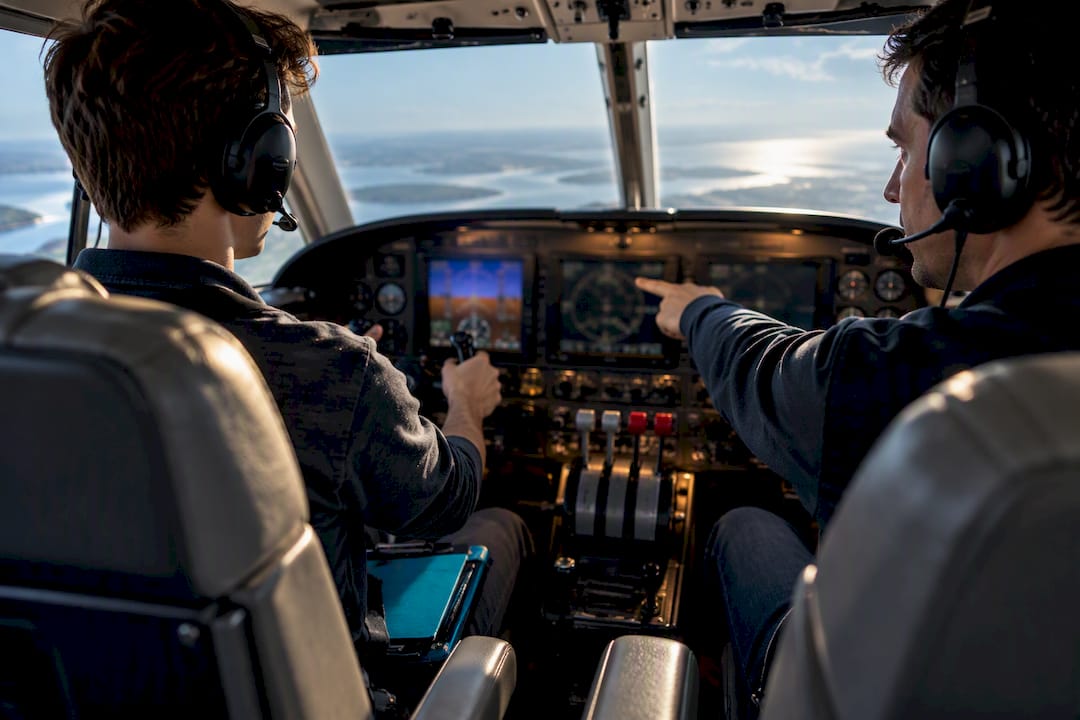
Get your initial CFI first, then earn the CFII before the MEI in nearly every case, because the instrument add-on costs less, takes less time, and immediately doubles the students you can legally teach. The main exception is the hour-builder racing toward an airline seat, who often benefits from front-loading the MEI to bank multi-engine PIC time sooner. For most instructors, the sequence is CFI, then CFII, then MEI.
TL; DR:
- The CFII is generally more accessible financially and time-efficient, opening the instrument training market for less cost and effort.
- The MEI requires significant multi-engine PIC hours and is more expensive, mainly due to aircraft costs and scheduling complexity.
- The CFII emphasizes teaching proficiency with focused checkrides on instructional ability, while the MEI centers on engine-out procedures and emergency training in twins.
- The typical sequence for most instructors is CFI, then CFII, then MEI, unless aiming for airline hours, which favors front-loading the MEI.
- Combining all three ratings in one program can reduce scheduling delays and costs, especially at schools with in-house checkrides and package discounts.
The Certified Flight Instructor certificate is the base credential. It authorizes you to teach primary flight maneuvers, but nothing beyond visual flight in a single category and class. The CFII and MEI are both add on ratings layered onto that base certificate, and they solve two entirely different problems.
The CFII adds instrument instruction privileges, letting you train pilots working toward an instrument rating or teaching instrument proficiency checks. The MEI adds multi-engine instruction privileges, letting you train pilots in twin engine airplanes, including engine-out procedures and multi-engine checkride prep. Neither rating replaces the other, and plenty of working instructors eventually hold both.
Here is where the friction shows up for each:
The practical difference comes down to market size versus aircraft cost. CFII opens a wider door for less money. MEI opens a narrower, pricier door, but one that pays off directly for anyone building multi-engine time toward an airline transport pilot certificate.
The CFII checkride tests your ability to teach, not just fly, instrument procedures. Examiners expect you to talk a student through holds, approaches, and partial panel work while explaining the “why” behind each technique, not simply demonstrating stick-and-rudder skill. The FAA Aviation Instructor’s Handbook frames this as the core distinction between flying competence and teaching competence, and it is the piece that trips up candidates who assume the instrument rating and the instrument instructor rating test the same skills. They do not. One measures your flying. The other measures your ability to diagnose someone else’s mistakes from the right seat and correct them verbally, sometimes without touching the controls.
The MEI checkride runs on a different track entirely. There is no separate written exam, but the practical test leans hard into engine-out procedures, Vmc demonstrations, and asymmetric thrust scenarios, because that is where multi-engine students actually get hurt if undertrained. The FAA Aviation Instructor’s Handbook notes that MEI training emphasizes teaching from the right seat under conditions that punish hesitation, which is a fair description of what an engine failure at rotation actually feels like. Practitioners describe the MEI’s real difficulty as logistical rather than academic: securing enough multi-engine PIC time, finding an available twin, and covering the higher hourly rate, according to a Master CFI’s assessment of the rating.
Because both CFII and MEI are add-on ratings rather than initial certificates, the endorsement trail looks different than it did for your original CFI. You will not repeat the full spin-training and fundamentals-of-instruction requirements. Instead, your instructor endorses you as prepared in the specific areas of operation tied to instrument or multi-engine instruction under Mtengo wa 14 CFR61.187, which spells out exactly which tasks the examiner must cover on each version of the practical test. Read that regulation before you schedule either checkride. It tells you precisely what will be on the exam, and too few candidates actually open it.

14 CFR 61.183 governs eligibility for both the initial CFI certificate and every instructor add-on rating that follows, including logbook and PIC minimums. For an add-on rating like the CFII or MEI, you must already hold a CFI certificate, hold the underlying pilot certificate and rating (an instrument rating for CFII, a multi-engine rating for MEI), and log a specified amount of pilot-in-command time in the relevant category and class.
The MEI carries a specific, often underestimated requirement buried in the instructor handbook rather than in casual conversation: 15 hours of PIC time in a multi-engine airplane before the checkride, plus a separate rule under 61.195(f) requiring 5 hours of PIC time in the exact make and model before you can instruct in it solo with a student. That second requirement catches people off guard when they switch from a Seminole to a Baron between training and teaching.
Key regulatory checkpoints to verify before scheduling either checkride:
If you are targeting an airline seat, 61.159 matters more than it looks at first glance, since multi-engine time logged while instructing counts toward the experience thresholds that shorten your path to ATP minimums.
Budget matters as much as timeline here, and the two ratings sit at genuinely different price points. According to cost estimates compiled by flight training educators surveying CFI, CFII, and MEI pricing, the CFII typically runs $1,500 to $4,500 and takes one to three weeks of focused training. The MEI runs considerably higher, often $5,000 to $12,000, and usually takes two to four weeks, driven almost entirely by the higher hourly rental cost of twin-engine aircraft and the 15-hour multi-engine PIC requirement.

A candidate stacking CFI, CFII, and MEI into one accelerated program should expect a combined total in the range of roughly $15,000 to $20,000, according to the same educator cost analysis. That figure assumes efficient scheduling and no repeated checkride attempts, which is not always the reality at schools without in-house examining authority.
Three cost drivers deserve attention before you commit to a timeline:
Three instructor archetypes map cleanly onto three different sequencing strategies, and picking the wrong one wastes both time and money.
A useful shorthand from working Master CFIs treats this as a question of identity rather than pure economics: instructors building a teaching career skew toward CFII first, while instructors building an airline resume skew toward MEI first. Neither path is wrong. They just optimize for different outcomes, and confusing the two is the most common planning mistake new instructors make.
If you are still deciding between initial CFI and your next step, the groundwork matters just as much as the sequencing that follows. Commercial pilots moving into instruction should treat the CFI certificate itself as the foundation every later decision rests on.
Before committing to either add-on, run through a short set of practical questions with your flight school or prospective employer. The answers will tell you more than any generic advice about “which rating is better.”
Start with market realities. Does the school have a steady stream of instrument students, or does it have twin aircraft sitting mostly idle? Ask about aircraft availability and rental rates for the specific make and model you would need for MEI training, since that number swings the cost calculus more than almost anything else. Ask how soon you actually need multi-engine ATP credit, because a hard deadline changes the sequencing math entirely.
A tight checklist to run through with any school:
Ovomereza Tip: Ask flight schools whether they discount package pricing when you commit to CFII and MEI together in one enrollment. Many schools will shave hundreds off combined tuition because it locks in your training slot and their aircraft utilization at the same time, and it rarely hurts to ask directly.
Florida Flyers Flight Academy runs its CFI, CFII, and MEI programs under FAA Part 141 structure, which brings a standardized syllabus and predictable progression to each add-on rating rather than a loosely sequenced series of lessons. The academy offers in-house checkrides instead of relying on outside designated pilot examiners, which can alleviate scheduling delays when stacking multiple ratings back to back.
That combination lets students move through CFI, CFII, and MEI training as an accelerated, coordinated sequence rather than three disconnected bookings spread across different examiners and different months. International students working through M1 visa enrollment get the same structured timeline, and the academy provides financing guidance for veterans exploring GI Bill benefits alongside standard tuition options.
The order I’d tell any new instructor to follow is CFI, then CFII, then MEI, unless a firm airline timeline is already on the table. Too many candidates chase the MEI early because it sounds more advanced, when the honest math says the CFII pays for itself faster by opening the door to instrument students almost everywhere. If your goal is airline hours specifically, that calculus flips, and front-loading the MEI is the smarter call. Either way, talk through your specific timeline and market before committing tuition. The enrollment path below is a reasonable place to start that conversation.
— Rainer
Flightschoolusa runs CFI, CFII, and MEI training under one Part 141 structure with in-house FAA checkrides, so you are not stacking three ratings across three different examiners’ calendars and hoping the scheduling lines up. That single advantage, control over your own checkride timeline, is what separates a predictable path to full-stack instructor credentials from an open-ended one.

If your goal is the career-teacher path, the CFI training track leads directly into CFII coursework once your commercial certificate is in hand. If you are building hours toward an airline seat, the multi-engine instructor pathway is built specifically around that hour-accumulation goal, and it pairs naturally with the academy’s Pulogalamu ya Sukulu ya Sukulu ya Sukulu ya Ndege ya Ndege Yokhazikika, priced at $85,900 as a single tuition commitment covering the full stack from private pilot through ATP. Before you call, have your current certificates, logged PIC hours, and target timeline ready. That is what the enrollment team needs to map your specific CFII, MEI, or full-stack sequence against real aircraft availability and checkride dates.
Verify every claim in this article against the primary regulatory text before you schedule training, since FAA rules and handbook guidance do get amended periodically.
Chongani FAA’s regulatory site periodically for amendments to Part 61, since eligibility minimums and checkride areas of operation are occasionally revised.
Yes. The MEI and CFII are independent add-on ratings, and the FAA does not require one before the other. You only need to hold a valid CFI certificate along with the underlying multi-engine rating to pursue the MEI, regardless of whether you have earned a CFII.
The CFII requires passing an FAA instrument instructor written exam and demonstrates the ability to teach instrument procedures. The MEI requires no separate written test but demands 15 hours of multi-engine PIC time before the checkride, with heavy emphasis on engine-out procedures, per the FAA Aviation Instructor’s Handbook.
Yes, many schools structure combined programs that let you train for both simultaneously, since the underlying flying skills do not overlap much and scheduling can run in parallel. Combining them in one enrollment, such as through Flightschoolusa’s fast-track structure, often shortens total calendar time compared to earning them months apart.
Most flight instructors point to the CFI initial certificate as the hardest step, since it combines a demanding oral exam covering the fundamentals of instruction with FAA scrutiny at a level beyond earlier certificates. Among the add-ons, the MEI is often considered logistically harder than the CFII, mainly due to the PIC hour requirement and higher aircraft costs rather than test difficulty, according to a Master CFI’s comparison of the ratings.
The CFII typically costs $1,500 to $4,500, while the MEI typically costs $5,000 to $12,000, according to flight training cost estimates. Combined with the initial CFI, a full stacked program often totals roughly $15,000 to $20,000 in an accelerated format.


