Enwere ike inye gị asambodo ahụike FAA gị n'oge a kara aka nke AME gị ma ọ bụrụ na enyochala akwụkwọ achọrọ ma ị zute ndị dọkịta...
Your FAA medical certificate may be issued at your AME appointment if the required documentation has been reviewed and you meet the medical standards. If your application needs further FAA review, the certificate may not be issued that day. Knowing how to prepare for an FAA medical exam means planning ahead, especially before making any changes to medication.
Ọ dị mfe nghọta ilekwasị anya n'ule ahụ n'onwe ya, mana ngwa gị, akwụkwọ ndekọ ahụike, na akụkọ ọgwụgwọ gị na-akpụzikwa otu oge a ga-esi aga. Nduzi a na-akọwa otu esi eme MedXPress, chọta ma hazie oge maka onye na-enyocha ahụike ụgbọelu (AME), ma kwadebe akwụkwọ ndị ị nwere ike ịchọrọ. Ọ na-ekpuchikwa ihe mere ịgbanwe ọgwụ n'oge ule ahụ ji enwe ike ime ka atụmatụ ọgwụgwọ kwụsiri ike sie ike, na ihe ị ga-ahazi tupu ị bịarute.
Etu ụzọ dị mkpa
- Know what can determine whether your medical certificate is issued at the AME appointment or sent for further FAA review.
- Mezue ngwa MedXPress gị nke ọma ma hazie ule gị n'ime windo ntinye achọrọ.
- Kwadebe ihe ndekọ ahụike dị mkpa, ozi ọgwụ, na njirimara tupu oge eruo.
- Nyochaa atụmatụ ọgwụgwọ gị tupu ule ahụ amalite, zerekwa mgbanwe ọgwụ n'oge ikpeazụ na-enweghị nduzi ahụike.
- Chọpụta mmemme ọzụzụ ụgbọ elu nke Flight School USA nke lekwasịrị anya n'ọrụ gị mgbe ị dị njikere ijikọ nkwadebe ahụike na ebumnuche ọzụzụ ụgbọ elu gị.
Olee mgbe m ga-enweta asambodo ahụike m?
- Mee atụmatụ maka nsonaazụ dabara na ule gị. An AME may issue your certificate after the appointment if the required documentation has been reviewed and you meet the applicable medical standards. If the AME needs additional FAA review, the application may be deferred rather than issued immediately. A deferral is not the same as a denial, but it can delay the certificate. FAA medical certification standards are set forth in 14 C.F.R. part 67, according to the Electronic Code of Federal Regulations. The outcome depends on your medical history, examination findings, and whether supporting records answer the AME’s questions.
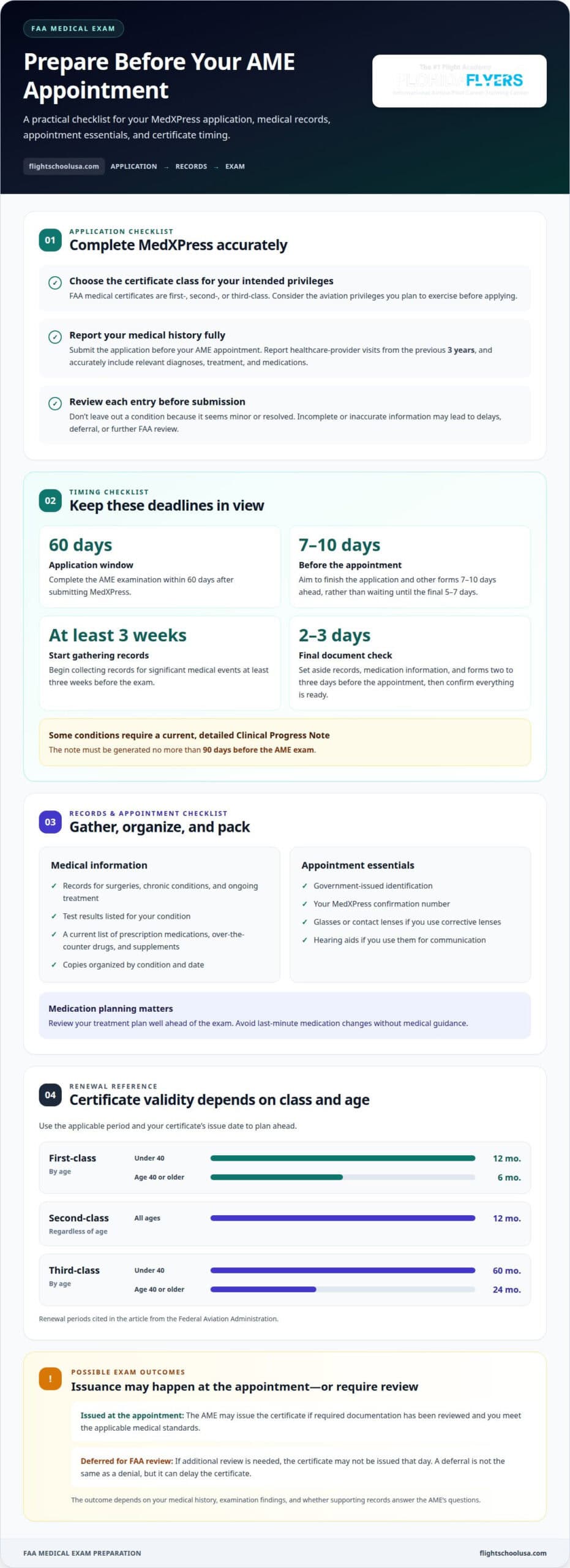
- Chịkọta ihe ndekọ tupu oge eruo. Start collecting records for significant medical events at least three weeks before your exam. Bring documentation for surgeries, chronic conditions, and ongoing treatment, along with test results listed for your condition. Some conditions require a current, detailed Clinical Progress Note generated no more than 90 days before the AME exam. Keep copies organized by condition and date. A complete medical history helps the AME review your application against the relevant records, while missing or unclear documentation can lead to delays or further FAA review.
- Pack identification and application details. Weta kaadị njirimara gọọmentị nyere na nọmba nkwenye MedXPress gị. Tinye ndekọ ahụike dị mkpa na ndepụta ọgwụ ndị dọkịta nyere gị, ọgwụ ndị a na-ere n'ụlọ ọgwụ, na ihe mgbakwunye. Ọ bụrụ na nke a bụ ule ahụike FAA mbụ gị, ihe ndị a na-enyere AME aka ijikọ ngwa gị na njirimara gị na akụkọ ahụike gị. Debe akwụkwọ ndị ahụ n'akụkụ nkọwa oge ị ga-abịa kama ịdabere na ebe nchekwa mgbe ị na-abanye. Ịkwadebe akwụkwọ ndị ahụ nwere ike ime ka nyocha ahụ dịkwuo irè ma ọ bụrụ na AME chọrọ ndekọ ma ọ bụ nsonaazụ ule iji chọpụta ọnọdụ.
- Bring the vision and hearing aids you use. Pack your glasses or contact lenses if you rely on corrective lenses, and bring any hearing aids you use for communication. The exam may include vision testing, an audiogram, an EKG when required, and urine collection and testing. Hearing may also be assessed through conversational voice testing at six feet. Set aside your records, medication information, and forms two to three days before the appointment. Use that time to confirm everything is together and your corrective lenses or hearing aids are ready to use.
Applying for an FAA medical certificate through MedXPress
- Select the certificate class for your intended privileges. A na-enye asambodo ahụike FAA n'ụdị nke mbụ, nke abụọ, na nke atọ. Ndị ọkwọ ụgbọelu chọrọ klas nke metụtara ikike ụgbọ elu ha na-eme atụmatụ ime. Tụlee ihe mgbaru ọsọ gị tupu itinye akwụkwọ, ebe ọ bụ na klas ahụ na-emetụta ihe achọrọ maka ule na oge mmeghari ohuru. Ịkwadebe maka ule ahụike FAA gụnyere ịchọpụta klas asambodo dabara na atụmatụ gị. Ọ bụrụ na ọnọdụ ahụike ewelite ajụjụ, hazie ozi dị mkpa tupu itinye akwụkwọ anamachọihe gị.
- Complete the MedXPress application online. Applicants must submit the FAA medical application before the AME appointment. Report healthcare-provider visits from the previous three years and answer medical-history questions accurately. Include relevant diagnoses, treatment, and medications. Don’t omit information because a condition seems minor or resolved. Incomplete or inaccurate disclosures may cause delays, deferral, or additional FAA review. Review each entry before submission, since correcting submitted forms can be difficult.
- Hazie ule ahụ n'ime windo ngwa. Mezue ule AME gị n'ime ụbọchị iri isii mgbe ị nyefere MedXPress. Gbalịa imecha ngwa ahụ na akwụkwọ ndị ọzọ ụbọchị asaa ruo iri tupu oge a kara aka, kama ichere ruo ụbọchị ise ruo asaa ikpeazụ. Nke a na-enye oge iji dozie mmejọ ma kwadebe akwụkwọ ndị dị mkpa. Akụkụ bara uru nke otu esi akwado maka ule ahụike FAA bụ ime ka nọmba nkwenye MedXPress gị dị mfe ịnweta, ebe ọ na-ejikọ ngwa ị tinyere na ule ahụ.
- Plan renewal before your certificate expires. Oge mmeghari klaasị mbụ bụ ọnwa iri na abụọ maka ndị ọkwọ ụgbọelu na-erubeghị afọ iri anọ na ọnwa isii maka ndị ọkwọ ụgbọelu dị afọ iri anọ ma ọ bụ karịa. Asambodo klaasị nke abụọ nwere oge mmeghari klaasị nke ọnwa iri na abụọ n'agbanyeghị afọ ole ha dị. Asambodo klaasị nke atọ dị irè maka ọnwa iri isii maka ndị ọkwọ ụgbọelu na-erubeghị afọ iri anọ na ọnwa iri abụọ na anọ maka ndị ọkwọ ụgbọelu dị afọ iri anọ ma ọ bụ karịa, dịka Federal Aviation Administration si kwuo. Jiri oge dabara adaba na ụbọchị e nyere asambodo gị mee atụmatụ tupu oge eruo.
- Debe ngwa gị ka ọ dabara na nlekọta ahụike. If you’re receiving treatment, report your medical history accurately and provide relevant records. A physician’s diagnosis, treatment plan, and documentation can help explain how a condition is managed. Don’t decide on your own that a condition is disqualifying. The AME assesses your application and determines whether further FAA review is needed. Complete, consistent information gives the examiner a clearer basis for evaluating your application.
Kedu otu m ga-esi chọta onye nyocha ahụike ụgbọ elu?
- Locate an AME through the FAA’s examiner search. Onye na-enyocha ahụike ụgbọelu na-eme nyocha ahụike FAA ma na-enyocha ma ị ruru eru maka ọrụ ụgbọelu. Chọọ AME site na ebe ị nọ, wee tụlee ohere ịnọ na oge a kara aka na ma ụlọ ọrụ onye na-enyocha ahụ nwere ike ịnabata ndekọ ndị metụtara akụkọ ahụike gị. Ọ bụrụ na ị nwere ọnọdụ dị ka ọbara mgbali elu ma ọ bụ ụkwara ume ọkụ, hazie akwụkwọ ya tupu ị denye aha. Ọnọdụ ndị a nwere ike iru eru maka CACI, usoro nke nwere ike ikwe ka AME nye asambodo mgbe enyere akwụkwọ achọrọ.
- Ghọta ihe mwepụta pụtara. Ọ bụrụ na AME achọpụta na ị ruru eru maka usoro ahụike dị mkpa, onye na-enyocha ahụ nwere ike inye gị asambodo ahụike gị mgbe oge a kara aka gasịrị. Nnyocha ahụ gụnyere nyocha nke ngwa gị na akụkọ ahụike gị, yana nyocha anụ ahụ. Ọhụụ na ịnụ ihe so n'ihe ndị a tụlere. Weta ndekọ kpọmkwem maka ọnọdụ na ule achọrọ ka AME wee nwee ike inyocha ihe akaebe dị mkpa. Mbipụta dabere ma ule na akwụkwọ ndị ahụ hà na-emezu ihe achọrọ.
- Prepare for CACI or Special Issuance review. CACI na-emetụta ụfọdụ ọnọdụ, gụnyere ọbara mgbali elu na ụkwara ume ọkụ, mgbe akwụkwọ ahụike achọrọ na-akwado inye AME. Mwepụta Pụrụ Iche bụ ụzọ asambodo FAA dị iche nke enyere maka n'okpuru 14 CFR § 67.401. Kwadebe ndekọ na akwụkwọ nkwado tupu oge a kara aka, gụnyere akwụkwọ ndị metụtara ọnọdụ a na-enyocha. AME nwere ike ịchọ ịkwụsịtụ ngwa ahụ ma ọ bụrụ na akwụkwọ achọrọ efuo ma ọ bụ ọnọdụ ahụ chọrọ nyocha FAA.
- Mara ihe a ga-eme n'oge na-adịghị anya n'emeghị ya ka ọ bụ ihe a na-agọnarị. A deferral means the AME sends the application to the FAA for review or further investigation. It does not, by itself, mean the FAA has denied certification. Special Issuance also does not automatically ground a pilot. However, in many cases, aviation privileges requiring medical certification cannot be exercised while a deferred application awaits FAA review. Plan your flight activity around your current certification status.
- Mara ihe ọzọ a ga-eme ma ọ bụrụ na FAA ajụọ ngwa ahụ. Ngọnarị dị iche na nkwụsịtụ AME: ọ pụtara na anabataghị ngwa ahụ site na nyocha ahụ. Ndị na-achọ akwụkwọ nwere ike ịrịọ arịrịọ maka ngọnarị, FAA na-enyekwa ntuziaka maka usoro mkpesa ahụ. Debe mkpebi ahụ na ndekọ ahụike dị mkpa ọnụ, wee soro usoro FAA kwuru. Ọ bụrụ na ikpe gị gụnyere ọnọdụ nke nwere ike dabara na CACI ma ọ bụ Nnyefe Pụrụ Iche, kwadebe akwụkwọ nkwado zuru oke maka nyocha dị mkpa kama iche na nsonaazụ mbụ ahụ kwụsịrị nhọrọ asambodo ọ bụla.
Ịhazi oge maka onye na-enyocha ahụike ụgbọelu
Debe oge gị na onye na-enyocha ahụike ụgbọelu (AME) nke oge a kara aka dabara na atụmatụ asambodo gị. Tupu ịdenye aha, tụlee otú ọnọdụ ahụike gị na ihe ndekọ achọrọ nwere ike isi metụta ule ahụ.
-
Find an Aviation Medical Examiner
Use the FAA’s AME search tool to locate an examiner and identify an appointment option. Before choosing a date, consider whether your medical history may require supporting records or additional tests. For example, applicants with hypertension or asthma may need documentation for CACI consideration. Prepare condition-related questions and records before the visit, rather than arriving without information the AME needs to assess your application.
-
Schedule the Appointment and Seek Guidance
Họrọ ụbọchị a kara aka nke na-enye oge iji chịkọta ndekọ ma mezue MedXPress n'ime oge ule ụbọchị 60 ya. Ọ bụrụ na ị nwere ọnọdụ ahụike, ghọta ihe asambodo ya pụtara tupu ịhazi oge. Kwurịta ahụike gị na dọkịta gị, ma hazie ndekọ dị mkpa maka AME. Akwụsịla ma ọ bụ gbanwee ọgwụgwọ edepụtara naanị iji kwadebe maka nyocha; atụmatụ kwụsiri ike, nke edere ede na-enye onye nyocha ozi doro anya.
- Debe atụmanya maka ule anụ ahụ. An FAA medical exam typically takes about 30 minutes, though the details depend on the required evaluation. The AME personally reviews your medical history, oversees tasks performed by office staff, and performs the physical examination. Expect checks of height, weight, pulse, and blood pressure. The examiner also evaluates your vision and hearing, so bring corrective lenses or hearing aids that you use.
- Prepare for tests that may form part of the visit. Nnyocha ahụ nwere ike ịgụnye nnwale anya, ihe nlele ọdịyo, na ihe nlele mmamịrị maka nchịkọta na nnwale. A na-etinye EKG mgbe ọ dị mkpa. AME nwekwara ike inyocha ntị olu mkparịta ụka n'ụkwụ isii. Usoro ndị a na-enye aka na nyocha ahụike zuru oke; ha anaghị edochi azịza ziri ezi gbasara ahụike gị. Weta ndekọ ahụike dị mkpa ka onye nyocha ahụ wee tụlee ihe ndị a chọpụtara n'ule yana akụkọ ntolite gị.
- Reschedule if illness or injury affects your condition. If you become sick or injured before the appointment, reschedule rather than attend while unwell. An AME evaluates your condition on the examination day, so an acute illness may affect the assessment. Before choosing a new date, consider whether you need updated records or test results. Arrive prepared to answer questions about your current health, treatment, and any changes since submitting your application.
Avoiding medication changes close to the exam
- Nyochaa ọgwụ ọ bụla tupu oge eruo. Ihe dị ka ụbọchị iri abụọ ruo iri abụọ na ise tupu ule ahụike FAA, chịkọta ndepụta zuru oke nke ọgwụ ndị a na-enye, ọgwụ ndị a na-ere n'ụlọ ahịa, na ihe mgbakwunye. Tinye aha ngwaahịa ọ bụla, dose, na ihe kpatara eji ya, tinyere mgbanwe ọ bụla emere n'oge na-adịbeghị anya. AME na-enyocha ahụike na ojiji ọgwụ gị n'ụbọchị ule ahụ. Ndepụta ziri ezi na-enyere aka ijikọ akụkọ ọgwụgwọ gị na ngwa na ndekọ ahụike gị. Ahapụla ọgwụ ma ọ bụ ihe mgbakwunye mgbe ụfọdụ n'ihi na ị na-ewere ha dị ka ihe na-abaghị uru.
- Soro dọkịta gị kwurịta mgbanwe ndị a tụrụ aro. Akwụsịla, ebelatala, ma ọ bụ dochie ọgwụ dọkịta nyere gị iji mee ka nsonaazụ nyocha ahụ pụta ìhè. Ndụmọdụ ọgwụgwọ dọkịta gị na-eleba anya na ahụike gị, ebe AME na-enyocha ahụike ahụike maka ụgbọelu. Mgbanwe emere na-enweghị nduzi ahụike nwere ike imebi ọgwụgwọ ma ọ bụ mee ka ọnọdụ gị ghara ịdị mma. Ọ bụrụ na ị nwere nchegbu gbasara ọgwụ, kpọtụrụ dọkịta gị n'oge, detuo ndụmọdụ ahụike na atụmatụ ọgwụgwọ ọ bụla ga-esi na ya pụta.
- Zere mgbanwe n'oge ikpeazụ ma ọ bụrụ na dọkịta gị agwaghị gị ka i mee ya. Ntuziaka nkwadebe ahụ na-adọ aka ná ntị megide ịgbanwe ọgwụ n'ime ụbọchị iri gara aga tupu ule ahụike FAA. Oge ahụ dị mkpa n'ihi na AME na-enyocha ọnọdụ gị na ọgwụgwọ ugbu a, ọ bụghị mgbanwe nwa oge emere maka oge a kara aka. Ọ bụrụ na dọkịta gị achọpụta na mgbanwe dị mkpa maka ahụike, gbasoo atụmatụ nlekọta ahụ ma debe ndekọ ndị dị mkpa. Egbula oge ọgwụgwọ dị mkpa naanị iji chekwaa ụbọchị ule.
- Mee ka akụkọ ihe mere eme gị kwekọọ na ndekọ ọgwụgwọ gị. Tupu ị nyefee MedXPress, tụnyere ndepụta ọgwụ gị na ndekọ na akụkọ ahụike gị. Dịka ọmụmaatụ, ọ bụrụ na ọgwụ enyere gị agbanwee n'oge na-adịbeghị anya, kọọ mgbanwe ahụ nke ọma kama ịdepụta naanị dose gara aga. Chịkọta ndekọ ndị na-akọwa nchoputa, ọgwụgwọ, na ọganihu ahụike. Akwụkwọ doro anya na-enyere AME aka inyocha nkọwa zuru oke ma nwee ike ibelata ajụjụ ndị a na-apụghị izere ezere, igbu oge, ma ọ bụ nyocha FAA ọzọ. Iji ọgwụ eme ihe naanị anaghị egosi na a ga-ajụ onye na-achọ ọrụ.
- Keep the plan stable and explain changes clearly. Pilots managing a medical condition should follow their physician’s recommendations and maintain a well-documented treatment plan. Bring an updated medication list and records explaining any change, including when it occurred and why. Not all medications are FAA-approved, so the AME considers the medication alongside the underlying condition and available documentation. If treatment changes shortly before the exam, provide the context rather than concealing it. Plan your next steps in aviation with a clear understanding of your medical preparation.
Lọ elu ụgbọ elu USA
Flight School USA is a next step for aspiring pilots ready to connect medical preparation with structured flight training. Once you understand your certification pathway, consider whether the Fixed-Price Career Program or CFI Fast Track Program aligns with your professional goals. Veterans can explore GI Bill Flight Training, while international students can consider M1 Visa Admission Services. These offerings support different routes into aviation, but they don’t replace FAA medical certification or an AME’s evaluation. Keep your training goals and medical certification requirements distinct as you plan your next steps. For program information and guidance on your flight training path, contact Flight School USA.
Wulite Nzọụkwụ Ọzọ Gị Gbasara Ihe Mgbaru Ọsọ Gị
Medical certification is one part of a larger aviation plan. As you map out training, consider how your certification timeline, career objectives, and personal circumstances fit together. A clear sequence helps you make informed choices and keep important decisions from competing for attention. Use what you’ve learned about preparing for an FAA medical exam to approach the process deliberately, while leaving medical decisions to the appropriate professionals.
Nzọụkwụ ọzọ ị ga-eme nwere ike ịbụ mkparịta ụka gbasara ọzụzụ ụgbọ elu na ụzọ ịchọrọ ịgbaso. Flight School USA na-enye nhọrọ ndị lekwasịrị anya n'ọrụ maka ndị na-achọ ịnya ụgbọelu, gụnyere mmemme maka ọzụzụ ọkachamara na ndị agha ochie na-eji uru GI Bill. Kpọtụrụ Flight School USA maka nduzi Ka ị na-atụle otú ọzụzụ ga-esi kwekọọ n'ihe mgbaru ọsọ gị. Weta ajụjụ gị na ihe ndị kacha gị mkpa ná mkparịta ụka ahụ, wee gaa n'ihu na atụmatụ nke na-egosipụta ọchịchọ gị. Mmalite nwere ike inyere gị aka iji obi ike bịaruo ọdịnihu ụgbọelu gị.
Ọtụtụ mgbe Ẹbụp Ajụjụ
What happens if my AME defers my exam?
Nkwụsịtụ na-eziga ngwa gị na FAA maka nyocha ọzọ; ọ bụghị ịjụ. FAA nwere ike ịgwa gị ka ị nyefee ozi ahụike ma ọ bụ ndekọ ndị ọzọ tupu ị kpebie. Hazie arịrịọ ahụ na akwụkwọ nkwado ọnụ ka azịza gị wee lebara ihe ọ bụla anya. FAA na-enyekarị ndị na-achọ ọrụ oge nkwụsịtụ ụbọchị 60 iji nye ozi achọrọ, ị nwekwara ike ịrịọ FAA maka ndọtị ụbọchị 60 ma ọ bụrụ na ịchọrọ oge karịa.
What Could Delay or Deny Certification?
Incomplete paperwork, unclear application answers, missing medical records, or a condition requiring further FAA review can delay certification. An AME may defer an application when required documentation is missing or the case needs additional review. A medical condition alone doesn’t establish that the FAA will deny certification. Provide accurate information and supporting records so the AME can assess your case. If the FAA needs more evidence, respond to its request within the stated period.
What Happens if I Fail?
Onye AME nwere ike ịjụ inye asambodo n'oge a kara aka, kwụsịtụ ngwa ahụ, ma ọ bụ kpebie na FAA ga-enyocha ikpe ahụ. Ihe ndị a agaghị agbanwe agbanwe: nkwụsịtụ abụghị njụ ikpeazụ. Ọ bụrụ na FAA ajụ asambodo ahụ, ndị na-achọ akwụkwọ nwere ike ịrịọ arịrịọ site na iji ntuziaka mkpesa nke FAA. Debe mkpebi ahụ na akwụkwọ ahụike metụtara ya ọnụ. Gụọ arịrịọ ma ọ bụ ọkwa ọ bụla nke ọma, n'ihi na usoro ọzọ achọrọ dabere na ihe akọwara.
What Is an FAA Medical Exam?
Ule ahụike FAA bụ nyocha nke onye na-enyocha ahụike ụgbọelu (Aviation Medical Examiner) na-eme iji chọpụta ma onye na-achọ ọrụ ruru eru maka ọrụ ụgbọelu. Ọ na-ejikọta nyocha anụ ahụ na nyocha nke akụkọ ahụike na ọgwụ onye na-achọ ọrụ. Ọ bụghị ule nkà ụgbọ elu: AME na-enyocha ahụike maka asambodo achọrọ. E depụtara ụkpụrụ ndị dị mkpa na 14 CFR part 67.
Kedu ihe bụ ụkpụrụ ahụike dị mkpa ka e mee?
Enweghị otu nsonaazụ ahụike nke na-ekpebi onye ọ bụla na-achọ ọrụ ruru eru. AME na-atụle ahụike gị ugbu a, akụkọ ahụike gị, ọgwụ gị, nchọpụta ule gị, na klaasị asambodo ịchọrọ. E depụtara ụkpụrụ FAA na 14 CFR akụkụ 67. Enwere ike ịtụle ụfọdụ ọnọdụ site na CACI ma ọ bụ ụzọ Mwepụta Pụrụ Iche mgbe akwụkwọ achọrọ dị. Nchọpụta n'onwe ya anaghị akọwa etu FAA ga-esi nyochaa ndekọ ahụike gị zuru oke.
What if I receive a denial letter?
Gụọ akwụkwọ ozi ngọpụ nke ọma ma soro ntuziaka mkpesa ya. FAA na-enye ndị na-achọ ọrụ ohere ịrịọ arịrịọ maka ngọpụ, akwụkwọ ozi ahụ na-egosikwa mkpebi ị ga-aza. Debe ọkwa ahụ na ndekọ ahụike dị mkpa, nsonaazụ ule, na akwụkwọ ọgwụgwọ. Ọ bụrụ na FAA arịọ maka ozi ndị ọzọ, hazie azịza gị gburugburu arịrịọ ọ bụla. Nkwụsịtụ dị iche na ngọpụ, yabụ chọpụta ihe ga-esi na ya pụta na akwụkwọ ozi ahụ.
Kedu ihe na - eme n'oge ule ahụike FAA?
Ụlọ ọrụ AME na-enyocha ngwa gị na akụkọ ahụike gị, wee mee nyocha ahụ. Nleta ahụ nwere ike ịgụnye nlele ọbara mgbali elu, obi mgbawa, ịdị elu, na ibu, tinyere nyocha ọhụụ na ịnụ ihe. A na-anakọtakarị ma nwalee ihe nlele mmamịrị; enwere ike itinye EKG mgbe achọrọ ya. Oge a na-ewekarị ihe dị ka nkeji iri atọ. Nyocha kpọmkwem dabere na ihe achọrọ maka nyocha ahụ na ozi dị na ngwa gị.
Kedu akwụkwọ m kwesịrị iweta n'ule ahụike FAA?
Weta ihe akaebe gọọmentị nyere, nọmba nkwenye MedXPress gị, na ihe ndekọ ndị metụtara akụkọ ahụike gị. Dịka ọmụmaatụ, tinye akwụkwọ nkwado maka ịwa ahụ, ọrịa na-adịghị ala ala, ma ọ bụ ọgwụgwọ na-aga n'ihu, yana nsonaazụ ule ndị dị mkpa. Buru ndepụta ọgwụ na lenzi ọ bụla ma ọ bụ ihe enyemaka ntị ị na-eji. Hazie akwụkwọ dịka ọnọdụ si dị ka AME si dị ka o kwesịrị ka onye na-ahụ maka ahụike nwee ike ịchọta ozi nke ọma. Ọ bụrụ na ọnọdụ gị nwere ihe achọrọ maka nyocha, weta ndekọ na ule edepụtara maka ọnọdụ ahụ.