Havayolu Pilotu Kariyer Bilgileri

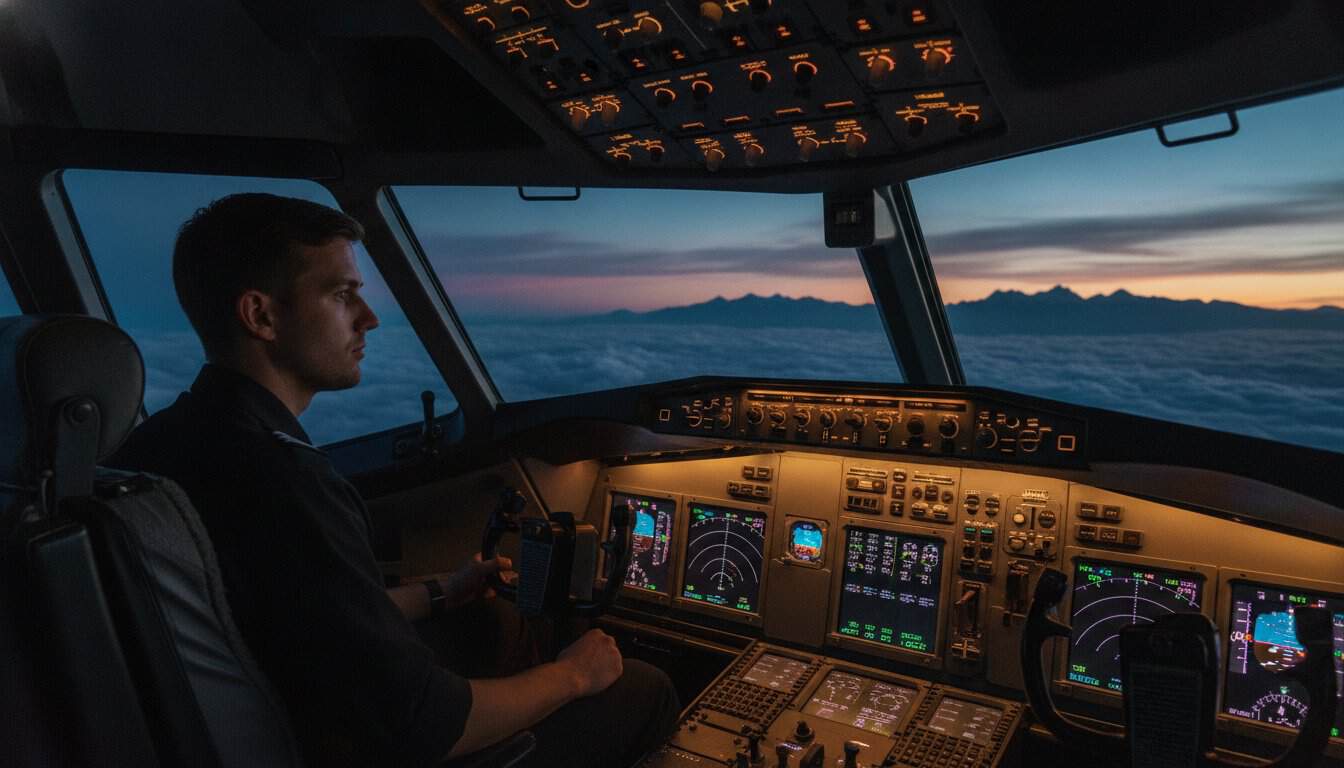
The cockpit of a commercial airliner is not a place for the casual enthusiast. It’s a high-stakes environment where only those who master the relentless challenges of being a pilot earn the right to command. You likely recognize that the path to the flight deck is paved with more than just technical skill. It requires a level of discipline that many find daunting, from the pressure of FAA medical certifications to the significant financial commitment of elite training. This professional seriousness demands a no-nonsense approach to the common anxieties surrounding investment and erratic scheduling.
This article provides an authoritative analysis of the rigorous mental, physical, and strategic demands required to thrive in a professional aviation career in 2026. We’ll examine the reality of daily stressors and validate your capacity to handle this career’s intensity. You will discover a strategic path to mitigate these hurdles through elite training options like the Airline Ready Program and our Fixed-Price Career Program. This guide ensures you enter the industry as a prepared professional rather than a hopeful amateur, providing the clarity needed to secure your status in the sky.
The flight deck is a laboratory of human performance where the margin for error is non-existent. Professional aviators don’t just fly; they manage complex systems while maintaining a state of hyper-vigilance known as the “Pilot Mindset.” This discipline involves superior situational awareness and the ability to execute split-second decisions under extreme pressure. Command Responsibility in Part 121 operations dictates that the Captain is the final authority for the safe and efficient operation of the aircraft, encompassing the lives of every passenger and crew member on board. One of the primary challenges of being a pilot is the weight of this constant accountability.
Entering 2026, the FAA has implemented more rigorous standards for mental health transparency and reporting. These updates demand a higher level of personal integrity and psychological resilience from flight crews. Candidates must now navigate a regulatory landscape where compliance is as critical as flight proficiency. The burden of constant evaluation is a permanent fixture of the career, manifesting in checkrides, medical exams, and recurrent training cycles that test technical and physical limits without compromise.
Managing the cognitive load during a 12-hour duty day requires elite-level conditioning. Pilots must maintain “sterile cockpit” discipline, which prohibits non-essential conversation during critical phases of flight to prevent distractions. This mental toll is compounded by the physiological strain of pilot fatigue and circadian disruption during long-haul or night operations. Sustaining peak performance through adverse weather and emergency procedures isn’t a suggestion; it’s a legal requirement for continued command. The ability to remain calm while processing hundreds of data points is what separates the professional from the amateur.
A pilot’s education is a lifelong commitment to technical excellence. The challenges of being a pilot include the reality that your career is only as secure as your next First-Class Medical Certificate. Failing a semi-annual checkride or a medical exam can result in an immediate grounding, effectively ending a career in an afternoon. Staying ahead of evolving FAA Part 141 standards requires a proactive approach to learning. Professional pilots undergo recurrent training cycles and new aircraft type ratings frequently to ensure they remain masters of the latest flight systems and safety protocols. This environment demands that you remain a perpetual student of the craft.
The glamorous image of international travel often masks the stark operational reality of a professional aviation career. One of the most significant challenges of being a pilot is the “Juniority” phase, where seniority systems dictate your entire quality of life. In this industry, your schedule, your aircraft type, and your home base are all determined by your relative standing on the company list. For those entering the field in 2026, this meritocracy of time requires a mercenary level of discipline to manage the transition from student to professional commander.
New hires typically begin their careers on reserve status, which means they are essentially on call to cover flights for sick or displaced crews. This unpredictability makes social planning nearly impossible and often results in working holiday shifts or missing significant family milestones. Transitioning from initial training to airline pilot career training requires you to internalize these scheduling demands early. You aren’t just learning to fly an airplane; you’re learning to maintain professional readiness while living out of a suitcase and navigating the complexities of domicile assignments.
Operational safety depends on a pilot’s ability to manage their own physiological limits. Circadian rhythm disruption is a persistent factor when crossing multiple time zones or operating “backside of the clock” night flights. While FAA Part 117 provides strict flight and duty limitations to ensure safety, the individual pilot must exercise personal discipline to utilize rest periods effectively. The physical toll of long-range operations is substantial, requiring a proactive approach to health and alertness. Reviewing FAA pilot mental fitness resources is essential for understanding the regulatory expectations for maintaining peak cognitive performance amidst these stressors.
Building the necessary professional habits starts long before you reach the airline flight deck. We advocate for the use of dedicated Öğrenci evi to foster an immersive environment during your training. Living among fellow aviators creates a 24/7 culture of professional dialogue and accountability, which is vital for surviving the initial hurdles of the industry. Balancing the challenges of being a pilot with personal relationships requires a support system that understands the high-stakes nature of your duty. Success in this field isn’t just about technical skill; it’s about managing a lifestyle that demands total commitment to the mission.
The modern flight deck is a digital fortress, demanding a radical shift from traditional “stick and rudder” flying to comprehensive systems management. For those entering the industry in 2026, one of the primary challenges of being a pilot is the mental transition from manual operator to high-level systems administrator. You’ve got to master advanced avionics while maintaining the elite manual skills necessary for emergency recovery. Our fixed-price flight training program is specifically engineered to bridge this gap. It ensures you’re proficient in modern glass cockpits without the financial volatility that plagues lesser academies.
Technical mastery isn’t just a goal. It’s the only defense against complex system failures in a 24/7 global industry. Modern fleets receive frequent software and hardware updates that demand constant study and immediate adaptation. To understand the baseline requirements for these high-stakes roles, the Bureau of Labor Statistics occupational guide for pilots provides a clear window into the professional environment you’ll face. We utilize high-fidelity simulators to expose you to these technological hurdles in a controlled, high-stakes setting. Combatting automation complacency is a critical survival skill. You must remain ready to hand-fly the aircraft the moment the computer logic fails or sensor data becomes unreliable.
Aviation safety has moved beyond reacting to accidents. It now relies on Safety Management Systems (SMS) to identify risks before they manifest. SMS has revolutionized 2026 cockpit safety by integrating real-time data analysis with a non-punitive reporting culture that prioritizes truth over blame. This proactive stance requires you to be a data analyst as much as a pilot. You’ll participate in a culture where every flight generates data used to prevent future incidents. Beyond mechanical issues, cybersecurity in the cockpit has emerged as a new frontier of safety challenges. Protecting flight management systems from external interference is a modern necessity that adds another layer to the challenges of being a pilot. You’re responsible for the integrity of the aircraft’s digital and physical systems alike. Our training demands that you treat every digital input with the same professional scrutiny as a physical pre-flight inspection.
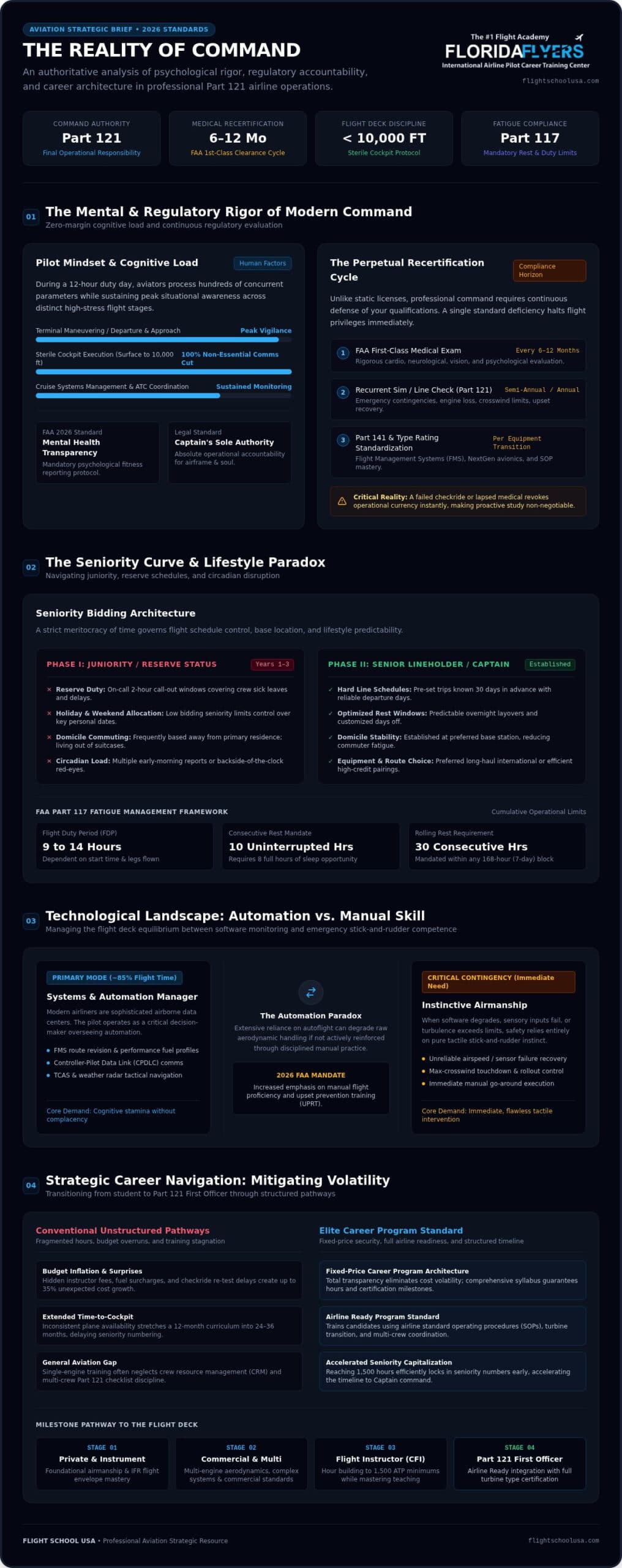
The financial investment required to reach the flight deck is one of the most formidable challenges of being a pilot. You must navigate a complex “Time vs. Cost” dilemma, deciding between slower modular tracks and intensive accelerated programs. In a volatile 2026 economy, financial risk management isn’t optional. It is a professional necessity. Choosing a fixed-price model eliminates the uncertainty of fluctuating fuel surcharges and equipment fees, allowing you to focus entirely on technical mastery. This strategic approach ensures that your progression remains on schedule regardless of market shifts.
Strategic progression also means conquering the “1,500-Hour Rule” required for ATP certification. Many candidates lose momentum during this phase. The most efficient path involves transitioning into a Certified Flight Instructor (CFI) role or a regional position to build time while receiving compensation. This transition requires a high level of discipline and a protective stance regarding your professional record. You must treat every hour in the logbook as a critical step toward your ultimate command.
Veterans can leverage their service history by utilizing the GI Bill for CFI training to offset the costs of advanced certifications. This is a strategic move that preserves personal capital while moving toward a competitive airline pilot salary. Beyond tuition, you must account for the “hidden costs” of the industry, such as FAA checkride fees, professional-grade equipment, and immersive housing. Our Fixed-Price Career Program provides a transparent pathway that accounts for these variables, ensuring your capital is deployed with maximum efficiency.
Global candidates face unique hurdles, specifically regarding M1 Visa requirements and the conversion of foreign licenses to FAA standards. The United States remains the global standard for elite pilot training because of its rigorous regulatory framework and vast airspace. Navigating these challenges of being a pilot as an international student requires a partner who understands M1 Visa admission services and provides the necessary infrastructure for success. Immersive student housing is critical here. It provides the cultural and professional environment needed to master US aviation protocols while living among a cohort of driven professionals.
Success in 2026 requires more than just flying skill; it requires a calculated approach to career logistics and financial planning. To secure your future in the cockpit and eliminate budget volatility, explore our Sabit Fiyatlı Kariyer Programı and begin your professional ascent today.
The challenges of being a pilot serve as a filter, separating those who seek a hobby from those who demand a professional career. At Flight School USA, our philosophy is rooted in the high-stakes reality of 2026 aviation. We don’t just teach you how to operate an aircraft. We build airline-ready commanders who possess the psychological stamina and technical precision required by major carriers. Every aspect of our training is designed to mirror the rigors of Part 121 operations, ensuring that your transition from the training environment to the flight deck is seamless and professional.
Financial uncertainty is one of the most common hurdles for aspiring aviators. While other institutions leave you vulnerable to fluctuating hourly rates and unexpected fuel surcharges, our Fixed-Price Career Program provides a definitive financial roadmap. This structure allows you to focus entirely on your certification standards rather than your bank balance. We prioritize professional outcomes over hobbyist flying, providing a rigorous environment where excellence is the minimum requirement. This program is the only way to guarantee your training investment translates into a long-term career asset.
Reaching the 1,500-hour milestone requires more than just time; it requires a strategic plan. Our CFI Fast Track Program is engineered to move you through the instructional phase with maximum efficiency. When combined with our Airline Ready Program, you gain a competitive edge that positions you at the top of the hiring pool. We also provide dedicated Student Housing solutions that foster the immersive habits necessary for success. Living in a professional environment ensures that your focus remains sharp and your discipline unwavering.
The admission process for both domestic and international candidates is designed to identify those with the aptitude for modern command. If you’re ready to move beyond the common challenges of being a pilot and secure your status in the industry, the path is clear. Excellence isn’t an option; it’s a requirement. Secure your position in our next elite training class and begin your journey toward professional command today.
Mastering the flight deck in 2026 requires more than technical proficiency; it demands a total commitment to regulatory compliance and psychological stamina. You’ve seen how the mental burden of constant evaluation and the lifestyle demands of the seniority system define this profession. These challenges of being a pilot serve as the ultimate gatekeeper for the industry’s elite standards. Success depends on your ability to navigate these hurdles with a no-nonsense approach to professional development.
Flight School USA stands as your strategic partner in this high-stakes environment. As FAA Bölüm 141 Sertifikalı instructors and M1 Visa Admission Experts, we provide the immersive infrastructure and Fixed-Price Training Guarantee necessary to eliminate career volatility. Don’t leave your progression to chance. Apply for the Elite Fixed-Price Career Program to secure your position among the next generation of commanders. Your ascent to the flight deck begins with the discipline to choose a superior training standard. We look forward to seeing you in the cockpit.
The most demanding aspect of modern flight training is the transition from manual “stick and rudder” flying to advanced systems management. Candidates must maintain elite manual proficiency while simultaneously mastering complex digital avionics and automated flight logic. This dual requirement creates a significant cognitive load. Our Airline Ready Program addresses this by simulating the high-stakes environment of commercial operations, ensuring students can handle the split-second decision-making required in today’s digital cockpits.
Fatigue management is a legal and professional obligation governed by FAA Part 117 regulations. Pilots must exercise extreme personal discipline to utilize designated rest periods effectively, especially when navigating multiple time zones. This involves strategic sleep hygiene and maintaining physical health to mitigate circadian rhythm disruption. Understanding these physiological limits is one of the essential challenges of being a pilot. Professional training emphasizes that alertness is a critical component of safety and command responsibility.
Eligible veterans can utilize GI Bill benefits to fund specific portions of their professional advancement. At Flight School USA, we offer specialized GI Bill Flight Training tracks, including our CFI Fast Track Program. This allows veterans to leverage their service history to offset the financial investment of earning advanced ratings. By using these benefits strategically, veterans can transition into high-level aviation roles while minimizing the financial risk associated with professional pilot development.
Commercial pilots must secure and maintain an FAA First-Class Medical Certificate, which evaluates vision, hearing, cardiovascular health, and neurological stability. These standards are non-negotiable and require a high level of physical integrity. Any medical condition that impacts safety can lead to an immediate grounding. Maintaining this certificate is a permanent fixture of the career. It requires a proactive approach to health and transparency regarding mental and physical fitness throughout a professional’s entire tenure.
While the demand for aviators remains high, the regulatory and technical standards for command have never been more rigorous. The shortage does not lower the bar for entry; instead, it increases the pressure for candidates to be airline ready immediately upon reaching the 1,500-hour milestone. Success requires a disciplined approach to training. We focus on building commanders through our Fixed-Price Career Program, ensuring you meet the industry’s elite requirements regardless of hiring trends.
In 2026, the FAA emphasizes a culture of transparency and proactive mental health reporting. The agency has implemented higher standards for evaluation while fostering a non-punitive environment for pilots who seek support early. This shift requires aviators to maintain absolute integrity regarding their psychological fitness. Navigating these evolving regulations is one of the core challenges of being a pilot today. It demands a level of personal accountability that matches the technical precision required in the cockpit.
Success for international students depends on total immersion in the US aviation system and mastering FAA Part 141 standards. We provide specialized M1 Visa Admission Services to facilitate this transition for global candidates. Our dedicated Student Housing creates a 24/7 professional environment that significantly improves outcomes. By living among fellow aviators and focusing strictly on English-language technical proficiency, international students can overcome the logistical and cultural hurdles inherent in US-based professional flight training.
Commercial pilots typically fly between 75 and 90 hours per month, but their total duty time is significantly higher. Duty hours include pre-flight briefings, ground delays, and layovers, often reaching 150 hours or more monthly. This schedule is governed by strict FAA Part 117 limitations to prevent exhaustion. Managing this erratic scheduling while maintaining peak performance is a fundamental reality of the profession. It requires a high level of discipline to balance professional obligations with personal recovery.