
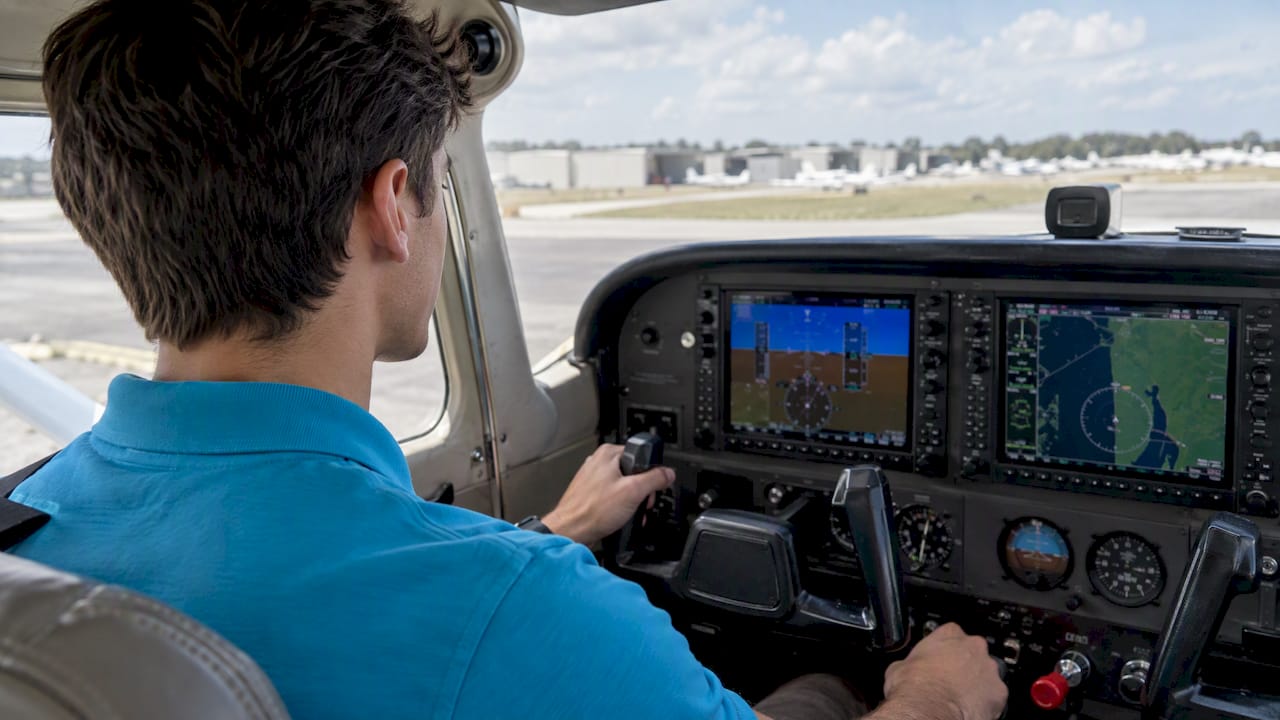
A glass cockpit transition is not a button-pushing exercise. It is a change in how you scan, how you manage attention, and how you think about failures. Pilots who treat it as an equipment checkout tend to learn the menus and miss the system logic. Pilots who treat it as structured training end up with a scan they can trust when a display misbehaves. This guide covers what actually changes, how to train for it, which simulator hours count, and how to choose the right system and instruction.
On paper, glass looks like a simplification. Six round instruments become one or two screens, the moving map sits in front of you, and the autopilot is often a few buttons away. In practice, the information is the same, but its presentation and the way you must manage it are different.
Tarama. Buharlı göstergelerle, ayrı ayrı kadranları çapraz kontrol eder ve resmi kendiniz oluşturursunuz. Birincil uçuş ekranında, hava hızı ve irtifa dikey şeritler halinde gösterilir, pozisyon arka planı doldurur ve eğilimler sizin için çizilir. Kitplanes'in cam geçişine dair kılavuzu Bu, sık karşılaşılan erken bir hatayı açıklıyor: dijital rakamların peşinden koşmak ve perdeyi aşırı kontrol etmeye çalışmak yerine, perde duruşunu korumak veya ekrana odaklanıp durumsal farkındalığı kaybetmek.
Dikkat. FAA'lar Transition Training guidance compares the shift to moving from an automatic car to a stick shift: it is still a car, but you must know how to operate what is new. The real skill is keeping an external visual scan while managing integrated information on the screen.
Otomasyon. Autopilot and flight director modes add a layer that analog panels rarely had. You must know what the system is doing, why, and how to take it back.
Failure behavior. A failed gauge on a six-pack is a single failed gauge. A failed display, sensor or data source on a glass panel can change what you see in several places at once, and the correct response depends on understanding the architecture behind it.

Pilots often ask whether glass is simply better. It is better at some things and demands more of you in others.
| Semt | Traditional (steam gauges) | Glass cockpit |
|---|---|---|
| Attitude and trend information | Built by the pilot through cross-check | Presented on a single display with trend cues |
| Durumsal farkındalık | Ayrı navigasyon kaynakları | Moving map, terrain and traffic integrated |
| taramak | Needle-by-needle | Tape-based, with a risk of fixation on the screen |
| Başarısızlık modları | Mostly isolated and visible | Zincirleme reaksiyon gerçekleşebilir; sistem mantığı bilgisi gerektirir. |
| Eğitim yükü | Panelin kendisi için daha düşük bir değer. | Higher up front, especially for IFR use |
| Otomasyon | Genellikle minimal | Common, and must be managed deliberately |
The advantages of glass are real: clearer presentation, integrated weather and terrain, and consistent layouts across aircraft. But the NTSB study cited above found that Camlı uçakların genel kaza oranlarında ölçülebilir bir iyileşme göstermediği görüldü. compared with analog-equipped ones. The study notes that these aircraft were more often flown single-pilot, on longer trips, and on IFR flight plans, so the comparison is not simple. The practical lesson is the one the NTSB itself draws: better displays do not replace training, and the instrument is only as good as the pilot’s understanding of it.
Herhangi bir geçiş planı için en kullanışlı standart, en eski olanıdır: uçmak, yönlendirmek, iletişim kurmak, bu sırayla. Her ekran, sayfa ve mod bu üç görevi yerine getirmek için vardır. Ekran çok karmaşık hale geldiğinde, önce aviyonik sistemlerde sorun giderme yapmazsınız. Uçağı uçurursunuz, sonra bilinen bir ekran yapılandırmasına geri dönersiniz.
That is why we tell students to build three habits before touching advanced features:
The NTSB warns that familiarity with screen menus is easily mistaken for mastery of the aircraft. Its safety study stresses that Acil durum prosedürleri, sistem mantığını öğrenme zamanı değildir.Dolayısıyla ilk uçuştan önce, önünüzde ekran olmadan da açıklayabilmelisiniz:
Bu, "kara kutu" tuzağıdır: Ekranın ne gösterdiğini neden gösterdiğini bilmeden her şey için ekrana güvenmek. Bu tuzağa düşmeyen pilotlar, mantığı tıpkı düğmeler gibi ciddiye alırlar.
The FAA guidance on transition training recommends a disciplined schedule and standard study topics: performance limitations such as weight and balance and airspeeds, abnormal and emergency procedures, and system-specific operating limitations. It also suggests practicing with your instructor about twice a weekÇünkü arayüz yeni olduğunda beceriler oturumlar arasında hızla kaybolur.
Mantıklı bir sıralama şöyle görünür:
Bu konudaki akademik çalışmalar da aynı yöne işaret ediyor. Analogdan dijitale geçiş üzerine yapılan araştırmalar, ilk performans düşüşlerinin daha yüksek iş yükünden ziyade yeni arayüzle bağlantılı olduğunu, yani resmi bir müfredatın performans düşüşünün daha çabuk atlatılmasına yardımcı olduğunu gösteriyor. İlk saatlerdeki herhangi bir düşüşü normal kabul edin ve bunu hızla atlatmayı ummak yerine müfredatı buna göre planlayın.
Pilotlar genellikle ev tipi uçuş simülatöründe geçirilen saatlerin kaydedilebileceğini varsayarlar. Ancak cihaz onaylı olmadığı sürece bu mümkün değildir. FAA Advisory Circular 61-136B, credit toward certificates and ratings requires an FAA-approved basic or advanced aviation training device (BATD or AATD), and you should verify the device’s letter of authorization and current status before logging anything. Consumer desktop software is still valuable for rehearsing flows and button sequences, but it is practice, not logged time.
Bölüm 141 enstrüman eğitimi için sınırlar özeldir. Buna göre LegalClarity’s summary of the Part 141 rulesToplam eğitim saatlerinin %40'ına kadar FTD veya AATD'de geçirilebilir, BATD kredisi %10 ile sınırlıdır ve tüm cihazların toplam kullanım süresi kurs saatlerinin %50'sini aşamaz. Bu yapı, Bölüm 141 müfredatının cam eğitimi için doğal bir yer olmasının nedenlerinden biridir: onaylı cihazlar kursa sonradan eklenmek yerine, kursun içine entegre edilmiştir. İki yolu da değerlendiriyorsanız, kılavuzlarımız size yardımcı olacaktır. Part 141 versus Part 61 hem de what Part 141 means Farklılıkları açıklayın ve sayfamızda... enstrüman simülatörü saatleri Bu bölüm, kredi sisteminin pratikte nasıl işlediğini ele almaktadır. Simülasyonun daha geniş kapsamlı gerekçesi için bkz. flight simulator training benefits.

If you are renting or buying, the right system is the one you will actually train on and fly regularly. Use these criteria:
Eğitim için, rastgele uçuş serileri yerine bir müfredat arayın, hem hataları hem de özellikleri öğretme konusunda rahat olan bir eğitmen bulun ve uygulama saatlerinin de kaydedilebilmesi için onaylı bir eğitim cihazına erişiminiz olsun.
We train commercial pilots, and almost every student who walks in has to be fluent in glass before they reach an airline. Whether you started on steam gauges and are upgrading, or learned on glass and are moving back to analog for a rental, the discipline is the same: fly the airplane, understand the architecture, and rehearse the failure before it happens.
What we see is that students who treat glass as a system to be understood, rather than a screen to be operated, pass checkrides with less stress and carry that habit into multi-engine and airline work. The ticking of a Hobbs meter is also a budget line, so structured preparation matters financially: arriving at each lesson having rehearsed the flows in an approved or desktop trainer means the aircraft hour is spent on flying, not on finding pages.
Tavsiyemiz basit. Sık sık pratik yapın, gösterilerden önce başarısızlıkları inceleyin ve rahatsız olduğunuz kısımları aşmanıza izin verecek bir eğitmen konusunda ısrarcı olun. Burada başarı, gösterinin kalitesinden değil, disiplinden gelir.
— Rainer
Florida Flyers Uçuş Akademisi'nde, cam kokpit kullanım becerisi, profesyonel bir kariyere giden yolun bir parçasıdır. glass cockpit training page describes an 8-week route from desktop practice to an AATD for U.S. pilots. If you are building toward the airlines, the Sabit Fiyatlı Havayolu Uçuş Okulu Programı is published at $85,900 one-off, and the ABD Havayolu Pilotu Kariyer Programı at $49,950 one-off. For ratings along the way, see our aletli uçuş yetkinliği eğitim programı ve tam listesi pilot eğitim kursları.
It depends on the system, your experience and whether you will fly IFR. Transitioning for VFR use takes noticeably less time than training for IFR, where autopilot and approach functions come into play. Rather than aiming at a fixed number of hours, aim for a standard: you can fly the aircraft by attitude, run the system without fixating, and handle display failures calmly.
Otomatik olarak değil. NTSB’s study Camlı hafif uçaklarda genel kaza oranlarında ölçülebilir bir iyileşme bulunamadı. Ekranlar daha iyi bilgi sağlıyor, ancak güvenlik faydası, özellikle acil durumlar ve otomasyon yönetimi için eğitime bağlı.
Only if the device is an FAA-approved BATD or AATD with a valid letter of authorization, as described in AC 61-136B. Consumer desktop software is useful for practicing procedures but does not generate loggable time by itself.
FAA'lar transition training guidance Haftada yaklaşık iki kez eğitmeninizle pratik yapmanız önerilir. Sık ve kısa seanslar yeni tarama modelinin oturmasına yardımcı olur ve simülatörde yapılan yer pratiği uçuşlar arasındaki boşlukları doldurur.
Bunu, düğmelerin nerede olduğunu öğrenmek gibi düşünün. Sık yapılan hatalar arasında ekrana odaklanmak, dijital rakamların peşinden koşmak ve sistem mantığını bilmeden menüleri bilmek yer alır. Gelişmiş özelliklere geçmeden önce hataları inceleyin ve eski haline dönün.


