
Информация о карьере пилота авиакомпании


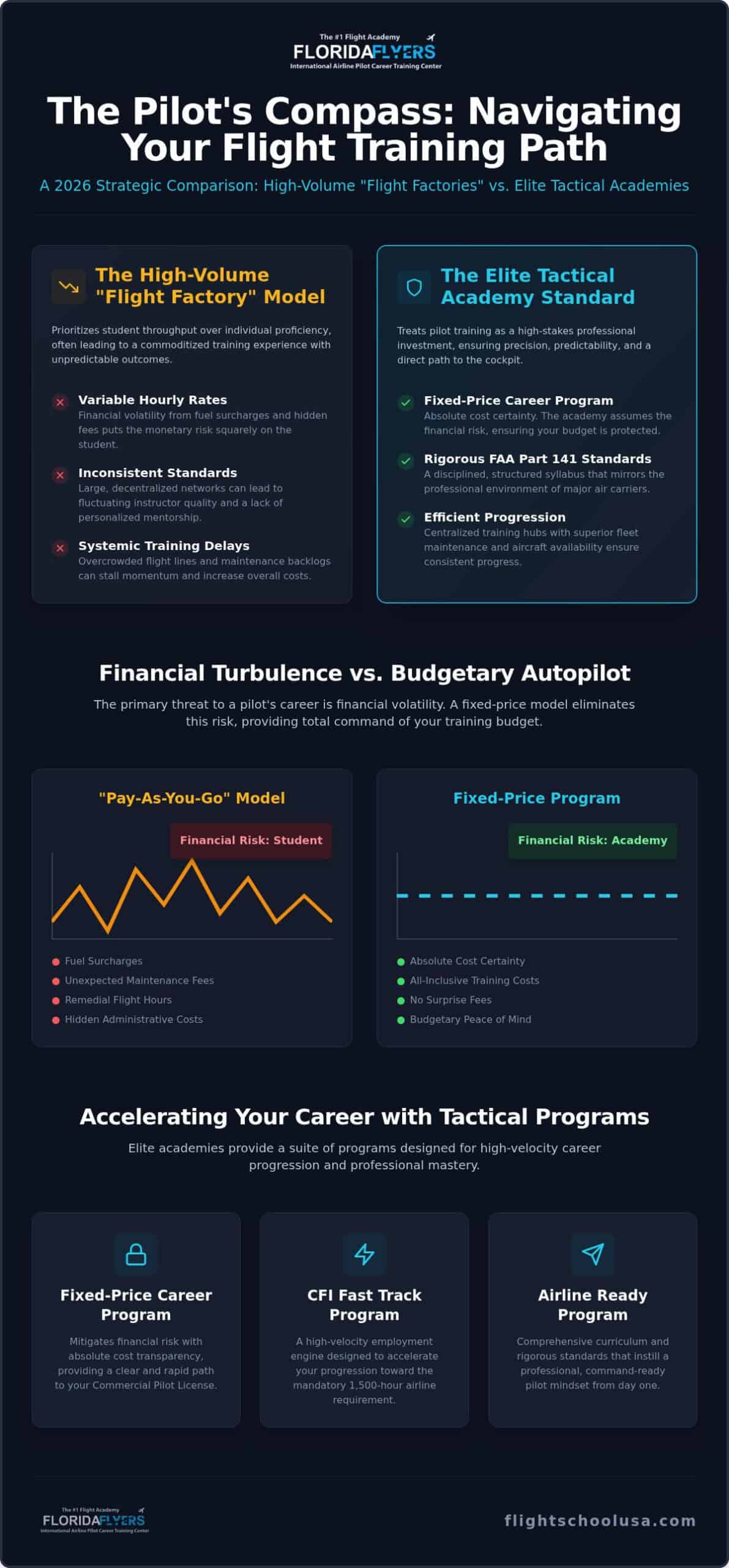
Модель «авиационной фабрики» больше не является золотым стандартом для начинающих пилотов, требующих профессиональной точности и финансовой прозрачности. В то время как школы с большим количеством учеников отдают приоритет производительности, элитные кандидаты все чаще обращаются к тактическим академиям, которые рассматривают подготовку пилотов как инвестицию с высокими ставками, а не как товар. Вы, вероятно, заметили, что традиционный путь часто приводит к неожиданному росту почасовой оплаты и отсутствию индивидуального наставничества, необходимого для карьеры в первоклассной авиакомпании.
В этом стратегическом обзоре 2026 года определены лучшие альтернативы летной школе ATP, выделены программы, предлагающие абсолютную стабильность стоимости и строгое соблюдение нормативных требований. Вы узнаете, как программа «Карьера по фиксированной цене» устраняет нестабильность топливных сборов и скрытых платежей, обеспечивая при этом быстрый переход к получению лицензии коммерческого пилота. Мы также подробно расскажем о преимуществах программы ускоренного обучения на инструктора по полетам (CFI Fast Track Program) и программы подготовки к работе в авиакомпании (Airline Ready Program); это гарантирует вам четкий и дисциплинированный путь к профессиональной работе в кабине пилота без административных сложностей, связанных с визой M1 или программой GI Bill.
В 2026 году требования к подготовке пилотов в современной системе образования предполагают стратегический сдвиг в том, как будущие летчики оценивают свое образование. Элитные кандидаты понимают, что масштаб не может служить заменой качеству. Крупные учебные заведения часто ставят во главу угла пропускную способность для выполнения корпоративных квот, создавая «фабрику», где индивидуальная квалификация отходит на второй план по сравнению с плотностью расписания. Эта модель основана на обширной децентрализованной сети, что может приводить к непоследовательным стандартам обучения и системным задержкам в подготовке.
Модель летной школы ATP Эта система основана на быстром прогрессе в многочисленных местах. Однако такой подход с большим объемом работы часто предполагает использование переменных почасовых ставок. В условиях инфляционной экономики эти колебания цен создают финансовую нестабильность для студента. Лучшая альтернатива летной школе ATP фокусируется на структурированных, тактических условиях обучения, где приоритет отдается точности соблюдения нормативных требований, а не масштабности. Эти элитные академии рассматривают подготовку пилотов как высокорискованную профессиональную инвестицию, гарантируя, что каждый час в кабине пилота приводит к измеримому карьерному росту.
В перегруженных национальных сетях соотношение инструкторов и студентов часто колеблется, что напрямую влияет на процент успешной сдачи экзамена. Когда школа одновременно обучает сотни студентов, «скрытый» риск задержек в обучении становится реальностью. Переполненные летные линии и задержки в техническом обслуживании могут затормозить прогресс студента на несколько недель. Хотя многие школы активно рекламируют партнерство с авиакомпаниями, эти связи не заменяют необходимости в индивидуальном совершенствовании навыков. Карьера профессионала зависит от его способности ориентироваться в сложных системах, а не только от корпоративных связей его учреждения. Опора на заводскую модель может привести к тому, что у пилота будет налет часов на бумаге, но будет недостаток опыта тактического управления.
Превосходная альтернатива профессиональной подготовке соответствует строгим требованиям сертификации FAA Part 141. Эта структурированная программа обеспечивает дисциплинированную структуру, отражающую условия обучения в крупных авиаперевозчиках. Централизованные учебные центры предоставляют существенное преимущество, обеспечивая превосходное техническое обслуживание флота и немедленную доступность воздушных судов. Такая стабильность позволяет студентам продвигаться по карьерной лестнице. Программа готовности авиакомпаний с уверенностью. Это заставляет с первого дня перейти от мышления «студента» к мышлению «профессионального пилота». Выбирая академию, которая предлагает Программа карьерного роста с фиксированной ценойТаким образом, вы обеспечиваете свое финансовое положение, полностью сосредотачиваясь на сложностях профессиональной подготовки пилотов. Такой уровень сосредоточенности необходим тем, кто намерен возглавить следующее поколение коммерческой авиации.
Финансовая нестабильность — главная угроза карьерному росту начинающего пилота. Хотя школы с большим потоком учеников часто предлагают привлекательные базовые цены, в реальности модель «оплата по факту обучения» является стратегическим недостатком. Это создает ситуацию, когда каждая задержка с корректирующим полетом или техническим обслуживанием приводит к прямым финансовым потерям для обучающегося. Чтобы найти лучшую альтернативу летной школе ATP, необходимо выйти за рамки первоначального маркетингового предложения и найти академию, предлагающую абсолютную стабильность стоимости. Вы должны защитить свои инвестиции от скрытого снижения стоимости из-за переменных затрат.
Переменные затраты непредсказуемы. Топливные сборы и непредвиденное техническое обслуживание самолетов часто приводят к значительному перерасходу средств в традиционных учебных заведениях. В модели почасовой оплаты у учебного заведения нет стимула уделять приоритетное внимание вашей эффективности; фактически, оно получает прибыль от ваших дополнительных часов обучения. Это конфликт интересов. Напротив, модель фиксированной цены перекладывает финансовый риск со студента на академию. Теперь школа профессионально и финансово заинтересована в том, чтобы вы сдали экзамены с первой попытки. Согласно ресурсам AOPA для пилотов, понимание этих структур затрат является основополагающим шагом в долгосрочном планировании карьеры. Программа летной подготовки с фиксированной ценой служит стратегической защитой от волатильности авиационного рынка.
Коррекционная подготовка не должна быть источником прибыли для вашей школы. В нашей элитной учебной среде мы ставим ваш успех на первое место, предлагая структурированную программу обучения, которая исключает необходимость гадания и оплаты по мере прохождения курса. Это единственный способ гарантировать, что ваш переход на службу в кабину пилота состоится в срок и в рамках бюджета. Управляйте своим будущим с уверенностью.
В процессе подготовки пилотов скорость часто ошибочно воспринимается как просто календарная скорость. В профессиональном контексте истинное ускорение является результатом дисциплинированной, высокоскоростной учебной программы, которая сочетает в себе получение продвинутых сертификатов с немедленными возможностями трудоустройства. В то время как заводские модели отдают приоритет быстрой смене студентов, элитная академия фокусируется на техническом мастерстве, необходимом для управления коммерческими самолетами. Такой акцент на долгосрочном совершенствовании навыков, а не просто на выполнении минимальных требований, делает ее лучшей альтернативой летной школе ATP для серьезных пилотов, стремящихся к карьере.
Программа ускоренного обучения CFI служит важнейшим профессиональным двигателем. Она превращает вас из студента в технического эксперта. Преподавание сложной аэродинамики — наиболее эффективный метод для закрепления вашего собственного понимания теории полета и нормативных стандартов. Получив сертификаты инструктора по полетам (CFI), инструктора по приборам (CFII) и инструктора по многодвигательным самолетам (MEI) в рамках единого, согласованного курса, вы максимально повышаете свою востребованность на рынке труда в авиационной отрасли. Элитные академии предоставляют своим выпускникам возможность немедленного трудоустройства внутри компании. Это позволяет вам налетать 1,500 часов, необходимых для получения сертификата пилота транспортной авиации (ATP), при этом поддерживая строгие стандарты безопасности и соответствия требованиям. Эксплуатация многодвигательных самолетов — это не второстепенный аспект, а стандарт для профессионального роста.
Переход от гражданской авиации к условиям, установленным в соответствии с Частью 121 правил гражданской авиации, представляет собой значительный тактический скачок. Программа готовности авиакомпаний Эта программа разработана для преодоления этого пробела посредством углубленной подготовки к переходу на реактивные самолеты и базового управления ресурсами экипажа (CRM). Вы выйдете за рамки базовых навыков управления самолетом и освоите сложные аспекты координации действий нескольких экипажей и автоматизированных систем управления полетом. Такая подготовка необходима для выживания в условиях высокого давления, характерных для начальной подготовки пилотов авиакомпаний. Для получения подробной стратегической дорожной карты обратитесь к нашему руководству по подготовке пилотов авиакомпаний. Мы требуем от наших студентов высочайшего уровня подготовки, потому что авиакомпании требуют этого от нас. Это единственный способ гарантировать, что вы будете не просто пилотом с налетом часов, а профессионалом, готовым занять место в кабине пилота. Если вы ищете лучшую альтернативу летной школе ATP, вам следует отдать приоритет академии, предлагающей такой уровень технической подготовки.
Крупные летные школы часто упускают из виду специфические административные и финансовые требования ветеранов и иностранных кандидатов. Они отдают приоритет быстрому финансированию, а не сложной нормативной поддержке, создавая вакуум для студентов, нуждающихся в специализированной помощи. Для тех, кто хочет учиться в учебном заведении, понимающем их уникальные особенности, выбор лучшей альтернативы летной школе ATP означает выбор академии со специализированными системами тактической поддержки. Мы относимся к соблюдению административных требований с той же профессиональной серьезностью, что и к вашей летной подготовке.
Ветераны привносят в кабину пилота уникальный уровень дисциплины, которому должно соответствовать их учебное заведение. Использование накопленных навыков, полученных в рамках программы GI Bill для обучения пилотированию, — это стратегический шаг, требующий точного соответствия стандартам FAA Part 141. Многие крупные сети не обладают необходимой административной инфраструктурой для прямой обработки этих льгот, что вынуждает ветеранов искать дорогостоящее внешнее финансирование. Наша академия уделяет приоритетное внимание адаптации ветеранов, обеспечивая соответствие наших коммерческих и инструкторских квалификаций строгим требованиям для получения права на участие в программе GI Bill после 11 сентября. Это соответствие имеет решающее значение; оно позволяет вам перенести военную дисциплину в гражданское лидерство в кабине пилота без бюрократических проволочек.
Глобальный спрос на пилотов требует упрощенной процедуры приема на работу для иностранных кандидатов. Наша Услуги по оформлению визы M1 Мы предлагаем структурированный путь для преодоления сложностей, связанных с оплатой сборов SEVIS, протоколами проверки биографических данных TSA и требованиями к уровню владения английским языком. В то время как подготовительные курсы часто предоставляют ограниченную международную поддержку, мы предлагаем среду полного погружения. Это включает в себя специализированную программу. Студенческое жильеЭто скорее тактическая необходимость, чем роскошь. Проживание в академии ускоряет обучение, устраняя неудобства ежедневных поездок и способствуя формированию постоянной профессиональной культуры. Именно такой подход, предполагающий полное погружение в профессию, делает нас лучшей альтернативой летной школе ATP для кандидатов со всего мира, которым нужны результаты, а не просто виза.
Комплексное руководство по поступлению в американские летные школы в 2026 году для иностранных студентов — это незаменимый инструмент для построения успешной карьеры в этой глобальной сфере. Если вы готовы применить свои навыки, полученные за рубежом, и обеспечить себе место в кабине профессионального пилота, свяжитесь с нашими специалистами по оформлению визы M1 уже сегодня. Мы предоставляем элитную инфраструктуру, необходимую для вашего глобального успеха.
Выбор учебного заведения — это последний тактический этап перед началом вашей профессиональной карьеры. Лучшая альтернатива летной школе ATP — это не просто академия с наибольшим количеством филиалов, а та, которая демонстрирует превосходную культуру безопасности и стабильный опыт успешной сдачи экзамена с первого раза. Вы должны оценивать школы по их способности предоставлять стандартизированную, ответственную подготовку, превосходящую минимальные требования FAA. В то время как заводские модели отдают приоритет выпуску студентов для выполнения корпоративных квот, лучшие кандидаты ищут программы, которые ставят во главу угла техническую компетентность и индивидуальное наставничество. Этот выбор определяет ваше положение на рынке труда в авиационной отрасли.
Кандидат в профессиональные пилоты должен провести аудит отдела технического обслуживания и протоколов безопасности учебного заведения. Элитные академии содержат собственный парк самолетов на своей территории, чтобы обеспечить максимальную доступность воздушных судов и строгое соблюдение нормативных стандартов. Следует отдавать приоритет учреждениям, имеющим право на самопроверку со стороны FAA. Этот статус является признаком престижа и доверия к учебному заведению, что позволяет сделать процесс сертификации более эффективным и стандартизированным. Стандартизированное обучение устраняет вариативность, присущую местным летным школам, гарантируя, что каждая процедура соответствует стандартам коммерческой авиации. Наиболее важным показателем является «экзамен на пилота»; процент успешной сдачи экзамена с первого раза отражает качество инструкторов и строгость обучения. Программа готовности авиакомпаний учебный план.
Для завершения вашей миссии необходим систематический подход к набору персонала. Первым шагом является организация экскурсии по предприятию и ознакомительного полета, чтобы лично познакомиться с профессиональной культурой. Во время этого визита вы должны ознакомиться с... Программа карьерного роста с фиксированной ценой Договор обеспечивает полную финансовую безопасность. Этот документ защищает ваши инвестиции от переменных почасовых ставок и скрытых надбавок, которые подрывают «заводскую» модель. Лучшая альтернатива летной школе ATP обеспечивает такой уровень прозрачности с первого дня. Переход в профессиональную кабину пилота требует прагматичного подхода и стремления к совершенству. Если вы обладаете дисциплиной, необходимой для элитной летной подготовки, вы готовы занять свое место в нашей компании. Программа ускоренного режима CFIВозьмите свое будущее в свои руки, выбрав академию, которая рассматривает вашу карьеру как важную профессиональную инвестицию.
Ориентироваться в авиационной среде 2026 года требует не только накопления часов, но и тактического выбора условий обучения. Благодаря нашей программе обучения по фиксированной цене, обеспечивающей финансовую прозрачность, вы исключаете нестабильность, связанную с массовыми программами подготовки пилотов. Вы уже видели, как элитные академии используют соответствие требованиям FAA Part 141 и специализированные программы, такие как Airline Ready Program, чтобы преодолеть разрыв между первоначальной сертификацией и получением коммерческой лицензии пилота. Эта приверженность техническому мастерству и точности соблюдения нормативных требований определяет лучшую альтернативу летным школам ATP для серьезных профессионалов.
Независимо от того, являетесь ли вы ветераном, использующим ресурсы по программе GI Bill, или иностранным кандидатом, нуждающимся в поддержке для получения визы M1, ваше обучение должно рассматриваться как инвестиция с высокими ставками. Наша академия, одобренная FAA Part 141, элитные программы ускоренного обучения на инструктора по полетам и специализированная поддержка иностранных студентов обеспечивают необходимую инфраструктуру для вашего успеха. Пришло время перейти от мышления студента к мышлению профессионального пилота. Обеспечьте свое будущее с помощью нашей программы карьерного роста с фиксированной ценой и возьмите под контроль свою профессиональную траекторию. Ваш переход в кабину пилота начинается с взвешенного решения. Мы с нетерпением ждем, когда вы станете лидером в кабине пилота.
Программа обучения с фиксированной ценой — наиболее экономически выгодное решение, поскольку она исключает финансовую нестабильность, присущую традиционным авиационным школам. В то время как другие школы используют переменные почасовые ставки, которые колеблются в зависимости от цен на топливо, наша структурированная модель обеспечивает абсолютную предсказуемость затрат. Это делает ее лучшей альтернативой летной школе ATP для кандидатов, которым необходим дисциплинированный бюджет. Вы защищаете свои инвестиции в обучение от инфляции, полностью сосредотачиваясь на техническом совершенстве.
Как правило, вы не можете использовать льготы по программе GI Bill для получения первоначальной лицензии частного пилота в учебном заведении, не предоставляющем высшее образование. Согласно действующим правилам 2026 года, ветераны обычно должны получить лицензию частного пилота за свой счет, прежде чем приступить к обучению по программе GI Bill для получения продвинутых коммерческих и инструкторских квалификаций. Наше одобрение FAA Part 141 гарантирует, что ваша профессиональная подготовка соответствует строгим стандартам, необходимым для возмещения расходов Министерством по делам ветеранов. Такой стратегический подход позволяет вам максимально использовать оставшиеся льготы для получения профессиональных сертификатов.
Программа ускоренного получения квалификации инструктора по полетам (CFI Fast Track Program) разработана для быстрого прохождения сертификации, обычно занимающей всего несколько недель для квалифицированных кандидатов. Эта программа направлена на превращение ваших существующих знаний в ценный учебный ресурс. Это наиболее эффективный способ начать накапливать 1,500 часов, необходимых для работы в авиакомпании. Объединив обучение по программам CFI, CFII и MEI в один блок, вы ускоряете свой переход от студента к профессиональному инструктору.
Программа летной подготовки с фиксированной ценой превосходит другие, поскольку она согласовывает интересы академии с вашим успехом. В почасовой модели школы получают прибыль от вашей дополнительной подготовки и задержек. Контракт с фиксированной ценой перекладывает этот риск на учебное заведение. Теперь у них есть профессиональная мотивация обеспечить вашу успешную сдачу экзаменов. Это обеспечивает финансовую безопасность, необходимую для управления важным переходом в карьере без беспокойства по поводу скрытых дополнительных сборов или платы за обслуживание.
Мы уделяем первостепенное внимание вашему профессиональному росту благодаря нашей программе подготовки к работе в авиакомпаниях и внутренним инициативам по найму. Хотя мы не предлагаем стандартное трудоустройство, мы являемся высокоэффективной академией, которая часто принимает на работу своих выпускников в программу ускоренного обучения инструкторов по полетам (CFI Fast Track Program). Это позволяет вам набрать необходимое количество часов налета на многодвигательных самолетах, работая в престижной учебной среде. Наши выпускники пользуются большим спросом у региональных авиаперевозчиков благодаря нашим строгим стандартам FAA Part 141.
Мы уделяем первостепенное внимание вашему профессиональному росту благодаря нашей программе подготовки к работе в авиакомпаниях и внутренним инициативам по найму. Хотя мы не предлагаем стандартное трудоустройство, мы являемся высокоэффективной академией, которая часто принимает на работу своих выпускников в программу ускоренного обучения инструкторов по полетам (CFI Fast Track Program). Это позволяет вам набрать необходимое количество часов налета на многодвигательных самолетах, работая в престижной учебной среде. Наши выпускники пользуются большим спросом у региональных авиаперевозчиков благодаря нашим строгим стандартам FAA Part 141.
Сертификация FAA Part 141 крайне важна, поскольку она обеспечивает структурированную, аналогичную той, что используется в авиакомпаниях, среду обучения, отражающую профессиональные стандарты авиаперевозчиков. В таких программах часто допускается более низкое минимальное количество летных часов для получения коммерческой пилотской лицензии по сравнению с программой Part 61. Это сигнализирует рекрутерам авиакомпаний о том, что к вам предъявляются более высокие нормативные требования. Эта дисциплинированная структура является основной причиной, по которой лучшие кандидаты считают нашу академию лучшей альтернативой летной школе ATP.
Наши контракты с фиксированной ценой разработаны таким образом, чтобы покрывать стандартные требования учебной программы для каждой квалификации. Если вы не достигнете уровня квалификации в установленные сроки, конкретные условия вашего соглашения определят дальнейшие тактические шаги. Мы ставим ваш успех на первое место, предлагая структурированную учебную программу, которая минимизирует необходимость в дополнительных занятиях. Наша цель — обеспечить достижение вами профессиональной компетентности без административных сложностей и финансовых неопределенностей, характерных для моделей оплаты по факту обучения.


