

The first year is a test of adaptation as much as flying skill. Surviving the first year as an repülőgép pilóta can mean managing Part 121 training, an Initial Operating Experience program, and a year of probation while adjusting to line operations.
That transition demands more than mastering procedures. New pilots must absorb unfamiliar systems, respond to feedback, and build consistency while adapting to the expectations of a professional flight crew. Workloads and sequences vary by airline, but preparation and disciplined habits matter throughout.
This article explains what to expect from training and early line flying, how probation and assignment constraints can shape the year, and how to manage the practical demands of a new aviation career. You’ll get a clear view of the pressures, the adjustments that help, and how professional flight training can prepare you for the transition.
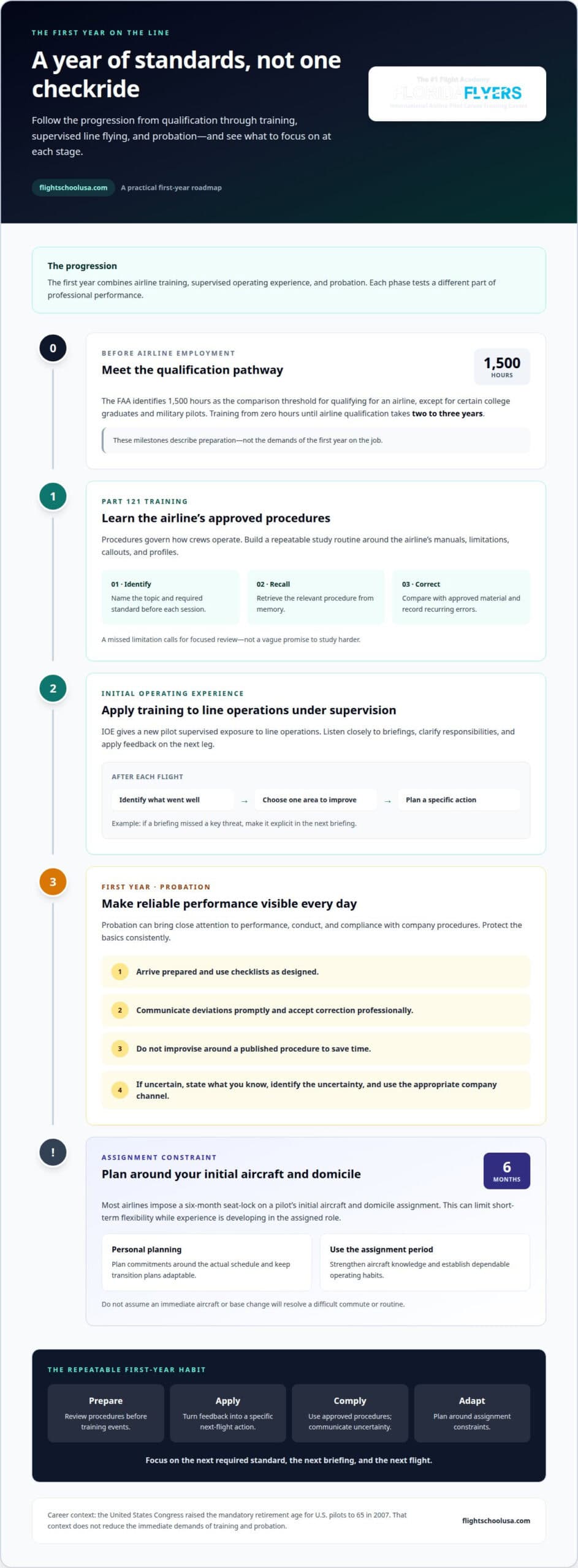
The first year combines airline training, supervised operating experience, and probation. Each phase tests a different part of professional performance. Training calls for accurate recall of procedures and aircraft systems. Initial Operating Experience applies that knowledge to line operations under supervision. Probation adds workplace expectations, including reliable preparation, sound judgment, and clear communication. Treat the year as a sequence of standards to meet, not a single checkride to pass.
Before airline employment, pilots must meet the applicable qualification pathway. The Federal Aviation Administration identifies 1,500 hours as the comparison threshold for qualifying for an airline, except for certain college graduates and military pilots. Training from zero hours until airline qualification takes two to three years. Those milestones describe preparation, not the demands of the first year on the job. Once hired, the emphasis shifts to applying knowledge consistently within the airline’s procedures and crew environment.
In Part 121 training, details matter because procedures govern how crews operate. Build a repeatable study routine around the airline’s manuals, limitations, callouts, and profiles. Begin each session by identifying the topic and the required standard. Then retrieve the relevant procedure from memory, compare it with the approved material, and correct gaps. A missed limitation should prompt focused review, not a vague promise to study harder. Record recurring errors so the next session addresses the actual weakness.
Expect the transition to involve more than classroom or simulator work. Initial Operating Experience gives a new pilot supervised exposure to line operations. Listen closely to briefings, clarify responsibilities, and apply feedback on the next leg. After each flight, identify what went well, choose one area to improve, and plan a specific action. For example, if a briefing missed a key threat, make it explicit in the next briefing.
Probation makes consistency especially important. The first year can involve close attention to performance, conduct, and compliance with company procedures. Protect the basics: arrive prepared, use checklists as designed, communicate deviations promptly, and accept correction professionally. Don’t improvise around a published procedure to save time. If something is unclear, state what you know, identify the uncertainty, and use the appropriate company channel. That discipline supports safe decisions and demonstrates sound judgment.
Assignment constraints can also shape daily life. Most airlines impose a six-month seat-lock on a pilot’s initial aircraft and domicile assignment. That can limit short-term flexibility while the pilot develops experience in the assigned role. Plan personal commitments around the actual schedule, and keep transition plans adaptable. Do not assume an immediate aircraft or base change will resolve a difficult commute or routine. Use the assignment period to strengthen aircraft knowledge and establish dependable operating habits.
The first year sits within a longer professional timeline. The United States Congress raised the mandatory retirement age for pilots in the United States to 65 in 2007. That change provides career context, but it does not reduce the immediate demands of training and probation. Focus first on the next required standard, the next briefing, and the next flight. Consistent execution across those daily tasks is the practical foundation for a durable airline career.
Address uncertainty by naming the unresolved point and seeking appropriate guidance before proceeding. A steady first-year approach makes preparation, communication, and responsiveness to feedback visible in everyday work. The author says he had been an airline pilot for just over seven years when assessing his first-year experience and had completed a year of airline probation. That perspective frames the period as an adjustment requiring patience as well as discipline.
Treat pay reports as context, not a promise. This is one participant’s account, so it should not replace a direct understanding of an airline’s terms. For a new pilot, the more dependable focus is what you can control: arrive ready, follow the approved process, ask when uncertain, and turn each correction into a specific habit.
Flight School USA’s Airline Ready Program is a career-focused option for aspiring pilots preparing for professional aviation. Structured flight training helps build the knowledge and discipline needed to progress toward airline operations, where standardized procedures, sound judgment, and consistent preparation are essential.
Consider this pathway as you plan your transition from flight training toward commercial aviation. A career-focused program can connect your training goals with the demands of professional piloting. Flight School USA also offers a Fixed-Price Career Program, a CFI Fast Track Program, and GI Bill Flight Training for eligible veterans.
Kapcsolatfelvétel az USA Repülőiskolával to discuss how the Airline Ready Program fits your pilot career goals.
Surviving the first year as an airline pilot starts with decisions made well before your first airline assignment. Set a clear direction for your training, identify the skills you need to strengthen, and choose a next step that aligns with your career goals. A deliberate plan gives each stage of preparation a purpose, rather than treating milestones as isolated tasks.
Flight School USA’s Airline Ready Program supports aspiring pilots preparing for professional aviation. Consider how structured flight training fits your experience and the path you intend to pursue. Your priorities may change as you progress, so base decisions on the capabilities you need to develop and the professional standards ahead.
Take the next step by discussing your goals with Kapcsolatfelvétel az USA Repülőiskolával. A focused conversation can help you define a practical direction for your aviation career. Keep building your knowledge, discipline, and readiness, and move forward with purpose.


