
Информация за кариерата на пилот на авиокомпания


Are pilots genuinely satisfied with their careers, or does the reality of the job outweigh the appeal? Pilot job satisfaction is more complex than a ranking or an individual account can show. Prestige and earning potential may draw people to aviation, but they don’t tell you how a particular role’s schedule, responsibilities, and daily demands will feel.
Публичните класации и опитът на пилотите могат да изглеждат противоречиви, тъй като удовлетвореността варира в зависимост от кариерния път. Резултатите от анкетата описват групи от респонденти, а не са гаранция за това, което ще изпитате. По-полезният въпрос е кои условия подкрепят удовлетвореността и дали те съответстват на вашите приоритети.
Тази статия разглежда основните измерения на удовлетвореността от работата на пилот, обяснява как внимателно да се интерпретират резултатите от проучванията и сравнява реалностите, които могат да се различават между различните пилотски роли. Ще намерите и практически въпроси, които ще ви помогнат да прецените дали авиацията отговаря на вашите професионални цели и предпочитан начин на живот. Разбирането както на изискванията, така и на наградите е съществена част от подготовката за пилотска кариера.
Pilot job satisfaction is a multidimensional assessment of how well a pilot’s work meets their expectations across factors such as compensation, meaning, work environment, and skills use. It is not a prediction of how any one person will feel. A single happiness rating offers a snapshot, but it can’t show which parts of the job are working well or where the trade-offs lie.
CareerExplorer reports that pilots rate their career happiness at 3.8 out of 5 stars, placing the career in the top 15%. That is a reported rating, not proof that pilots across every role and career stage share the same experience. Nor is it a personal forecast. Someone who values predictable time at home may assess a role differently from someone who prioritizes travel or operational responsibility.
CareerExplorer разделя удовлетвореността от кариерата на възнаграждение, смисъл, личностно съответствие, работна среда и използване на уменията. Тези измерения помагат да се обясни защо положителната обща оценка може да съществува едновременно с много различни индивидуални преживявания. Силното възнаграждение, например, не означава автоматично, че пилотът намира работата за смислена или средата за подходяща.
Evaluate each dimension against your own priorities. Ask yourself:
Rank these factors rather than treating them as equally important. For example, if schedule predictability matters more to you than travel, make that distinction explicit. A ranked list gives you a practical standard for comparing a career path with your expectations.
CareerExplorer’s figure uses a five-star rating scale. The available reporting for the 3.8 score does not specify a survey date, sample size, or respondent breakdown, so those details shouldn’t be assumed. Readers can note what CareerExplorer reports, but can’t establish from that figure alone how closely respondents represent the wider pilot workforce.
Keep the finding separate from broader conclusions. A rating describes responses gathered under a particular source’s method; it doesn’t establish that every pilot is satisfied. Sample size can affect how stable a result is, self-selection can influence who responds, and broad role definitions may combine pilots with substantially different work. Treat the score as one reference point. For a sound career decision, compare it with the specific duties, work setting, and priorities that matter to you.
Ролята на пилота и условията на труд могат да оформят удовлетвореността му независимо от длъжността. Думата... пилот covers work with different missions, schedules, team structures, and responsibilities. A pilot focused on scheduled passenger operations may experience a different working rhythm from someone flying corporate trips, carrying out military missions, or instructing students. Comparing satisfaction without comparing the work itself can obscure what matters most.
Пилотите на авиокомпании работят в рамките на пътническите графици и установените структури на екипажа. Корпоративните пилоти поддържат пътуващите нужди на организацията или клиента, докато военните пилоти работят в рамките на приоритетите на мисията и командните структури. Инструкторите по летене разделят вниманието си между управлението на самолет и подпомагането на студентите да развиват своите знания и умения. Тези описания са широки; задълженията и условията на работа варират във всяка област.
Сравнете практическите изисквания на ролите, които обмисляте:
No category guarantees a better lifestyle or higher satisfaction. Compare the actual demands of a role with the conditions in which you do your best work.
Career fit can change as experience and personal priorities evolve. Early in a career, structured learning, skill development, and gaining experience may be central considerations. With experience, a pilot may place greater weight on autonomy, leadership, type of operation, or schedule preferences. These are possible shifts, not a universal progression; seniority or time in the profession doesn’t guarantee a particular assignment or lifestyle.
Before committing to a path, compare its responsibilities with your priorities now, then consider how those priorities could change. Would you welcome a role centered on instruction, or do you prefer working within a larger crew? How much schedule variability feels manageable? Which non-flying duties are part of the role, and do they appeal to you? Specific answers are more useful than relying on a job title alone.
For aspiring pilots, career-focused preparation can help connect training goals with the demands of professional flying. Exploring career-focused flight training is one way to consider how deliberate preparation fits into your longer-term plans. Training can build readiness, but it can’t determine future job satisfaction.
Rankings can help frame the question, but they don’t provide a single, interchangeable measure of whether pilots are happy at work. A career score, a self-reported satisfaction rating, and a wage statistic each describe something different. Read each result according to its source and scale, then consider what it leaves out about an individual pilot’s role and priorities.
The figures below come from different publishers and measures. They shouldn’t be combined into one score or treated as if they came from the same survey. CareerExplorer’s reported ratings offer a view of career happiness and selected dimensions; the U.S. News figure is an overall career score, not a direct satisfaction result. The wage statistic provides compensation context, not evidence of happiness.
| източник | Измерване и мащабиране | Докладван резултат |
|---|---|---|
| CareerExplorer | Щастие в кариерата, 5-звездна скала | 3.8 out of 5; listed in the top 15% of careers |
| CareerExplorer | Compensation satisfaction and meaningfulness, 5-star scale | 3.4 out of 5 for compensation; 3.6 out of 5 for meaningfulness |
| САЩ новини | Overall career score, 10-point scale | 6.4 out of 10 in the supplied profile excerpt, not a job-satisfaction score |
| САЩ Бюрото за трудова статистика | Median annual wage for airline pilots, copilots, and flight engineers | May 2024 data, reported at about $226,600 to $232,140 in 2026 sources |
Датите на публикуване и методологията са от значение. Наличните данни от CareerExplorer не установяват дата на проучването, размер на извадката или разпределение на респондентите, а годината на класиране на US News и методът на оценяване трябва да бъдат проверени, преди да се опише цифрата като актуална. Докато тези подробности не бъдат установени, третирайте числата като приписани резултати, а не като пълно измерване на днешната пилотна работна сила. Данните за заплатите на BLS описват определена професионална група и период, а не колко е доволен всеки човек от заплащането си.
A favorable rating can coexist with demands that matter greatly to a particular pilot. Depending on the role, schedules and time away may be important considerations, while another pilot may place greater weight on compensation, teamwork, or the meaning they find in the work. These factors vary by position and circumstances; no single trade-off applies to everyone.
Pay and meaningfulness are distinct. A person can value the purpose of the work while wanting different compensation, or feel well-compensated while finding other aspects less rewarding. That distinction helps explain why a satisfaction rating and a salary figure may point in different directions without contradicting each other.
For compensation context, compare the measures carefully with the 2026 airline pilot salary guide. Use earnings as one input in your assessment of pilot job satisfaction, alongside the working conditions and priorities that shape your own definition of a good career.
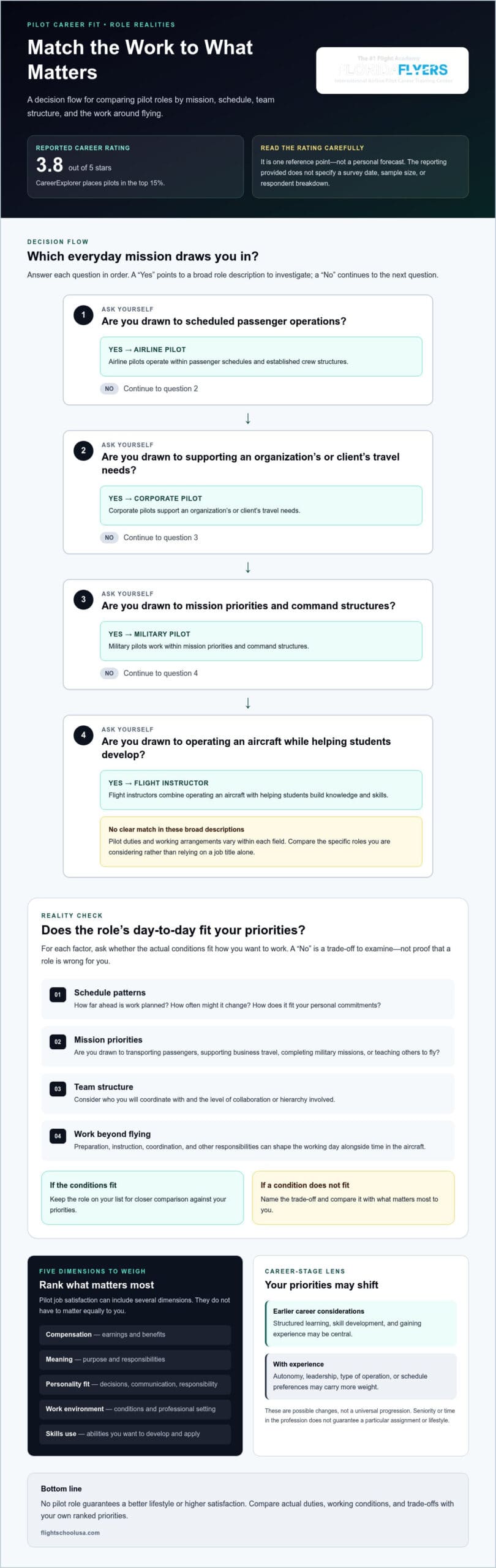
A useful career-fit assessment is not a pass-or-fail test. It’s a disciplined way to identify what you value, compare those priorities with the work itself, and surface questions that deserve better answers before you commit. The result shouldn’t predict whether you’ll be satisfied; it should clarify which conditions you’re prepared to accept and which could undermine long-term fit.
Make the comparison concrete. Create two columns: “conditions I prefer” and “what this role requires.” Include travel, schedule demands, decision-making responsibility, technical tasks, collaboration, and mission purpose. Then mark which differences you can accept, which need more investigation, and which could become persistent sources of dissatisfaction. This written exercise is more useful than assigning yourself a score; a checklist can organize your thinking, but it can’t forecast your experience.
Test your expectations by speaking with people in the pilot roles you’re considering. Ask about a typical work period, how duties extend beyond flying, which parts of the role they find demanding, and what changed as they gained experience. Compare those perspectives with current, credible career information. One person’s account is useful context, not a universal description, so focus on details that apply to the specific work setting you have in mind.
As you build practical knowledge, revisit why aviation appeals to you and whether the full professional role still aligns with your priorities. For structured preparation connected to career goals, проучете професионалното летателно обучение като стъпка в информираното планиране, а не като обещание за бъдещо удовлетворение от пилотската работа.
Career planning doesn’t end with deciding that flying appeals to you. Professional preparation can help you understand the discipline, standards, and progression involved in pilot training, while giving you a more informed basis for considering the work ahead. It can’t determine whether you’ll enjoy a particular role or guarantee employment, salary, or pilot job satisfaction.
Structured training turns preparation into a sequence of defined learning and skill-development goals rather than an abstract career idea. As you progress, you can reflect on how you respond to study, practical flight experience, and the responsibilities involved in becoming a professional pilot. That experience can help you test assumptions about aviation, though it isn’t a substitute for learning about the day-to-day realities of a specific job.
Flight School USA работи по сертификати FAA Part 141 и Part 61 и предлага програми, насочени към кариерата, включително програмата Airline Ready и CFI Fast Track. Тези програми подпомагат професионалната подготовка. Разбирането на пътя на обучение и неговите изисквания може да ви помогне да свържете кариерните амбиции с работата по изграждане на умения и готовност.
За по-широк поглед върху пътя на подготовка, ръководството за обучение на пилоти на авиокомпании може да ви помогне да обмислите как обучението е свързано с професионалните цели. Използвайте кариерни материали заедно със собствените си приоритети: планът за обучение може да изясни какво включва подготовката, но никоя учебна програма не може да определи предварително колко удовлетворяваща ще бъде бъдещата роля.
Върнете се към писмените си приоритети и ги сравнете с кариерните реалности, които сте определили. Помислете дали изискванията за подготовка и отговорностите на желаната от вас роля съответстват на това, което очаквате от работата. Ако важен въпрос остане без отговор, посочете го конкретно и потърсете актуална, релевантна за ролята информация, преди да приемете дадено предположение за факт.
Обучението, фокусирано върху кариерата, на Flight School USA предлага структуриран начин за подготовка на пилоти, включително програмата Airline Ready Program, CFI Fast Track и Fixed-Price Career Program. Проучването на тези професионални програми за обучение може да бъде практическа следваща стъпка за амбициозните пилоти, които претеглят целите си спрямо ангажимента, който поемат. Подходете към решението обмислено: подготовката изгражда знания и готовност, докато кариерното съответствие остава лична преценка, оформена от ролята и вашите приоритети.
Use your priorities as a working guide, not a fixed verdict. As you learn more about professional aviation, revisit what you want from your work and whether the responsibilities of your intended path still align. A thoughtful approach to pilot job satisfaction starts before choosing a training route: build a clear picture of the career you’re preparing to pursue.
Flight School USA has prepared aspiring pilots since 2008 and operates under FAA Part 141 and Part 61 certifications. Its career-focused options include the Airline Ready Program and CFI Fast Track. Structured preparation can support readiness and informed planning, but your career experience will depend on your role and personal priorities.
Explore the programs and consider how they fit your goals. Разгледайте програмите за обучение на професионални пилоти на Flight School USA as you plan your next step. With realistic expectations and deliberate preparation, you can move toward an aviation career with greater clarity and confidence.
Some pilots are happy with their work, but experiences differ. CareerExplorer reports a career-happiness rating of 3.8 out of 5 for pilots; that figure describes its respondents, not every pilot. Before relying on it, look for the survey’s date, sample size, and methodology. For your own decision, consider how a role’s routine duties, schedule, and working relationships might affect you, not just whether the career sounds appealing.
It can be demanding, but stress varies with the position, operating environment, and individual. A pilot handling consequential decisions may experience pressure differently from someone balancing instruction with their own flying duties. Consider what situations challenge you: time-sensitive decisions, changing plans, high responsibility, or extended periods away. Learning how those factors appear in the specific role you’re considering is more useful than labeling the entire profession stressful or stress-free.
Да. Пилотът може да намира работата за възнаграждаваща, като същевременно приема изискванията на графика, но балансът е личен. Например, някой с малко фиксирани ангажименти може да гледа на пътуването различно от някой, който е отговорен за редовните грижи за децата. Помислете как бихте се справили с промяна в графика, която засяга важно лично събитие. Този конкретен сценарий може да разкрие повече за вашите предпочитания, отколкото общ въпрос за това дали обичате да пътувате или можете да толерирате време, прекарано далеч.
Some do, while others may prefer different responsibilities or work settings. To assess instructional flying, consider whether you enjoy explaining procedures, observing a learner’s progress, and communicating clearly as skills develop. Also reflect on how you’d feel sharing attention between operating the aircraft and supporting someone else’s learning. Those preferences can help you judge the work on its own terms, rather than assuming instruction suits every aspiring pilot.
Neither salary nor meaning alone determines satisfaction. CareerExplorer reports separate ratings for compensation satisfaction and meaningfulness, which can reflect different parts of respondents’ experience. In practice, consider what a higher income would need to offset, if anything, and how much purpose matters in your daily work. Your answer may also depend on schedule, workplace, and responsibilities, so identify which factors are essential rather than assuming pay settles the question.


