
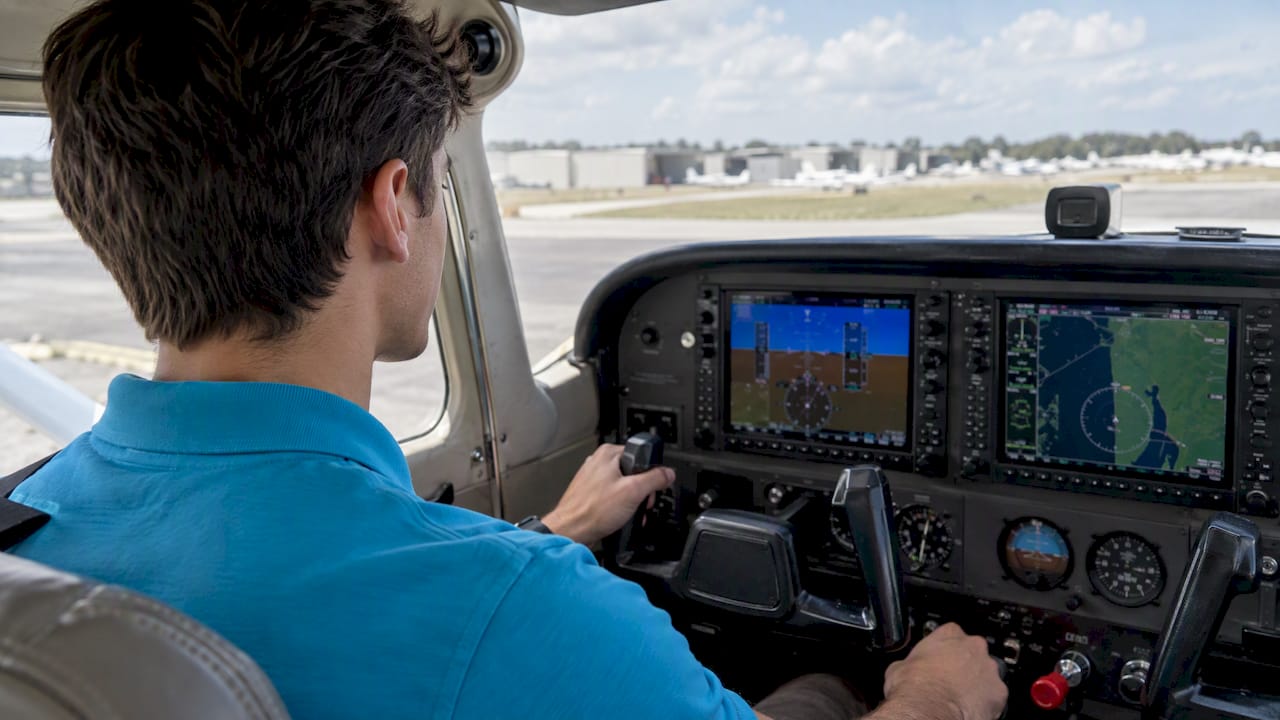
Transitio ad "glass cockpit" non est exercitium ubi clavis premenda est. Est mutatio in modo quo perscrutaris, quomodo attentionem administras, et quomodo de erroribus cogitas. Piloti qui eam tamquam probationem instrumentorum tractant, menus discere solent et logicam systematis omittunt. Piloti qui eam tamquam exercitationem ordinatam tractant, perscrutationem habent cui confidere possunt cum imago male se gerit. Hic dux explicat quid revera mutetur, quomodo ad eam exerceri, quae horae simulatoris computentur, et quomodo systema et instructionem rectam eligere.
On paper, glass looks like a simplification. Six round instruments become one or two screens, the moving map sits in front of you, and the autopilot is often a few buttons away. In practice, the information is the same, but its presentation and the way you must manage it are different.
ENARRATIO. Vaporariis instrumentis, indices discretos comparas et imaginem ipse construis. In primario volatus monitorio, celeritas aëris et altitudo sunt taeniae verticales, altitudo fundum implet, et inclinationes tibi delineantur. Kitplanes guide to the glass transition describit insidias communes praecoces: numeros digitales persequi et sonum vocis nimis moderari loco tenacitatis vocis tenendae, vel in imagine figere et conscientiam situationis amittere.
Operam. The FAA's Transition Training guidance compares the shift to moving from an automatic car to a stick shift: it is still a car, but you must know how to operate what is new. The real skill is keeping an external visual scan while managing integrated information on the screen.
Automation. Autopilot and flight director modes add a layer that analog panels rarely had. You must know what the system is doing, why, and how to take it back.
Failure behavior. Indicator vitiosus in sex-pack est indicator singularis vitiosus. Ostentatio, sensorium, vel fons datorum vitiosus in tabula vitrea potest mutare quod vides in pluribus locis simul, et responsum rectum pendet ab intellectu architecturae post id.

Saepe gubernatores rogant num vitrum simpliciter melius sit. In quibusdam rebus melius est, in aliis plus a te postulat.
| Area | Traditional (steam gauges) | Vitrum gubernaculum |
|---|---|---|
| Attitude and trend information | Built by the pilot through cross-check | Presented on a single display with trend cues |
| Iohannes conscientia | Separate navigation sources | Moving map, terrain and traffic integrated |
| Scan | Acus per acum | Taeniae fundatum, cum periculo fixationis in velo |
| defectum modos, | Mostly isolated and visible | Can cascade; require knowledge of system logic |
| Training load | Lower for the panel itself | Altius in fronte, praesertim ad usum IFR |
| Automation | Saepe minima | Common, and must be managed deliberately |
The advantages of glass are real: clearer presentation, integrated weather and terrain, and consistent layouts across aircraft. But the NTSB study cited above found that glass-equipped aircraft showed no measurable improvement in overall accident rates comparatis cum illis quae analogice instructae sunt. Studium animadvertit has aeronaves saepius uno gubernatore, in longioribus itineribus, et secundum consilia volatus IFR volavisse, itaque comparatio non est simplex. Lectio practica est quam ipsa NTSB extrahit: meliores imagines exercitationem non substituunt, et instrumentum tantum bonum est quantum gubernator de eo intellegit.
The most useful standard for any transition plan is the oldest one: aviate, navigate, communicate, in that order. Every screen, page and mode exists to serve those three tasks. When the display becomes overwhelming, you do not troubleshoot the avionics first. You fly the airplane, then return to a known screen configuration.
Quam ob rem discipulis monemus ut tres habitus excolant antequam functiones provectiores attingant:
The NTSB warns that familiarity with screen menus is easily mistaken for mastery of the aircraft. Its safety study stresses that emergency procedures are not the time to be learning system logic. So before the first flight, you should be able to explain, without the screen in front of you:
Haec est insidia "capsae nigrae": in velo omnia confidere nesciens cur ostendat quod ostendat. Piloti qui eam vitant logicam tam serio quam manubria student.
Consilium FAA de institutione transitionis ordinem disciplinatum et argumenta studiorum consueta commendat: limites perfunctionis ut pondus et aequilibrium et celeritates aëris, rationes abnormales et in casu necessitatis, et limites operationis systemati proprii. Etiam suadet ut cum instructore tuo exerceas. circiter bis in hebdomada, because skills fade quickly between sessions when the interface is new.
A sensible sequence looks like this:
Academic work on this subject points the same direction. Research on the analog-to-digital move suggests that early performance drops are tied to the new interface rather than to higher workload, which means a formal syllabus helps the performance dip pass sooner. Treat any dip in your first hours as normal, and plan the syllabus around it instead of hoping to fly through it.
Pilots often assume that hours on a home flight simulator can be logged. They cannot, unless the device is approved. Under Circularis Consultativa FAA 61-136B, credit toward certificates and ratings requires an FAA-approved basic or advanced aviation training device (BATD or AATD), and you should verify the device’s letter of authorization and current status before logging anything. Consumer desktop software is still valuable for rehearsing flows and button sequences, but it is practice, not logged time.
For Part 141 instrument training, the limits are specific. According to LegalClarity’s summary of the Part 141 rulesUsque ad 40% horarum totius institutionis in FTD vel AATD fieri potest, meritum BATD ad 10% limitatur, et omnia instrumenta simul 50% horarum cursus excedere non possunt. Haec structura una causa est cur syllabus Partis 141 sedes naturalis sit institutionis vitreae: instrumenta probata in cursum potius quam affixa sunt. Si duas vias ponderas, nostri duces ad... Part 141 versus Part 61 et what Part 141 means explain the differences, and our page on horae simulatoris instrumentorum covers how the credit works in practice. For the broader case for simulation, see flight simulator training benefits.

If you are renting or buying, the right system is the one you will actually train on and fly regularly. Use these criteria:
For instruction, look for a syllabus rather than a series of ad hoc flights, an instructor who is comfortable teaching failures as well as features, and access to an approved training device so that practice hours can also be logged hours.
Nos gubernatores commerciales erudimus, et fere omnis discipulus qui ingreditur perite vitrum scire debet antequam ad societatem aëriam perveniat. Sive vaporis instrumenta incepisti et pergis, sive vitrum didicisti et ad analogum pro locatione reverteris, disciplina eadem est: aeroplanum guberna, architecturam intellege, et defectum antequam accidat meditare.
Quod videmus est discipulos qui vitrum tamquam systema intellegendum, potius quam velum operandum, tractant, probationes "checkrides" cum minore labore superant et hanc consuetudinem in opera cum multis motoribus et in aëroplanis transferunt. Tictacus aerometrorum Hobbs etiam est linea sumptuum, ergo praeparatio ordinata magni momenti est pecuniarie: ad singulas lectiones pervenire postquam cursus in instrumento probato vel escritorio exercitati sunt significat horam aeroplani in volatu, non in paginis inveniendis, impendi.
Our advice is simple. Schedule the practice frequently, study failures before features, and insist on an instructor who will let you work through the uncomfortable parts. Proficiency here comes from discipline, not from the quality of the display.
— Rainer
Apud Academiam Volatus Florida Flyers, peritia in cabina vitrea pars viae ad cursum professionalem est. Nostra... pagina exercitationis "vitre cockpit" describes an 8-week route from desktop practice to an AATD for U.S. pilots. If you are building toward the airlines, the Certa-Price Airlines fuga School Program is published at $85,900 one-off, and the US Airlines nauclerus Tutela Program pretio $49,950 semel. Pro aestimationibus interea, vide nostram programma exercitationis aestimationis instrumentorum et index completus gubernator exercitationesque.
Id pendet a systemate, experientia tua, et utrum IFR volabis necne. Transitio ad usum VFR multo minus temporis requirit quam exercitatio ad IFR, ubi gubernator automaticus et functiones appropinquationis in rem veniunt. Potius quam numerum horarum fixum petere, ad normam pete: aeroplanum secundum inclinationem gubernare, systema sine fixatione currere, et defectus in ostensione placide tractare potes.
Non sponte. (or) Non sponte. NTSB’s study found no measurable improvement in overall accident rates for glass-equipped light aircraft. The displays provide better information, but the safety benefit depends on training, especially for emergencies and automation management.
Only if the device is an FAA-approved BATD or AATD with a valid letter of authorization, as described in AC 61-136BProgramma computatrale ad usum domesticum destinatum utile est ad rationes exercendas, sed per se tempus adnotabile non generat.
The FAA's ductio exercitationis transitionis suggests practicing with your instructor about twice a week. Frequent short sessions help the new scan pattern settle, and ground practice on a simulator fills the gaps between flights.
Treating it as learning where the buttons are. The common failures are fixating on the display, chasing digital numbers, and knowing the menus without knowing the system logic. Study failures and reversion before advanced features.


