
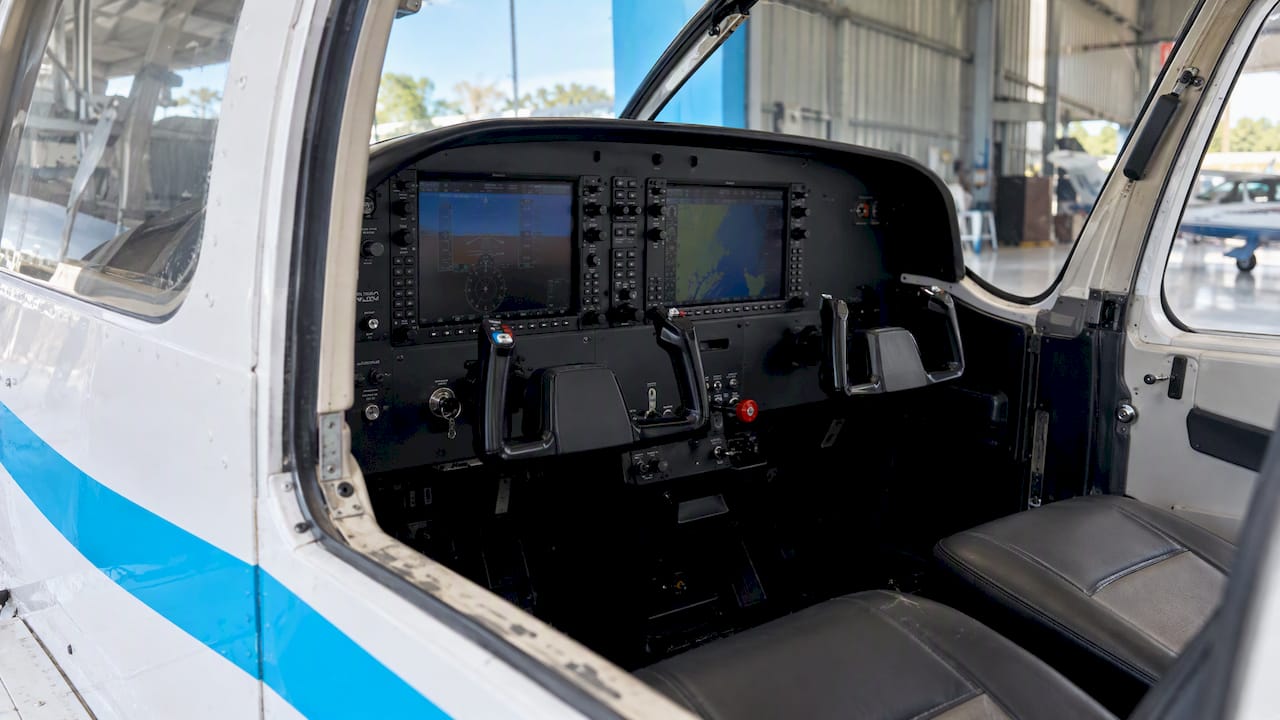
Glass cockpit training gives student pilots a consolidated, easier-to-read picture of the airplane: attitude, airspeed, altitude, engine data and a moving map on two screens instead of a scatter of round dials. The documented benefits are stronger position awareness, more accurate GPS navigation and, in at least one recent simulator study, lower workload for novices. The documented costs are more head-down time, a real learning curve on the avionics themselves, and the risk of leaning on automation. Below, we separate what the evidence supports from what the marketing implies, so you can decide how glass fits into your own path to the airlines.
In training, a glass cockpit is an electronic display system that consolidates traditional flight instruments and other aircraft data. AOPA describes the usual arrangement: a primary flight display (PFD) that commonly shows attitude, airspeed, altitude and vertical speed, and a multifunction display (MFD) that commonly carries engine, navigation and moving-map information.
गोल डायल या "स्टीम गेज" पैनल से इसका मुख्य अंतर सूचना को व्यवस्थित करने और प्रदर्शित करने के तरीके में निहित है। भौतिक उड़ान में कोई परिवर्तन नहीं होता है। तकनीकी रूप से उन्नत विमानों पर AOPA का मार्गदर्शन उनका कहना है कि स्टीयरिंग व्हील और पतवार को नियंत्रित करने का कौशल डायल से लैस विमानों के समान ही है, जबकि जानकारी को अलग तरीके से प्रस्तुत किया जाता है और एक बड़ा गतिशील मानचित्र मौसम, भूभाग और आस-पास के विमानों की जानकारी जोड़ सकता है।
That distinction frames everything that follows. Glass changes what you look at and how quickly you can find it. It does not change what the airplane needs from you.
RSI हल्के विमानों में कांच के कॉकपिट पर एनटीएसबी का सुरक्षा अध्ययन notes that integrated displays can present more information in the same panel space as conventional instruments. For a student, that means the core of the instrument scan sits on one screen, and a moving map answers the question “where am I?” without a chart on your knee.
An FAA study of advanced general aviation displays अध्ययन में पाया गया कि पायलटों ने स्थिति की जानकारी को उच्च दर्जा दिया। इसमें यह भी पाया गया कि जीपीएस/एमएफडी मार्गदर्शन ने वीओआर की तुलना में इनबाउंड और फाइनल-अप्रोच सेगमेंट पर क्रॉस-ट्रैक त्रुटि को कम किया। सेंटरलाइन पर अधिक सटीकता से उड़ान भरना ही इंस्ट्रूमेंट ट्रेनिंग का मुख्य उद्देश्य है।
इसी अध्ययन में एक महत्वपूर्ण तथ्य भी सामने आया है: सबसे लंबे खंड के दौरान पायलट ऊंचाई बनाए रखने में कम सटीक थे। बेहतर पार्श्व ट्रैकिंग का मतलब यह नहीं था कि ऊर्ध्वाधर दिशा में भी बेहतर नियंत्रण हो।
A 2024 peer-reviewed simulator study of novice pilots reported significantly better flight performance, lower measured mental workload and improved situational awareness with a G1000 glass panel than with a steam-gauge panel. That is encouraging for beginners.
इसे सिम्युलेटर में विशिष्ट G1000 बनाम स्टीम गेज इंटरफ़ेस के प्रमाण के रूप में पढ़ें, न कि सार्वभौमिक गारंटी के रूप में। ऊपर उद्धृत FAA अध्ययन में डिस्प्ले प्रकार के आधार पर समग्र कार्यभार में कोई अंतर नहीं पाया गया, इसलिए सटीक निष्कर्ष यह है कि कार्यभार लाभ पायलट, डिस्प्ले और कार्य पर निर्भर करते हैं।
A 30 प्री-प्राइवेट-पायलट छात्रों पर किए गए पीयर-रिव्यूड सिम्युलेटर अध्ययन found faster early learning and better performance within the FAA ATP standard for precision approaches when students used an advanced synthetic-vision display rather than a conventional one. For instrument-rating candidates, whose checkride centers on precise approach flying, that finding is relevant. It is a single simulator study, and it concerns synthetic vision specifically, so treat it as supportive rather than conclusive.
Modern training and airline-track aircraft are built around electronic displays, and the FAA recognizes this. AOPA reports that in 2018 the FAA added technically advanced airplanes as an alternative for commercial-pilot training, with the TAA definition including a glass panel with a PFD, a GPS moving map and an autopilot. Glass experience is therefore not a luxury for a career pilot; it is part of the regulatory landscape.
A fair assessment of glass cockpit training benefits has to include the costs. The research is consistent on four of them.
एफएए के अध्ययन में यह भी पाया गया कि केवल दृश्य चेतावनी से ध्यान आकर्षित नहीं हो पाता है। व्यवहार में, इसका अर्थ यह है कि छात्र को हवा में ऐसी स्थिति उत्पन्न होने से पहले यह अभ्यास करना चाहिए कि विफल या खराब प्रदर्शन कैसा दिखता है।
इन प्रमाणपत्रों के लाभ समान रूप से वितरित नहीं होते हैं।
Primary (private pilot) training. The case for glass is weaker here than many assume. In primary training, the emphasis belongs on positive aircraft control using outside visual references, and anything that pulls your eyes into the cockpit works against that. A glass panel is usable for private training, but your instructor should deliberately hold your attention outside. Our guide to दृश्य उड़ान नियम covers why seeing and avoiding is the core habit to build first.
वाद्य यंत्र प्रशिक्षण। This is where the research is most favorable. Cross-track accuracy on approaches improved with GPS/MFD guidance, and the synthetic-vision study showed gains on precision approaches. A moving map, integrated autopilot and clear navigation data reduce the mechanical burden of procedures so you can concentrate on decision-making.
व्यावसायिक प्रशिक्षण। AOPA recommends combining technically advanced airplane experience with some analog or complex-airplane experience, so that pilots develop both modern-avionics familiarity and an understanding of traditional aircraft systems.
| ट्रेनिंग | जहां कांच सबसे ज्यादा मददगार होता है | What to guard against |
|---|---|---|
| निजी पायलट | Situational awareness, moving map for orientation | Eyes inside the cockpit instead of on the horizon |
| उपकरण रेटिंग | Approach tracking, workload during procedures | छोटी-छोटी गलतियों पर ध्यान केंद्रित करना, ऊंचाई के नियमों का कमजोर पालन |
| Commercial and beyond | TAA-शैली के उपकरणों और स्वचालन से परिचित होना। | Gaps in conventional-instrument and systems knowledge |
यह वह प्रश्न है जो आपको गलत कारणों से कांच का चयन करने से रोकना चाहिए। 2013 सहकर्मी-समीक्षा अध्ययन स्टीम गेज वाले विमानों के पायलटों की तुलना ग्लास कॉकपिट वाले विमानों के पायलटों से की गई। स्टीम गेज वाले विमानों के पायलटों ने ग्लास कॉकपिट वाले विमानों के पायलटों की तुलना में ग्लास कॉकपिट वाले विमानों के पायलटों की तुलना में बेहतर प्रदर्शन किया।
The implication is not that glass is bad. It is that the transition runs more smoothly in one direction, and that a pilot who has only ever seen a PFD may be underprepared for a round-dial airplane. That is the strongest argument for the complementary approach described below.
Use these criteria rather than a blanket rule.
Learn the avionics on the ground first. डेस्कटॉप और प्रशिक्षण उपकरण सत्रों के माध्यम से आप हॉब्स मीटर चालू किए बिना मेनू, उड़ान योजना प्रविष्टि और अप्रोच लोडिंग का अभ्यास कर सकते हैं। हम अपने लेख में इसका एक व्यवस्थित तरीका बताते हैं। 8 सप्ताह का ग्लास कॉकपिट प्रशिक्षण कार्यक्रमऔर पहले से प्रमाणित पायलटों के लिए, हमारा glass cockpit transition guide यह बताता है कि क्या बदलता है और क्या नहीं बदलता।
सिम्युलेटर में असफलताओं का अभ्यास करें। Because light aircraft cannot safely reproduce many glass failures, a simulator is the right place to see them. Our overview of फ्लाइट सिम्युलेटर प्रशिक्षण के लाभ यह बताता है कि उस समय का उपयोग कैसे करें और यह हवाई जहाज में बिताए गए समय से कैसे भिन्न है।
Use a deliberate scan. AOPA’s position is that glass changes the location and depiction of information but should not change the fundamental instrument-scan concept. Scan the PFD, cross-check, look outside, repeat.
Do not chase small numbers. If you catch yourself correcting a few feet while heading and airspeed drift, you are in the trap AOPA describes. Fly the airplane, then refine.
अपनी पारंपरिक कलाओं को जीवित रखें। Regular practice on basic references, including partial-panel work, protects you if the screens ever degrade.

हम वाणिज्यिक पायलटों को पार्ट 141 के तहत त्वरित प्रशिक्षण प्रदान करते हैं, और ग्लास डिस्प्ले के संबंध में हमारी सलाह एक जैसी है: डिस्प्ले को ऐसे पायलट के लिए एक सहायक उपकरण के रूप में मानें जो पहले से ही स्कैन करता है, योजना बनाता है और बाहर देखता है, न कि इन आदतों के विकल्प के रूप में।
Our students are working toward airline certification on a fixed timeline, so every hour has to teach something. That is why we favor learning avionics on the ground before the airplane, rehearsing failures in a simulator, and holding the outside-reference discipline from the first lesson. The research above supports that sequencing: the benefits show up when pilots are properly trained on the specific equipment, and the risks show up when they are not.
हम आपको केवल पैनल के प्रकार के आधार पर प्रोग्राम चुनने से भी बचने की सलाह देंगे। यह पूछें कि प्रशिक्षण में पैनल का उपयोग कैसे किया जाता है, इसे कौन सिखाता है और डिस्प्ले में अप्रत्याशित खराबी आने पर यह कैसे काम करता है। इन सवालों के जवाब आपकी दक्षता का अनुमान विमान में शीशा होने या न होने से कहीं बेहतर तरीके से लगा सकते हैं।
— रेनर
If your goal is an airline seat, the question is how glass training slots into a complete, cost-controlled path. Our फिक्स्ड-प्राइस एयरलाइन फ्लाइट स्कूल प्रोग्राम is published at $85,900 as a one-off price, designed so you are not watching an open-ended meter tick. If you are comparing structures first, our अमेरिकी एयरलाइन पायलट कैरियर कार्यक्रम is listed at $49,950 as a one-off price, and our पायलट प्रशिक्षण पाठ्यक्रम पृष्ठ covers the individual certificates and ratings, from private through instrument, multi-engine and CFI.
Because we conduct FAA checkrides in-house under Self Examining Authority, you avoid the long waits for practical exams that stall many students, and that matters when your avionics skills are fresh. If you want to see how the pieces fit, talk to us about your training path.
It refers to an electronic flight display system that replaces or consolidates traditional round-dial instruments. It commonly includes a PFD for attitude, airspeed, altitude and vertical speed, and an MFD for engine, navigation and map information, according to AOPA.
ज़रूरी नहीं। 2024 के एक सिम्युलेटर अध्ययन में पाया गया कि G1000 पैनल पर नौसिखियों का प्रदर्शन बेहतर था और कार्यभार कम था, लेकिन FAA के एक अध्ययन में कार्यभार में कोई अंतर नहीं पाया गया और यह भी पता चला कि डिस्प्ले को समझने के लिए दो से तीन घंटे का समय पर्याप्त नहीं था। ग्लास डिस्प्ले को पढ़ना आसान हो सकता है, लेकिन फिर भी इसके लिए विशेष विमानन प्रशिक्षण की आवश्यकता होती है।
यह विशिष्ट कार्यों में सहायक होता है, विशेष रूप से विमानन संचालन और उन विफलताओं का अभ्यास करने में जिन्हें हल्के विमानों में सुरक्षित रूप से दोहराया नहीं जा सकता। एनटीएसबी इसी उद्देश्य के लिए सिमुलेटर या प्रक्रियात्मक प्रशिक्षकों की अनुशंसा करता है। यह विमान में बिताए गए समय का पूरक है, न कि उसका विकल्प; हमारी मार्गदर्शिका देखें। logging pilot hours in a simulator उस समय का महत्व समझने के लिए।
Both is the best-supported answer. AOPA recommends combining technically advanced airplane experience with analog or complex-airplane experience during commercial training, and a 2013 study found steam-gauge-trained pilots transitioned to glass better than the reverse.


