
About 16,400 openings for airline and commercial pilots are projected each year, on average, over the coming decade, according to the U.S. Bureau of Labor Statistics. That points to a positive pilot career outlook for 2026, but opportunity depends on where you are in training and which aviation sector you pursue. For aspiring pilots, the central question isn’t only whether employers will hire, but how to prepare for the right opening.
It’s reasonable to weigh hiring prospects against the time and commitment required to qualify. A favorable forecast matters most when you understand what it could mean for your own career path, from building experience to pursuing airline, regional, corporate, or charter roles.
This article examines hiring trends, fleet growth, retirement-driven demand, and pay prospects across those sectors. You’ll see how the outlook may affect new pilots in 2026 and which factors shape the transition from flight training to professional opportunities.
Airline hiring reflects a continuing need to replace pilots and staff operations. In the United States, airline pilots must retire at age 65, according to the Federal Aviation Administration. That rule creates a predictable retirement point, though it does not determine when an airline will recruit or how many positions it will open. Hiring decisions also depend on fleet plans, staffing needs, and operating schedules. For new pilots, the distinction matters: industry demand describes a broad workforce need, not a guaranteed job offer.
Long-term forecasts show demand extending well beyond the United States. Commercial aviation is projected to need 674,000 new pilots worldwide over the next 20 years. The same forecast projects demand for more than 2.4 million new commercial aviation personnel during that period. Its scope is specific: it counts aircraft with more than 30 seats. It excludes business aviation and civil helicopter demand, so it does not describe every professional flying career. For someone becoming a pilot, the figures indicate a large global workforce requirement, not a hiring timetable for any one airline.
The forecast also projects 728,000 new maintenance technicians worldwide over the next 20 years. That figure sits alongside pilot and other workforce needs, showing that aviation growth requires more than flight crews. Aircraft must be maintained to support scheduled operations, while airlines need qualified personnel across their operations. The projected demand for 1,023,000 new cabin crew members adds another measure of the workforce scale. These categories should remain distinct: technician and cabin crew projections are not pilot vacancies, but they reflect the broader staffing needs of commercial aviation.
Supply pressures add another dimension. A global estimate placed the pilot supply-and-demand gap at 24,000 pilots in 2026. A gap means projected demand exceeds available supply in the estimate; it does not mean every region or employer faces the same shortfall. Hiring can still vary by airline, aircraft delivery schedules, and the experience employers require. That is why a global shortage estimate cannot identify the best entry point for an individual applicant. It does, however, underline why training pipelines and career progression remain central to the workforce outlook.
In the United States, the U.S. Bureau of Labor Statistics projects about 16,400 openings for airline and commercial pilots each year, on average, over the decade. This measure includes openings across those occupations, rather than only new airline recruitment. For prospective pilots, the practical signal is to plan for qualifications and experience while tracking employer needs. Forecasts establish the scale of workforce demand; an individual’s route into a cockpit still depends on meeting the requirements for the role.
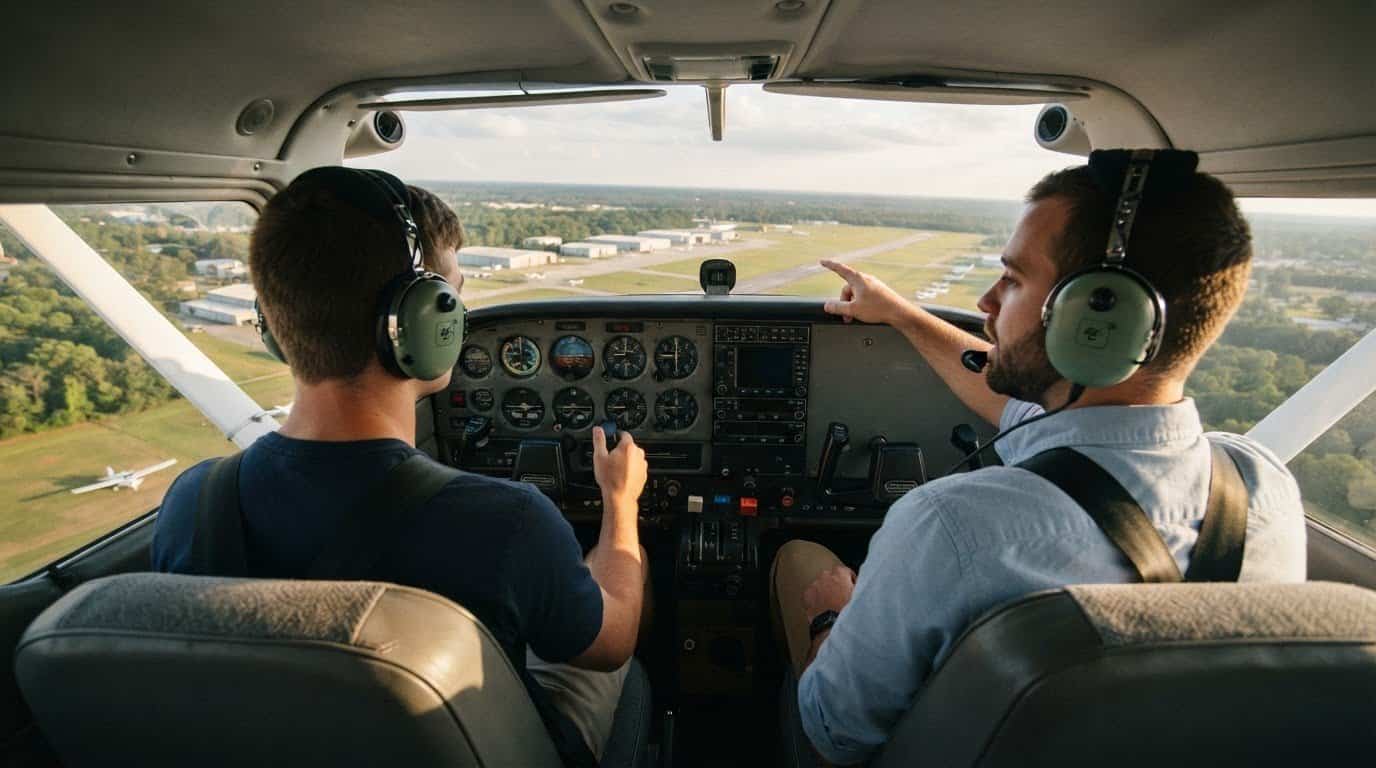
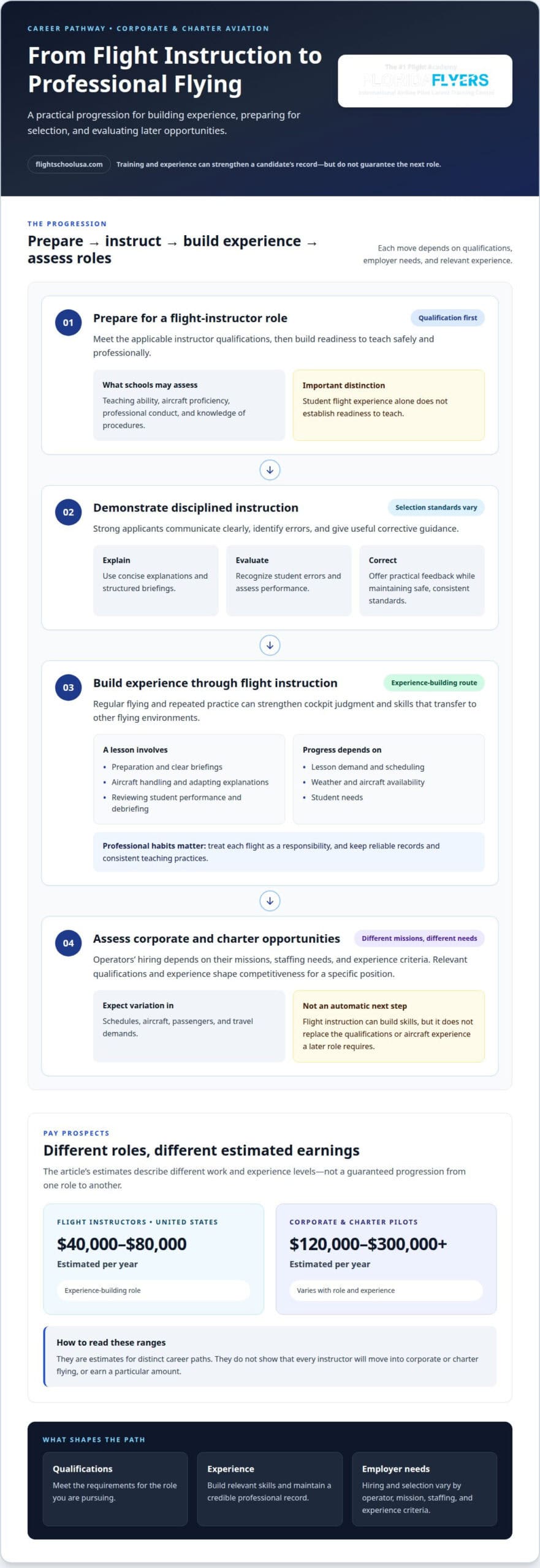
Corporate and charter flying offer alternatives to scheduled airline careers, with different aircraft and travel needs. Hiring depends on each operator’s missions, staffing requirements, and experience criteria. For pilots with limited experience, a first professional role may be flight instruction rather than corporate passenger operations. Instructing can develop cockpit judgment, but it also requires explaining, demonstrating, and evaluating maneuvers safely.
Flight instructor openings and selection standards vary by flight school. Employers may assess teaching ability, aircraft proficiency, professional conduct, and knowledge of procedures. Strong applicants communicate clearly, identify errors, and offer useful corrective guidance. Student flight experience alone does not establish readiness to teach. First meet the applicable instructor qualifications, then prepare to demonstrate technical competence and disciplined instruction. Selection depends on more than logged flight time.
Flight instruction can help pilots build hours through regular flying and repeated practice. Each lesson calls for preparation, clear briefings, aircraft handling, and a review of student performance. The work can strengthen skills that transfer to other cockpit environments, including communication and decision-making. Progress depends on lesson demand, scheduling, weather, aircraft availability, and student needs. Treat every flight as a professional responsibility, not just a way to accumulate hours. Reliable records and consistent teaching habits also support a credible career history.
Earning differs across these paths. Flight instructors in the United States are estimated to earn $40,000-$80,000 per year. Corporate and charter pilot earnings are estimated at $120,000-$300,000 or more per year. These ranges describe different work and experience levels, not an automatic progression from instruction to charter flying. Corporate and charter roles may involve varied schedules, aircraft, passengers, and travel demands. A candidate’s qualifications and relevant experience shape how competitive they are for a specific position.
For flight school instructors, career preparation starts with meeting instructor qualifications and mastering the aircraft and lesson material. Strengthen core flying skills, practise concise explanations, and develop structured briefings and debriefings. During lessons, adapt explanations to each student while maintaining consistent standards. This experience can prepare pilots for later roles, but it does not replace the qualifications or aircraft experience those positions require.
Choose flight training with the intended career path in view. A career-focused flight-training plan can help align instruction, experience-building, and professional preparation without treating corporate or charter employment as a guaranteed next step.
The U.S. Bureau of Labor Statistics projects about 16,400 openings for airline and commercial pilots each year, on average, over the decade. U.S. airline pilots must retire at age 65, according to the Federal Aviation Administration. Airline pilots must meet applicable medical and certification requirements; the Federal Aviation Administration identifies 1,500 total flight hours as a requirement for pilots pursuing airline eligibility.
Hiring announcements show how opportunities vary by carrier. United planned to hire 1,800 pilots by the end of 2026. Southwest announced plans to hire approximately 872 pilots and upgrade 662 pilots in 2026. Avelo reported hiring 50 pilots in 2026. These figures describe distinct company plans, not a single industry-wide hiring target. They also show why applicants should distinguish new-hire recruitment from captain upgrades.
American Airlines had placed over 110 ATP graduates with the airline year-to-date as of September 2, 2026. Alaska planned to continue hiring later in 2026 as aircraft arrived following an order for over 130 aircraft. Fleet deliveries can support staffing needs, but they do not translate directly into openings at a specific base or for every applicant. Carrier requirements and recruitment schedules shape who can compete.
Regional airlines remain an important part of the pilot hiring pipeline. They recruit pilots who meet minimum flight-hour and certification requirements, making regional employment a relevant target for those building toward airline careers. Candidates improve their prospects by arriving qualified, prepared for selection, and ready to meet the carrier’s operating standards. Hiring demand does not replace the required experience or credentials.
Training time affects when applicants can enter that pipeline. The path from starting flight training to airline minimums is estimated at 2-4 years. A fast-track training path is estimated at 8-14 months. These are different planning estimates, not interchangeable timelines: experience, training pace, and progress through required qualifications all matter. A clear sequence helps aspiring pilots understand when they may become eligible to apply.
For 2026, the announcements point to active recruitment alongside continued requirements. United, Southwest, American, Alaska, and Avelo each illustrate different hiring signals, from stated pilot plans to ATP graduate placements and aircraft deliveries. Applicants can turn those signals into practical preparation by tracking the qualifications named in postings, maintaining accurate flight records, and aligning training milestones with airline eligibility.
Recruitment plans can change as airline staffing and fleet needs shift. Regional and major-airline roles also differ in entry criteria and career progression. Treat hiring announcements as signs of employer activity, then focus on what you can control: meeting certification standards, building qualifying hours, and preparing for applications. This keeps training progress connected to real hiring requirements.
Fleet growth affects pilot demand through aircraft capacity and daily use. When airlines add aircraft, they may expand routes, increase frequencies, or replace older equipment. How intensively each aircraft flies matters too: a larger fleet does not automatically mean proportionally more hiring. Staffing depends on schedules, aircraft availability, route plans, and crew requirements. For students considering aviation careers, fleet announcements are useful signals, not direct measures of job openings.
A 20-year aviation workforce forecast projects 2.44 million new hires. That scale reflects multiple occupational groups, not pilots alone. Commercial forecasts also have defined boundaries: one forecast counts aircraft with more than 30 seats and excludes business aviation and civil helicopter demand. Its projections therefore do not capture every kind of flying. Business aviation follows different operating needs, so its hiring patterns should not be inferred directly from airline fleet forecasts.
Utilization determines how fleet growth translates into staffing needs. More flying across an airline’s schedule can require additional crew coverage, while delivery timing and route plans influence when that staffing is needed. Aircraft capacity matters as well. Higher seat density can increase passenger capacity without a corresponding increase in aircraft, and greater fleet productivity changes how airlines use existing equipment. Forecasts also do not assume single-pilot commercial airplane operations, so their pilot-demand outlook is not based on replacing flight crews with that model.
Pilot earnings vary by sector, position, and career progression. Estimated regional airline first-officer earnings range from $90,000 to $150,000 per year, while regional captains are estimated at $150,000 to $250,000. Major airline first officers are estimated at $150,000 to $250,000, and major airline captains at $250,000 to $500,000 or more. These ranges illustrate why seniority and role matter. They are not starting salaries or guaranteed outcomes for new pilots.
Higher-paying aviation jobs depend on qualifications and responsibilities, not simply aircraft size. Moving from first officer to captain changes the role, while employer, schedule, and experience influence earning potential. Corporate and business aviation require separate consideration: the commercial fleet forecast excludes business aviation, so it cannot establish demand or pay prospects in that sector. Assess each path by its aircraft, mission, experience requirements, and progression opportunities.
For a practical career assessment, separate three signals: projected workforce demand, actual employer recruitment, and the qualifications a role requires. A growing fleet may support more flying, but utilization and operating plans determine how that affects staffing. Salary estimates help compare roles, but do not guarantee future income. This distinction helps aspiring pilots interpret forecasts without treating fleet expansion as a guaranteed job pathway.
The 2026 outlook combines continued recruitment with a more normalized hiring environment. Major airlines were projected to hire at an equally strong pace in 2027 as in 2026. That points to continued opportunities, but not a uniform hiring boom. Each airline sets staffing according to operations, fleet plans, and workforce needs. For new pilots, the distinction is essential: broad demand supports a career case, while qualifications and timing shape an individual application.
FedEx planned to hire approximately 800 pilots in 2026 and begin new-hire classes in July 2026. This illustrates how hiring can depend on a carrier’s staffing plans and class schedules. Recruitment activity can create entry points for qualified candidates, but a planned hiring total does not mean every applicant will be selected. Candidates should track the experience and certifications specified for each role, then align their training milestones with those requirements.
Pay is best understood as a progression, not a single career-long figure. A pilot’s position, employer, seniority, aircraft assignment, and applicable pay agreement all shape earnings. Promotion from first officer to captain changes responsibilities and may change compensation. Hiring pace also affects progression: shifts in staffing or fleet plans can alter upgrade timing and available roles. A career plan should consider both entry-level prospects and the longer path to greater responsibility.
Delta Air Lines was described as increasing reserve staffing and accelerating hiring activity in 2026. Reserve assignments are part of airline operations, and staffing needs can influence which positions carriers recruit for. For applicants, this is a reminder to assess the full job structure, not just the headline pay. Schedules, base assignments, reserve duties, and seniority progression affect the working environment and the practical value of a role.
The hiring cycle has also been characterized as a normalization phase during 2024-2026. Normalization means the market may move from unusually intense recruitment toward a steadier pace. It does not eliminate openings, but it makes preparation and employer-specific timing more important. A pilot evaluating offers should compare the role, advancement prospects, and operational demands, rather than treating a single year’s hiring pace as a permanent industry condition.
Washington discussions about raising the airline pilot retirement age to 67 describe a possibility, not an enacted change. That distinction matters for long-range career planning: current rules and actual hiring announcements provide firmer planning points than a proposal. Retirement policy could affect workforce timing if changed, while airline recruitment still responds to current staffing and fleet requirements.
For prospective pilots, the practical takeaway is to build a career plan around qualifications, role progression, and the hiring environment. Plan your pilot training path with the intended career stage in mind, from initial eligibility through competitive airline applications and future advancement.
Flight School USA offers a Fixed-Price Career Program for aspiring professional pilots. Turn to structured flight training when you’re ready to move from broad hiring forecasts to a focused plan. The CFI Fast Track Program and Airline Ready Program support career preparation at different stages, while GI Bill Flight Training serves eligible veterans.
Choose a path based on your career goal, current training progress, and the qualifications you need. A defined program can connect flight training with professional objectives, but hiring still depends on employers’ needs and each role’s requirements. Consider which training route fits your circumstances and intended next step.
தொடர்பு விமானப் பள்ளி அமெரிக்கா for guidance on your pilot training path.
The pilot career outlook for 2026 can inform your direction, but your next decision is personal: define the role you want, identify the qualifications it requires, and build a disciplined path toward them. The aviation environment will continue to change, so focus on skills and preparation that remain relevant across hiring cycles. A clear plan helps convert an ambitious goal into practical training milestones.
Take stock of your current experience, what you need to build, and the next career stage you’re targeting. Align your training choices with that goal instead of reacting to every hiring headline. Flight School USA can help you consider a career-focused training path suited to your goals.
Discuss your pilot training goals with Flight School USA, and take the next step with purpose.
The 2026 pilot career outlook points to opportunities, but new pilots still need a deliberate route into professional work. Hiring plans don’t remove experience, certification, or selection requirements. For example, a pilot early in training can use employer announcements to identify likely qualifications, then plan milestones toward them. The useful takeaway is to build eligibility before a hiring window opens, rather than treating broad demand as an immediate job offer.
Starting flight training and reaching airline minimums is estimated to take 2-4 years. Your pace depends on training progress, flight-hour accumulation, and completing required certifications. For planning, separate the time needed to complete training from the additional experience-building stage. A fast-track training estimate of 8-14 months describes a different path, not necessarily the full period to airline eligibility.
The 2026 forecast provides a defined view of commercial aviation workforce needs, rather than a U.S. airline hiring count alone. It includes aircraft with more than 30 seats and excludes business aviation and civil helicopters. It also does not assume single-pilot commercial airplane operations. These boundaries matter when comparing forecasts: differences in coverage or assumptions can change totals, even when the underlying workforce need has not changed in the same way.
More than 2.4 million new commercial aviation personnel are projected to be needed worldwide over the next 20 years. The forecast includes 674,000 pilots, 728,000 maintenance technicians, and 1,023,000 cabin crew members. These roles have separate training and qualification pathways. For someone considering aviation, the total signals broad workforce demand, while the pilot projection is the relevant figure for planning a flight-deck career.
Thousands of U.S. airline pilots approach retirement age each year, but that does not mean the same number retire annually. The timing varies as individual pilots reach the mandatory retirement age of 65 and leave airline work. For workforce planning, retirements create replacement needs over time; airlines still decide when to recruit based on staffing, operations, and aircraft plans.
A global estimate placed the pilot supply-and-demand gap at 24,000 pilots in 2026. That indicates a projected imbalance worldwide, not an identical shortage at every airline or location. Employers may still vary their hiring by fleet needs, operating plans, and required experience. For applicants, the practical meaning is to assess actual role requirements and recruitment activity, rather than assume that a global gap guarantees a position.
The U.S. Bureau of Labor Statistics projects steady employment growth for pilots as demand for air travel continues to expand. This is an occupational openings projection, not a count of airline jobs available in 2026 alone. It includes both airline and commercial pilot work. Applicants can use it as a broad employment signal, then focus on the certifications and experience required for specific positions.
The available 2026 figures are role-based earnings estimates, not a median for airline pilots, copilots, and flight engineers as one group. Major-airline first officers are estimated at $150,000-$250,000 per year, while captains are estimated at $250,000-$500,000 or more. Actual earnings depend on role, employer, and progression. Compare positions using their specific responsibilities and pay structures, rather than treating a broad range as an individual salary prediction.


